
Hindus for Human Rights and the International Commission for Dalit Rights present the
2026 Civil Rights Scholarship Contest
Meet the Winners of Our 2026 Civil Rights Scholarship Contest
High School Essay Winners
Sumitra Baral
is a sophomore in high school and the daughter of Nepali-speaking Bhutanese refugees. Through her writing, she wishes to share stories about her family's experiences and to shed light on Bhutanese refugees who were exiled or forced to leave their homes. In her free time, she enjoys volunteering, dancing, and exploring healthcare careers. In the future, she hopes to become an emergency room doctor.
Samatha Kranthijanya
is from New Mexico. She loves to read, sew, and play the drums. She aspires to become a doctor one day, tackling injustices and disparities in research and in the medical world.
College Essay Winner
Kavi Shahnawaz (he/they)
is a lifelong Philadelphian studying Law and Society with a Professional and Strategic Writing minor at Thomas Jefferson University. Their identity as the child of Bangladeshi immigrants deeply informs their academic, professional, and community service endeavors.
Art Winner
Shahan Haque
has been doing art for as long as she can remember. From being praised for her doodles in Pre-K, to drawing original characters based off of Steven Universe, to learning how to paint in the traditional Kalighat style, and doing henna to fundraise for her extracurricular organizations. She mainly depicts South Asian women and Bengali culture in her work as a dedication to my mother who was the only one at times to support her creativity.
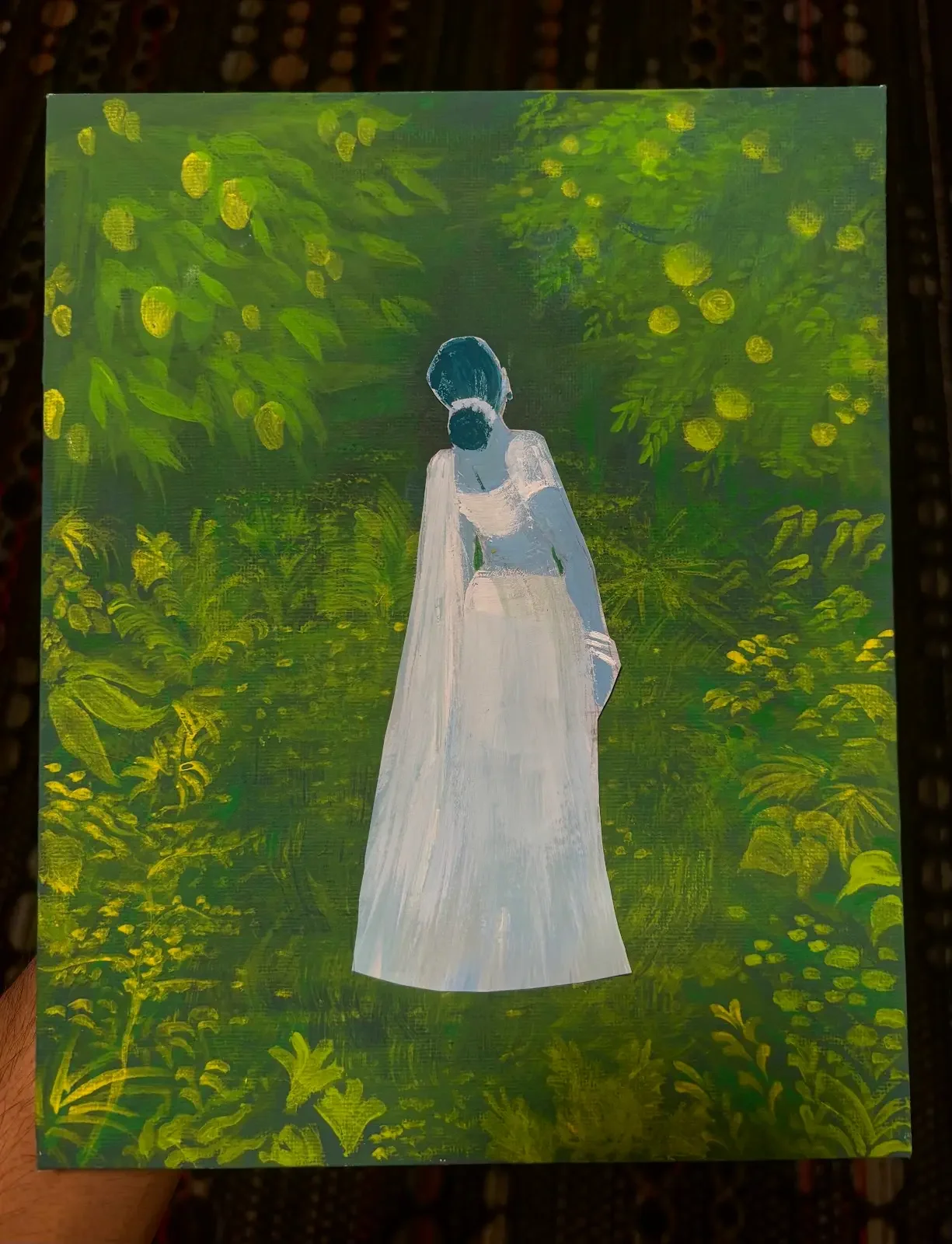
Behind the Art
The idea for this piece is inspired off of the movie “Goynar Baksho”. The character Rashmani, the hot-tempered “Pishima” (paternal aunt), was widowed young and is extremely protective over her jewelry box from her greedy relatives. (Spoiler Alert!) Rashmani passes away and becomes a ghost due to her attachment to her jewelry, the care of which she entrusts to her nephew’s new bride Somalata. As a ghost Rashmani has this newfound freedom she never had as a widow, she travels back to her hometown in East Bengal, she crosses continents and sees the whole world. Taking this concept, I painted this piece, not with Rashmani, but with my mother. My mother passed away September 9th 2021 after years of medical hardship that prevented her from visiting her home country of Bangladesh. In the last days all she wanted was to go back, see her family and spend time with them after decades. She was buried here in Miami, so in the end she never made it back home. This painting is my way of bringing her there.
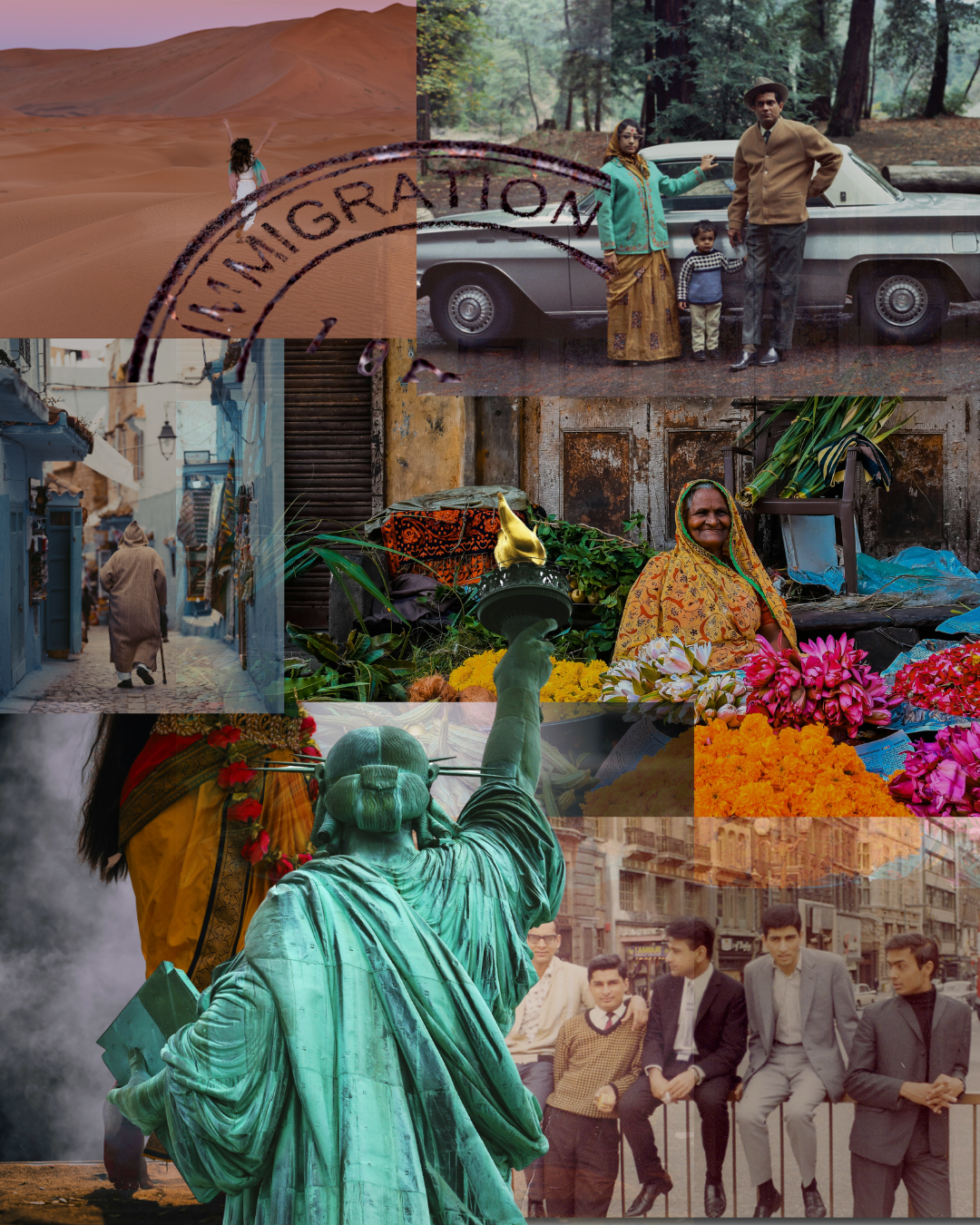
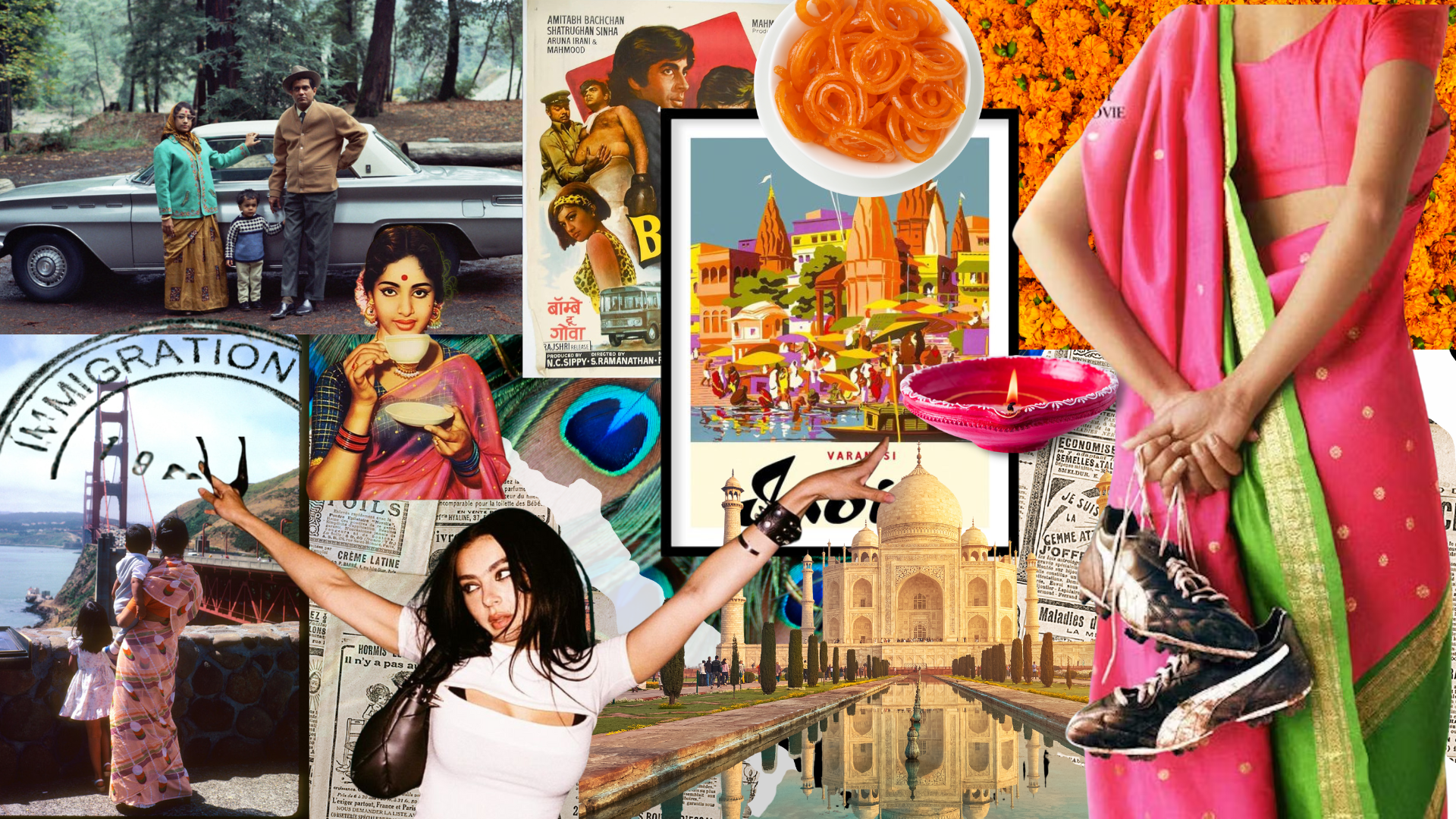
This contest centers on migration as a constant in human history, inviting emerging writers and artists in high school and college to reflect on movement, borders, and belonging through personal, historical, and creative lenses.
At a moment when migration is increasingly politicized, criminalized, and misrepresented, the contest seeks to uplift nuanced work by South Asian students that grapples seriously with questions of justice across borders.
Ideas, Culture, and Movement Across Borders
The contest is fully funded by Hindus for Human Rights, in collaboration with the International Commission for Dalit Rights, and will award 4–5 scholarships of $1,500 each.

Winners of the essay section will collaborate with editors from the Polis Project for publication. Winners of the art section will be published in Skipping Stones Magazine.
Contest Topic
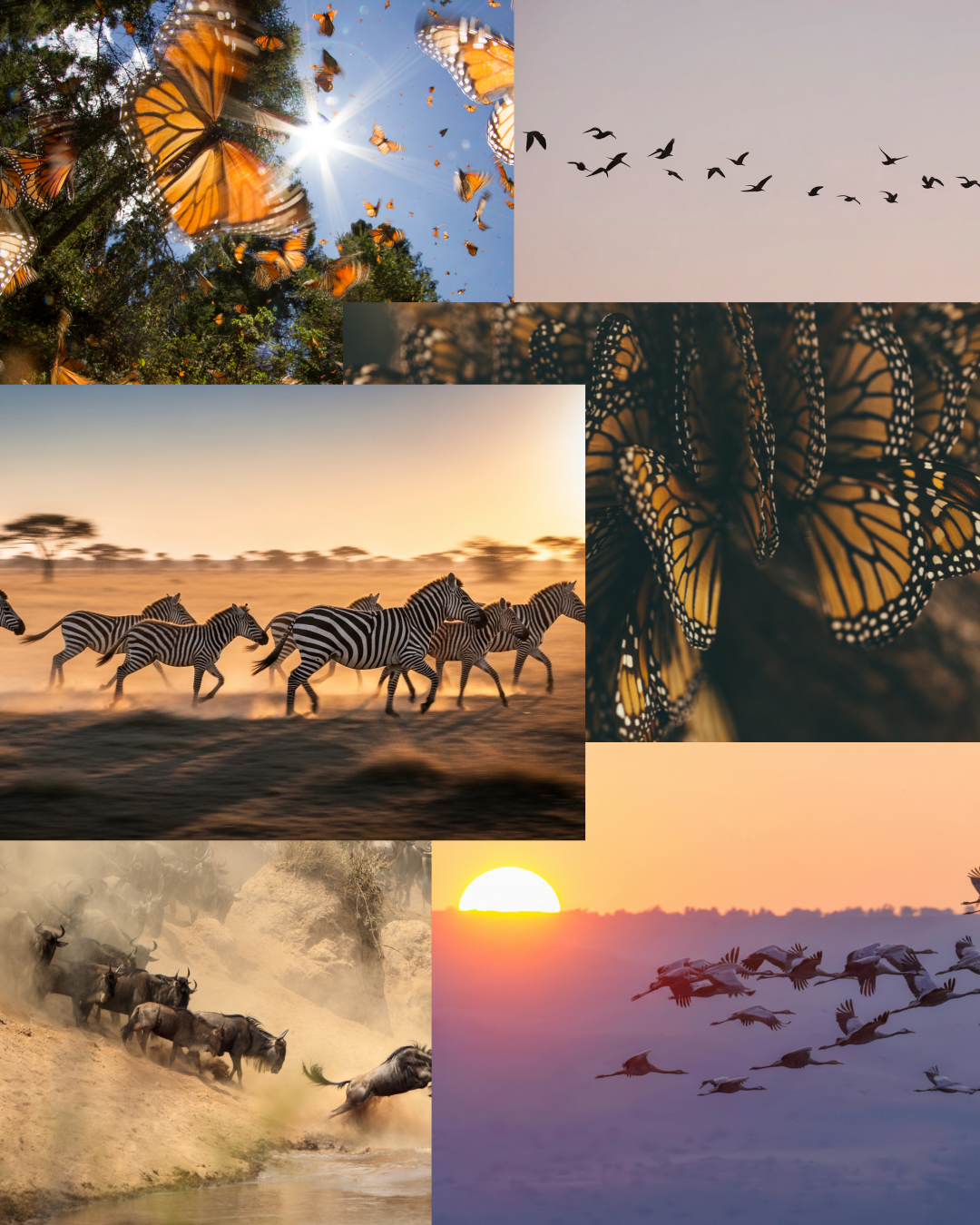
Migration is not an exception in human history, it is a constant. People have always moved in search of safety, dignity, opportunity, love, and survival. In a time when migration and immigration is being debated, restricted, and blamed for social problems, write an essay that connects your own migration story to another whose migration story is different from yours.
What do these stories reveal about who is allowed to move freely and who is not?
How do race, caste, class, gender, religion, nationality, or colonial history shape the meaning and consequences of migration?
What privileges, protections, or violences are attached to different kinds of movement?
Finally, reflect on the present moment. In a world marked by hardened borders, surveillance, climate displacement, and rising nationalism:
What does justice across borders demand of us now?
What responsibilities do those with relative safety, citizenship, or mobility hold toward those without it?
You are encouraged to draw on history, personal or collective memory, and media. You may engage with family stories, archival material, oral histories, and mythology. Essays should be non-fictional but can engage with storytelling and media in the piece. Through this entrypoint, consider exploring any or a combination of the questions above.
Writing Guidelines:
1000-1500 word count
Provide files in word document or pdf.
Non-fictional writing or media criticism format pieces only.
Art Guidelines:
Must be physical art scanned or photographed.
For alternative mediums contact info@hindusforhumanrights.org
200-300 word artist statement about the piece.
Deadline to submit pieces is June 15th, 2026. Winners will be announced in July 2026.