
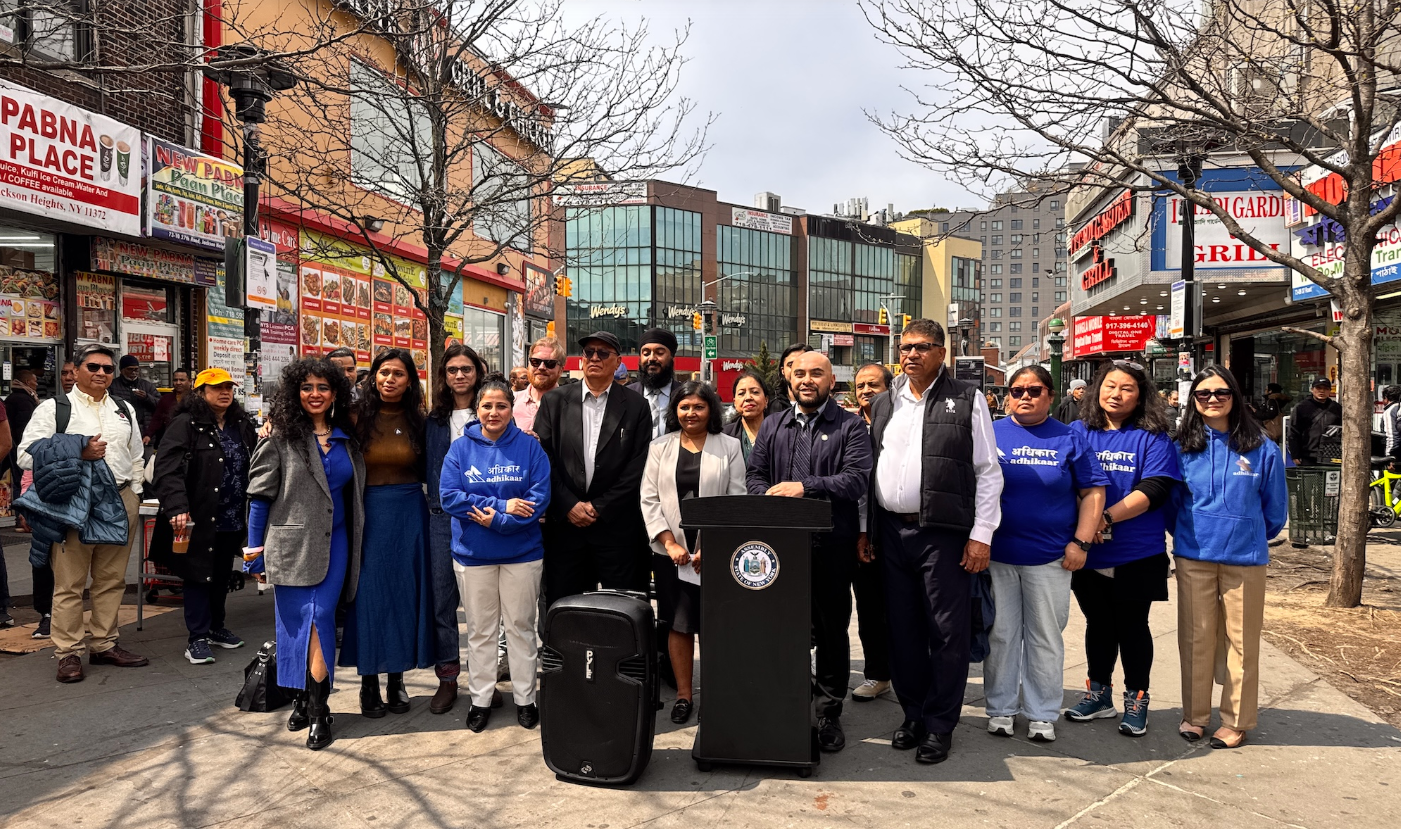
In April, during Dalit History Month, a powerful coalition of lawmakers, advocates, and community members gathered in Jackson Heights, Queens—one of the most diverse neighborhoods in the country—to push forward a landmark bill that would explicitly ban caste discrimination in New York State.
The legislation—Assembly Bill A6920 and Senate Bill S6531—seeks to add caste as a protected category under New York’s Human Rights Law, closing a long-standing gap in civil rights protections across employment, housing, and public life .
At the center of the gathering were stories—stories of exclusion, humiliation, resistance, and hope. Among the speakers was Anuraag, a member of the Hindus for Human Rights community, who spoke in a personal capacity as a Hindu, a trans person, a person of color, and a yoga teacher.
Their words offered something essential to this moment: a deeply rooted, unapologetically Hindu argument for justice.
Why This Bill Matters
New York’s proposed legislation emerges from years of advocacy and documentation of caste-based harm in the United States.
Without explicit legal recognition, individuals facing caste discrimination often lack clear pathways for justice. Complaints are harder to file, harder to prove, and easier to dismiss.
This bill changes that.
By naming caste directly, it aligns New York with jurisdictions like Seattle and California that have already taken steps to recognize caste as a civil rights issue. It affirms a simple but profound principle: no one should face discrimination based on birth, ancestry, or inherited status.
Speakers at the rally—from elected officials to community advocates—underscored that caste discrimination is not hypothetical. It is present in workplaces, housing, education, and religious spaces. And it demands legal clarity to be effectively addressed .