
A Muslim who built a temple in Unnao
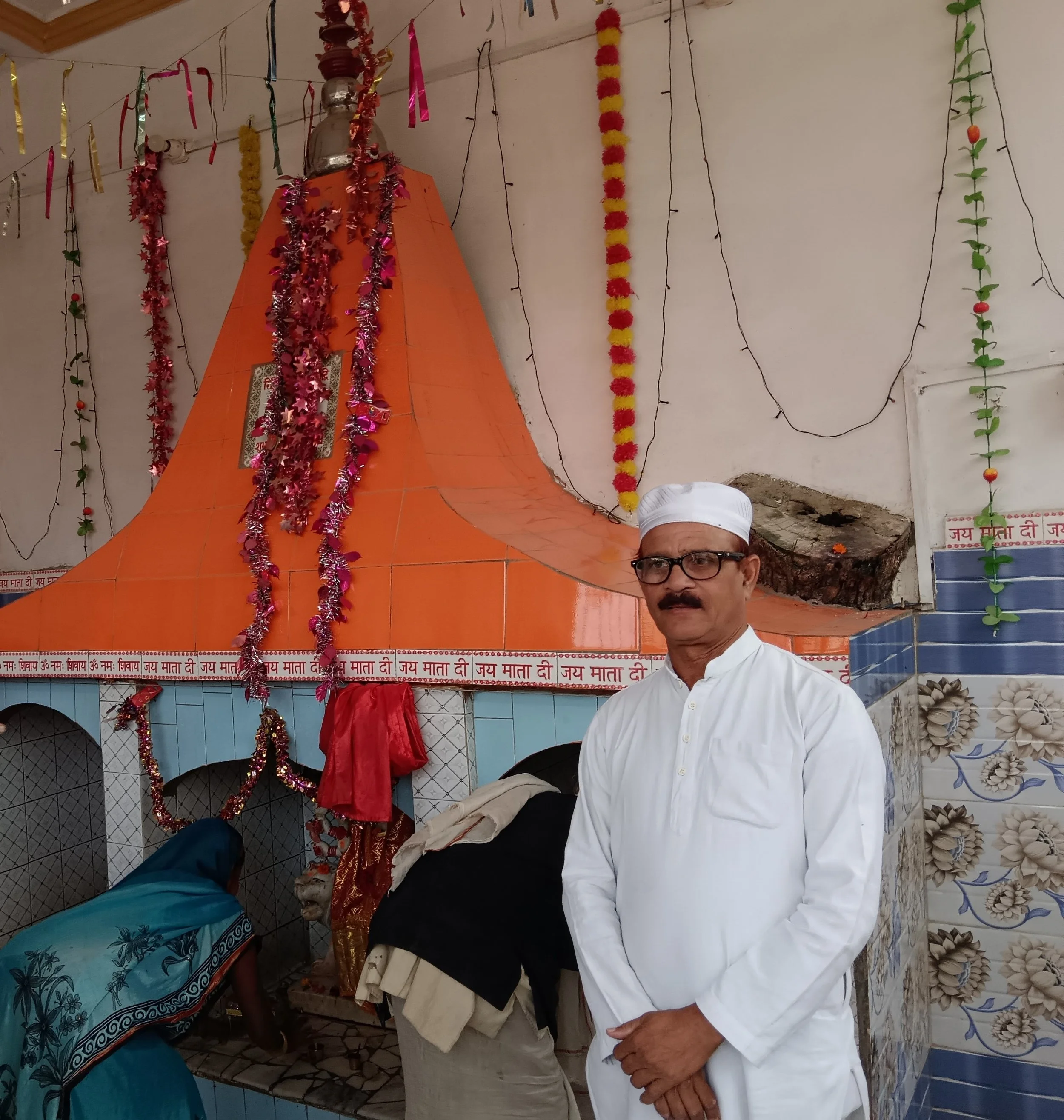
Mohammad Arif is a Sunni Muslim who is in construction business. He lives with his wife and eight children in Lucknow. Originally he hails from Sheikhpur, Ward 2, of Unnao. There are 80% Hindus and 20% Muslims in Sheikhpur.
Three years back there was a cemented platform in the locality on which deity Sheetla Devi’s statue was kept. Rajendra Tiwari’s family who live next door took the responsibility for the upkeep of this platform. However, it was not well kept. Sometimes animals would occupy it and at other times dunkards and gamblers made it their den. A nearby Pal family also made a claim on this platform. The matter went to the court.
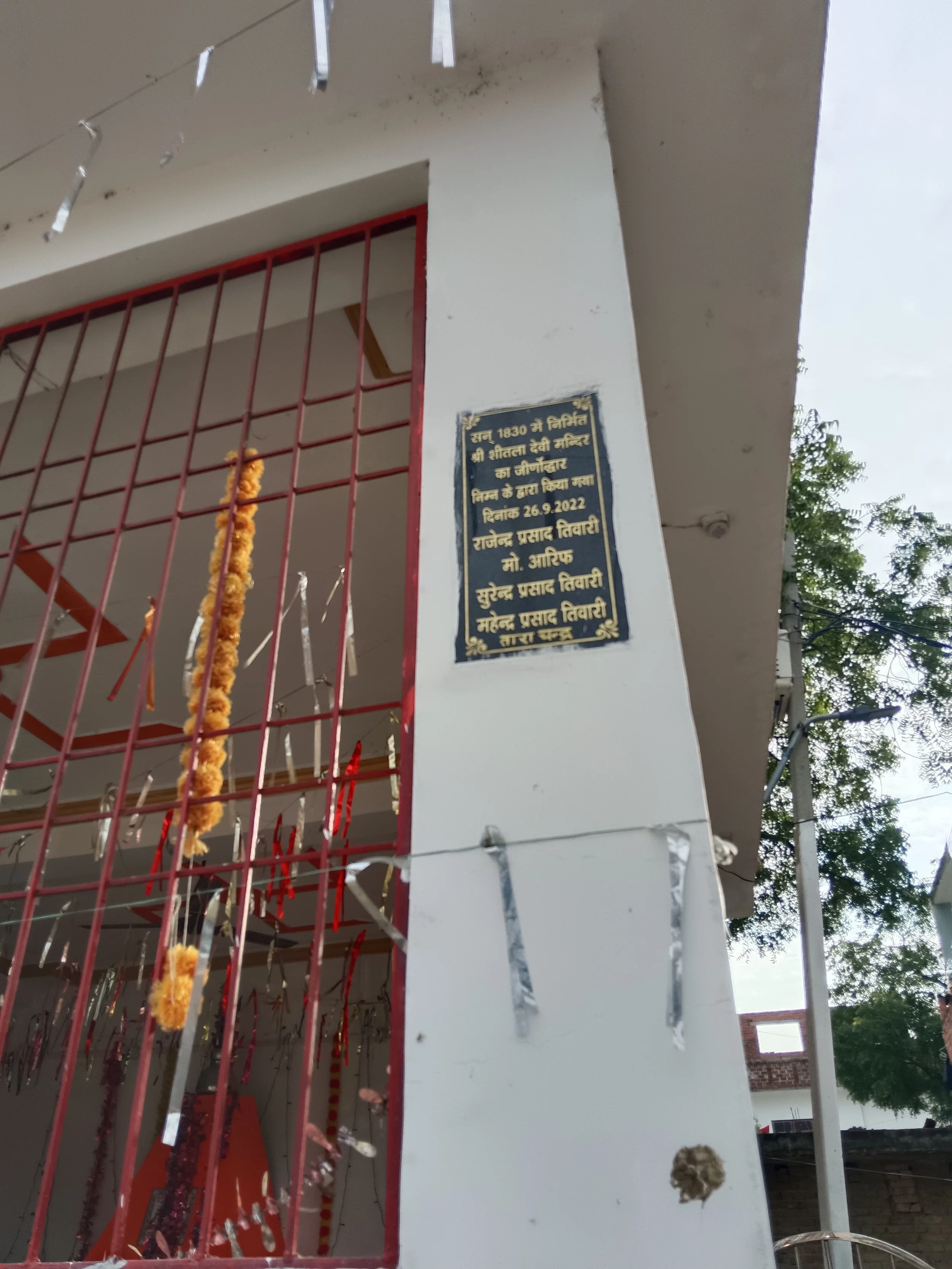
Mohammad Arif proposed to the two warring sides that if they burried their dispute then he would construct a temple over the platform. Rajendra Tiwari sought some time to deliberate. However, his son said that there was no need to ponder over this and Mohammad Arif should go ahead with the construction. In no time a temple was erected there. When a plaque was to be put on the front wall of the temple indicating the name of its creator, Mohammad Arif told Rajendra Tiwari to put his name as some people may not find Arif’s name on the plaque appropriate. However, Rajendra Tiwari wrote Mohammad Arif’s name below his name followed by other members of the Tiwari family. The important point is that the plaque bears Mohammad Arif’s name as one of the builders of the temple. However, the entire locality knows that it was Arif who contributed all the money and materials.
There was a dilapidated mosque some distance away from this temple. Mohammad Arif, with the help of community contribution, also renovated the mosque.
There is another temple in the locality. When people asked him to contribute towards its renovation Mohammad Arif contributed a trolley each of red sand and pebbles.
Now Mohammad Arif has also constructed a marriage lawn close to his house. This lawn is given free to families, irrespective of which religion or caste they belong to, for the purpose of conducting marriages. The job of cleaning the garbage after the event is done by Mohammad Arif’s family members.
Mohammad Arif is a symbol of Hindu-Muslim unity in his locality. When a politics of hate has taken over and over the last 11 years there has been an alienation between the two communities and people have stopped participating in each other’s social and religious occasions, there is a man who is acting as a bridge between Hindus and Muslims.
When it was asked of him whether the Muslim community, which doesn’t believe in idol worship, questions his loyalty to the faith after constructing a Hindu temple with a deity inside, he answered with aplomb that he doesn’t worship the idol, neither does he suggest to Muslims to worship it but he has constructed the temple for his Hindu brothers and sisters who believe in idol worship.
Mohammad Arif’s bravery is commendable. At at time when the morale of minorities is down as they are the targets of communal politics and they have almost been reduced to second grade citizens, Mohammad Arif, unapologetically, has taken an initiative and driven it to consummation. People in this country who believe in communal harmony but have surrendered before the Hindutva brigade must take inspiration from Mohammad Arif. The answer to communal politics is that we must continue to work for communal amity. Like earlier, Hindus and Muslims used to live together, particiapte in each other’s festivals, did not use to discriminate on the basis of religion, used to respect each other’s ways of living and customs, did not use to force other to live according to one’s fancies, we have to preserve the same syncretic culture. Even now people who believe in communal amity outnumber the ones who practice communal hatred. Human beings by nature love harmony and animosity is artificial and temporary.
We will have to demonstrate the courage exhibited by Mohammad Arif. We should not back down from what is right. If a Muslim or Christian is being harassed we must intervene and stand with the innocent victim. What somebody eats, what they wear, how they worship their God, these are their personal affairs in which nobody or no government has a right to interfere. If a Hindu and a Muslim want to get married it is their Constitutional and legal right. Right wing Hindus have objection to a Muslim boy marrying a Hindu girl. But there are couples where the boy is Hindu and the girl is Muslim. However, it is a personal decision of two individuals to marry each other. One of the points in Dr. Ram Manohar Lohia’s seven revolutions is the right to privacy which must be respected in all circumstances.
Fundamentalist Hindus are taking us away from the Constitutional ideals, which is dangerous because it is a threat to democracy itself. The bedrock of our democracy is our Constitution. If we remove the Constitution then our democracy is crippled. Hence it is important to save the Constitution. What Mohammad Arif is doing is strengthening the value of fraternity in consonance with the Constitution.
By Krishna Murari Yadav and Sandeep Pandey