
Bhagya Reddy Varma: Anti-Caste Leader, Adi-Hindu Organizer, and Pioneer of Dalit Education
Bhagya Reddy Varma: Building a Public Life Beyond Caste
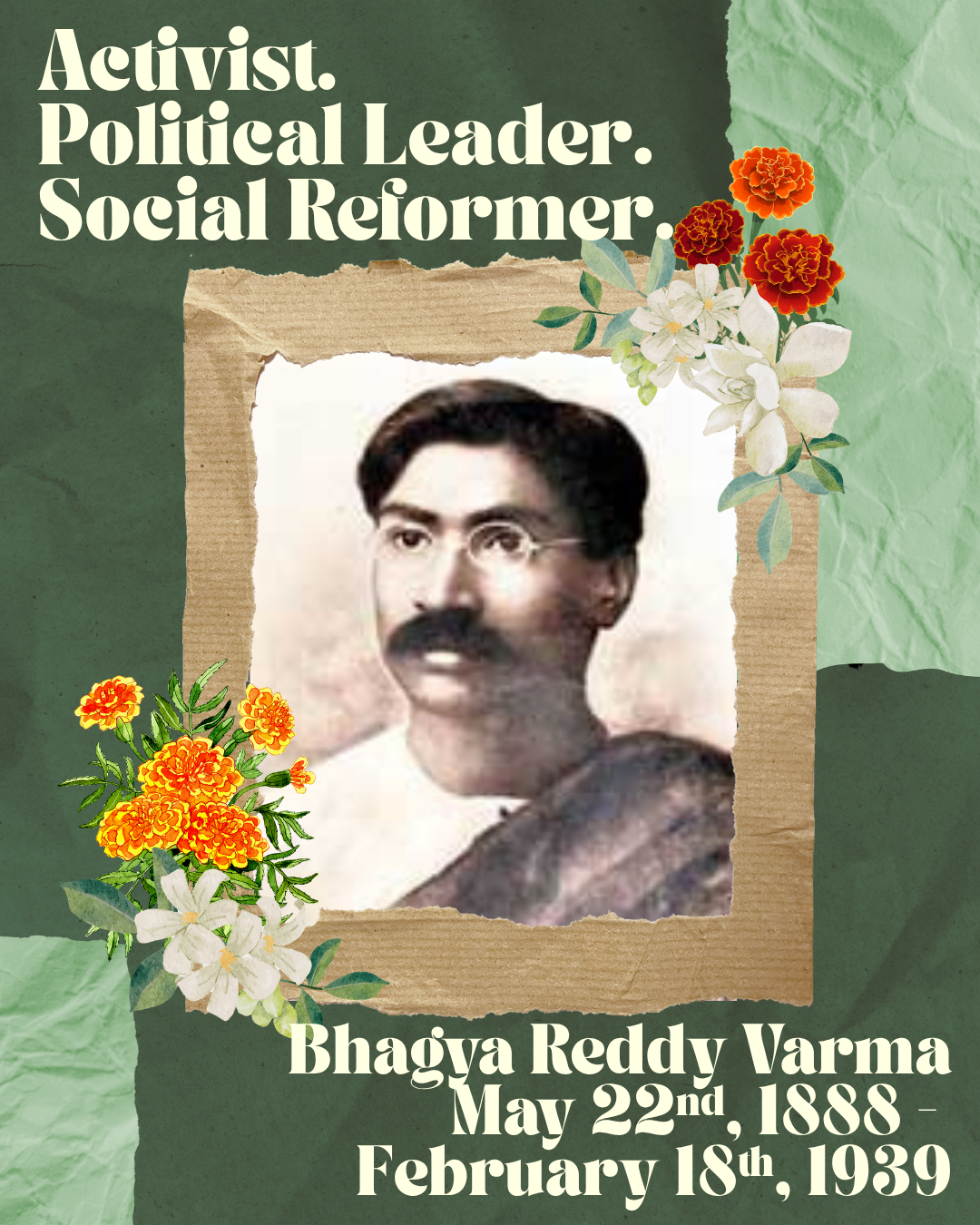
On May 22, we remember Bhagya Reddy Varma, one of the foundational anti-caste leaders of Hyderabad State and the wider Telugu-speaking region. The Government of Telangana has directed that his birth anniversary be observed every year on May 22 as a State Function, a sign of how deeply his legacy remains woven into Telangana’s public memory.
Born Madari Bhagaiah in 1888, Bhagya Reddy Varma emerged from a society organized around caste humiliation and turned that experience into a movement for education, self-respect, and collective awakening. He is remembered as a pioneer of the Dalit movement in the Telangana region, especially in the old Hyderabad State under the Nizam.
What makes Bhagya Reddy Varma so important is not simply that he opposed untouchability. Many reformers spoke against untouchability as a moral failing. Varma treated it as part of a broader world of social control: caste names, forced labor, exclusion from education, violence against Dalit women, public humiliation, ritual subordination, and the denial of history itself.
His answer was not symbolic inclusion. It was institution-building.
He founded organizations, opened schools, used Harikatha and public lectures to awaken consciousness, encouraged Dalit communities to reject degrading caste identities, and worked against practices such as child marriage, alcoholism, animal sacrifice, and the Jogini, Devadasi, and Basavi systems. Historian Adapa Satyanarayana describes his work as a network of educational, social, spiritual, and cultural initiatives that helped build Adi-Hindu society in Hyderabad State.
That word — Adi-Hindu — is central to his legacy. It carried a claim about dignity and origin. It rejected the idea that caste-oppressed communities were marginal, polluted, or outside history. Instead, it insisted that they were original people, bearers of culture, memory, and moral worth.
This was not just a change in terminology. It was a challenge to the entire caste imagination.
Caste depends on making hierarchy feel ancient and inevitable. Bhagya Reddy Varma fought that by giving people new names, new institutions, new spaces to gather, and new ways to see themselves. He understood that oppressed communities needed schools, but also stories. They needed political representation, but also cultural pride. They needed reform, but also self-definition.
In 1906, he founded Jagan Mitra Mandali, often described as one of his earliest organizations for social awakening. Through Harikatha — a popular form of oral storytelling — and lectures, he brought anti-caste ideas into public and community life, using a familiar cultural form to carry a radical message.
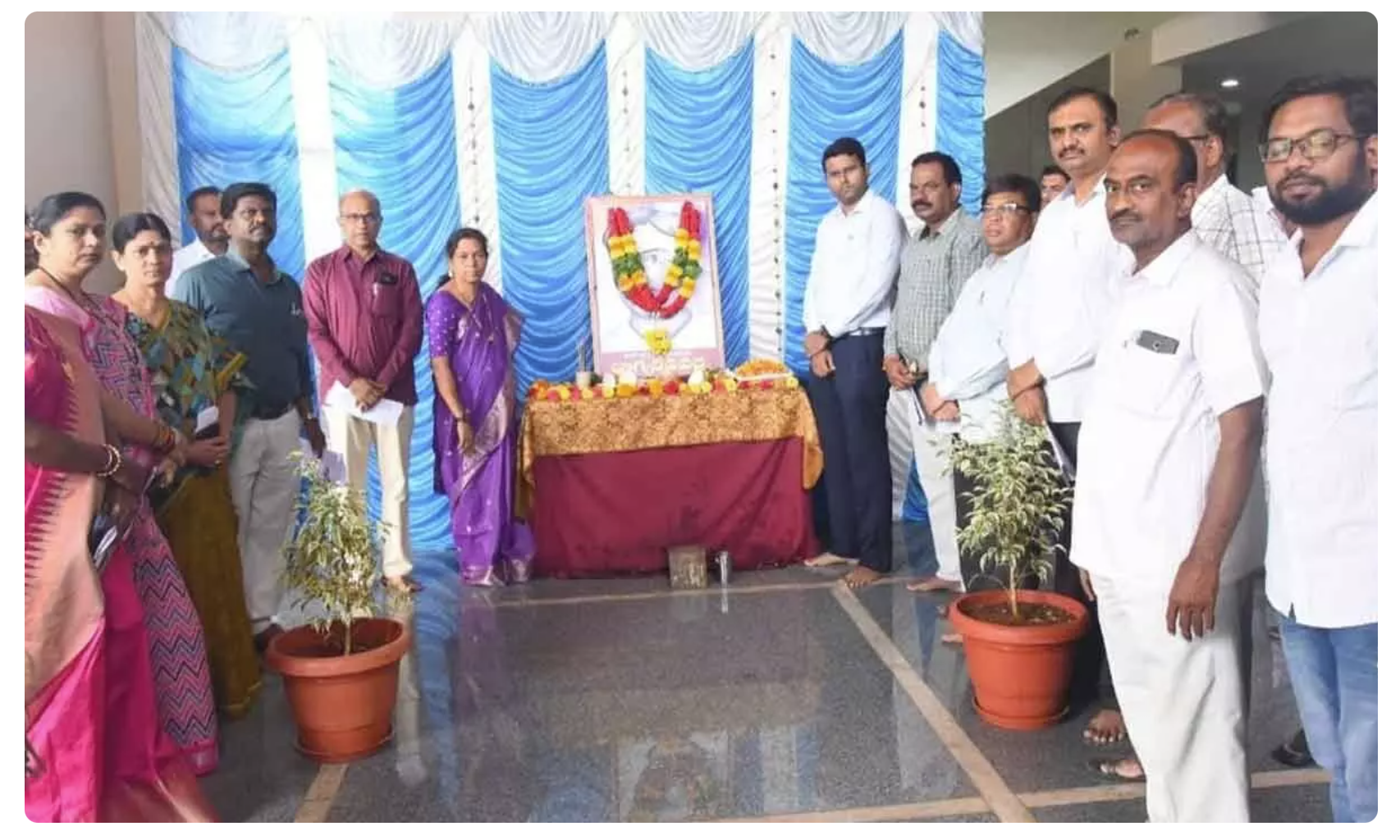
tributes to a portrait of Bhagya Reddy Varma as part of his birth anniversary celebrations in 2025 via Hans India
This is one reason his work feels so alive today. He did not treat culture as secondary to politics. He understood that the stories people hear, the songs they sing, the names they inherit, the schools they attend, and the rituals they are allowed to enter all become part of how power lives in the body.
His emphasis on education was especially transformative. Telangana Today notes his efforts in running schools for Dalit children more than a century ago, and another report emphasizes his role in establishing schools for Dalit girls in the erstwhile Hyderabad State. Education, for Varma, was not merely a route to individual mobility. It was a collective act of refusal. Every school challenged the caste order’s assumption that some children were born to serve rather than to learn.
He also insisted that reform had to confront the gendered violence built into caste society. Varma campaigned against the Jogini, Devadasi, Basavi, and Murali systems — practices in which girls and women, often from Dalit and other marginalized communities, were ceremonially “dedicated” to a deity, shrine, or temple tradition. In reality, these dedications often denied them ordinary family life, marked them with social stigma, and left them vulnerable to sexual exploitation, caste control, and economic dependency.
By opposing these systems, Varma placed the dignity and freedom of Dalit women and girls at the center of anti-caste struggle. He founded the Adi-Hindu Murali Nivarana Mandali to challenge the Jogini/Murali system, working with other Dalit reformers to stop dedication ceremonies and support women who had been trapped within these practices, including by helping them pursue marriage, social recognition, and lives beyond ritualized exploitation.
That history matters now because caste is never only about ritual status. It organizes labor, sexuality, land, public space, education, memory, and violence. Varma’s work saw these connections clearly. He knew that a community could not be free if its children were denied schools, if its women were left vulnerable to ritualized exploitation, if its workers were trapped in unpaid labor, or if its people were forced to answer to names designed to degrade them.
To engage with Bhagya Reddy Varma today is to enter a rich history of anti-caste struggle — one that did not wait for permission from dominant society. His work reminds us that social justice is not built only through speeches from above. It is built through neighborhood meetings, schools, pamphlets, oral storytelling, community organizations, inter-dining and local leadership. It offers a method: educate, organize, rename, remember, and build. His work belongs not only to Telangana’s history, but to every movement that understands dignity as something people must be allowed to claim in public, together.
The Questions Bhagya Reddy Varma Still Leaves Us
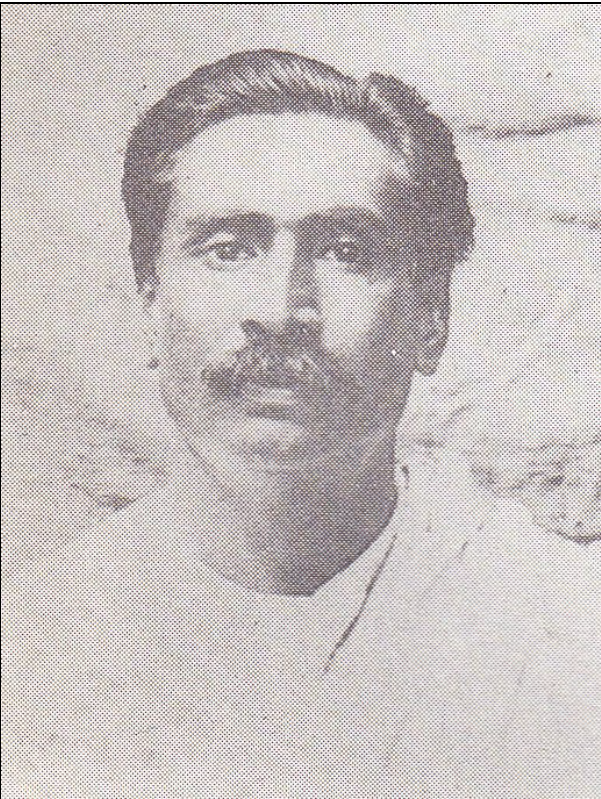
Bhagya Reddy Varma
Bhagya Reddy Varma was an anti-caste leader, social reformer, educator, and organizer from Hyderabad State. Born Madari Bhagaiah in 1888, he became one of the most important early leaders of the Dalit movement in the Telangana region.
He is remembered for building schools, organizing Dalit communities, challenging untouchability, opposing practices such as child marriage and the Jogini system, and helping shape the Adi-Hindu movement in Hyderabad. Bhagya Reddy Varma’s birth anniversary is observed on May 22. In 2025, the Government of Telangana directed departments to celebrate his birth anniversary every year on May 22 as a State Function.
What does “Adi-Hindu” mean?
“Adi-Hindu” was not simply a new name. It was a political, spiritual, and historical intervention. In Bhagya Reddy Varma’s movement, the term gave caste-oppressed communities a way to step outside the degrading vocabulary of untouchability and claim an identity that was older, deeper, and more dignified than the caste order itself.
The prefix “Adi” means original, first, or primordial. By calling oppressed communities Adi-Hindu, Varma was making a powerful counter-claim: those treated as polluted, marginal, or outside respectable society were not degraded remnants of civilization. They were among its original people, bearers of their own history, culture, labor, spiritual life, and moral imagination.
This mattered because caste does not only oppress through material exclusion. It also oppresses through naming. It teaches communities to see themselves through terms of insult, dependence, impurity, and inherited inferiority. Varma understood that liberation required breaking that mental and social hold. To reject caste-imposed names was to reject the story those names carried.
The term Adi-Hindu therefore challenged two ideas at once. First, it rejected the claim that Dalit communities were “low” by birth. Second, it challenged the idea that dominant-caste society had the sole authority to define Hindu history, religious belonging, or cultural inheritance.
In this sense, Adi-Hindu identity was both a refusal and a recovery. It refused humiliation, ritual subordination, and the logic of untouchability. But it also recovered a sense of origin, belonging, and collective pride. It allowed oppressed communities to say: we are not outside history; we have been pushed out of the histories others wrote. We are not without religion or culture; we have been denied the dignity of naming our own traditions. It was organizing language. It helped turn scattered experiences of caste oppression into a shared public identity, one that could support education, self-respect, political mobilization, and social reform. Like other anti-caste naming practices across South Asia, it made identity itself a site of struggle. It asked caste-oppressed communities not to accept a place at the bottom of someone else’s hierarchy, but to imagine themselves as authors of a different social world.
Why was Bhagya Reddy Varma important to the Dalit movement in Hyderabad State?
Bhagya Reddy Varma helped transform scattered grievances into organized public life. He founded organizations, built schools, gave lectures, used cultural forms such as Harikatha, and created spaces where Dalit communities could gather, learn, and imagine themselves beyond caste subordination. His work helped create a foundation for later Dalit politics in Hyderabad State and connected local struggles to wider anti-caste movements across India.
What was Jagan Mitra Mandali?
Jagan Mitra Mandali was one of Bhagya Reddy Varma’s early organizations, founded in 1906. It used Harikatha, public lectures, and cultural programs to awaken social consciousness among Dalit communities and challenge caste discrimination. Varma understood that movements are not built through policy demands alone. They are built through culture, memory, language, and the repeated experience of gathering together.
Why was education central to Bhagya Reddy Varma’s work?
Education was a direct challenge to caste. Caste society depended on keeping oppressed communities away from knowledge, public speech, and institutional power. By founding and supporting schools for Dalit children, including girls, Varma helped create pathways of dignity and collective advancement. Telangana Today notes his work in running schools for Dalit children and establishing schools for Dalit girls in the erstwhile Hyderabad State.
What was Bhagya Reddy Varma’s role in opposing the Jogini and Devadasi systems?
Varma was also part of a major struggle against the Jogini, Murali, Devadasi, and Basavi systems — practices in which girls and women, often from Dalit and other marginalized communities, were ceremonially “dedicated” to a deity, shrine, or temple tradition. These dedications were often presented in religious language, but in practice they could deny women ordinary family life, mark them with social stigma, and leave them vulnerable to sexual exploitation, caste control, and economic dependency.
This was not a side issue in Varma’s anti-caste work. It was central to it. Caste did not operate only through untouchability or exclusion from temples, schools, and public spaces. It also operated through control over women’s bodies, sexuality, labor, and social reputation. The so-called dedication of Dalit women and girls turned religious custom into a structure of vulnerability.
Varma understood that a community could not claim dignity while its women and girls were trapped in systems of ritualized exploitation. He founded the Adi-Hindu Murali Nivarana Mandali to fight these practices, and that Dalit reformers worked to stop dedication ceremonies and support women who had been caught within them.
Anti-caste work must also be feminist work, recognizing that caste oppression is lived through bodies and families, through labor and sexuality, through public shame and private coercion. Challenging caste seriously meant challenging the customs that made exploitation appear sacred, traditional, or inevitable.
How did Bhagya Reddy Varma use storytelling and culture?
Bhagya Reddy Varma used Harikatha and public lectures to spread ideas about dignity, reform, and anti-caste awakening. Harikatha is a popular oral storytelling form, often combining narration, music, religious themes, and moral reflection. Telangana Today describes his use of literature, Harikathas, and lectures in promoting Dalit education and empowerment.
How does Bhagya Reddy Varma connect to Ambedkarite and wider anti-caste movements?
Bhagya Reddy Varma’s work emerged before Ambedkar became the central national figure of Dalit politics, which is part of what makes his legacy so important. He belonged to an earlier generation of anti-caste organizers who were already building schools, associations, public meetings, reform campaigns, and new forms of collective identity before the language of Dalit politics became nationally consolidated.
At the same time, Varma’s movement was not isolated. Hyderabad’s Dalit movement later developed links with wider Dalit movements across colonial India, especially from the 1930s onward, as Ambedkarite politics began reshaping the national conversation around caste, representation, rights, and self-respect. In the context of that broader history, Varma helps us see that anti-caste struggle was never the work of one leader or one region alone. It was and is a many-centered movement, built through local institutions and regional iterations that eventually spoke to one another across India.
Why does Bhagya Reddy Varma matter today?
Bhagya Reddy Varma matters today because caste still survives through institutions, family expectations, religious spaces, marriage networks, labor hierarchies, and community silence. His life reminds us that caste cannot be dismantled only by condemning prejudice. It requires schools, laws, cultural change, community leadership, women’s dignity, public memory, and the courage to rename what caste has distorted. That justice is built through both critique and construction. Varma criticized caste, but he also built schools. He challenged social practices, but he also created organizations. He rejected degrading names, but he also offered new identities. His example asks us to move beyond symbolic solidarity toward durable structures: education, leadership development, public storytelling, and institutions accountable to the people most harmed by caste.
Further Reading: The Public Worlds Bhagya Reddy Varma Built
Bhagya Reddy Varma’s life opens onto several connected histories: the Dalit movement in Hyderabad State, Adi-Hindu identity, anti-caste education, women’s dignity, oral storytelling, and the larger struggle to turn oppressed communities into authors of their own public life.
For official recognition of his birth anniversary, the Telangana government directive identifying May 22 as the annual State Function for Sri Bhagya Reddy Varma’s Jayanthi is a useful source.
For a contemporary news account of his legacy, Telangana Today’s 2025 report highlights Bhagya Reddy Varma’s role as a torchbearer of the Dalit movement, including his schools for Dalit children, his work against child marriage and the Jogini system, and his role as a multilingual orator and journalist.
For the education and empowerment of Dalit girls, Telangana Today’s 2023 report notes his work establishing schools for Dalit girls in the erstwhile Hyderabad State and promoting education through literature, Harikathas, and lectures.
For historical context on the spread of the Dalit movement in Telangana, Prof. Adapa Satyanarayana’s article in Telangana Today is especially useful for understanding the growth of Jagan Mitra Mandali, Manya Sangham, Buddha Jayanti observances, Telugu-language education, and the voluntary organizations associated with Varma’s work.
For a more academic overview, Dr. N. Venkateshwarlu’s article, “Bhagya Reddy Varma: A Pioneer of Social Justice, Cultural Revival and Dalit Rights, Dalit Movement in the Telangana Region”, frames Varma as a foundational figure in the Telangana Dalit movement and discusses his role in anti-caste organizing, education, women’s dignity, and broader Dalit politics.
For a broader justice frame, readers can connect Varma’s work to present-day caste abolition efforts, including the continuing need to confront caste discrimination in religious, civic, educational, and diaspora spaces.