None of this requires romanticizing nonviolence or pretending it guarantees victory. It doesn’t. Nothing does. But noncooperation offers something violence rarely can: the possibility of mass participation without moral corrosion. Violence can win battles and still leave behind a society trained to accept cruelty as competence. Noncooperation, at its best, tries to build a different kind of capacity: solidarity that outlasts adrenaline, courage that isn’t dependent on hatred, discipline that doesn’t collapse when the spectacle fades.
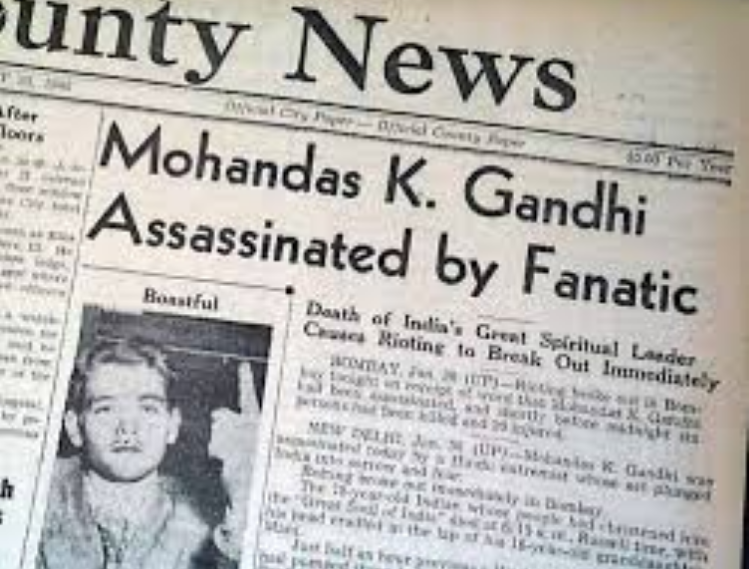
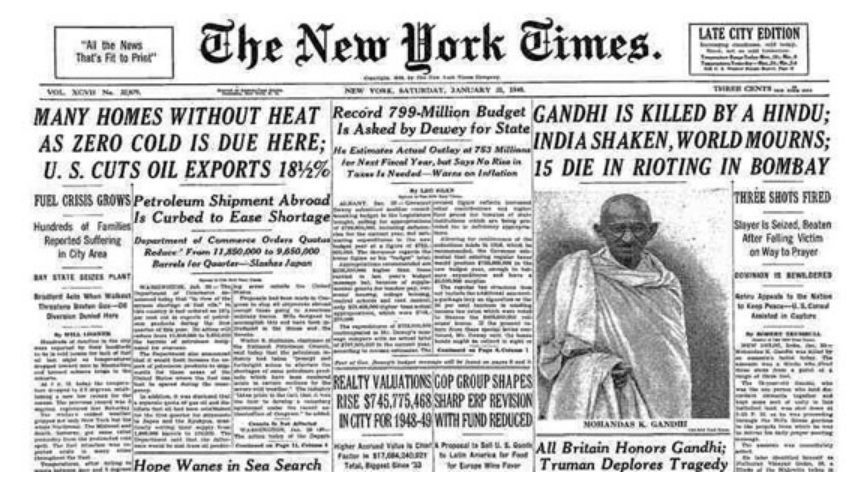
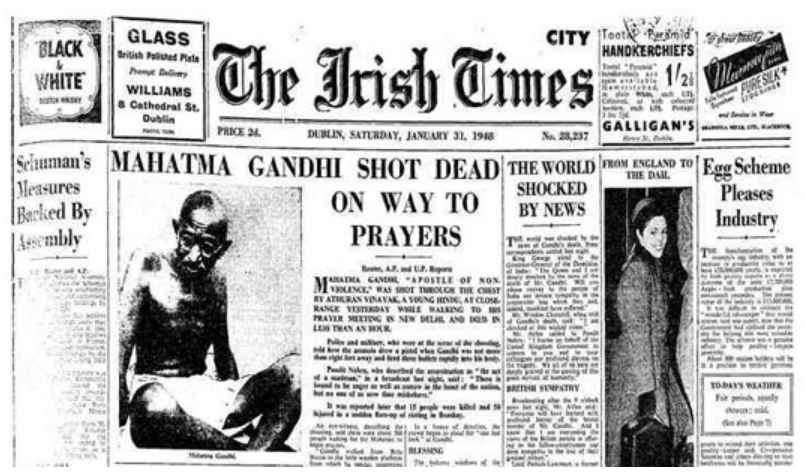
If we want to write about Gandhi’s assassination in a way worthy of its seriousness, we have to resist the easy move: condemning violence in the abstract while quietly accepting the world violence produces. The harder move is to ask what our institutions, our media ecosystems, and our communities are being trained to tolerate—and then to build practices that interrupt that training. Noncooperation, now, might look like refusing dehumanizing hierarchies of grief; making truth harder to suppress through documentation and community storytelling; building legal and care infrastructures that keep people from being isolated into silence; organizing boycotts, divestment, labor action, and principled noncompliance with strategies that are collective rather than performative. It is not a single gesture. It is a long practice of withdrawing legitimacy from cruelty—until cruelty becomes politically expensive again.
Gandhi’s assassination was meant to teach a lesson: that a different politics could be ended with bullets. The only adequate response is to make sure the opposite lesson survives—that movements can refuse domination without inheriting domination’s soul, and that “realism” does not have to mean surrendering our moral imagination to the logic of fear.
Q&A
What is political violence—beyond “terrorism” or “riots”?
Political violence is any organized infliction (or strategic tolerance) of harm intended to shape power: who belongs, who speaks, who governs, what futures are permitted. It includes assassinations and mob attacks, but also state repression, collective punishment, and policies that predictably produce mass suffering while being justified as “security” or “order.”