
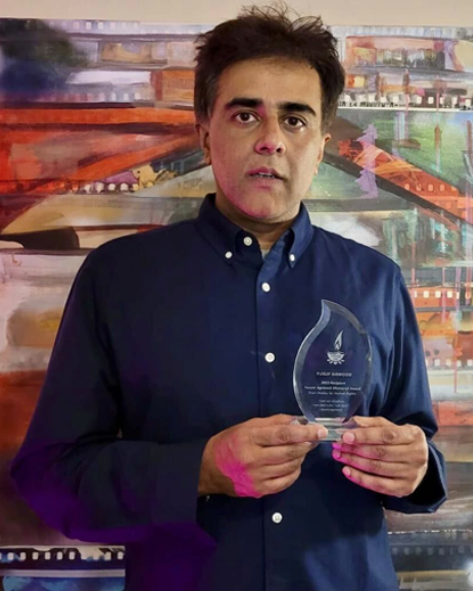
Yusuf Dawood
On 23 February 2002, Muslims in Gujarat marked Eid al-Adha. It is a festival rooted in the story of the
Prophet Abraham and his son Ishmael — a story not of triumph, but of obedience, restraint and mercy.
Abraham’s willingness to sacrifice is ultimately answered not with blood, but with divine compassion. The
lesson is clear: faith must be tempered by conscience. Power must bow to moral limits.
For three days, homes were open. Food was shared. Prayers were offered. Children wore new clothes.
Neighbours exchanged greetings of peace. Then, on 28 February, parts of Gujarat were engulfed in
organised violence.
More than a thousand people were killed, the majority Muslim. Women were subjected to unspeakable
brutality. Entire neighbourhoods were burned. Tens of thousands were displaced. At the time, Gujarat’s
Chief Minister was Narendra Modi. In 2005, the United States denied him a visa under legislation
concerning religious freedom — an extraordinary diplomatic rebuke. India’s Supreme Court has not
convicted him of wrongdoing, and he has consistently denied culpability. Yet the events of 2002 have never
fully receded from international scrutiny, resurfacing in inquiries, human rights reports and a recent
documentary by the BBC, The Modi Question.
Former police officer Sanjiv Bhatt alleged that senior officials were forewarned about possible reprisals
after the Godhra incident and alleged that Mr Modi told officials that Hindus should be allowed to vent their
anger against Muslims.
Still, the most haunting fact is the calendar. Eid on February 23. Pogrom on February 28.
CELEBRATION, THEN FIRE.
The proximity matters. Festivals are moments of visibility and belonging. When violence erupts immediately
after such a gathering, it transforms joy into vulnerability. It tells a minority community that even its holiest
days offer no insulation from political rage.
That is why this anniversary cannot be treated as routine and in 2026, due to the observance of religious
festivals using the lunar calendar the anniversary this year will fall on May 31st not February 28th.
The ideology often described as Hindutva frames India as fundamentally a Hindu civilisational state. Its
defenders see cultural affirmation. Its critics see the risk of majoritarian dominance. Wherever politics
begins to define citizenship through religious hierarchy rather than constitutional equality, minorities listen
differently. They measure not just laws, but tone. Not just policy, but atmosphere.
PAST SCARS FUTURE WARNINGS
This is not solely India’s challenge. In 2022, unrest in Leicester demonstrated how quickly identity politics
abroad can reverberate within diaspora communities. Social media collapses distance. Narratives harden.
Grievance travels. In the UK, the Dawood family still await repatriation of the remains of their family
members who were killed whilst on holiday reflecting the deeply punitive manner in which the Indian
authorities weaponised grief against British citizens.
February 28 stands as a reminder of how fast coexistence can fracture when leaders promote hate and fail
to cool anger or when institutions falter under pressure. Democracies survive not by satisfying majorities,
but by protecting minorities at their most exposed.
Eid al-Adha commemorates a moment when sacrifice was halted — when restraint prevailed over
destruction. Five days after Eid in 2002, restraint failed. That contrast is the moral weight of this
anniversary. Dates matter because they compress lessons into memory. This anniversary is not only about
Gujarat. It is about the enduring obligation of every plural society: that no community should celebrate its
faith in peace and, days later, fear for its survival.
About the Author
Yusuf Dawood is a British Muslim artist, commentator and human rights advocate who has written and spoken extensively on questions of religious freedom, pluralism, and the responsibilities of democratic societies in moments of communal fracture. He frequently works alongside his nephew, Dawood, and the two often advocate together — speaking publicly and consistently for justice, dignity, and accountability across communities, especially where communal violence and political hate seek to harden the boundaries of belonging.
Yusuf and Imran were 2023 recipients of the Swami Agnivesh Memorial Award (SAMA) from Hindus for Human Rights. The award honors individuals who embody the fearless moral clarity and interfaith courage of the late Swami Agnivesh — a Hindu monk and activist who stood against caste oppression, communal hatred, and majoritarian violence throughout his life.