Lighting the Journey: Celebrating Migrants at Diwali in Philadelphia
Lighting the Journey: Celebrating Migrants at Diwali in Philadelphia
This weekend Hindus for Human Rights – Philadelphia chapter joined the Unitarian Society of Germantown for a Diwali celebration on the theme “Keeping Alive the Spirit of Jihaji.” The evening brought together a diverse community to honor the resilience and faith of migrants — those who have crossed oceans and borders in search of freedom, dignity, and light.
The program featured Dr. Ramya Vijaya, HfHR board member and economics professor, whose remarks traced Diwali’s meaning through the lens of migration and struggle.
She began by thanking the organizers:
“Thank you so much, Andrea, for inviting me back here. I was here just a couple of months ago to give an introduction to our organization, Hindus for Human Rights. I might have met some of you at that time.”
Ramya described HfHR’s mission:
“We advocate for pluralism and civil and human rights in South Asia and North America, with the firm belief that the most important application of faith is to uphold social justice. We provide a Hindu voice of resistance to caste, Hindu nationalism, racism, and all forms of bigotry and oppression.”
She reminded the audience that Diwali’s meanings are multiple:
“Diwali has many different origin stories, one of which you heard here today, the story of the victory of the Hindu god Rama over Ramana. But Diwali also transcends religious and regional boundaries in South Asia and is celebrated through diverse perspectives. Sikhs, for example, celebrate Diwali as Bunddi Chore, the day of liberation, to commemorate the liberation of their revered saints from imprisonment. Many communities in India celebrate Diwali as a celebration of their resilience against the evil of caste oppression.”
and connected this shared symbolism of light to the story of the Indo-Caribbean diaspora:
“Today with our theme, keeping alive the spirit of Jihaji, we celebrate yet another Diwali origin story, the story of Diwali in the Indo-Caribbean diaspora. Andrea and I were discussing how could we possibly celebrate a festival of light? How could we hold on to the hope of light in such dark times? And I don’t have to tell you there’s many ways in which darkness and oppression envelopes us today. But in the story of the Indo-Caribbean diaspora, we found abundant inspiration from people who held on to light during the darkest of times.”
She recounted the history of those migrants:
“Indian migrants came to the Caribbean primarily as plantation workers to replace slave labor after the abolishment of slavery by the British in the 1830s. British colonial recruiters often used false pretenses to sign up villagers in India for extended contracts. Many signed on since their traditional livelihoods had already been destroyed by the switch from growing food crops to cash crops like opium and indigo imposed on them by the early capitalist expansion of the British East India Company.”
“Once contracted, the new migrants faced a perilous voyage on the jihad or the ships across the dreaded Kalapani or the dark waters of the ocean. Many of the farmers from hinterlands had no experience with and in fact had grown up with religious and cultural taboos against crossing the oceans. Those who survived that dark journey encountered harsh, often abusive conditions on plantations. They were also separated from their families and all cultural and community ties and support.”
Out of that suffering emerged a shared light:
“Many of the jihadis, those who survived the journey of the ship, persevered through the darkest times and settled permanently, creating the large Indo-Caribbean communities and shaping the region’s demographics and culture. They had originally come from different regions, languages, and castes of India. Yet in the jihad, the ships of terror and the cane fields, caste distinctions faded. The shared struggle for dignity and identity united. Remembering traditions like Diwali enabled them to maintain links to their cultural identities while also shaping new syncratic ones — a reminder that no matter one’s background or caste, every person has the divine light within.”
Bringing her reflection to the present, Dr. Vijaya said:
“It is this story of migrant perseverance that we hope we can be inspired by and celebrate today as migrants are tarnished and their humanity stripped from them in yet another phase of exploitative capitalism. So today, as Elia Diaz, we invite all of you to remember and share stories of migrant ancestors and be inspired by the light of their resilience. I now invite some others among us to share their own stories of immigrants and their families.”
Her words reminded everyone that Diwali’s light shines most brightly when it honors those who have struggled for dignity and belonging — from the ships that crossed the Kalapani to the borders of today.
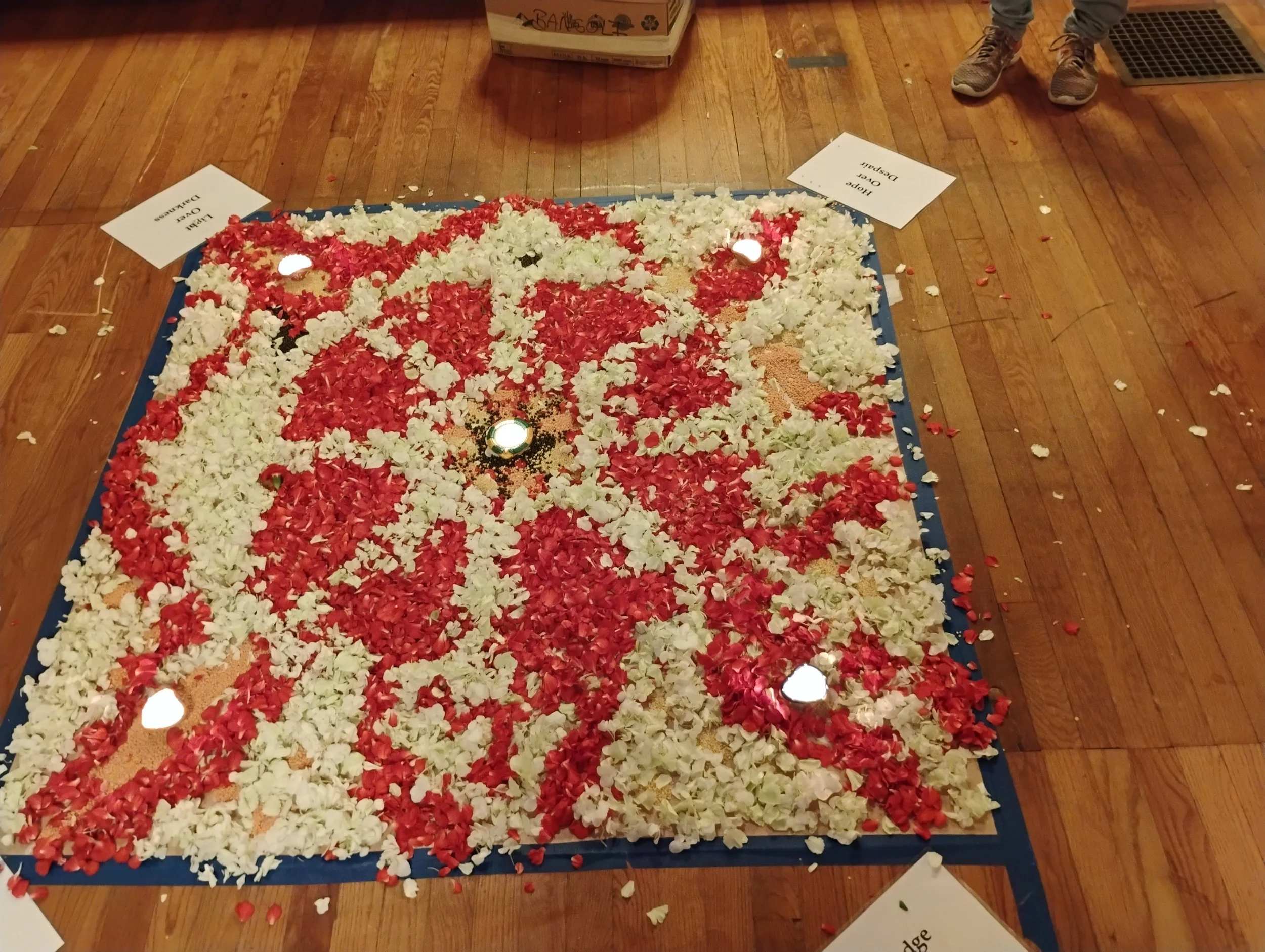
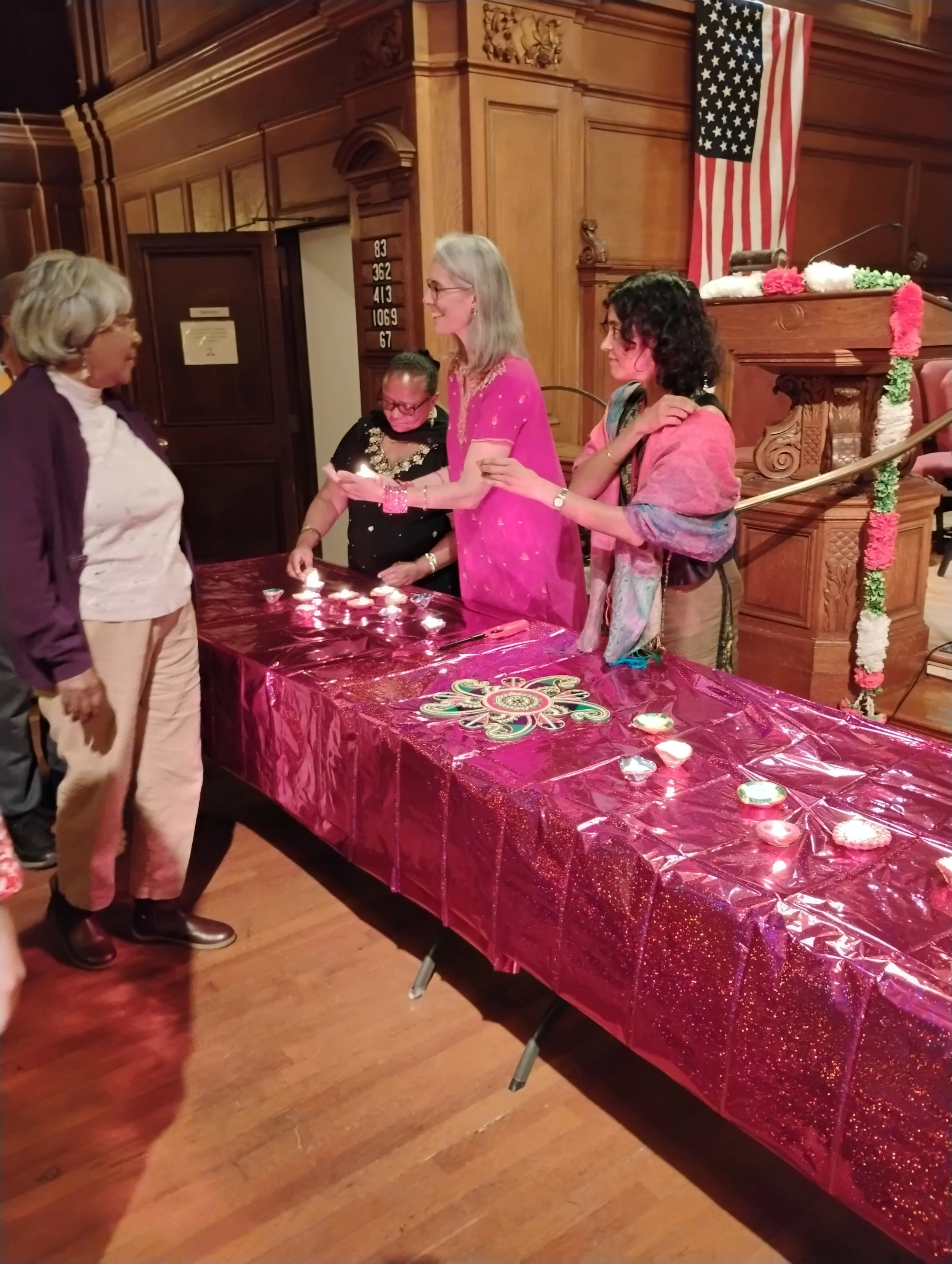
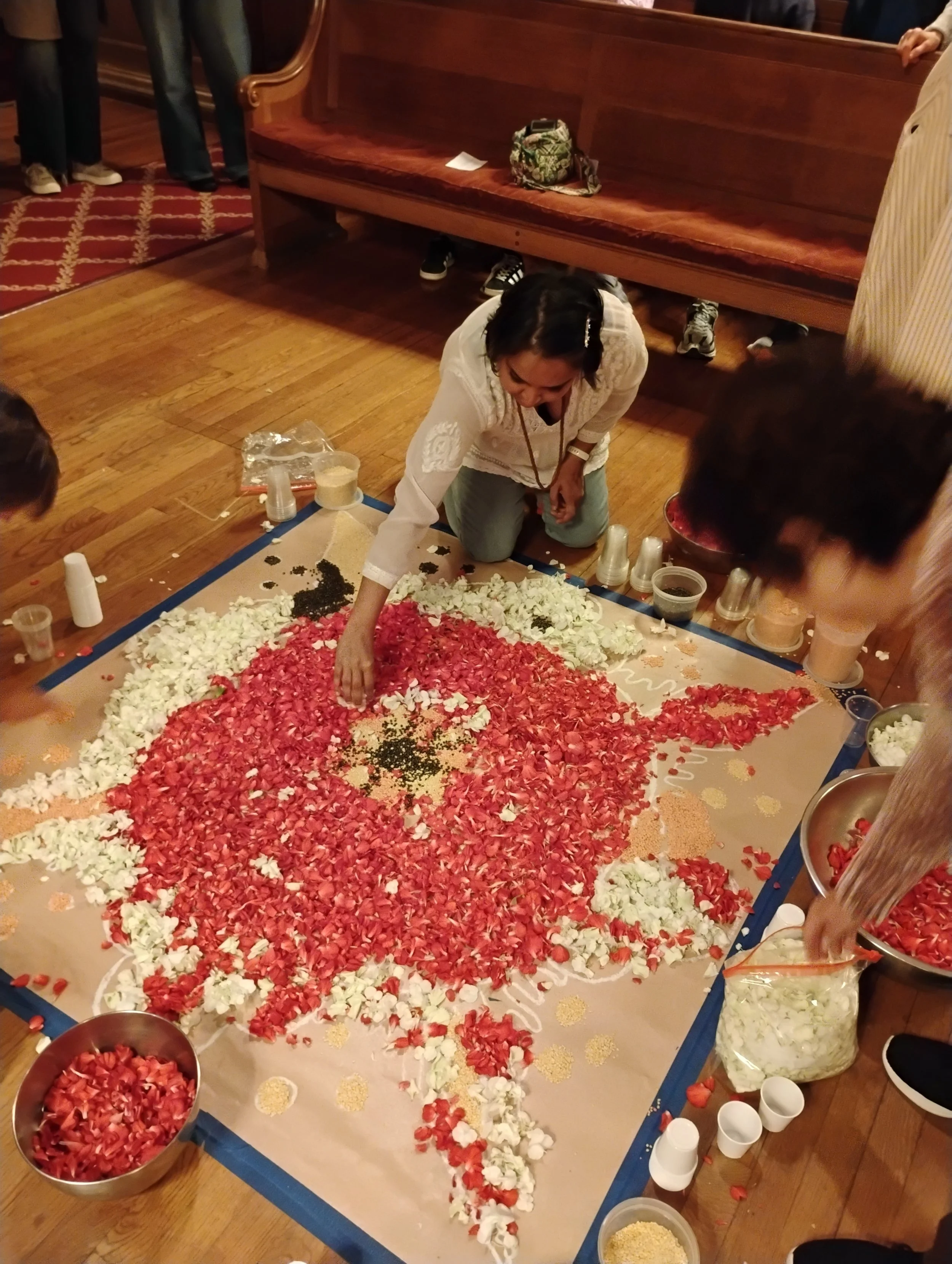
The evening concluded with shared stories, song, and the warm glow of diyas lit in remembrance of migrant ancestors. It was a Diwali that truly lived up to its name: a festival of light born from perseverance, unity, and hope.