
Remembering Reverend Jesse Jackson (1941-2026)
Today, Hindus for Human Rights joins millions of others from around the world in mourning the loss of Reverend Jesse Louis Jackson. A vital force within the American Civil Rights Movement, Reverend Jackson's commitment to our values of peace, justice, and truth shown through in his leadership, work, and desire to make positive change, and we know his spirit lives on in human rights work throughout the country.
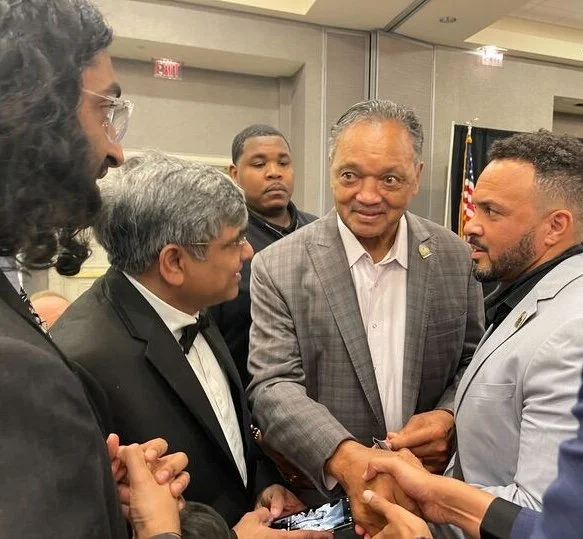
Hindus for Human Rights had the profound privilege of meeting Reverend Jackson during our early years as an organization in 2022. That encounter affirmed for us that struggles for justice are deeply interconnected – across race, faith, and geography. Since our founding, we have shown up each year for the annual commemoration of Selma’s Bloody Sunday – March 7th, 1965 – when more than 500 African Americans peacefully demanding their right to vote were met with brutal police violence.
For us, Selma is not simply a historical market; it is a moral summons. Reverend Jackson’s lifelong presence in that legacy strengthened our own commitment to stand in solidarity with Black communities and all those whose rights were denied. We carry a cherished photo from that early meeting as a reminder of the responsibility he modeled: to build bridges where others build walls.
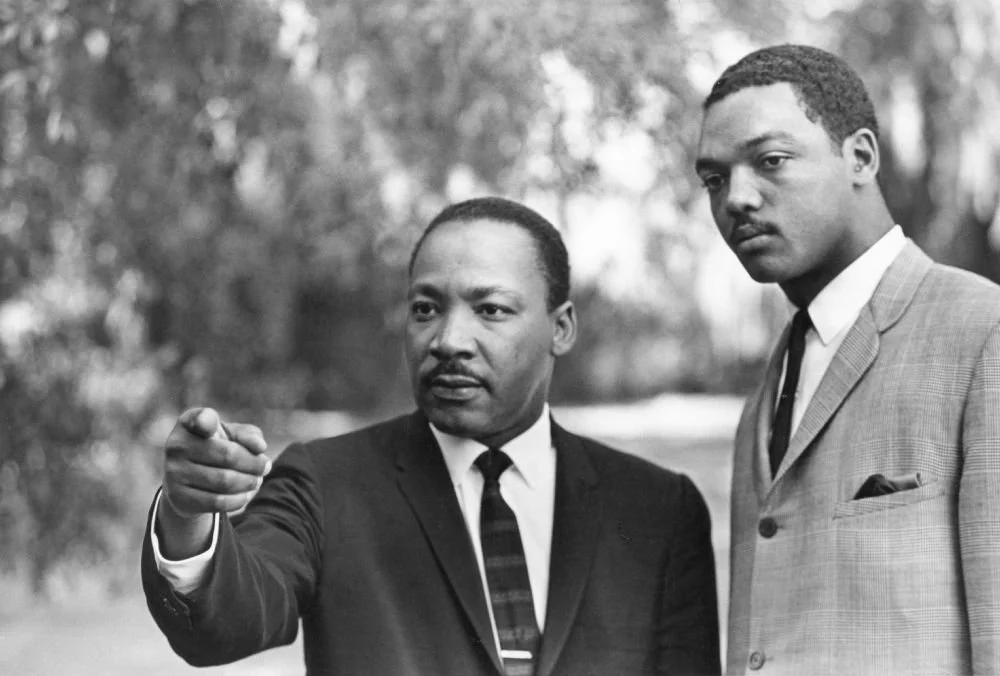
Jesse Jackson became involved with human rights activism like many of us do – by attending a protest on our college campuses. Yet Jackson held a charisma, ambition, easygoing nature, and razor sharp mind, quickly positioning him as a protege of leaders such as Dr. Martin Luther King and James Bevel.
They personally selected Jackson to run the economic arm of the Southern Christian Leadership Conference (SCLC), Operation Breadbasket, which was dedicated to improving the economic conditions of Black Americans nationwide. Operation Breadbasket flourished under Jackson’s guidance, becoming a leading resource for Black Americans to seek economic and financial resources.
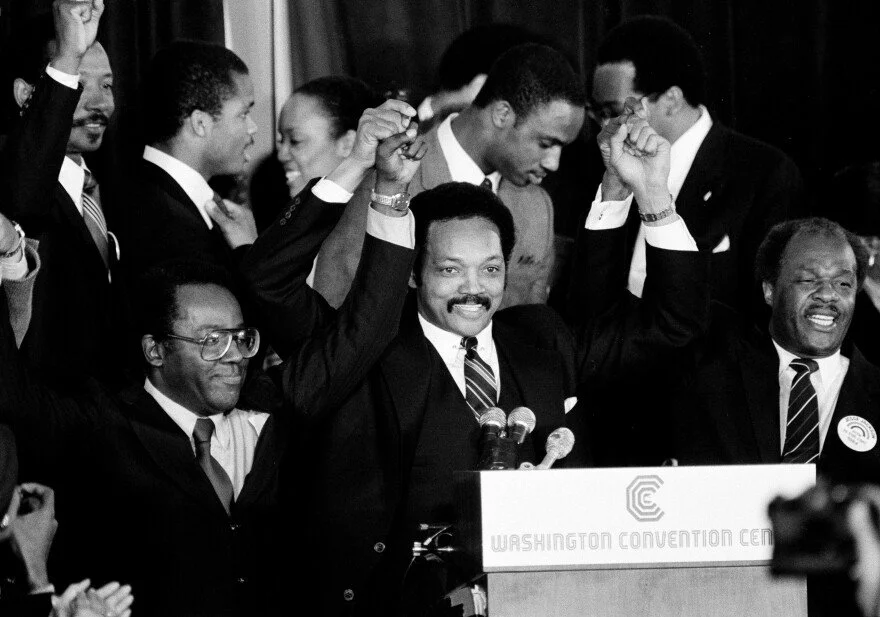
In the 1970s and 1980s, Jackson turned his gaze towards Washington, his mind still focused on economic development. He organized the Rainbow/PUSH Coalition, a nonprofit fighting for social justice, civil rights, and political activism. In 1983, Jackson became the first African-American man since Reconstruction to address a joint session of the Alabama legislature, urging them to cast racial divides aside and focus on the real issue dividing Americans – economic disparities and unemployment.
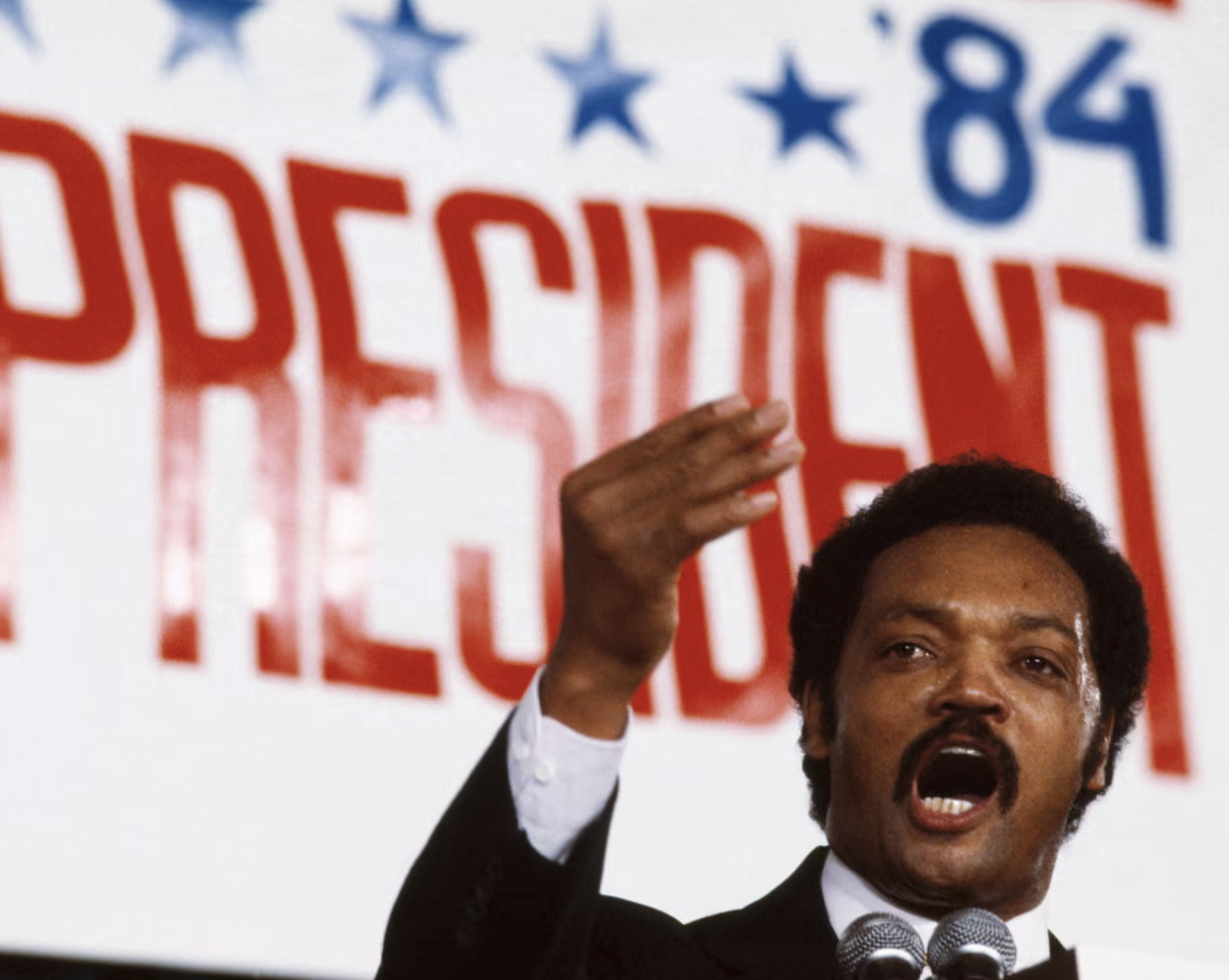
Just a few months later, he launched his presidential campaign, becoming only the second African-American (after Shirley Chisholm) to run a national campaign for presidency. He ran again in 1988, on a progressive platform of universal health care, cutting defense budget spending, ratifying the ERA, and banning discrimination against LGBTQ+ individuals in federal agencies.
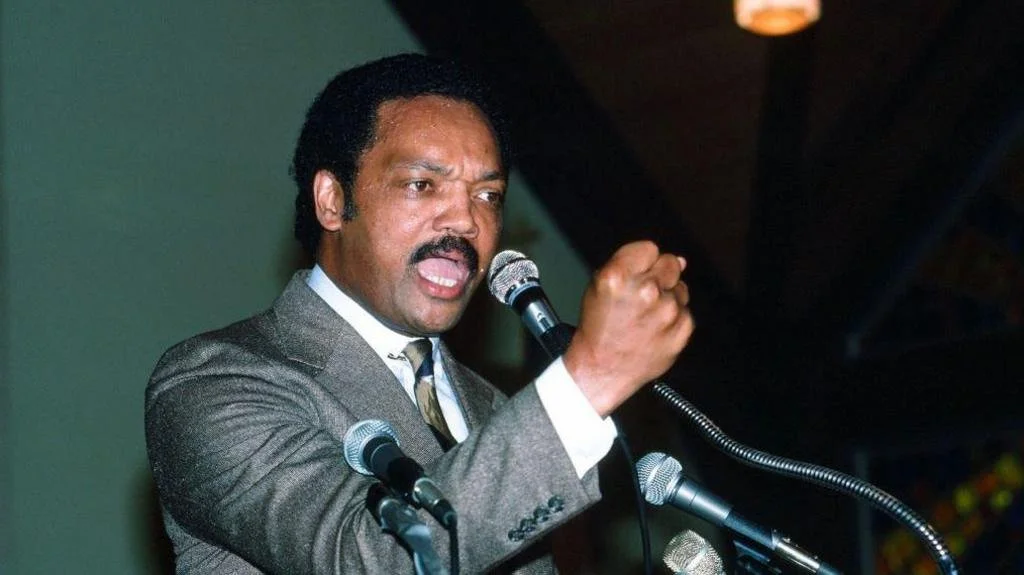
At the core of Jackson’s message was a profound reframing of America’s moral crisis.
He insisted that economic inequality lay at the root of so many divisions; that racism, homophobia, and other forms of discrimination were sustained by structures that hoard opportunity and deny dignity.
By focusing on unemployment and economic exclusion, he made the struggle for justice concrete and collective. His message resonated across faiths, across communities, across political divides – because it named a truth too often avoided.
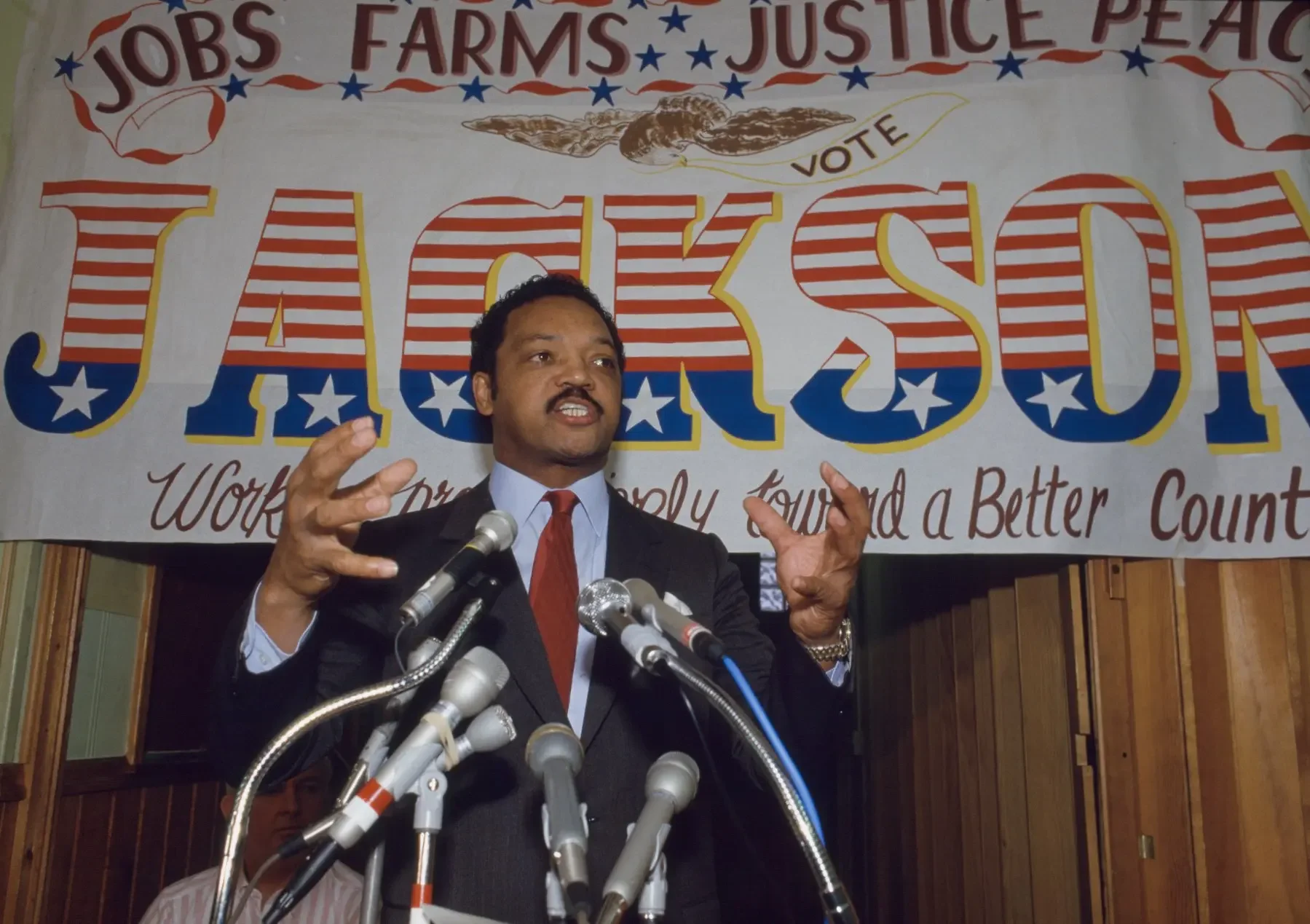
Jesse Jackson will be remembered as a beacon of hope;
a relentlessly ambitious advocate and a believer in the unfinished promise of America. From segregated Greenville, South Carolina to the national stage, he refused to narrow his vision of who belonged. His life reminds us that solidarity is not symbolic – it is a sustained presence.
As Hindus committed to human rights, we draw strength from this example. The arc of justice does not bend on its own; it bends because people like Reverend Jackson – and those who follow – refuse to let go.
Rest in power.