
Tariffs, Helicopters, and Humiliation: What Trump’s Modi Remarks Reveal
Donald Trump gave us a very clear picture this week of how he wants Americans to think about India—and it’s not “shared democratic values,” “people-to-people ties,” or even “strategic partnership.” It’s dominance.
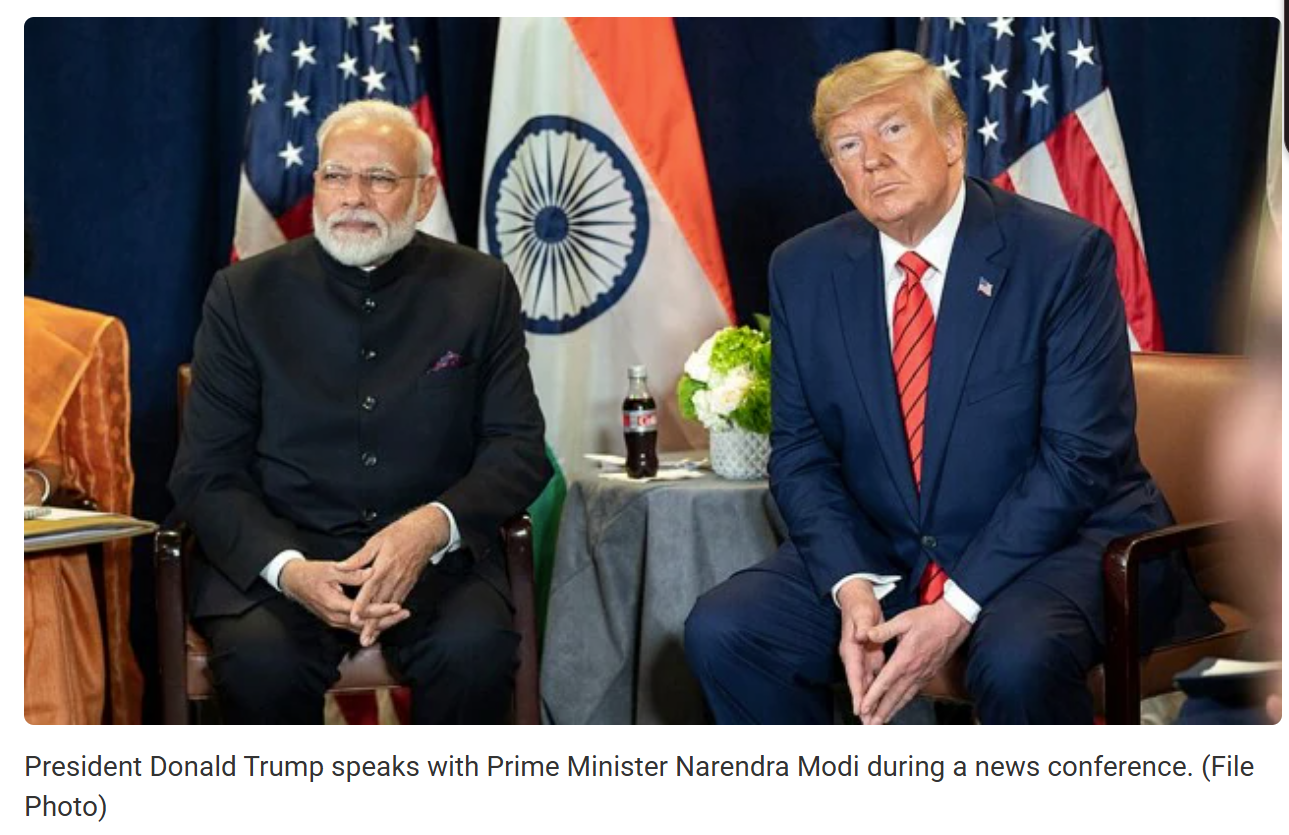
On January 5, 2026, talking to reporters on Air Force One, Trump praised Prime Minister Narendra Modi as “a good guy,” and then immediately reframed the relationship as something Modi needed to manage around Trump’s personal approval: it was “important to make me happy,” Trump said, because the U.S. can “raise tariffs… very quickly.”
On January 6, 2026, speaking at the House GOP Member Retreat, Trump doubled down on the same story—only more theatrical. He claimed Modi came to him asking, “Sir, may I see you please,” and then added that Modi is “not that happy with me” because India is “paying a lot of tariffs” tied to Russian oil purchases.
We’re not interested in treating this as gossip or “just Trump being Trump.” These comments matter because they show how easily a relationship that affects more than 1.4 billion people can be reduced to a reality-TV power play—tariffs as punishment, flattery as currency, and human rights as the first thing thrown off the boat.
This isn’t only a clash of personalities. It’s a model of politics—strongman competition—that treats trade and migration as weapons and turns diplomacy into humiliation theater. The cost tends to move downward: onto workers, migrants, minorities, and families.
via Indian Express
What Trump actually did: turn a complex relationship into a loyalty test
Let’s name the pattern.
Trump isn’t talking about India as a place with workers, farmers, students, journalists, or minorities who deserve protection and dignity. He’s talking about India as a lever in his own performance of power: Who’s in trouble with me? Who’s trying to please me? Who’s paying a price?
In the Air Force One remarks, Trump tied tariffs to India’s oil trade with Russia and framed India’s choices as a response to his displeasure. In the retreat speech, he personalized it further—Modi as the person coming to seek an audience, Modi as the person who must be unhappy now that the tariffs are high.
This isn’t just undignified. It’s dangerous, because it normalizes the idea that international relationships should run on humiliation and coercion rather than law, rights, and accountability.
And it’s not hypothetical. Reuters reported Trump has already doubled import tariffs on Indian goods to 50% (as punishment connected to Russian oil purchasing), and that analysts describe the tariff structure as including a portion tied specifically to Russian crude. The Indian Express summarized the tariff setup as 50% total, with 25% described as a reciprocal levy and 25% tied to purchases of Russian oil.
When leaders play hardball on TV, real people absorb the consequences—especially workers in export-heavy industries, families facing price shocks, and communities that already live with economic precarity.
Here’s the part diaspora progressives recognize immediately
Trump’s remarks about Modi don’t function as ordinary diplomacy so much as a familiar genre in today’s global politics: strongman competition. It’s a contest over status and dominance—who gets to appear as the decisive “protector,” who sets the terms, who gets framed as conceding ground. The narrative is masculinist and dated, but it has returned to the center of international life with surprising force: policy becomes secondary to performance, and entire populations become props in a story about “great men.”
This dynamic lands in distinct ways across the Indian diaspora—and not only as symbolism. Diaspora communities understand, almost instinctively, that when leaders turn international relations into a dominance ritual, someone else pays: prices shift, contracts get canceled, uncertainty spreads through supply chains, and the costs migrate downward to exporters, workers, and small businesses. In other words, this is not just a clash of egos; it is “punish the economy to punish the government,” and everyone can predict who pays. Not presidents and prime ministers—shop owners, factory workers, farmers tied to exports, and households dealing with higher costs and uncertainty.
Many diaspora progressives will read the spectacle as a kind of exposure—less “justice” than revelation. If Modi’s political brand has been marketed internationally as strength and inevitability, there is a bitter clarity in seeing that brand treated as disposable within Trump’s own hierarchy. It underscores a core problem with strongman politics: the currency is dominance, and dominance always requires a target. When the goal is to appear powerful, there is no stable endpoint—only the next opportunity to demonstrate who can coerce whom, and whose economy can be made to flinch.
For sections of the diaspora that support Modi, Trump’s tone can register as a provocation. The same “strength” aesthetic celebrated in India—often alongside minimization of how that strength is exercised against minorities, dissenters, journalists, and civil society—can feel intolerable when the hierarchy flips internationally and Modi is positioned as the one being spoken down to. That reversal is instructive: it shows how quickly the language of pride and national dignity becomes entwined with a preference for hierarchy, rather than a commitment to rights—and how quickly “strength” talk becomes detached from the real question of who bears its costs.
The broader risk is that this style of politics normalizes a framework where relationships between states are managed through public humiliation, transactional loyalty, and punitive leverage, while human rights are treated as peripheral. Trump can call Modi “a good guy” and still reinforce a corrosive model of governance: personal loyalty over institutions, spectacle over accountability, punishment over persuasion. The effect is not simply rhetorical. It shifts what counts as “success” in foreign policy—from measurable improvements in safety and freedom to the optics of dominance—and that is precisely the terrain on which rights are most easily abandoned, while exporters, workers, and ordinary families are left carrying the bill.
The human rights cost of “transactional friendship”
There’s another reason this moment lands differently from an Indian diasporic perspective: when Washington treats India primarily as (a) a market for weapons or (b) a pawn in great-power competition, human rights become easy to downgrade into “noise.” But the human rights situation is not background noise. Human Rights Watch has warned about the high cost of dissent in India, including the misuse of broad laws that fall heavily on critics and minorities, and Freedom House continues to rate India “Partly Free.” These are mainstream, documented concerns—not niche talking points.
CBS News
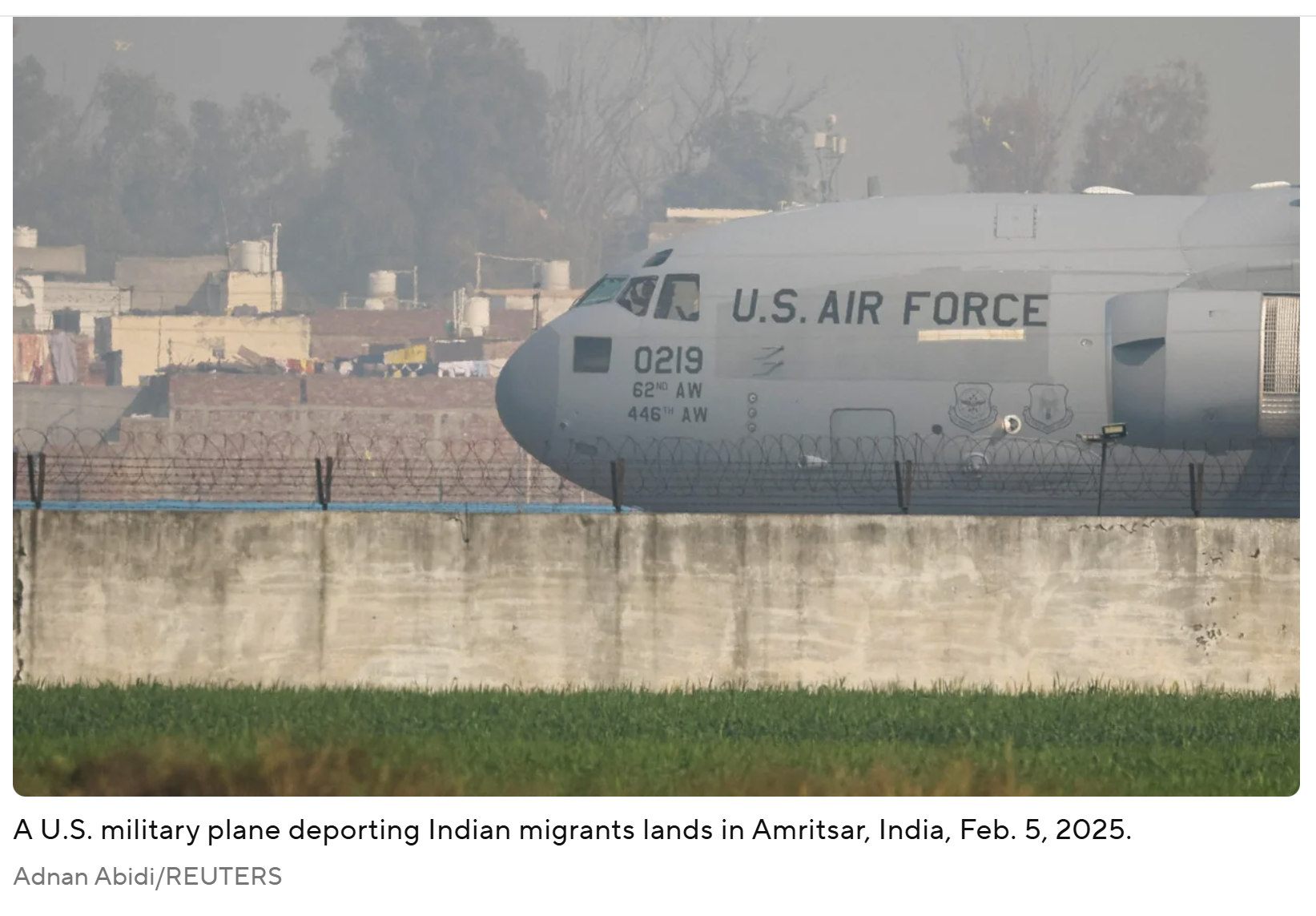
And it’s not just abstract. People are bearing the cost right now, in ways that don’t make it into the strongman storyline. We’ve already seen reports of Indian undocumented migrants deported from the U.S. in handcuffs and leg chains—a spectacle of state power that should have triggered sustained diplomatic pressure, not a shrug. We’ve also seen “third-country” deportation tactics, where deportees—including Indians—were sent to places like Panama and held in hotel rooms under guard, with limited freedom of movement, prompting legal challenges and judicial pushback in the U.S.
At the same time, Trump’s posture on India and immigration has sharpened pressure on Indian tech workers and families. Visa backlogs and policy churn have left some workers effectively stranded on either side of the border—unable to return to jobs, or unable to travel without risking their status—while employers scramble with restrictive stopgaps. And the climate around this has fed a measurable rise in anti-Indian hate online and offline: the Center for the Study of Organized Hate (CSOH) has documented surges in anti-Indian racism on X, while high-profile far-right attacks have mainstreamed slurs like “jeet,” and campaigns like “Operation Clog the Toilet” explicitly targeted Indian H-1B workers’ ability to travel.
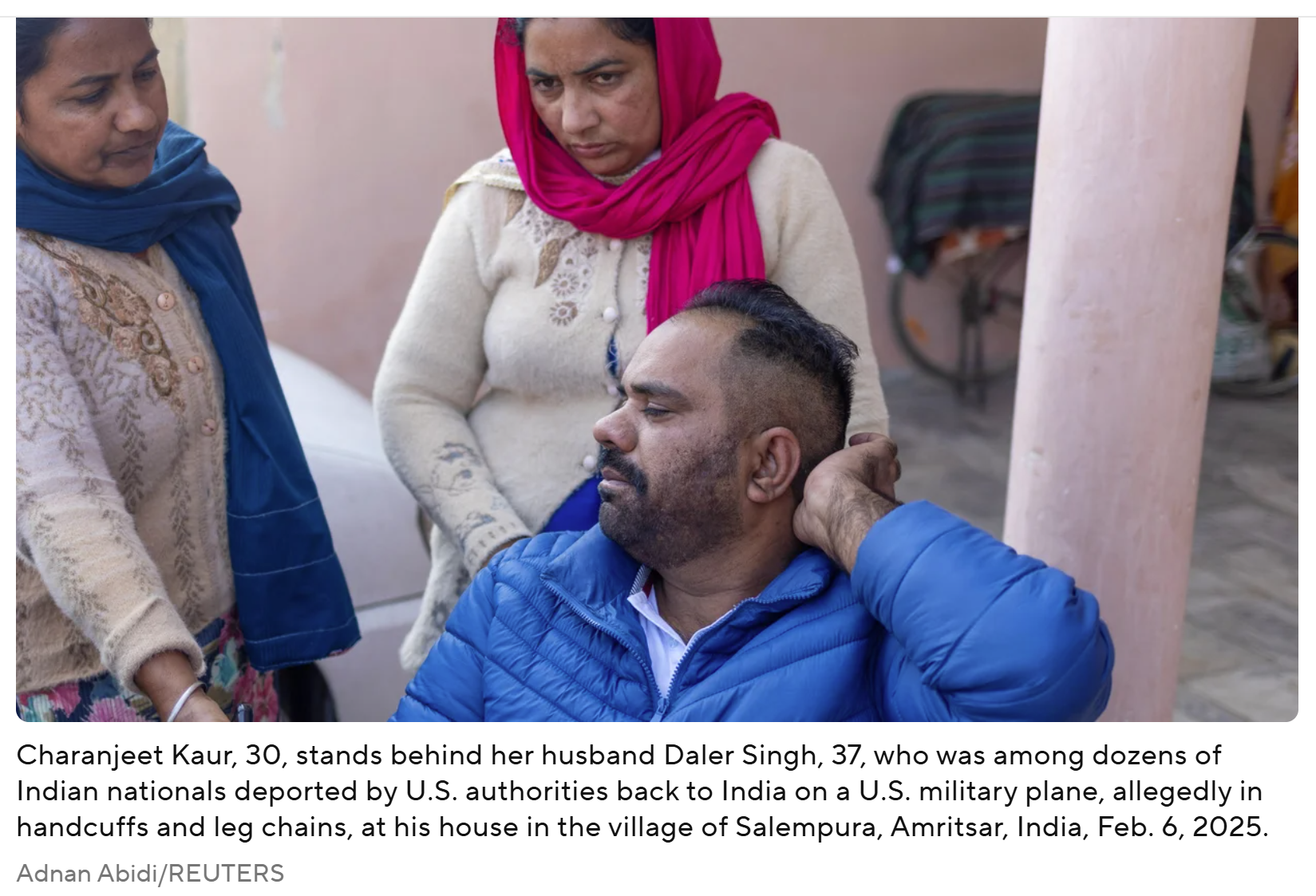
So when Trump turns the U.S.–India relationship into a dominance ritual—tariffs up, tariffs down; access granted, access denied—the conversation that gets crowded out is the one that matters most: Are people safer? Are minorities protected? Can journalists report? Can civil society breathe? And just as crucially: who is being sacrificed so two leaders can look “tough”? In this standoff, the real victims are often Indian families on both sides of the border who placed their faith in these strongman narratives—and are now paying the price.
That’s not “anti-India.” It’s pro-democracy, pro-people, and pro-rights—consistently, not only when it flatters whoever is in power.
.
About the Russia-oil piece: what’s real, what’s claimed, and what’s at stake
Trump is using India’s purchases of Russian oil as the headline justification for trade punishment.
We can hold two truths at once: Russia’s war economy is propped up in part by energy revenue, and countries’ purchase decisions matter. But we should also be clear that the energy priorities of the world’s most developed nations do not automatically take moral or political precedence over everyone else’s—especially when those same nations have long histories of climate and extraction policies that shifted costs onto the Global South. A rights-based approach has to reckon with uneven development, domestic energy needs, and the real distributional impacts of abrupt price shocks. That’s exactly why tariffs-as-shaming is not a serious human rights policy: when it’s delivered as a personalized punishment ritual, it treats entire populations as collateral while sidestepping the harder work of coordinated, transparent strategies that reduce war financing without reproducing global hierarchies.
Trump claimed India has reduced Russian oil purchases. Separately, Reuters reported that India’s imports of Russian oil may drop sharply in January 2026, after Reliance said it isn’t expecting Russian crude deliveries that month. That’s a concrete development—but it still doesn’t justify turning diplomacy into a public hazing ritual.
We should be skeptical of any approach that uses “humanitarian” or “anti-war” language as cover for ego-driven economic coercion—because the human rights results tend to be accidental, not designed.
Two Leaders And Two Political Machines That Thrive On Spectacle And “Strength”
What all of this reveals is a shared architecture: two leaders and two political machines that thrive on spectacle, hierarchy, and the promise of “strength,” even when the costs are pushed onto ordinary people. Trump’s language turns diplomacy into a dominance ritual; Modi’s brand of authority has long leaned on a similar aesthetic at home. When those logics collide, it doesn’t produce clarity or peace—it produces policy-by-posture: tariff threats that ricochet into prices and jobs, immigration moves that strand families and workers, and a public atmosphere that makes racism feel licensed.
For the Indian diaspora, that’s the hard moral test. We are close enough to feel the consequences and influential enough to shape the narrative. If we accept a world where leaders “win” by humiliating each other, we also accept a world where rights become conditional—for migrants in chains, for workers caught in trade crossfire, for students and journalists facing repression, for minorities made into bargaining chips, and for diaspora communities targeted by hate when politics becomes punishment.
A better U.S.–India relationship—one worthy of the word partnership—would be boring in the right ways: less swagger, more rules; less ego, more institutions; less coercion, more accountability. It would measure success by whether people are safer and freer, not by who looked dominant on camera. And it would insist on the same democratic baseline everywhere: pluralism, civil liberties, and minority rights are not side issues to be traded away for a short-term show of force.
Note: This article embeds a range of clips and posts from Indian media outlets, TV stations, and independent YouTubers to reflect the diversity and context of current coverage; inclusion is for illustration and media-landscape reference only and does not imply endorsement of any views expressed.
FAQ: Trump Modi Remarks, U.S. Tariffs On India, Russian Oil, H-1B, And Anti-Indian Hate
What Did Trump Say About Modi And India This Week?
Trump framed Modi and India through a dominance lens—presenting U.S.–India relations as something managed through personal approval, public pressure, and consequences. The underlying message wasn’t “partnership,” but leverage: who sets terms, who gets treated as subordinate, and who pays when they don’t comply.
Why Are There U.S. Tariffs On India Right Now?
Trump has linked U.S. tariffs on India to India’s purchases of Russian oil, using tariffs as a pressure tool. Whatever the stated rationale, tariffs are a blunt instrument: they create uncertainty quickly and can trigger cascading effects through trade relationships.
How Do U.S. Tariffs On India Affect Indian Exports And Jobs?
Tariffs raise the cost of Indian goods entering the U.S. market, which can reduce demand, cancel contracts, and squeeze margins. That pressure often moves down the supply chain—impacting exporters, smaller suppliers, and workers before it meaningfully impacts political leaders.
How Could U.S. Tariffs On India Affect Indian Americans And The Indian Diaspora?
Diaspora communities are part of the connective tissue of US–India relations. Trade shocks can hit diaspora-run businesses, import/export networks, and family finances. Just as importantly, tariff showdowns can harden identity politics in diaspora spaces—turning “pride” into a loyalty test and crowding out serious conversations about rights and democratic norms.
Why Is Russian Oil Linked To India Tariffs?
Russia’s war economy benefits from energy revenue, and countries’ energy purchases matter. But using tariffs as public punishment isn’t the same as building effective, equitable policy. A serious approach would include coordinated strategies that reduce war financing while also addressing uneven development, energy constraints, price stability, and transition support—so ordinary people aren’t treated as collateral.
What Does This Mean For US–India Relations Long-Term?
When leaders conduct US–India relations as a dominance contest, institutions and norms weaken. The relationship becomes more volatile—less predictable for businesses and families, and less able to address shared challenges like climate, migration, and regional stability. It also makes it easier for human rights to be treated as “optional” or “inconvenient.”
Why Are Human Rights Groups Mentioned In A Post About Trump Modi Remarks?
Because the stakes aren’t just tone; they’re outcomes. When geopolitics becomes transactional—trade penalties, arms sales, access games—human rights often get sidelined. The questions that should remain central are: Are minorities protected? Can journalists report? Can civil society operate without fear? Is democracy expanding to include more people, not fewer?
What’s Happening With Indian Immigrants And Deportations?
Reports have described Indian undocumented migrants deported under visibly punitive conditions (including shackling), as well as third-country deportation tactics that can leave people effectively restricted or detained far from home. These practices raise basic questions of dignity, due process, and state violence—exactly the issues that get ignored when diplomacy becomes a strongman performance.
How Do H-1B Changes Affect Indian Tech Workers?
Policy shifts and enforcement uncertainty can strand Indian workers on either side of the border—unable to travel without risking status, unable to continue jobs, or trapped in long backlogs that shape life decisions for years. This isn’t just a labor-market story; it’s a family stability and rights story.
Is Anti-Indian Hate Rising—And Why Does This Climate Matter?
When leaders and political ecosystems normalize scapegoating and punishment politics, it can intensify a climate where anti-Indian racism spreads faster—online and offline. Slurs and harassment campaigns aren’t just “internet noise”; they shape what people feel permitted to say and do to Indian and South Asian communities, including migrants and visa workers. It is up to us to refuse loyalty-test politics. Ask who is paying for tariff shocks and immigration punishment. Challenge anti-Indian racism directly. And insist on a consistent democratic baseline: rights aren’t a reward for loyalty; they’re a constraint on power—at home in the diaspora, in Indi and across South Asia — and in the international order.