
Ugadi and the Grace of Being Humbled
Ugadi 2026: A Prayer for the New Year of Parabhava
Ugadi, the Telugu and Kannada New Year, begins today. And like every year, someone in the house has made Ugadi pachadi (chutney), that curious mix of sweet, bitter, sour, and spicy all in one bite. It's the whole point. This is what the year will hold. All of it. Together.
This year's name, Parabhava, roughly translates as being humbled, brought low, plans undone. Not the most cheerful name for a new year. I've been sitting with it, and there's something in it I am feeling drawn to. Some of the most important things I've learned came from exactly those kinds of moments.
So I'm stepping into this one with a little less need for certainty and a little more room for whatever comes.
Happy Ugadi to everyone celebrating.
Holy One
We come to this new year not knowing what it holds. And maybe that's the point.
We are grateful. For life. For breath. For the stubborn turning of time that keeps offering us another chance.
In the spirit of Ugadi, teach us to receive what comes. The sweet and the bitter. The expected and the things that catch us off guard. All of it. May we not turn away.
In this year of Parabhava, this year of being humbled, keep us from brittleness. When we stumble, hold us. When our careful plans fall apart, remind us that something we couldn't have planned is often taking root.
Give us the strength to grow through what we didn't choose. The honesty to learn from what we'd rather forget. And hearts that stay open, even when opening hurts.
May we journey this year with enough humility to keep learning. May we be kind and patient with one another and with ourselves. May something in how we live make this world a little more whole. (edited)
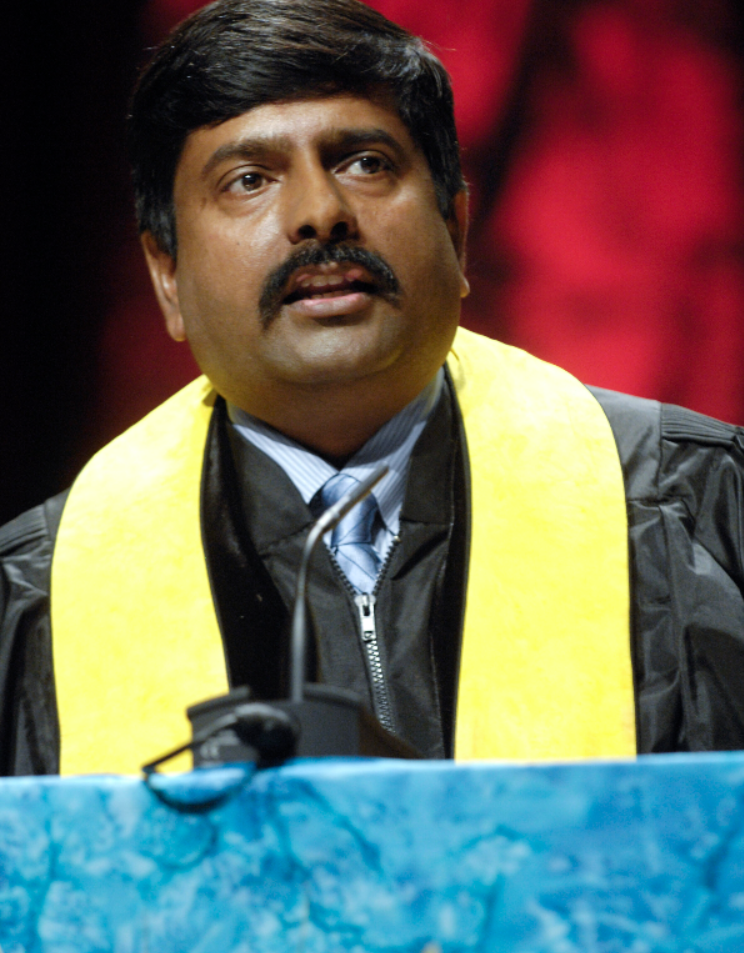
Rev. Abhi Janamanchi serves on the Hindus for Human Rights Advisory Board and is the senior minister of Cedar Lane Unitarian Universalist Church in Bethesda, Maryland. Born and raised in South India, he brings decades of interfaith, multicultural, and justice-centered leadership to his ministry, shaped by his Indian heritage, his Unitarian Universalist-Hindu faith, and his lifelong commitment to progressive religious life.