
Bangladesh Independence Day: Freedom, Memory, and the Unfinished Work of Justice
March 26 marks Bangladesh Independence Day—a moment of profound historical rupture, when a people asserted their right to language, dignity, and self-determination. It is a day of celebration, but also one that carries the weight of memory: of violence, displacement, and a struggle that reshaped South Asia.
To honor this day fully is to hold both truths at once—the birth of a nation and the trauma that accompanied it.
A War for Language, Identity, and Democracy
The origins of Bangladesh lie not only in 1971, but in decades of political and cultural marginalization. After the partition of British India in 1947, East Pakistan (now Bangladesh) was geographically and culturally distinct from West Pakistan, yet politically dominated by it.
The Bengali Language Movement of 1952 became an early flashpoint, asserting linguistic rights against attempts to impose Urdu as the sole national language. Over time, grievances deepened: economic disparities, political exclusion, and the denial of democratic mandates—most starkly after the 1970 elections, when Sheikh Mujibur Rahman’s party won a clear majority but was prevented from forming a government.
By March 1971, tensions had reached a breaking point.
1971: War and Atrocity
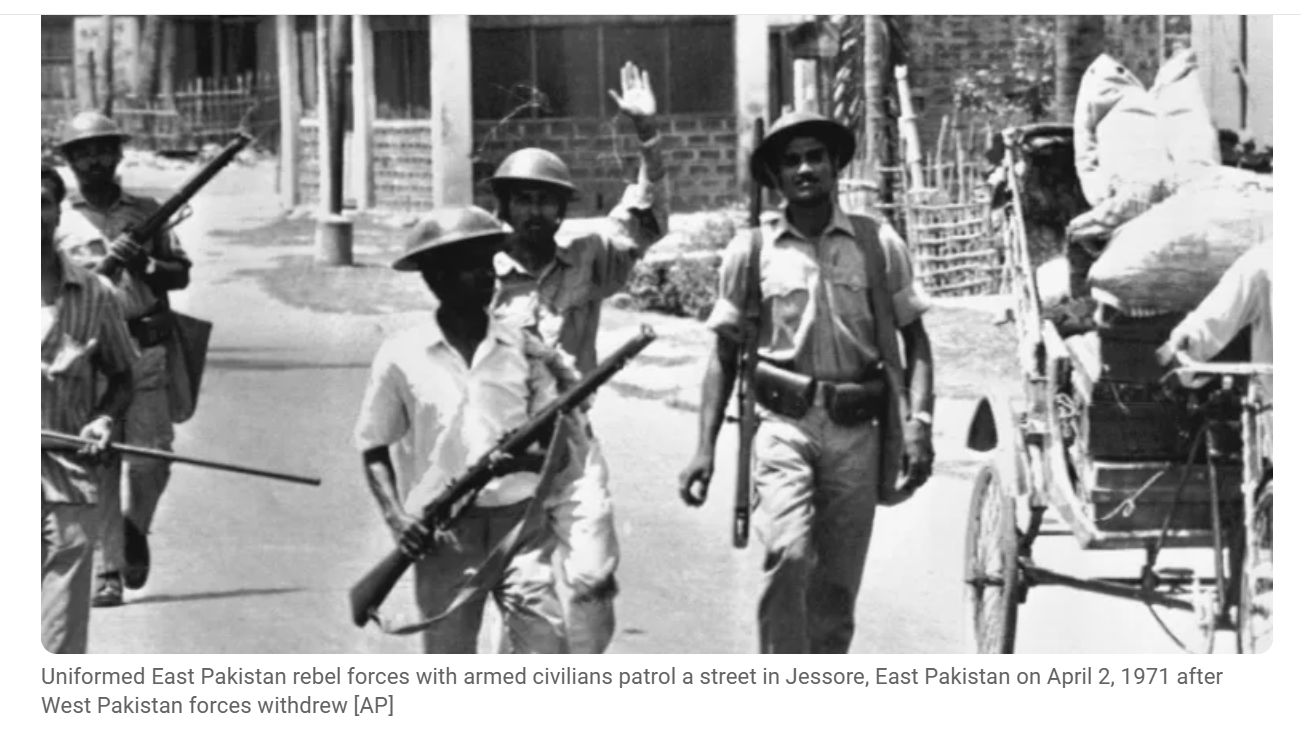
On the night of March 25, 1971, the Pakistani military launched Operation Searchlight, a brutal crackdown targeting students, intellectuals, political activists, and civilians in East Pakistan. What followed was a nine-month war that resulted in widespread violence, mass displacement, and the eventual creation of Bangladesh on December 16, 1971.
The scale and nature of the violence remain deeply contested but widely recognized as catastrophic. Estimates suggest that hundreds of thousands to millions were killed, and millions more were displaced, with approximately 10 million refugees fleeing to India.
A particularly painful dimension of this history is the systematic use of sexual violence. Bengali women were targeted in large numbers, leaving generational scars that are still being addressed today.
Bangladesh officially recognizes the atrocities as a genocide, and there has been growing international acknowledgment, including resolutions in some countries and advocacy from scholars and human rights groups. Others continue to use terms like “mass atrocities” or “crimes against humanity,” reflecting the complexities of international legal recognition. March 25 is observed in Bangladesh as Genocide Day, marking the beginning of the military crackdown.
For those of us reflecting from a human rights perspective, the terminology matters—but so does the deeper commitment: to recognize suffering, to document truth, and to resist denial or erasure in any form.
Independence and Its Regional Impact
The birth of Bangladesh reshaped South Asia. It altered the political landscape of the subcontinent, deepened India-Pakistan tensions, and introduced new questions about nationalism, identity, and the rights of linguistic and cultural communities.
It also revealed both the promise and peril of nation-making.
For many, Bangladesh became a symbol of resistance against authoritarianism and cultural domination. For others, the war and its aftermath highlighted how quickly identity—religious, linguistic, or national—can become weaponized.
These tensions continue to echo today, not only in Bangladesh but across South Asia and its diasporas.
Any reflection on Bangladesh today also has to reckon with how quickly the country’s recent history has moved. What began in July 2024 as a student protest against a reinstated government job quota for descendants of 1971 war veterans widened into a much larger uprising against repression, inequality, and the closing of democratic space. After security forces and ruling-party supporters cracked down violently, the movement expanded beyond quota reform into a broader demand for political change.
Coexistence, Memory, and Responsibility
At Hindus for Human Rights, we propose that days like this call for ethical remembrance: a way of engaging history that centers human suffering without flattening complexity. To remember Bangladesh well is to reject denial and selective memory, while also resisting the temptation to turn historical trauma into fuel for present-day hatred. It asks us instead to hold fast to pluralism, dignity, and coexistence across religious and national lines.
That is especially important in the case of Bangladesh, a deeply plural society shaped by Muslims, Hindus, Buddhists, Christians, and Indigenous communities, and by founding ideals of secularism and linguistic identity that remain powerful even as they continue to be debated and reinterpreted. The challenge, as always, is how to remember the past truthfully without becoming trapped by it.
This history matters far beyond a single national anniversary. In a moment when nationalism is resurging across South Asia and around the world, the story of Bangladesh offers both warning and possibility. It reminds us how the suppression of language, culture, and democratic rights can lead to rupture, and how mass violence leaves legacies that extend across generations. It also reminds us that justice is never a finished project. It must be pursued legally, socially, and morally, again and again.
To mark Bangladesh Independence Day, then, is not only to celebrate sovereignty. It is to recommit to the principles that make freedom meaningful: dignity, equality, truth-telling, and the protection of all communities. It is also an opportunity to deepen our understanding of 1971 beyond simplified narratives and political shorthand.
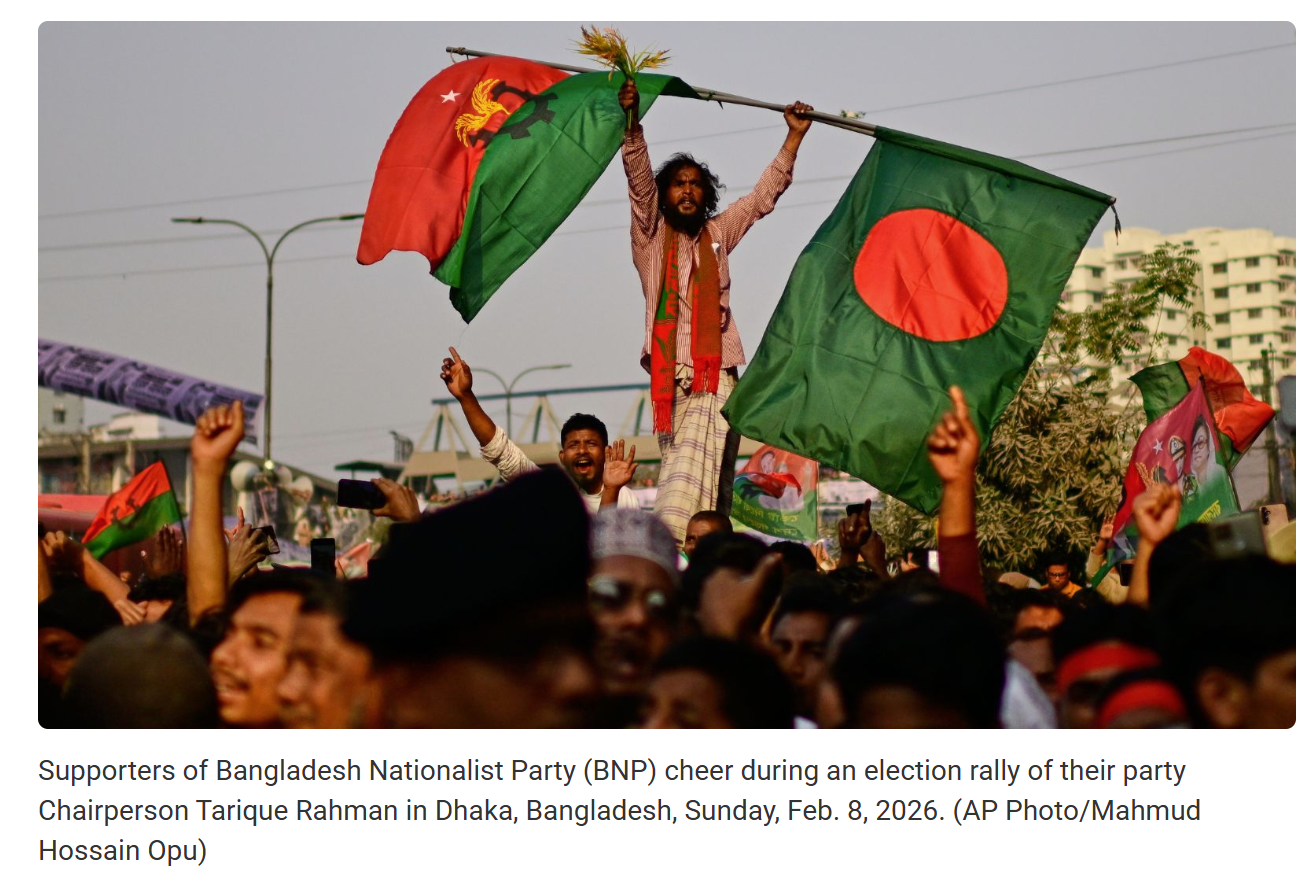
That is part of what makes Bangladesh Independence Day feel especially alive in the present. Sheikh Hasina fled to India on August 5, 2024, as protesters closed in on her residence, and within days Muhammad Yunus was appointed to lead an interim government at the request of student leaders. That interim period did open important space for transition, including reform commissions and international scrutiny of past abuses, and it eventually led to the February 2026 election that brought Tarique Rahman and the BNP to power in a vote described by AP as largely peaceful and accepted by international observers. But the story is still evolving. Rights groups say the post-Hasina period did not end every abuse: arbitrary detentions, mob violence against journalists, religious minorities, and cultural centers, and deep anxiety over the place of secularism and pluralism in Bangladesh’s future all remain part of the picture. For that reason, Bangladesh’s present moment, like its past, resists easy storytelling. It is a history still being made, and one whose democratic promise will depend on whether justice, minority rights, and coexistence are treated as foundational rather than optional.
In that spirit, the Hindus for Human Rights Bangladesh Genocide Reporter’s Guideis a valuable resource for anyone seeking to engage this history with care. In a media environment where the events of 1971 are often compressed, politicized, or misunderstood, the guide offers historical context, ethical grounding, and a more careful approach to language and reporting. For readers who want to go further, the Liberation War Museum in Dhaka and the BBC’s overview of the Bangladesh Liberation War also offer useful starting points for learning more.
Liberation War Museum (Dhaka)
https://www.liberationwarmuseumbd.org
BBC History – Bangladesh Liberation War
https://www.bbc.com/news/world-asia-16207201