
Hindus for Human Rights condemns the passage of the Transgender Persons (Protection of Rights) Amendment Bill, 2026
After clearing Parliament, the amendment now awaits presidential assent and would replace self-identification with exclusion and medical gatekeeping.
(WASHINGTON, D.C., March 26, 2026) — Hindus for Human Rights strongly condemns the passage ofIndia’s Transgender Persons (Protection of Rights) Amendment Bill, 2026, a harmful and exclusionary measure that has now passed both houses of Parliament and awaits presidential assent. This bill does not protect transgender people; rather, it denies self-identification, narrows recognition, and gives the state greater power to police lives that should be met with dignity, autonomy, and equal rights.
This bill is not protection. It is a rollback of dignity, equality, and the right to self-identification. By narrowing who the law recognizes as transgender, removing explicit protection for trans men, trans women, and genderqueer people, and subjecting the identity of individuals to medical-board scrutiny, the government is replacing rights with state-sanctioned gatekeeping.
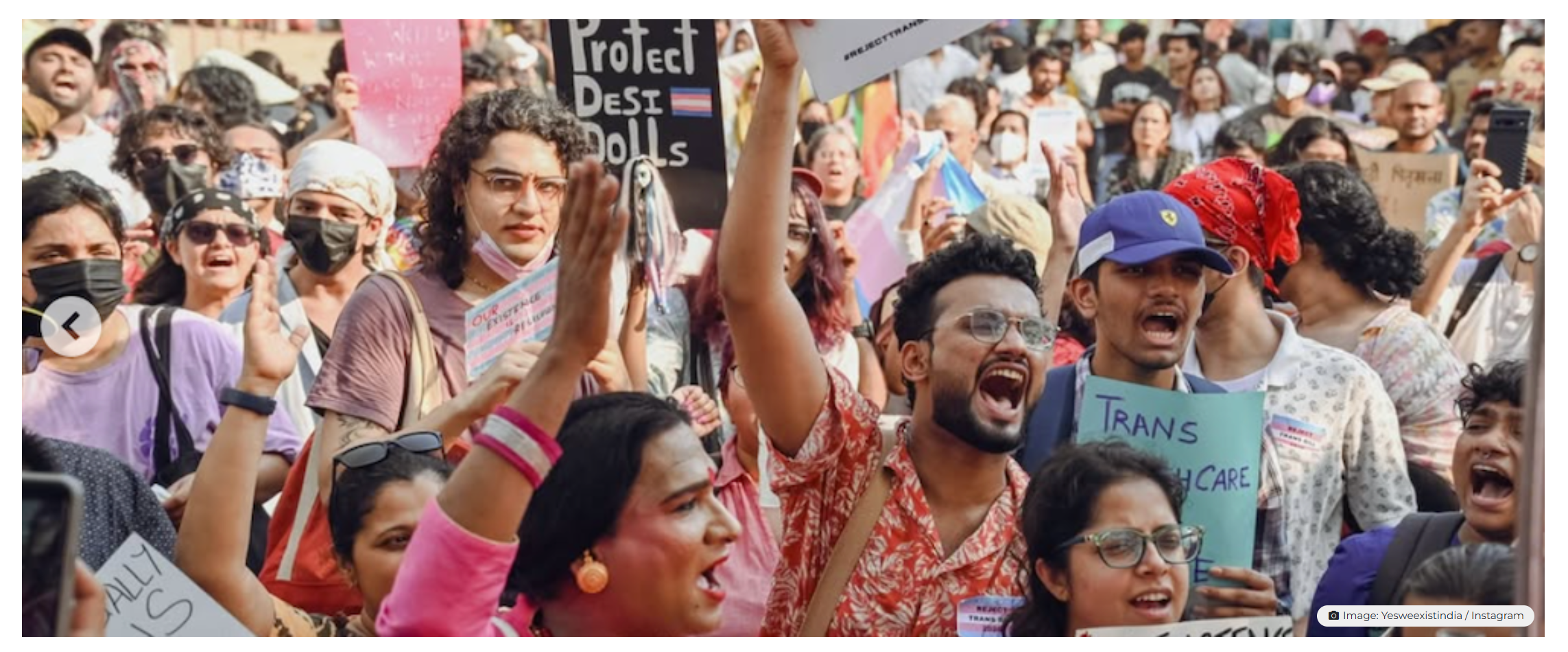
The amendment directly cuts against the spirit of the Supreme Court’s NALSA judgment, which affirmed that transgender persons have the right to their self-identified gender and that self-identity, autonomy, and personal integrity are fundamental rights. India should be moving toward fuller recognition and protection, not back in time towards draconian patterns of suspicion, bureaucracy, and state control.
As progressive Hindus, we reject the claim — whether spoken or implied — that this narrowing is somehow more authentic to Indian culture. India and South Asia have long contained complex social worlds for people living beyond narrow gender binaries, including communities known by names such as hijra, kinner, aravani, and jogta. That history has never been simple, and it has never guaranteed safety or equality. But it does mean this bill is not a defense of tradition. Not only is it an act of individual erasure, but it also renders invisible centuries of culture. It takes a complex human reality and forces it into a smaller, harsher, state-approved box.
We are also deeply disturbed that this bill appears to have moved forward without meaningful consultation with the communities most affected by it. The resignations of two members of the National Council for Transgender Persons make clear how serious that exclusion has been. A government cannot claim to protect transgender people while refusing to listen to them.
Hindus for Human Rights stands with transgender, non-binary, intersex, and gender-nonconforming people across India resisting this law. We call on President Droupadi Murmu to withhold assent and on the Government of India to withdraw this regressive amendment and return to a rights-based framework grounded in constitutional equality, dignity, and self-identification.
###