Interfaith Day of Action Brings Voter Outreach, Community Care, and Civic Joy to Jackson Heights
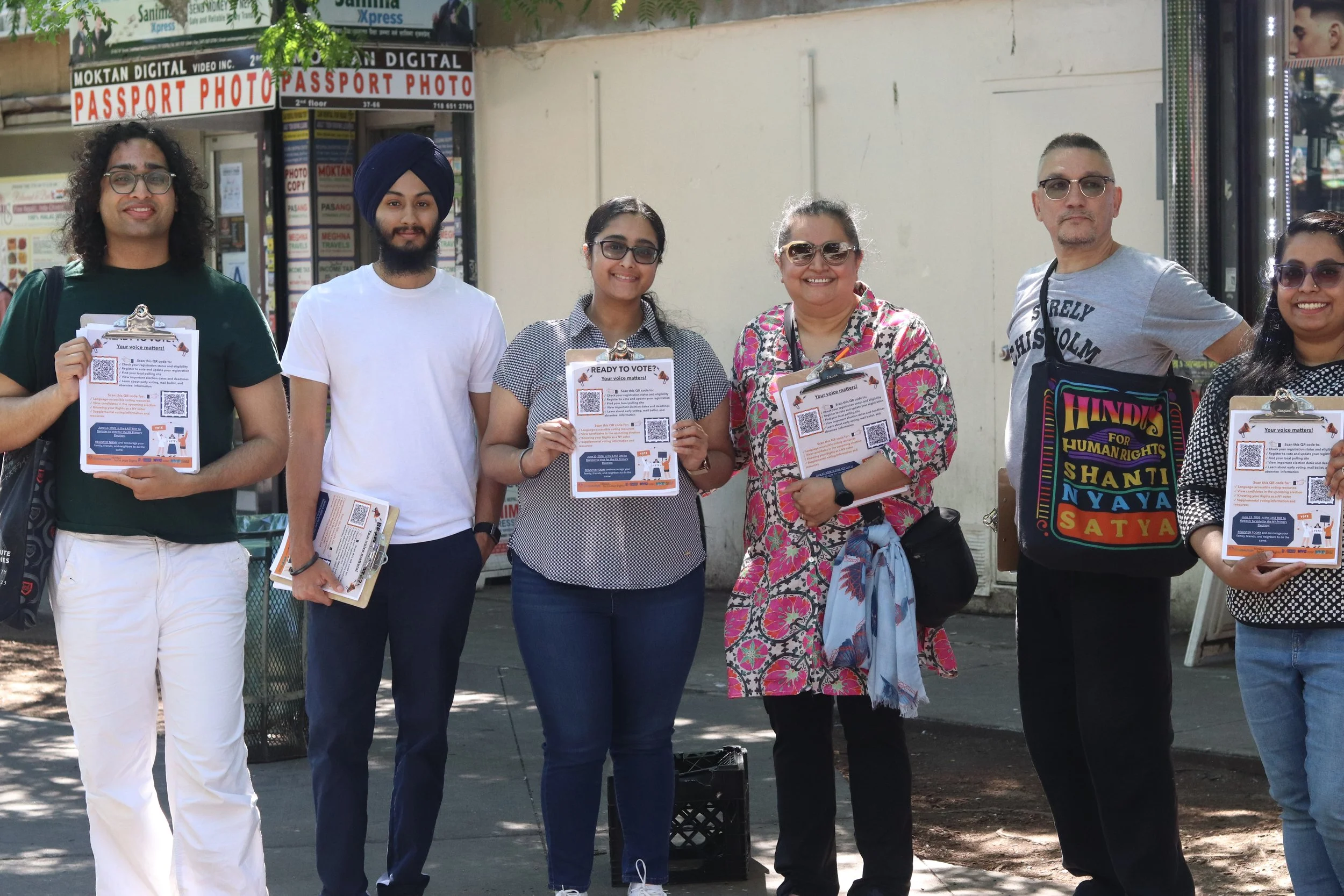
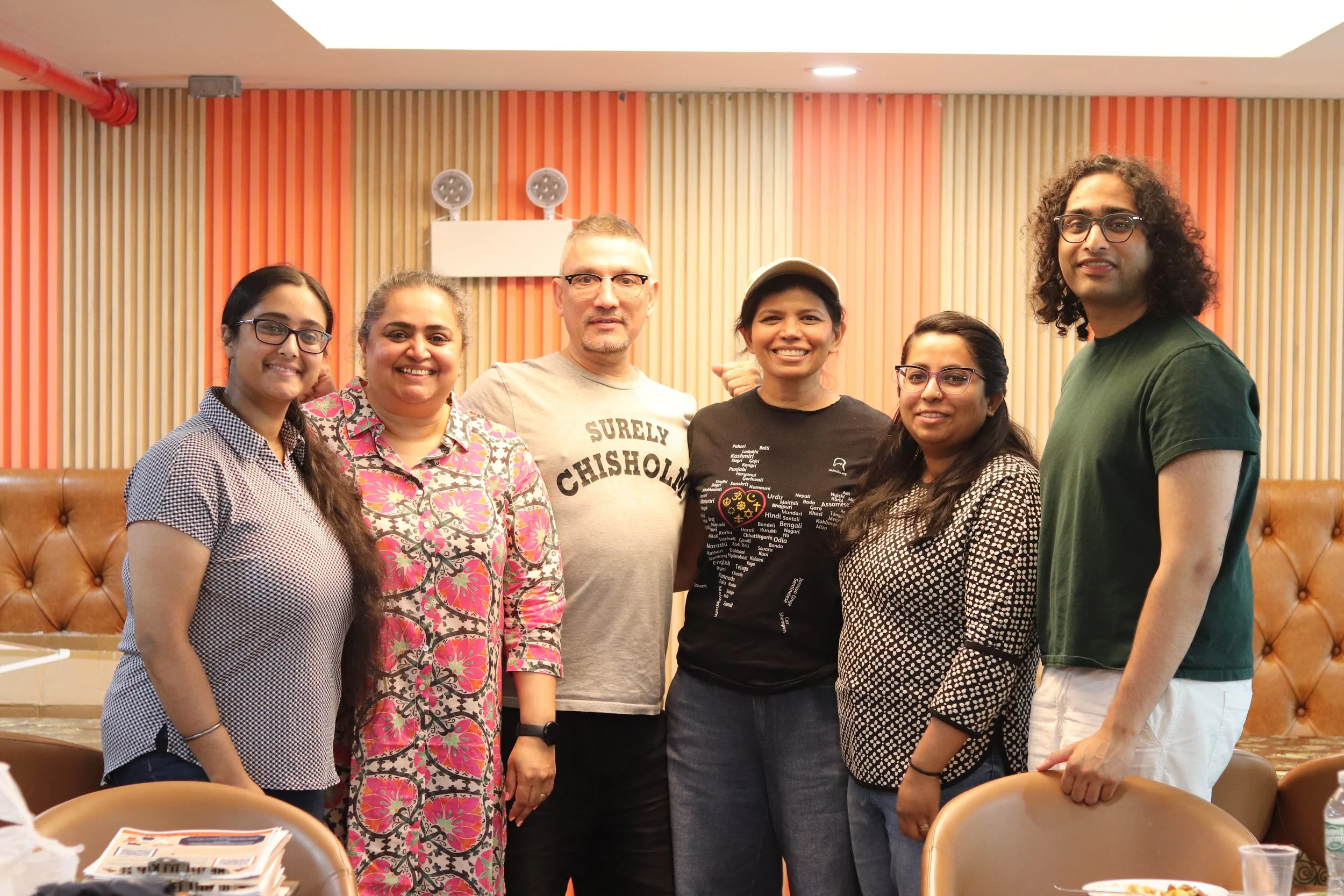
On Saturday, June 13, volunteers, organizers, faith leaders, and community members came together in Jackson Heights for an Interfaith Day of Action and Celebration—a neighborhood-wide effort to help New Yorkers check their voter registration, access trusted voting resources, and feel more prepared to participate in the upcoming primary election.
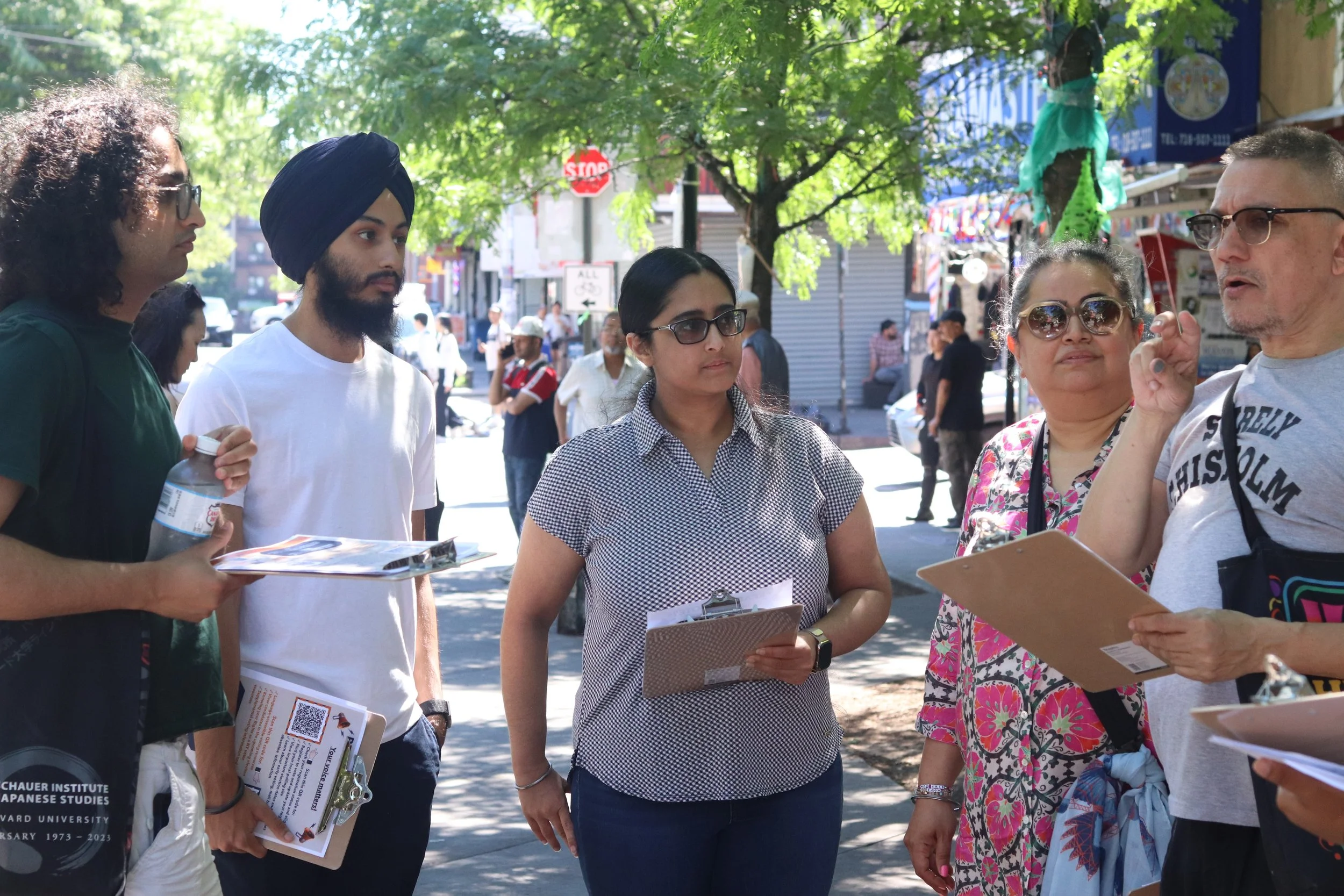
The event was organized by Hindus for Human Rights, The Sikh Coalition, and Emgage, with generous support from the NYC Office for the Prevention of Hate Crimes and the NYC Commission on Human Rights. Together, these partners helped create a day that was practical, joyful, multilingual, interfaith, and rooted in the belief that democracy is strongest when communities organize face-to-face.
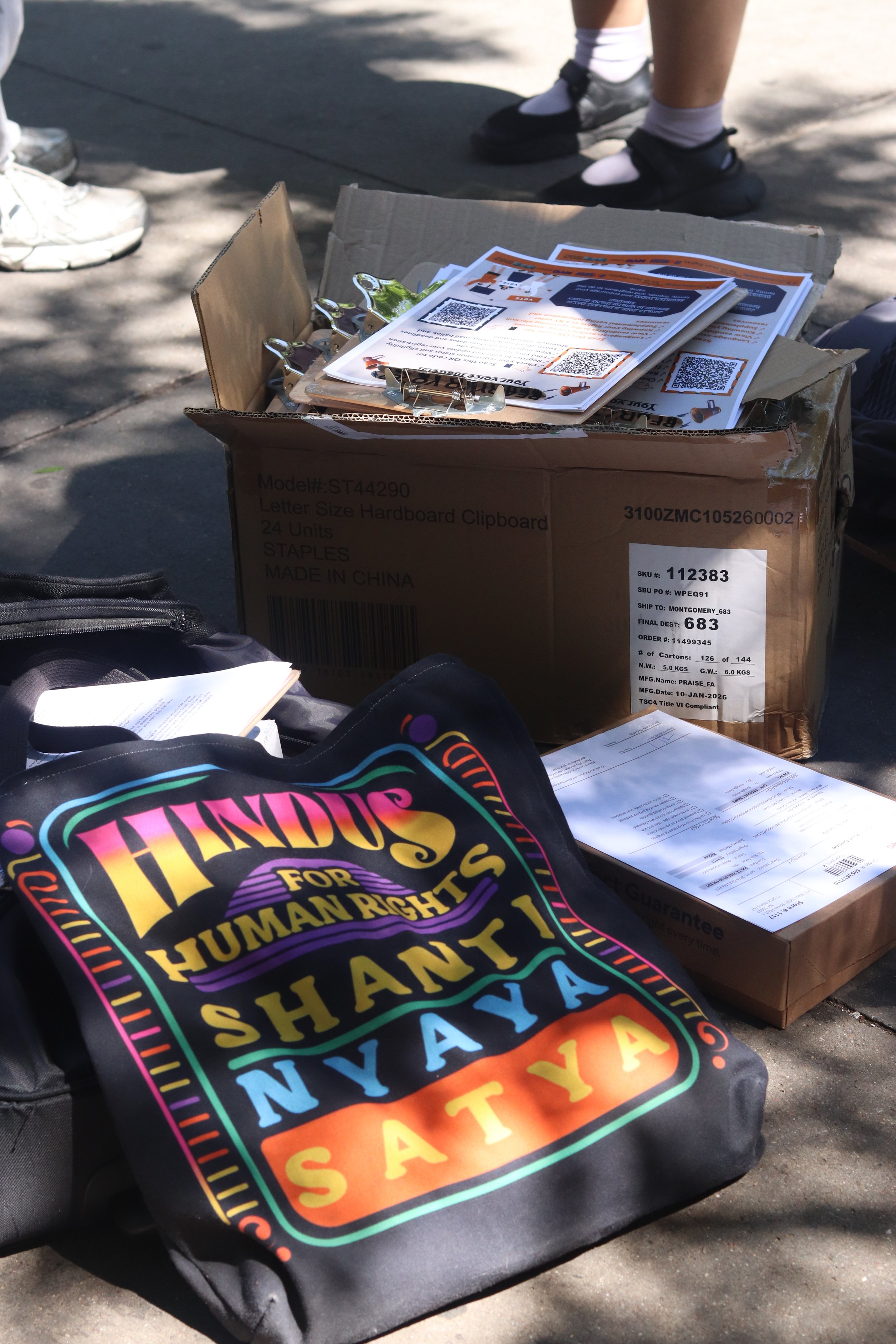
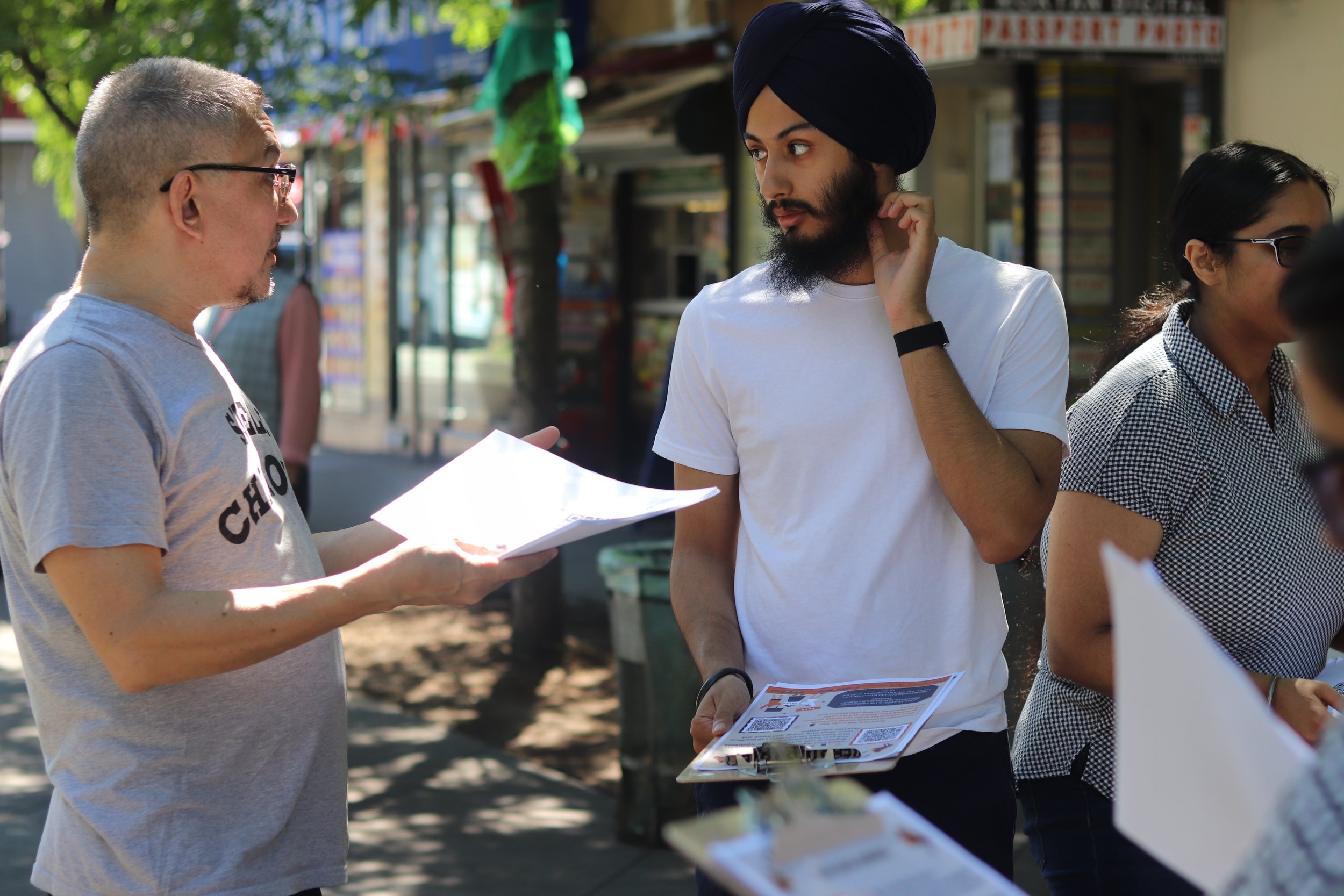
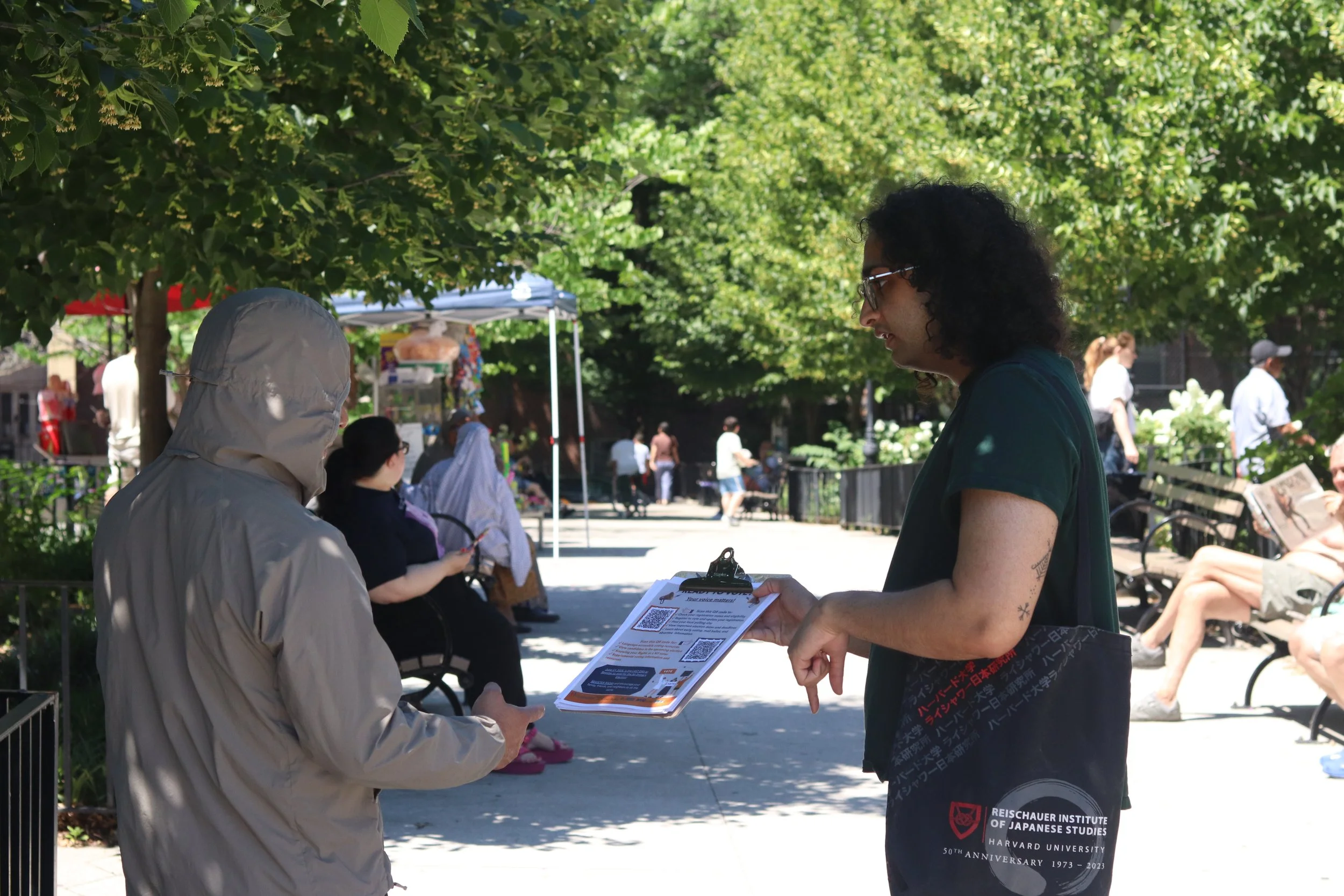
The morning began in Diversity Plaza, where volunteers gathered at 10 AM for training, materials, and assignments. Before heading out into the neighborhood, participants received clipboards, QR code sheets, voter registration resources, and guidance on how to speak with residents in a clear, calm, nonpartisan way. The goal was simple: help community members feel prepared to vote by sharing accurate information, not by persuading anyone on candidates or issues. Volunteers were encouraged to ask people whether their voter registration was up to date, remind them that June 13 was the last day to register before the New York primary election, and offer materials to anyone who wanted to learn more.
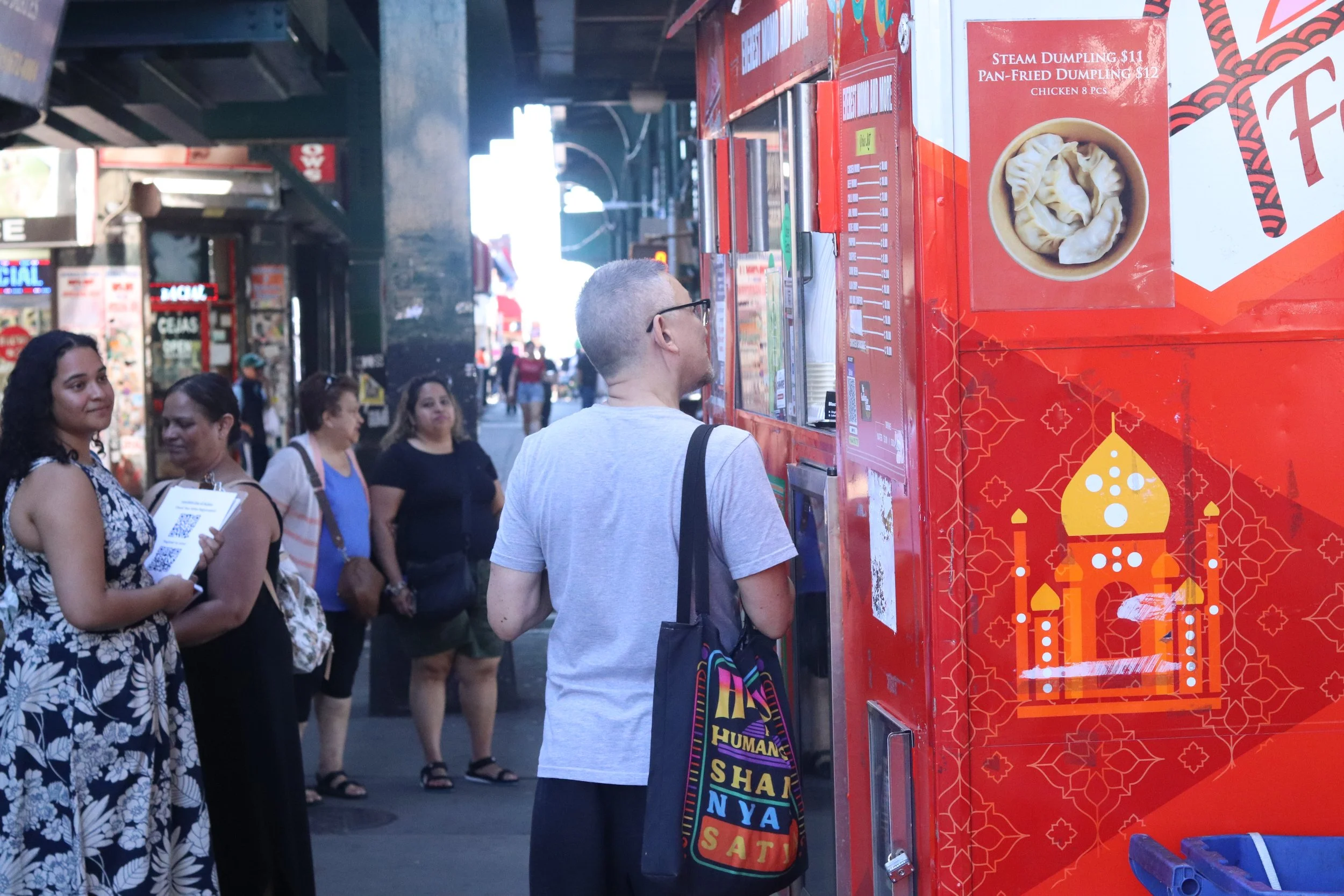
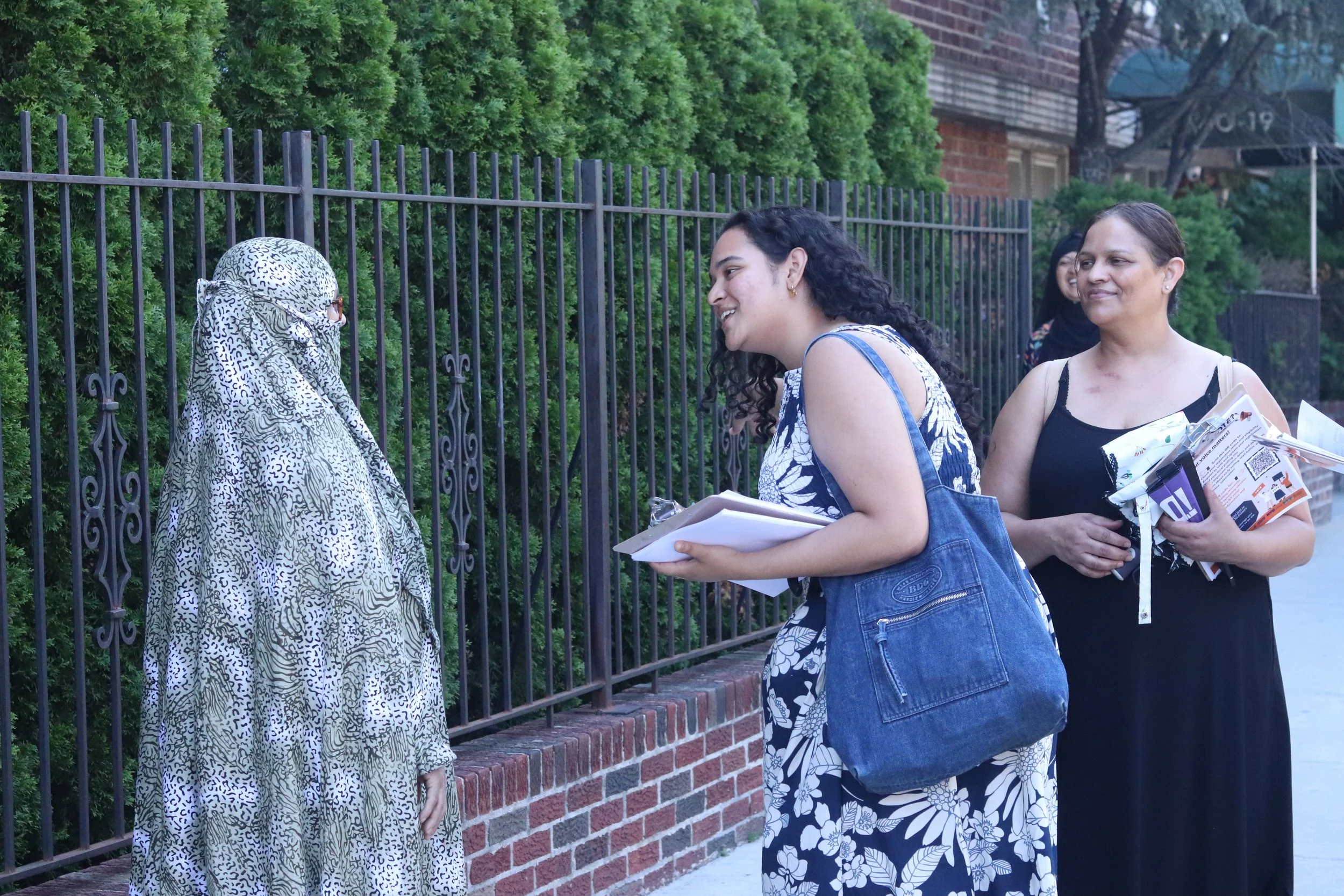
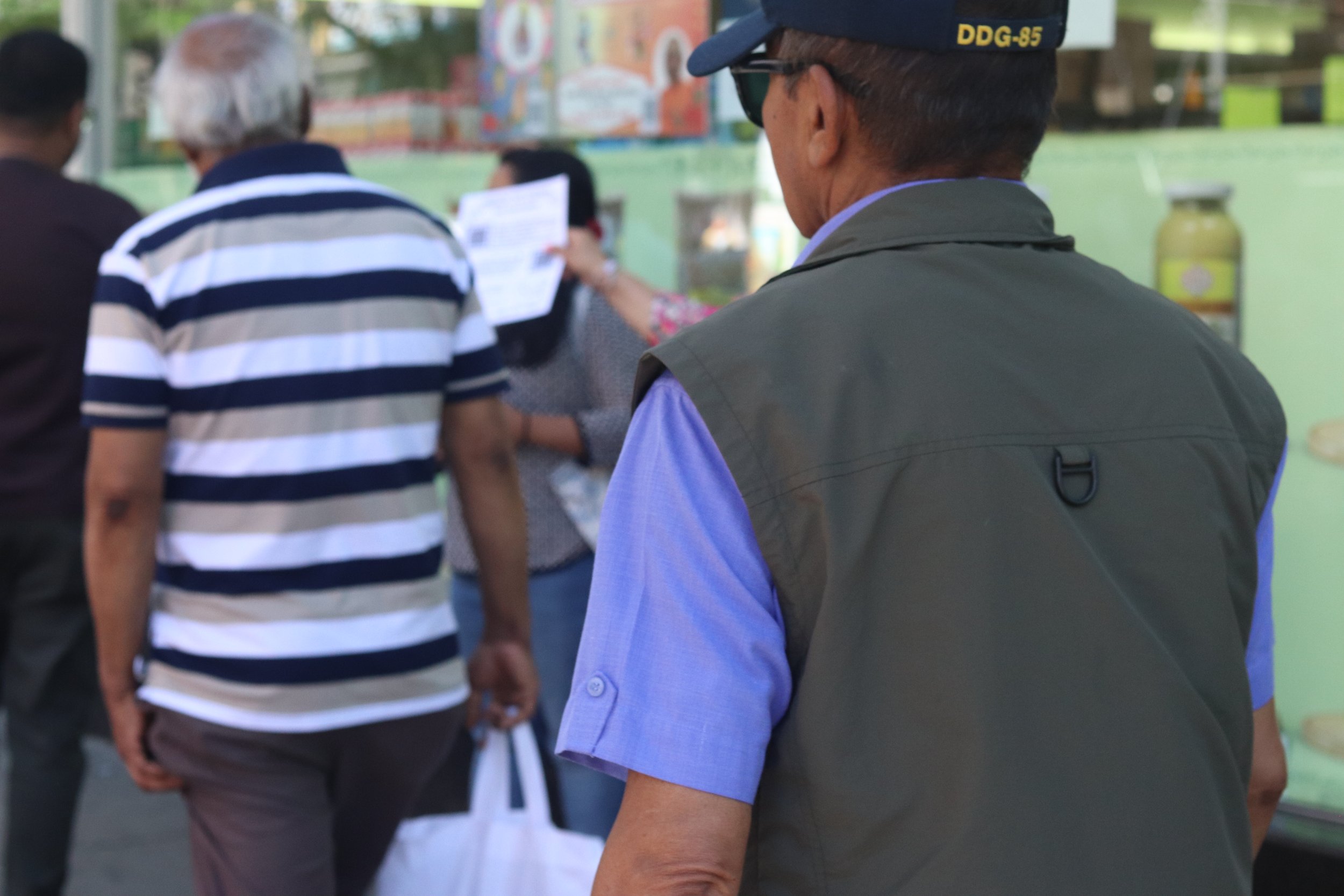
From there, volunteers spread across the neighborhood. Teams canvassed Diversity Plaza, the area outside Patel Brothers, the area outside Om Shakti Mandir, and the area outside the Jackson Heights Islamic Center. Along the way, they also reached residents, shoppers, passersby, workers, and small businesses throughout the neighborhood, including nail salons, food trucks, phone stores, restaurants, and busy sidewalk gathering places.
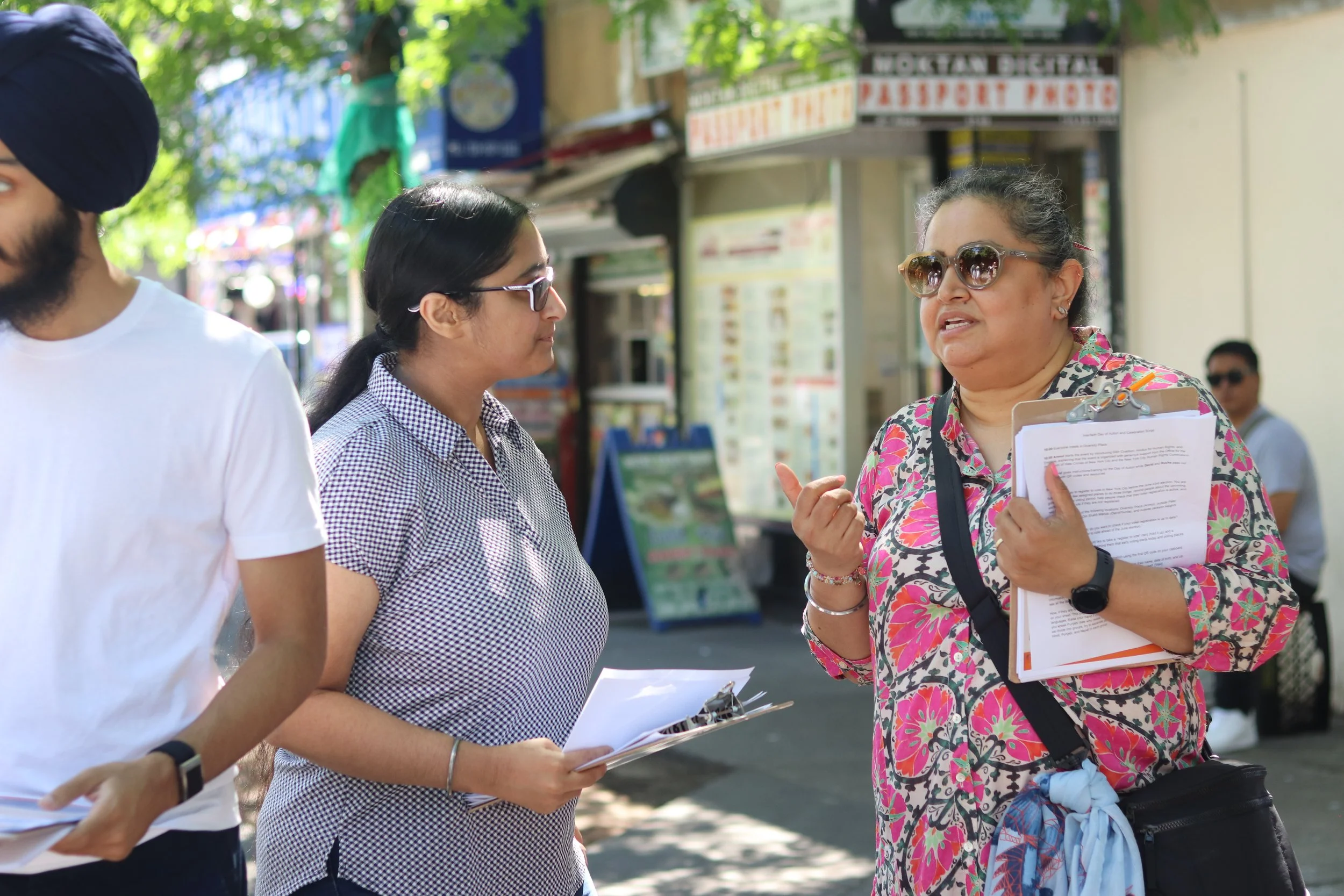
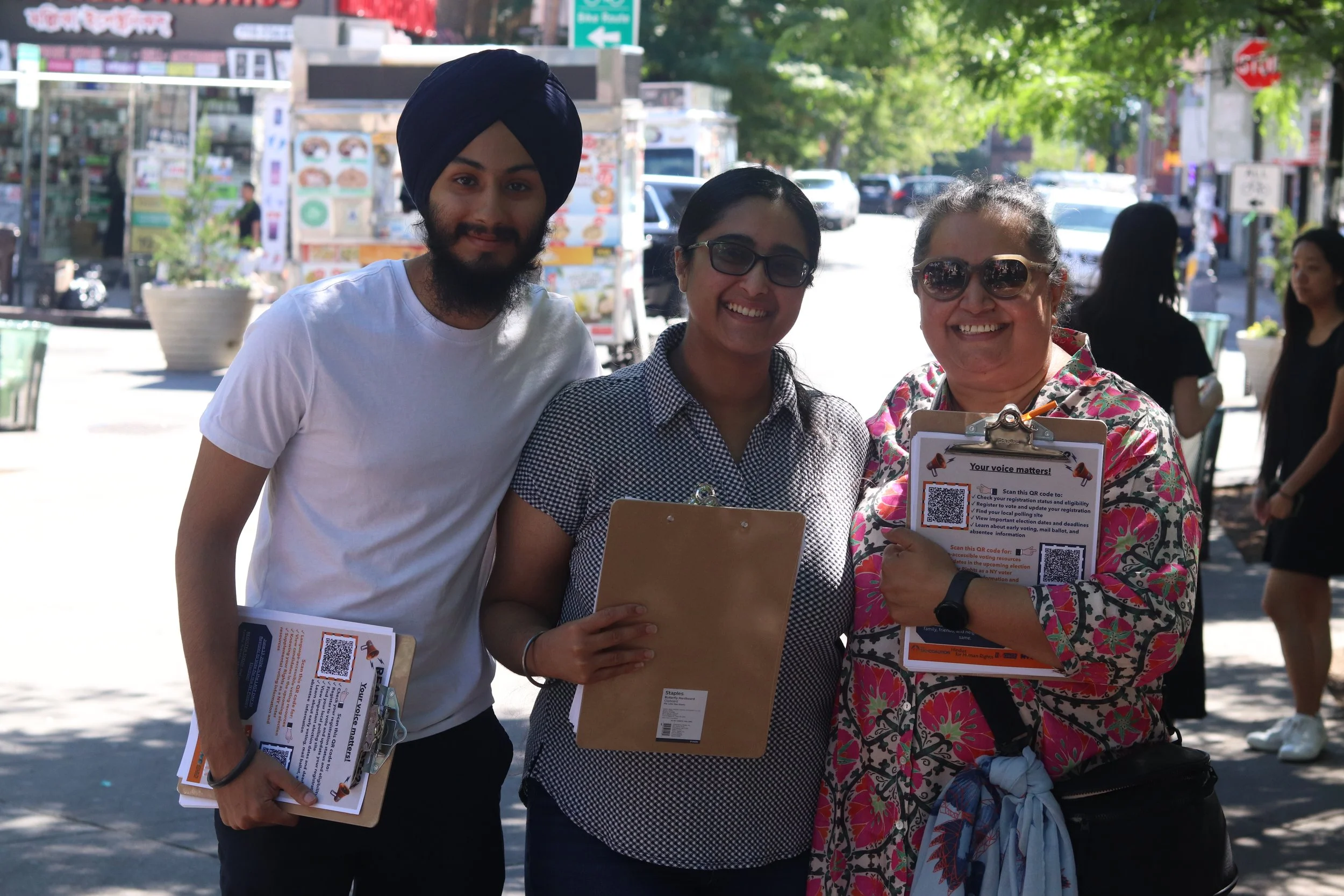
This was not outreach from a distance. It was the kind of civic engagement that happens through eye contact, conversation, and trust. Volunteers spoke with people on the street, outside places of worship, near grocery stores, and in the everyday spaces where Jackson Heights lives and breathes. Some people stopped to check their voter registration on the spot. Others accepted a flyer to look at later. Some asked about early voting, polling locations, language access, ranked choice voting, or what to do if they had moved recently. Others simply said thank you and carried the information into the rest of their day.
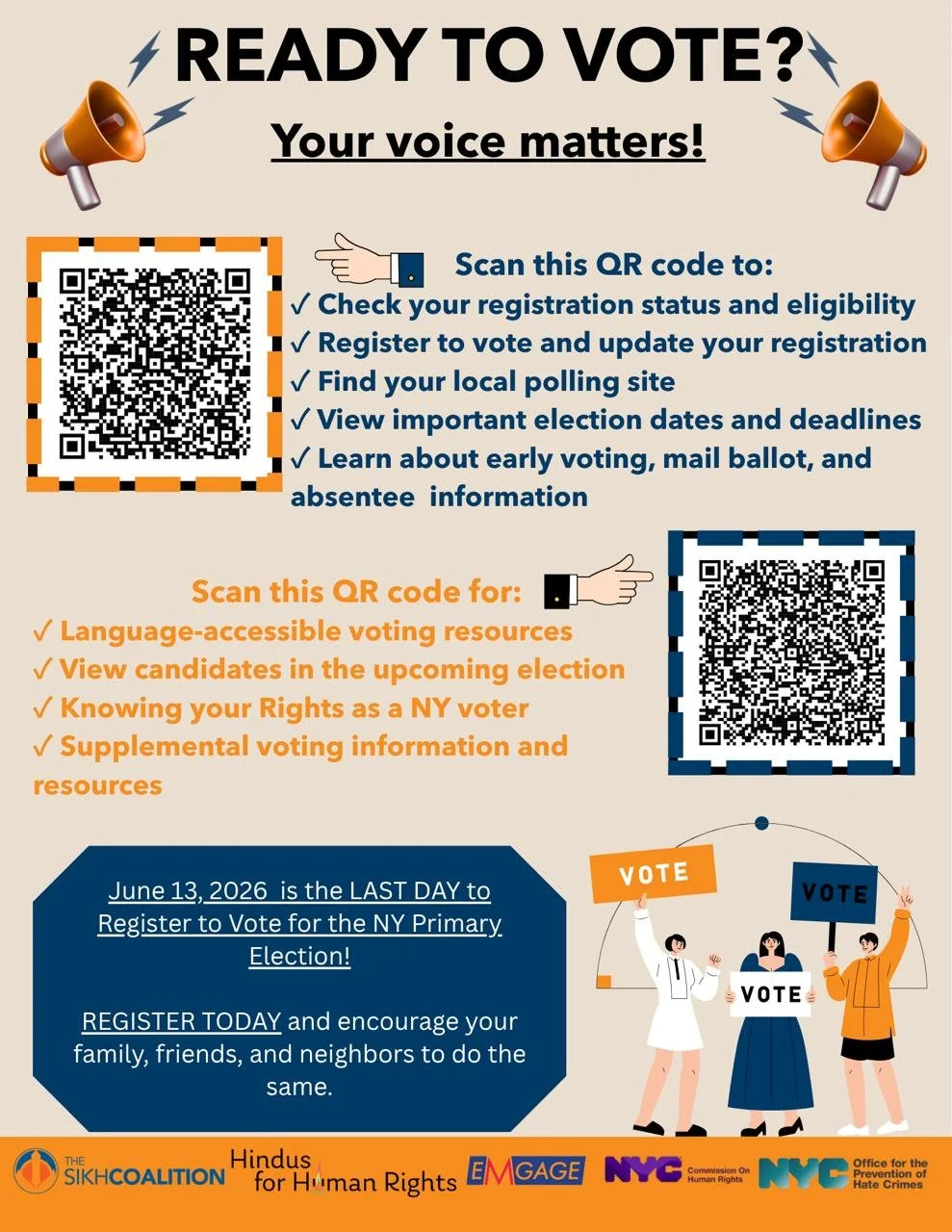
The outreach materials made the work especially accessible. Through QR codes, community members could check their registration status and eligibility, register to vote or update their registration, find their local polling site, view important election dates and deadlines, and learn more about early voting, mail ballots, and absentee voting. A second set of QR codes connected residents to language-accessible voting resources, candidate information, know-your-rights materials for New York voters, and supplemental voting information.
The multilingual dimension of the day mattered deeply. Volunteers were encouraged to organize teams so that speakers of languages including Hindi, Punjabi, Nepali, and Bengali could be present across the outreach locations, helping residents feel more comfortable asking questions and accessing information. In a neighborhood like Jackson Heights, where language, migration, faith, and civic life are woven together in complex and beautiful ways, this kind of outreach is not just helpful—it is essential.
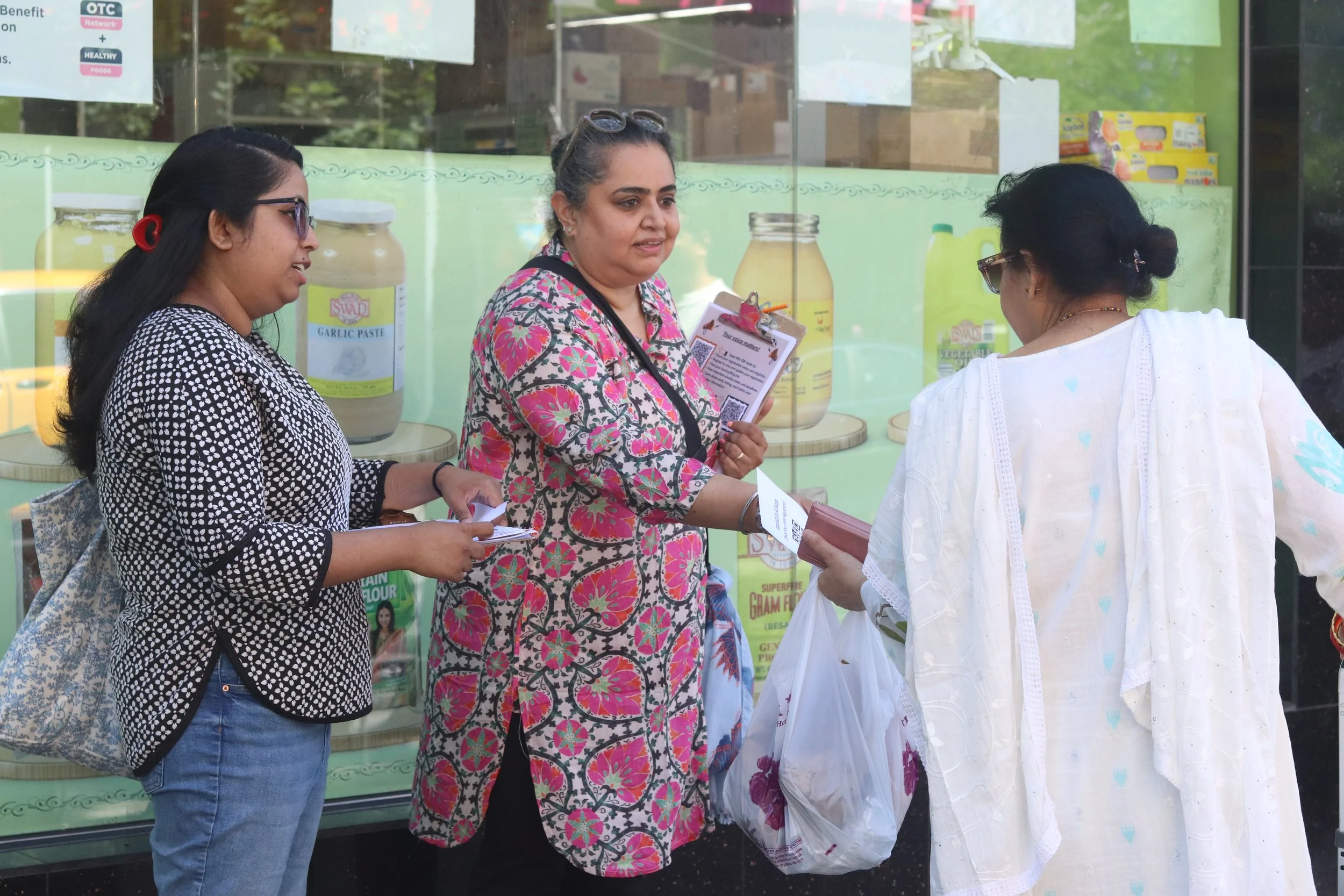
The day’s success came not only from the number of conversations, but from their quality. Volunteers reported meaningful encounters with voters and residents who wanted to participate but did not always know where to begin. Some needed help checking whether they were registered. Some wanted to know where to vote. Some wanted to understand early voting. Some were grateful to learn that translated resources existed. Others were not ready to engage, and volunteers honored that too, offering materials without pressure and keeping the outreach respectful.
That spirit of respect shaped the whole day. The canvassing script reminded volunteers that the effort was nonpartisan and community-centered. If someone was not interested, volunteers were asked to simply offer a flyer and thank them for their time. If someone had questions, volunteers were encouraged to direct them to trusted resources or to partner organizations for additional support.
After the morning outreach, volunteers and community members gathered for a free interfaith lunch at Shanai Restaurant and Party Hall, located at 37-43 74th St. in Jackson Heights. The lunch was more than a celebration at the end of a successful canvass. It became a space for reflection, connection, and strategy. Over food, conversation, and community-building activities, participants shared what they had learned from the morning: which questions came up most often, which materials were most useful, where people seemed most receptive, and where future outreach could be even stronger.
The discussion at Shanai was rich with feedback. Volunteers talked about the importance of approaching people in familiar neighborhood spaces rather than expecting them to seek out information on their own. They reflected on how effective it was to pair practical voting tools with personal invitations. They also discussed new strategies for future outreach: bringing more multilingual volunteers, creating even more accessible printed materials, returning to high-traffic locations, building relationships with small businesses, and making voter education part of a broader culture of neighborhood care.
The interfaith lunch also made visible the deeper meaning of the day. Civic participation is not only about forms, deadlines, and QR codes. It is about belonging. It is about whether people feel seen, whether their language is respected, whether their questions are welcomed, and whether they know that their voice matters. In Jackson Heights, that work happened through Hindu, Sikh, Muslim, and broader South Asian and interfaith partnerships, alongside city agencies committed to preventing hate and defending human rights.
The Interfaith Day of Action showed what is possible when organizations come together not just to issue a message, but to walk the streets, meet people where they are, and build trust one conversation at a time. It was voter outreach, but it was also community repair. It was a reminder that the health of our civic life depends on neighbors helping neighbors understand their rights, use their voice, and participate fully in the decisions that shape their lives.
Thank you to The Sikh Coalition, Emgage, the NYC Office for the Prevention of Hate Crimes, the NYC Commission on Human Rights, and everyone who volunteered, canvassed, shared resources, hosted conversations, welcomed neighbors, and helped make the day a success.
Jackson Heights offered a powerful lesson: when communities organize with care, democracy becomes more than an abstract ideal. It becomes a conversation outside a grocery store, a QR code scanned on a sidewalk, a flyer handed to a neighbor, a multilingual exchange in front of a place of worship, and a shared meal where people ask, together, what comes next.