
No State Can License a Life: National Transgender Day in India 2026
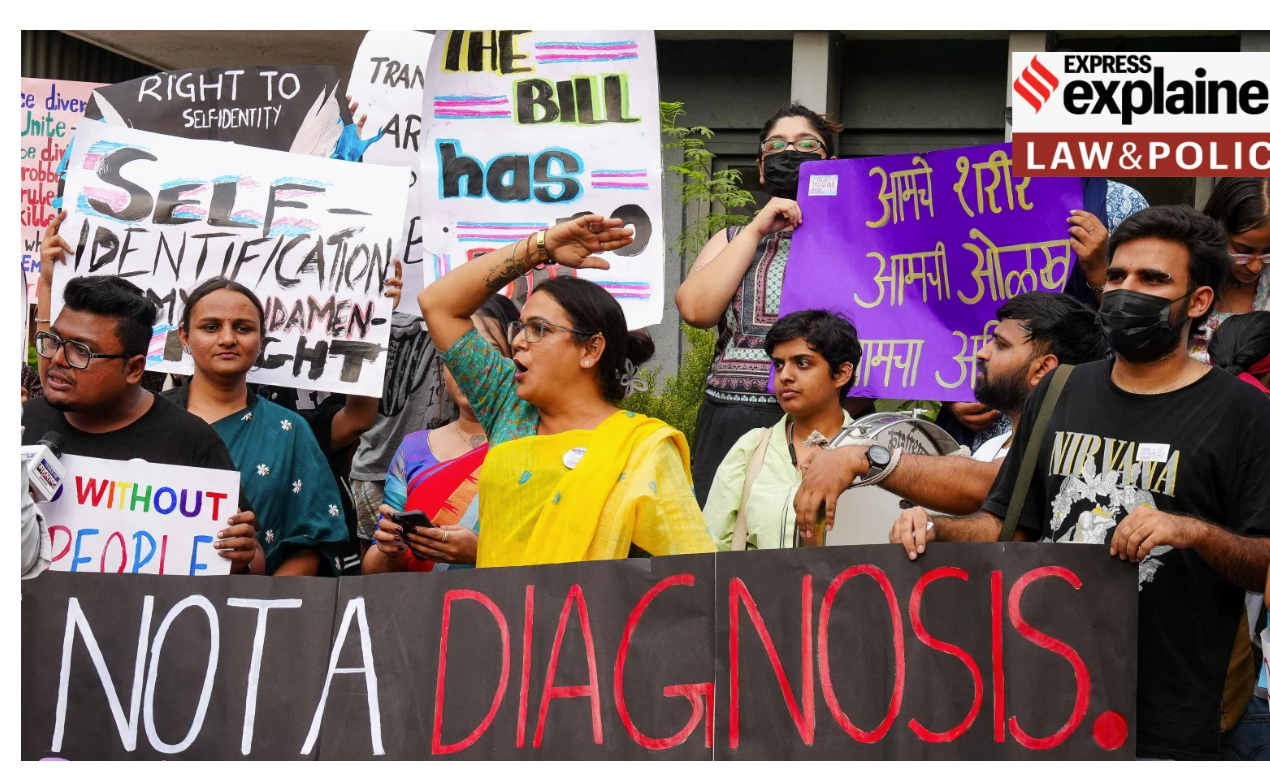
Trans rights activists protest against the 2026 law in Pune. Arul Horizon
On April 15, 2014, the Supreme Court of India issued one of the most important judgments in the country’s modern human rights history: NALSA v. Union of India. In that decision, the Court recognized transgender people as a third gender and affirmed something profound and simple at the same time: gender identity is bound up with dignity, autonomy, and the freedom to live as oneself. The Court did not treat identity as a favor to be granted by the state. It treated it as part of personhood itself.
Twelve years later, National Transgender Day arrives in a far darker political atmosphere.
This year, the anniversary is not only a moment to honor a legal breakthrough. It is a moment to defend it. The Transgender Persons (Protection of Rights) Amendment Act, 2026 has triggered protests across India because it strikes at the heart of what made NALSA so historic: the principle that trans people have the right to self-identify. The amendment removes the 2019 law’s explicit protection for self-perceived gender identity, narrows who counts under the law, and pushes recognition back through medical and bureaucratic gatekeeping.
That is why this day in 2026 cannot be marked with easy language about progress
For years, even imperfect law carried the promise that India was moving, however unevenly, toward a society where trans people would not have to justify their existence before officials, doctors, or hostile institutions. The new law pulls in the opposite direction. It says, in effect, that the state knows your identity better than you do. It suggests that recognition must come after scrutiny. It replaces lived truth with paperwork, and autonomy with permission.
That is not a technical change. It is a moral one.
When a government takes away self-identification, it is not merely revising procedure. It is asserting control over the deepest parts of a person’s life. It is saying that your name, your body, your documents, your future, and even your social legibility can be filtered through state approval. For marginalized people, this kind of control is never abstract. It shapes access to healthcare, housing, education, work, mobility, family recognition, and safety. It determines who is seen as real and who is pushed into administrative shadow.
The protests erupting across India have understood this clearly. Demonstrations have taken place in Delhi, Bengaluru, Mumbai, Pune, Lucknow, Madurai, and other cities, with participants warning that the law erases many trans people, criminalizes lived realities, and turns identity into something the state can police. In Delhi, hundreds gathered at Jantar Mantar demanding rollback. In Bengaluru, recent protests at Freedom Park again centered opposition to medical certification, privacy violations, and the exclusion of gender-diverse communities from recognition.
The resistance has moved into the courts as well. Challenges to the 2026 law are now being heard in the Delhi and Kerala High Courts, with petitioners arguing that the amendment rolls back constitutional protections and replaces self-identification with a rigid, medically determined framework controlled by the state. That matters because this is not only a political dispute. It is also a constitutional one. NALSA did not frame gender identity as a discretionary matter. It located it within equality, liberty, dignity, and self-expression.
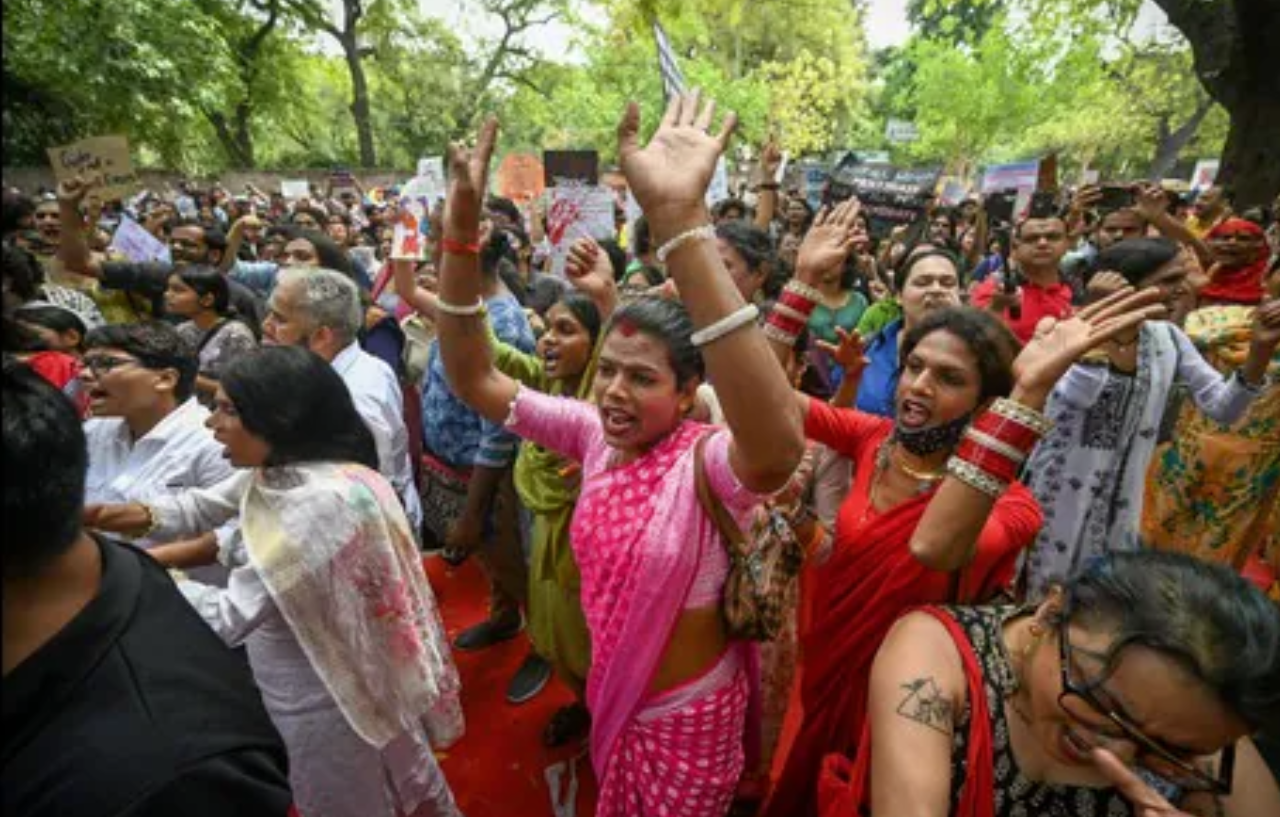
A protest against Transgender Persons (Protection of Rights) Amendment Bill, 2026 at Jantar Mantar ion Sunday. (Sanchit Khanna/HT Photo)
This is the larger lesson of National Transgender Day in 2026: a society reveals itself by how badly it wants to regulate the people who do not fit its preferred order. Authoritarian politics always has a fascination with classification. It wants sharp borders, rigid categories, obedient paperwork, and bodies that can be sorted, watched, and disciplined. Trans freedom challenges that impulse at its root. It insists that human beings are not state property. It insists that dignity does not begin at the district magistrate’s desk.
That is why solidarity today must be more than symbolic. It means defending self-identification not as a niche demand, but as a basic democratic principle. It means listening to trans communities when they say this law will deepen precarity. It means refusing the lie that bureaucratic control equals protection. And it means understanding that whenever the state claims the right to overrule a person’s own account of who they are, everyone’s freedom becomes smaller.
National Transgender Day should still be a day of pride, memory, and gratitude. We remember the courage of those who fought for NALSA. We honor the trans people who forced India to confront truths it had long refused to see. But in 2026, this day is also a warning.
Further reading
PRS Legislative Research — Bill summary and text
https://prsindia.org/billtrack/the-transgender-persons-protection-of-rights-amendment-bill-2026The Indian Express — Why the new law is being challenged in court
https://indianexpress.com/article/explained/explained-law/transgender-persons-act-2026-challenge-explained-10627581/The Indian Express — Nationwide protests against the bill
https://indianexpress.com/article/india/transgender-persons-protection-of-rights-amendment-bill-2026-protests-nalsa-10595508/Hindustan Times — Protest at Jantar Mantar in Delhi
https://www.hindustantimes.com/cities/delhi-news/transgender-individuals-protest-at-jantar-mantar-demand-rollback-of-new-bill-101774810781220.htmlDeccan Herald — Bengaluru protest at Freedom Park
https://www.deccanherald.com/india/karnataka/bengaluru/protest-at-bengalurus-freedom-park-against-transgender-law-changes-3964884Human Rights Watch — Why the 2026 bill is being called a major setback
https://www.hrw.org/news/2026/03/26/indias-transgender-rights-bill-a-huge-setbackBBC News India — Video report from the protests
https://www.youtube.com/watch?v=nX33QmMLuMw