
Pongal: Abundance Is Something You Share
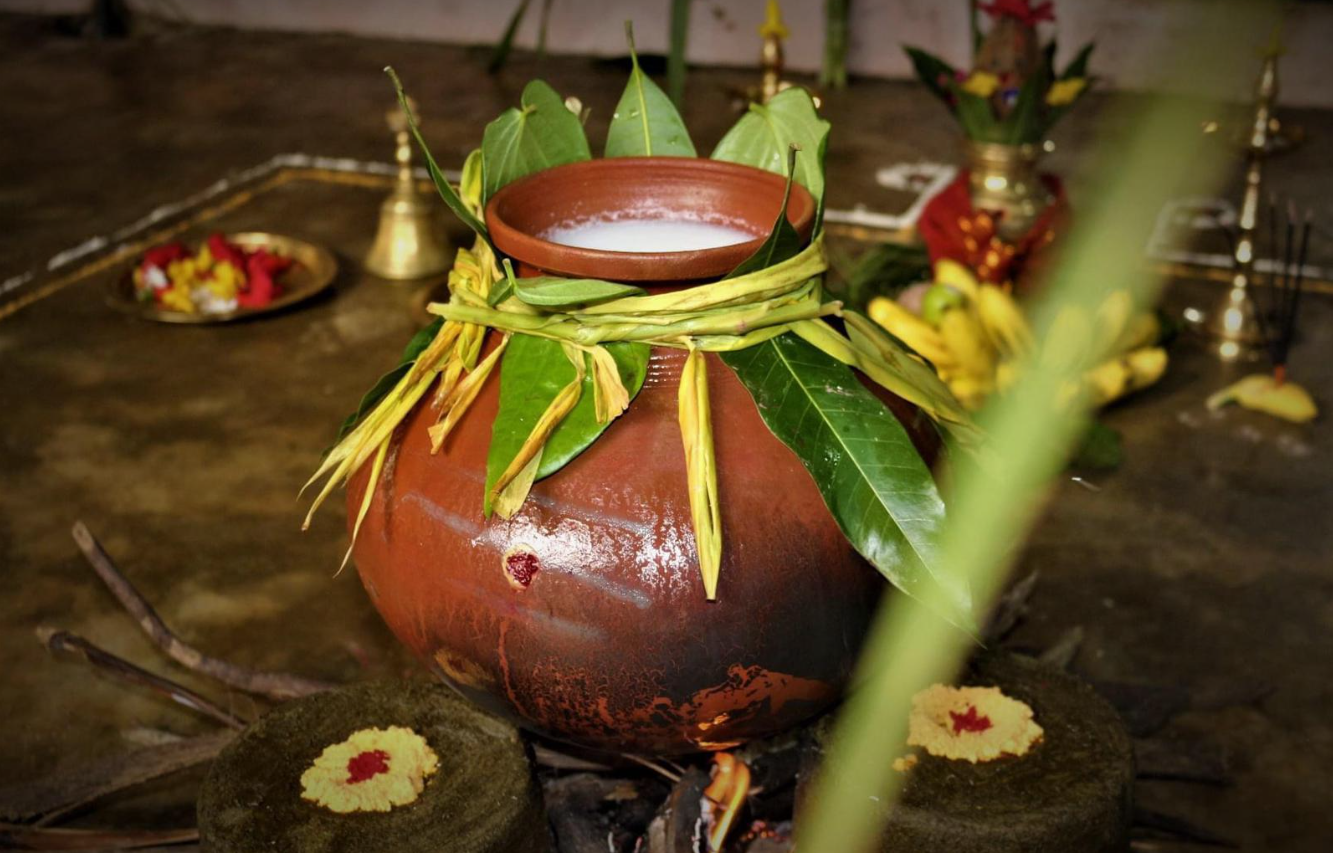
You can usually tell it’s Pongal before anyone explains it. There’s a particular kind of morning noise—lids being lifted, spoons striking metal, someone laughing from the next room because the milk is thinking about rising. Outside, the season may still feel like winter, but inside a kitchen the air has already shifted: sweet with jaggery, warm with ghee, bright with cardamom. And then the moment arrives—foam cresting at the rim of the pot, everyone watching like it’s a small sunrise you can cook.
“Pongalo Pongal!” someone calls out, half blessing, half cheer.
It’s an ordinary household scene, and it isn’t. Pongal is a harvest festival, yes—but it’s also a yearly reminder that “enough” is never just private. It spills. It steams. It asks to be offered, shared, carried next door.
Pongal festival meaning, history, and significance
What does “Pongal” mean?
The word pongal is commonly explained as “to boil over” or “overflow”—a deliberately joyful image of abundance that can’t be contained. The pot is not meant to be neat. The overflow is the point.
What is Pongal?
Pongal is a multi-day harvest festival celebrated especially in Tamil Nadu and across Tamil communities worldwide. It’s tied to the Tamil solar calendar, and its central gesture is gratitude—for the sun, for rain, for the harvested grain, for animals and human labor, for the ecology that makes food possible.
How old is Pongal?
Pongal is widely described as having deep historical roots, with references to its celebration appearing in historical discussions of Tamil society (including mentions associated with the Chola period).
At its best, Pongal keeps a simple truth in view: every meal has a lineage. It comes from weather and work, from water and soil, from hands that plant and harvest, from systems that can either honor that labor—or hide it.
Pongal, Thai Pongal, Surya Pongal: how the names relate
People often use “Pongal” to mean the whole festival, but you’ll also hear Thai Pongal as the name for the main day.
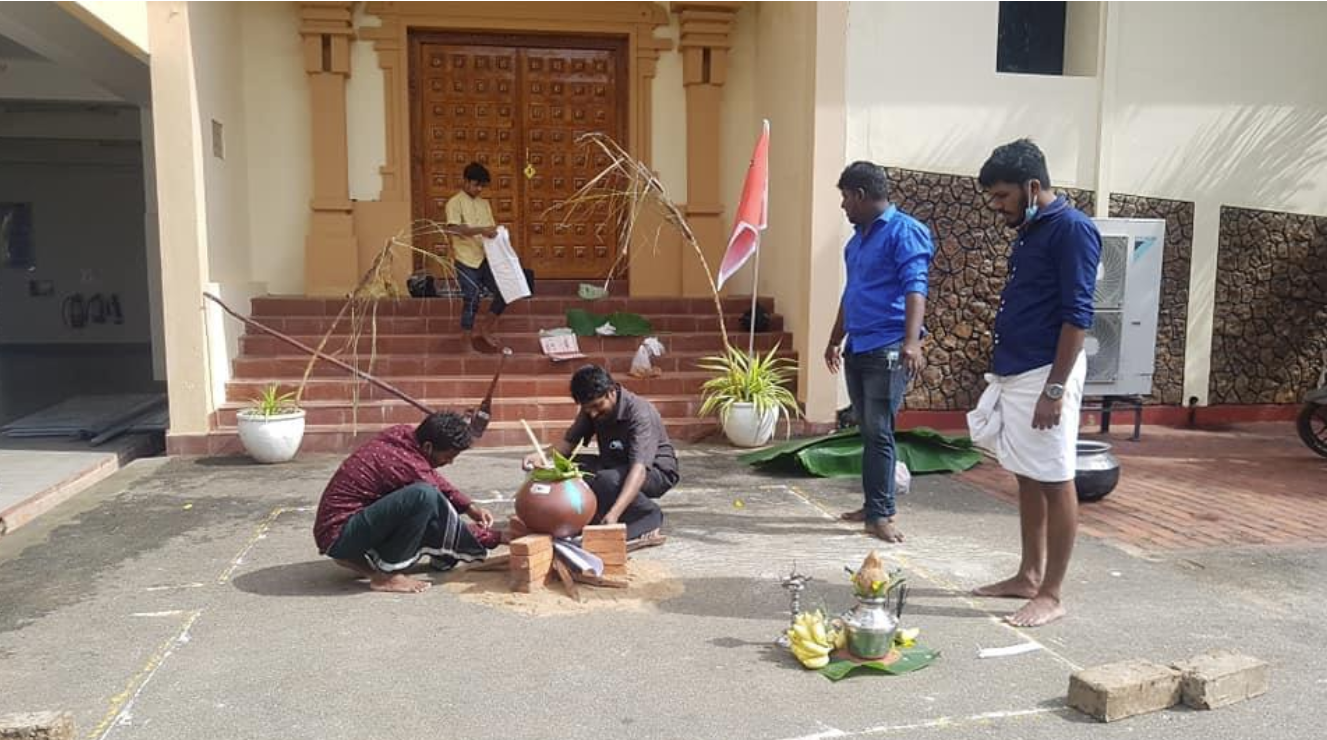
Thai is a month in the Tamil solar calendar, and Thai Pongal falls on the first day of Thai.
That solar shift is closely related to Makar Sankranti in many other Indian calendars; some sources even note that “Thai” corresponds to “Makar” in other Hindu calendar traditions.
Because the festival is pegged to solar movement and local sunrise rules, you’ll sometimes see different date labels depending on place and panchang.
So: Pongal is the festival; Thai Pongal is the central day within it; and Surya Pongal is another common way people describe that main day because of the offerings to the Sun (Surya).
The four days of Pongal, explained
Pongal is typically observed over three or four days, commonly named Bhogi, Thai Pongal, Mattu Pongal, and Kaanum Pongal.
Day 1: Bhogi Pongal
Often associated with clearing out the old—decluttering, cleaning, making room. In many tellings, it’s also connected to gratitude for rain.
Day 2: Thai Pongal (Surya Pongal)
The heart of the festival: the pot, the boil-over, the offering to the Sun, the sense that light is not a background detail but a life-giver worthy of attention.
Day 3: Mattu Pongal
A day honoring cattle (and, more broadly, the animals that make agrarian life possible). Decorated horns, garlands, feeding and blessing—gratitude made visible.
Day 4: Kaanum Pongal
Often described as a day for visiting—family reunions, community time, outings, a gentler exhale at the end of the cycle.
Pongal 2026 dates and why you may see more than one set
If you’re searching “Pongal 2026 date,” here’s the clearest way to say it:
Many festival calendars list Thai Pongal / Makar Sankranti on January 14, 2026, with a noted sankranti moment given for that day.
Some Tamil calendar listings indicate Thai begins on January 15, 2026, which is why you’ll also see the main day labeled January 15 in some contexts.
Tamil Nadu school/office holiday schedules reported in the press have described official Pongal holidays falling January 15–17 (with Mattu Pongal and Thiruvalluvar Day often named on January 16, and Kaanum Pongal/Uzhavar Thinam on January 17).
In practice, communities often celebrate across the whole stretch—especially when family travel and public holidays widen the window.
What you’ll see during Pongal: kolam, sugarcane, turmeric, and the pot that refuses to stay quiet
If Pongal had a visual grammar, it would be written at the doorstep.
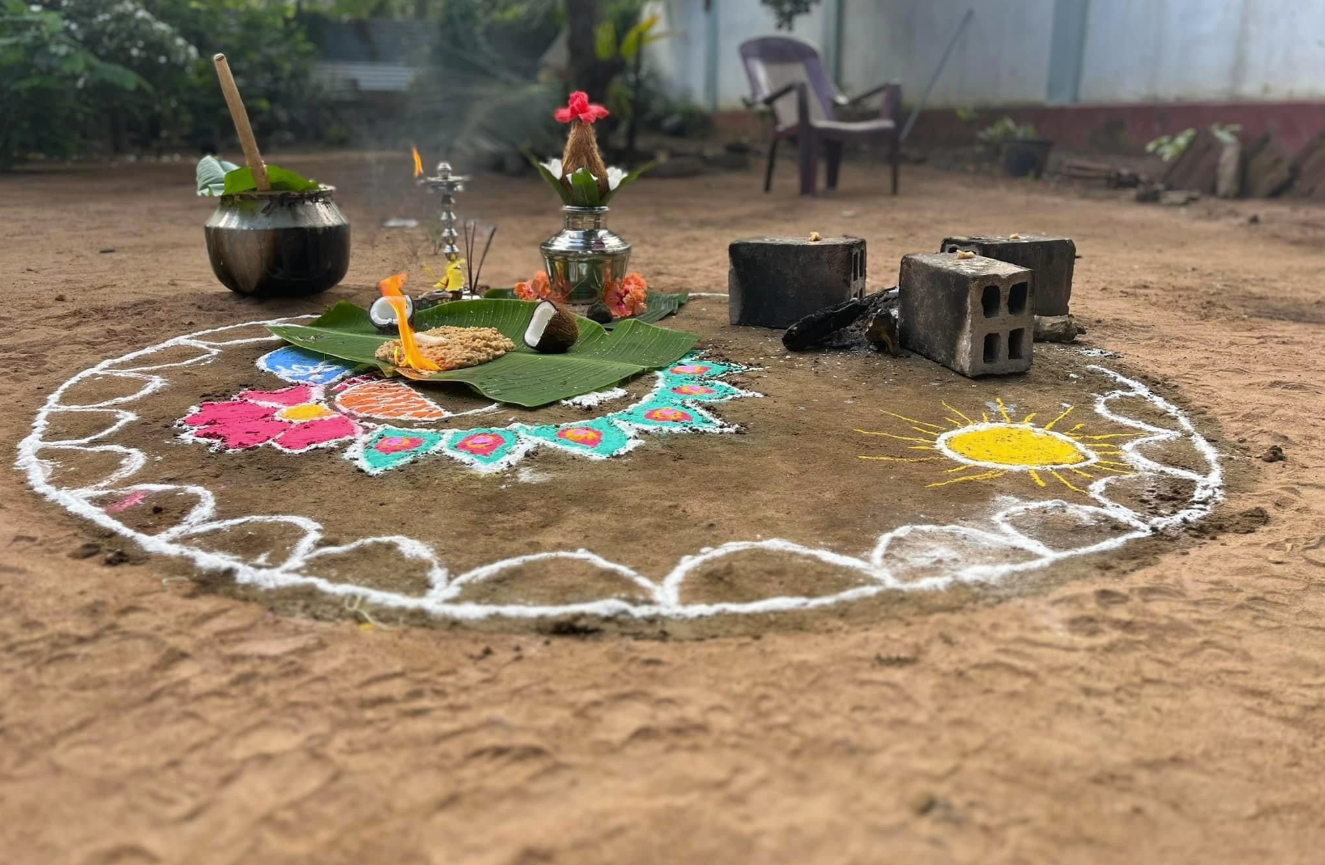
Kolam (rice-flour designs) appear in front of homes—geometry that looks like devotion and welcome at once.
Sugarcane shows up like a punctuation mark: sweet, fibrous, unmistakably harvest-season. Fresh turmeric plants, new vessels, banana leaves, bright cloth—everything feels like a way of saying: we have received something; now we respond.
And then there’s the food—because Pongal is also literally a dish.
Sakkarai (sweet) pongal: rice, lentils, jaggery, ghee, cardamom—soft as a blessing.
Ven (savory) pongal: rice and lentils with pepper, cumin, ghee—warm, steady, quietly perfect.
Even if you’ve never been “good at festivals,” Pongal has a way of meeting you where you are: cook something simple, offer thanks, share it.
A small Pongal reflection
Pongal’s most radical gesture might be its most ordinary one: gratitude with receipts.
Not just “thank you” in the abstract—but thank you to sunlight, to rain, to soil, to animals, to the people who make harvest possible and too often remain unseen. In a time when so many systems train us to forget where food comes from (and who pays the costs), the overflowing pot is a quiet correction: abundance is never solitary.
Pongal FAQ
What is Pongal?
Pongal is a multi-day harvest festival celebrated especially in Tamil Nadu and among Tamil communities worldwide. It centers gratitude for the harvest and the sun, and it’s closely tied to the Tamil solar calendar month of Thai.
What does Pongal mean?
“Pongal” is commonly explained as “to boil over” or “overflow,” referencing the ceremonial moment when rice (often with milk/jaggery) boils over in a pot—symbolizing abundance and prosperity.
What is Thai Pongal?
Thai Pongal is the main day of Pongal, observed on the first day of the Tamil month Thai, and often associated with offerings to the Sun (Surya).
Is Pongal the same as Makar Sankranti?
They happen around the same solar transition, and Thai Pongal is closely connected to the timing of Makar Sankranti in many calendars. But Pongal is a Tamil harvest festival with its own multi-day structure and distinct rituals (Bhogi, Thai, Mattu, Kaanum).
What are the four days of Pongal?
The days are commonly: Bhogi Pongal, Thai Pongal, Mattu Pongal, and Kaanum Pongal (some observances are described as three days, but four is very common).
When is Pongal in 2026?
Many festival calendars list Thai Pongal/Makar Sankranti on January 14, 2026, while some Tamil calendar listings place the start of Thai on January 15, 2026—so you may see both dates depending on calendar conventions and location. Tamil Nadu holiday schedules reported in the press have listed official Pongal holidays around January 15–17.
What is Mattu Pongal?
Mattu Pongal is the day honoring cattle (and farm animals more broadly), recognizing their role in agriculture and rural life through decoration, feeding, and blessing rituals.
What is Kaanum Pongal?
Kaanum Pongal is commonly described as a day for visiting and spending time with family/community—often marked by outings, shared food, and reunion.
What is the Pongal dish?
“Pongal” also names a traditional dish made with rice and lentils. Sweet versions often include jaggery and ghee (sakkarai pongal), and savory versions use spices like pepper and cumin (ven pongal).
What is kolam and why is it made during Pongal?
Kolam are decorative designs (often made with rice flour) drawn at entrances. During Pongal, they’re a festive welcome and a visual sign that the home is marking the harvest season.