
A Pravachan on Shabri Maa, Navadha Bhakti, and the Devotion That Breaks Hierarchy
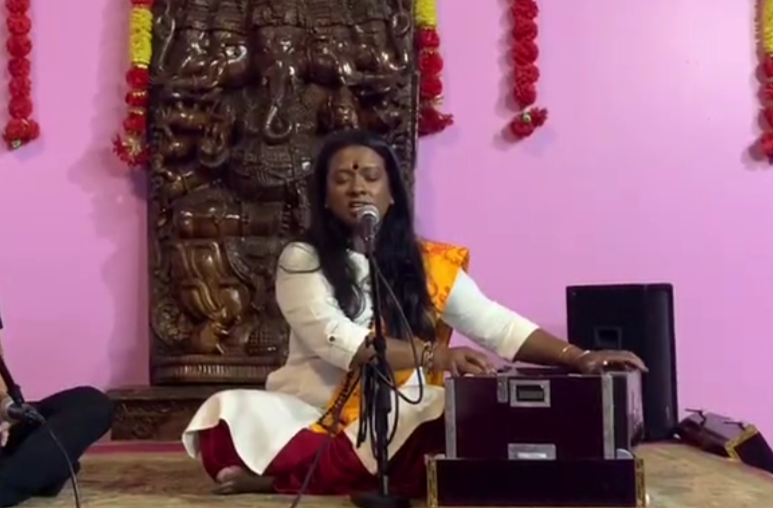
Pandita Pratima Doobay
At “Namastasyai: We Gather to Pray as One,” community members gathered at Sarvamangala Shri Saneeswara Temple NY for a morning of prayer, reflection, and shared spiritual intention. The event brought together temple community, artists, organizers, LGBTQ+ advocates, and allies in a spirit of collective devotion and belonging. As part of the gathering, Pandita Pratima Doobay offered the following pravachan — a devotional discourse or spiritual reflection rooted in Hindu scripture, story, and lived experience. A pravachan is not simply a lecture or sermon; it is a way of opening sacred teachings into the present moment, allowing scripture to speak to the questions we carry about God, society, suffering, justice, love, and our own path through the world. In this reflection, Pandita Pratima turns to the Ramcharitmanas and the beloved encounter between Sri Rama and Shabri Maa to explore Navadha Bhakti, the nine steps of devotion.
ॐ
Every so often, I find myself in a deep state of questioning.
I question God, the concept of God, myself, society, morality and its absence. Who am I? What is my purpose? Where am I going? When will I succeed or fail? Why do things in life happen the way they do? How do I navigate the inevitable cycles of gain and loss, grief and joy, compassion and hate, life and death?
Whenever I find myself in this state of critical inquiry and self-doubt, I hear the words of the Sri Ramcharitmanas echoed through my father’s voice—specifically the dialogue between Sri Rama and Shabri Maa in the Aranya Kanda, known as the teaching of Navadha Bhakti: the nine steps of devotion.
As Rama and Lakshmana were wandering through the forests in search of Maa Sita, who had been abducted, they arrived at the ashram of Matang Rishi, where Shabri Maa resided. What unfolds in this encounter is devotion in its most unguarded and transcendental form—an expression of love beyond appearance, beyond social codes, beyond surface.
Shabri Maa welcomed Rama and Lakshmana by offering them berries she had lovingly collected and tasted. Sri Rama accepted them with grace. Lakshmana, however, felt discomfort at the idea of eating fruit that had already been tasted.
And here we receive an introductory lesson in Navadha Bhakti.
We witness it before the teaching itself is ever spoken aloud.
Sri Rama gently indicated to Lakshmana that Shabri Maa’s offering was not an act of impurity or disregard, but the highest expression of love and intention. She did not offer leftovers. She offered mindfulness.
She had tasted each fruit not to diminish it, but to ensure only the sweetest was given to her divine Guest, while she kept the bitter and sour ones for herself.
Sri Rama wholeheartedly accepted and ate the berries. In that moment, He relished pure love, sweetness, heartfelt intention, devotion—Bhakti itself.
Just as Rama once lifted and broke the Shiv Pinaka, Shiva’s cosmic bow, He also dismantled every false structure surrounding caste, gender, purity, worthiness, and spiritual qualification through the simple act of sitting in Shabri Maa’s hospitality.
Filled with love and gratitude for Shabri Devi’s sincerity, Sri Rama then shared the teachings of Navadha Bhakti.
Om Sri Gurubhyo Namah is
Om Sri Maha Ganadhipataye Namah
Aim Saraswatyai Namah
Shabri Maa wished to learn more from Sri Rama about the path of Bhakti. In response, Sri Rama explained:
### 1) Pratham Bhagati Santan Kar Sangaa
The first step toward divine living is the company you keep.
Be in fellowship with those who are healing, compassionate, honest, encouraging, and devoted to a higher purpose. The energy around us shapes the energy within us.
### 2) Doosri Rati Mam Kathaa Prasangaa
The second step is to develop love for hearing and engaging with sacred teachings.
In Sanatan Dharma, our scriptures serve as mirrors, maps, and reminders. They help guide the mind back toward truth.
### 3) Guru Pankaj Seva, Teesri Bhakti Amaan
The third step is humble service to the Guru.
Who is Guru in this context?
Everything.
“Tvameva Vidya Dravinam Tvameva”
You alone are my knowledge. You alone are my wealth.
The world, with all its dualities and experiences, becomes Guru. It teaches us to learn, grow, soften, and evolve. It is often said that when the seeker is ready, the Universe may appear in human form as Guru—and find you.
4) Chouthi Bhagati Mam Gun Gaan, Karai Kapat Tajee Gaan
The fourth step is to be intentional in speech, praise, and expression.
The divine spark exists in both the seen and unseen—Nirakara and Sakara. God is also Vak: sacred sound, speech, vibration.
What we say carries power. What we repeat becomes reality.
May we speak, sing, and express with sincerity and devotion.
### 5) Mantra Jaap Mam Dridh Vishvaasaa, Pancham Bhajan Jo Ved Prakaasaa
The fifth step is faith-filled repetition of mantra and song.
Mantra and bhajan are pathways through which many experience the Divine. When you chant, pray, or sing, may it be wholehearted and beneficial to the world.
### 6) Chattha Dasa Sheela Birati Bahu Karmaa, Nirat Nirantara Sajjan Dharma
The sixth step is discipline in action and steadiness in adversity.
Act. Perform your karma. Fulfill your purpose as the noble ones do.
Every individual is born carrying something meaningful to offer this world. Along the journey, we are met with dualities—joy and sorrow, gain and loss, life and death.
Regardless of circumstance, we should do our best not to lose ourselves in the extremes.
Feel what you must. Process what you must.
And keep going.
### 7) Saatvam Sam Mohi Main Jag Dekhaa, Motey Sant Adhik Kar Lekhaa
The seventh step is to perceive the world as Divine.
See God in every being, every action, every encounter.
Then every thought, word, and deed becomes an offering—to the world, to others, to the spark that lives within me and within you.
### 8) Aathvam Jathaa Laabh Santoshaa, Sapneu Nahin Dekhai Par Doshaa
The eighth step is contentment, grace, and freedom from fault-finding.
Move with steadiness, compassion, intention, and discernment.
Recognize that each person is navigating the human experience through the lens of their own karma, pain, growth, and understanding.
The projections of others often reveal more about them than about you.
Choose not to live as judge, but as witness.
We are all headed toward the same mystery, however different the roads may be.
Give grace for the journey.
### 9) Navam Saral Sab San Chhal Heena, Mam Bharos Hiy Harash Na Deenaa
The ninth step is simplicity, sincerity, and unwavering trust in the Divine.
To trust in the Divine is not to seek constant outer validation. It is to stand rooted within.
It is equanimity. Groundedness. Openness to what is and what is not.
It is doing your best while holding yourself accountable.
It is remembering that you are a divine being having a human experience.
Believe in your essence.
Do your best.
See God in others.
Move with discernment.
Manage your expectations.
Remain open.
This, too, is Bhakti.