
Remembering Iyothee Thass: A Voice Before His Time, and Still Urgent in Ours
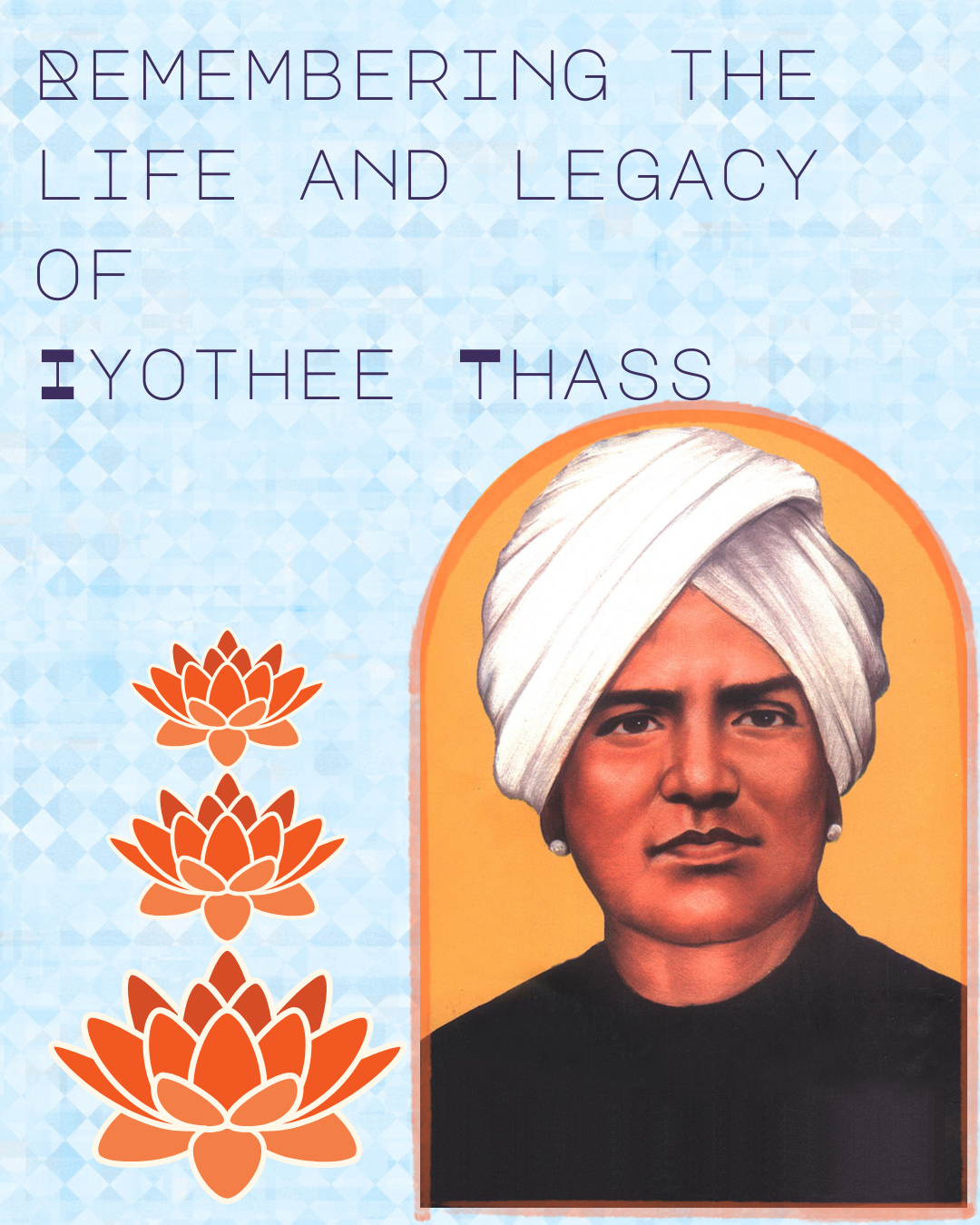
On May 20, we remember Pandit C. Iyothee Thass — also known as Ayothidasar — one of the great anti-caste thinkers of modern South Asian history. Born in 1845 in Madras, he was a Siddha practitioner, journalist, scholar, organizer, and Buddhist revivalist. In the Tamil context, Siddha refers to a long-standing system of medicine, healing, and philosophical knowledge associated with Tamil spiritual and scientific traditions. That training matters: Iyothee Thass approached society not only as a political critic, but as someone concerned with diagnosis, healing, and the restoration of dignity. His work challenged some of the deepest assumptions of caste society.
Iyothee Thass did not simply argue that caste discrimination was cruel. He questioned the entire moral universe that made caste appear natural, sacred, and permanent. He understood that caste was not only enforced through law or custom, but through stories: stories about purity and pollution, birth and worth, religion and belonging, civilization and degradation.
To challenge caste, then, required more than reform. It required recovering erased histories, refusing imposed names, building new institutions, and giving oppressed communities the tools to speak in their own voices.
That is why Iyothee Thass remains so important today. His life sits at the intersection of many struggles we now recognize as central to justice: caste abolition, religious equality, self-representation, access to education, community journalism, linguistic pride, and the right of marginalized people to define their own spiritual and political futures.
Long before many of these ideas entered mainstream political language, Iyothee Thass was asking foundational questions. Who gets to write history? Who benefits when oppressed communities are told they have no past except servitude? What happens when religion is used to sanctify hierarchy? And what becomes possible when communities refuse the identities that caste society assigns to them?
One of his most radical interventions was his insistence that caste-oppressed communities should not be forced to understand themselves through the terms of the very order that degraded them. In the context of colonial census classifications, he urged oppressed communities to identify as “Casteless Dravidians.” This was not a small semantic shift. It was a profound act of political and spiritual refusal.
Names matter. Caste survives, in part, by making inherited labels feel inevitable. Iyothee Thass saw that liberation required a different vocabulary — one that did not begin with humiliation.
His turn to Buddhism was part of this larger project. For Iyothee Thass, Buddhism offered a way to reclaim a casteless spiritual inheritance and challenge Brahminical dominance. He argued that oppressed Tamil communities had deep connections to a Buddhist past, and that this history had been buried beneath caste society’s narratives of religious authority. In 1898, he founded the Sakya Buddhist Society in Madras, helping build a religious and intellectual space for dignity, equality, and anti-caste thought.
His work also anticipated later Dalit Buddhist movements, including the historic conversion led by Dr. B.R. Ambedkar in 1956. But Iyothee Thass should not be remembered only as a precursor to someone else. He was a major thinker in his own right, a bridge between Tamil intellectual history, anti-caste politics, Buddhist revival, and the early formation of Dravidian consciousness.
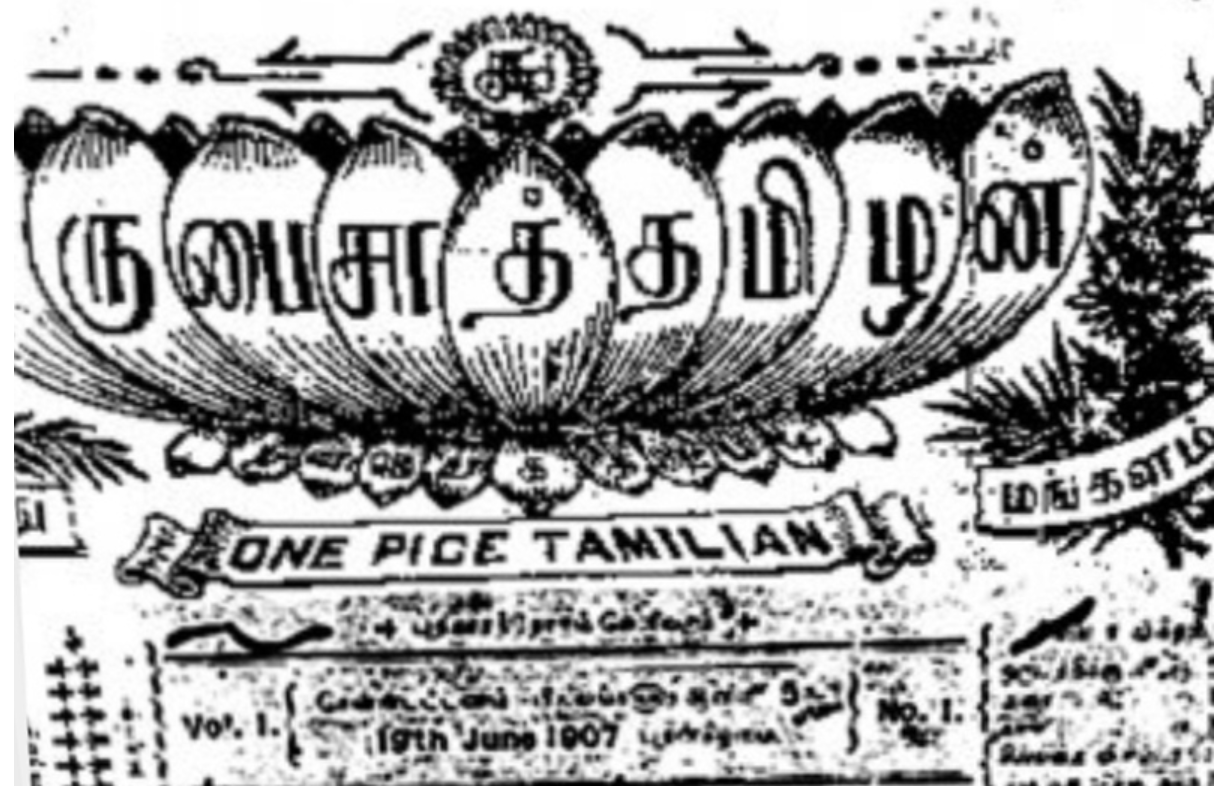
He also understood the power of media. In 1907, he launched Oru Paisa Tamizhan, a Tamil weekly that became a vital platform for anti-caste thought, political critique, literature, medicine, religion, and social reform. At a time when oppressed communities were routinely spoken about but rarely given control over the means of public speech, Iyothee Thass used journalism as a tool of liberation.
This is one reason his life feels so contemporary. We still live in a world where power depends on controlling narratives. Communities are still misnamed, misrepresented, flattened, exoticized, or erased. The struggle for justice is still also a struggle over archives, headlines, textbooks, temple spaces, family stories, and public memory.
To remember Iyothee Thass today is not simply to honor a figure from the past. It is to enter a richer history of resistance — one that reminds us that the fight against caste has always been intellectual, spiritual, cultural, and political at once.
His life challenges those of us committed to justice to ask harder questions of our own traditions. It is not enough to celebrate pluralism while ignoring hierarchy. It is not enough to speak of ancient wisdom without confronting ancient and modern systems of exclusion. It is not enough to honor reformers after death while resisting the discomfort of their critiques in the present.
Iyothee Thass asks us to remember differently. Not through nostalgia, but through interrogation. Not by turning social justice leaders into harmless icons, but by allowing their questions to remain alive.
What are the names we have inherited that still carry the weight of oppression?
What histories have been hidden because they threaten dominant power?
What religious practices still protect hierarchy while speaking the language of devotion?
What would it mean to build communities where dignity is not conditional on birth?
Questions Iyothee Thass Still Asks Us
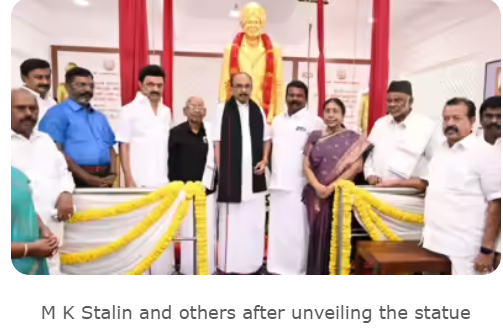
Tamil Nadu chief minister M K Stalin unveiling statue Iyothee Thass at Gandhi Mandapam in Chennai in 2023
Iyothee Thass, also known as Ayothidasar, was a Tamil anti-caste thinker, Siddha practitioner, journalist, organizer, and Buddhist revivalist. Born on May 20, 1845, in Madras, he became one of the most important early voices challenging caste hierarchy in modern South Asia.
He is remembered for urging oppressed communities to reject caste-imposed identities, reclaim erased histories, and organize around dignity, education, and self-respect.
Why is Iyothee Thass important?
Iyothee Thass is important because he understood caste as more than social discrimination. He saw it as a system of power that shaped religion, language, history, politics, and everyday life.
His work helped lay the groundwork for later anti-caste, Dalit, Buddhist, and Dravidian movements. He challenged the idea that oppressed communities had to accept the identities and histories given to them by caste society.
What did Iyothee Thass mean by “Casteless Dravidians”?
Iyothee Thass urged caste-oppressed communities to identify as “Casteless Dravidians” rather than accept a place within the Hindu caste order. This was a radical act of self-definition.
By using the term “casteless,” he rejected the idea that caste should define a person’s identity, worth, or community. By invoking “Dravidian,” he connected oppressed communities to a broader cultural and historical inheritance beyond Brahminical frameworks.
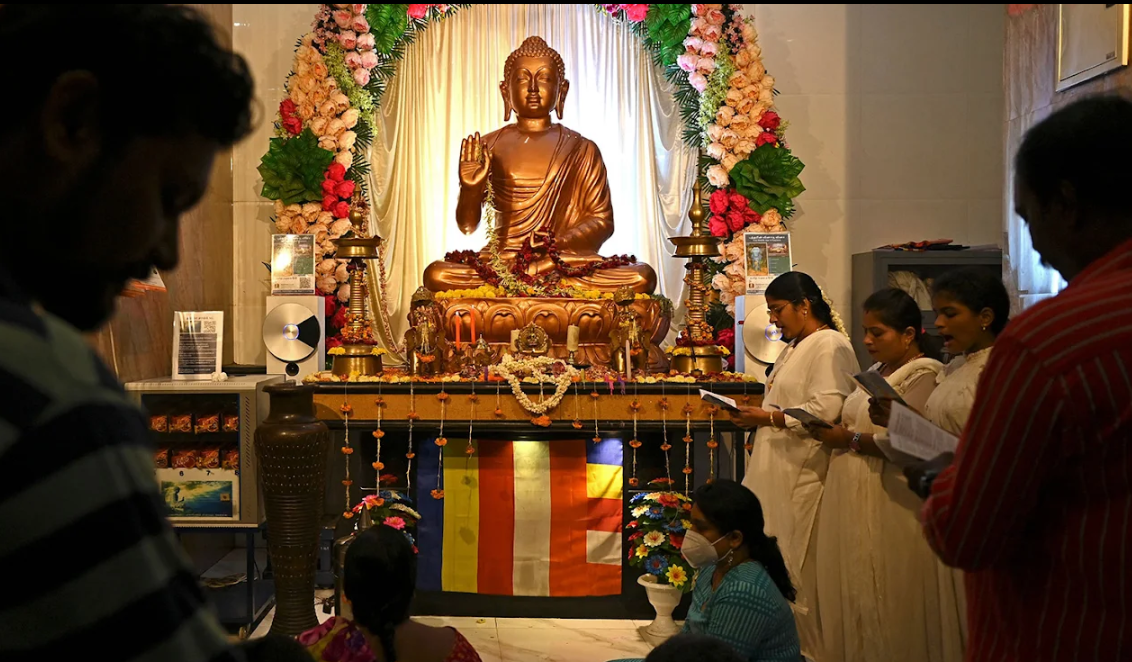
Devotees pray inside a vihara in Chennai on the occasion of Buddha Purnima (via Caravan)
How was Iyothee Thass connected to Buddhism?
Iyothee Thass saw Buddhism as a casteless spiritual and ethical tradition that could help oppressed communities reclaim dignity. He argued that many caste-oppressed Tamil communities had roots in an earlier Buddhist past.
In 1898, he founded the Sakya Buddhist Society in Madras. His Buddhist work was both religious and political: it challenged caste hierarchy while offering a different vision of community, history, and liberation.
Was Iyothee Thass a Hindu reformer?
Iyothee Thass is better understood as an anti-caste thinker who challenged the religious foundations of caste society. He did not simply call for reform within existing caste structures. He questioned whether oppressed communities should accept the religious identities imposed on them by those structures.
This is part of what makes his work so powerful. He was not asking for inclusion into an unjust order. He was asking whether that order itself had any moral legitimacy.
What was Oru Paisa Tamizhan?
Oru Paisa Tamizhan was a Tamil weekly launched by Iyothee Thass in 1907. It later became known as Tamilan. The publication covered anti-caste politics, Tamil Buddhism, medicine, literature, religion, and social reform.
It gave oppressed communities a platform to debate, learn, organize, and speak for themselves. In that sense, it was not only a newspaper. It was a tool for intellectual and political liberation.
How did Iyothee Thass influence later anti-caste movements?
Iyothee Thass helped shape many ideas that later became central to anti-caste and Dravidian movements: self-respect, caste refusal, critique of Brahminical dominance, alternative histories, and the importance of oppressed communities naming themselves.
His Buddhist revival also anticipated later Dalit Buddhist movements, including the mass conversion led by Dr. B.R. Ambedkar in 1956.
Why does Iyothee Thass matter for conversations about caste today?
Iyothee Thass matters today because caste continues to shape life in India and across the diaspora. It appears in marriage networks, religious spaces, social organizations, workplaces, politics, and community life.
His work reminds us that caste cannot be addressed only through symbolic inclusion. It requires deeper honesty about history, power, religious authority, and social practice.
What can progressive faith communities learn from Iyothee Thass?
Progressive faith communities can learn that justice requires self-critique. Traditions cannot only be remembered through their most beautiful teachings; they must also be examined through the suffering they have allowed, justified, or ignored.
Iyothee Thass pushes us to ask whether our religious and cultural practices protect dignity or hierarchy. He reminds us that liberation is not found in pride alone, but in truth, accountability, and solidarity.
Further Reading: The Worlds Iyothee Thass Opened
Iyothee Thass’s life cannot be understood through biography alone. His work opens onto larger histories of Tamil Buddhism, anti-caste journalism, Dravidian thought, Siddha healing, caste abolition, and the right of oppressed communities to recover their own pasts. These resources offer a deeper path into that world.
For a concise biographical overview, the Government of India’s profile of Iyothee Thass as an anti-caste activist, Siddha practitioner, and institution-builder offers a useful starting point, including his birth on May 20, 1845, in Thousand Lights, Madras.
For readers who want a deeper scholarly foundation, Gajendran Ayyathurai’s Columbia dissertation, Foundations of Anti-caste Consciousness: Pandit Iyothee Thass, Tamil Buddhism, and the Marginalized in South India, remains one of the most important academic studies of Iyothee Thass, Tamil Buddhism, and caste-oppressed communities in South India.
Ayyathurai’s newer Oxford University Press book, Tamil Buddhism and brahminism in Modern India: Deep Resistance against Caste, expands this work into a major study of Tamil Buddhism, caste resistance, and Iyothee Thass’s intellectual world.
To understand Iyothee Thass’s role in anti-caste journalism, readers can explore the Tamil Wiki entry on Oru Paisa Tamilan, the weekly Tamil magazine he launched in 1907. The publication became an important space for anti-caste thought, Tamil Buddhist writing, political critique, and community self-representation.
For those interested in reading closer to the source, digitized Tamil materials connected to Ayothidasar are available through Internet Archive, including Tamil-language collections of writings and studies on Ayothidasar.
To better understand the term “Siddha” in Iyothee Thass’s life, the Central Council for Research in Siddha under the Ministry of AYUSH offers background on Siddha as a Tamil system of medicine, healing, and research.
For a contemporary bridge between Iyothee Thass’s anti-caste vision and ongoing caste justice work, see Hinduism and the Caste System: A Call for Liberation and Justice, which reflects on the need for a casteless society rooted in dignity and equality.
And to connect this history to present-day diaspora struggles, read New York Must Outlaw Caste Discrimination, which looks at how caste discrimination continues to appear in workplaces, schools, housing, and community life — and why civil rights protections must name the harms people actually face.