
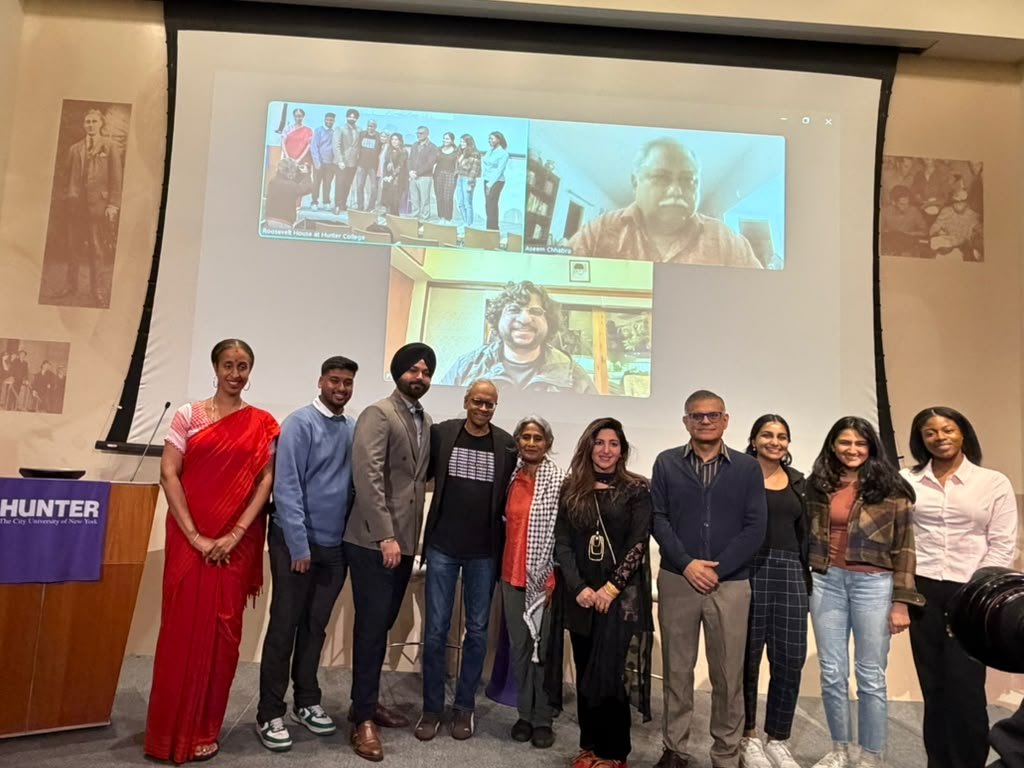
Hindus for Human Rights and Roosevelt House co-sponsored a community screening of Satluj, followed by a wide-ranging conversation with director Honey Trehan and writer and film critic Aseem Chhabra.
The afternoon began with welcomes from Manu, who offered context for the gathering, and HfHR co-founder Sunita Viswanath. After the screening, Japneet Singh moderated a lively post-film discussion with Trehan and Chhabra, who joined by Zoom from India at 4:30 a.m. their time.
Participants reflected on the legacy of human rights defender Jaswant Singh Khalra and the history of Punjab and India in the years after 1984. The discussion also explored why the BJP government may be so resistant to a film that revisits this history, and what it means when governments attempt to control which stories can be told, circulated or publicly remembered.
Trehan and Chhabra also spoke about the complicated relationship between Bollywood and political movements. At a moment when cinema in India is increasingly shaped by political pressure, censorship and ideological expectation, Satluj raises larger questions about the role artists can play in preserving memory, confronting violence and creating space for histories that those in power would rather leave undisturbed.
Those questions felt especially immediate given the political moment in India. The discussion connected the film’s exploration of state power, dissent and historical memory with the mass protests now unfolding across the country. A story rooted in Punjab’s past became a way of thinking about the present: what happens when citizens challenge institutions they believe have failed them, and why remembering previous struggles matters when new ones begin.
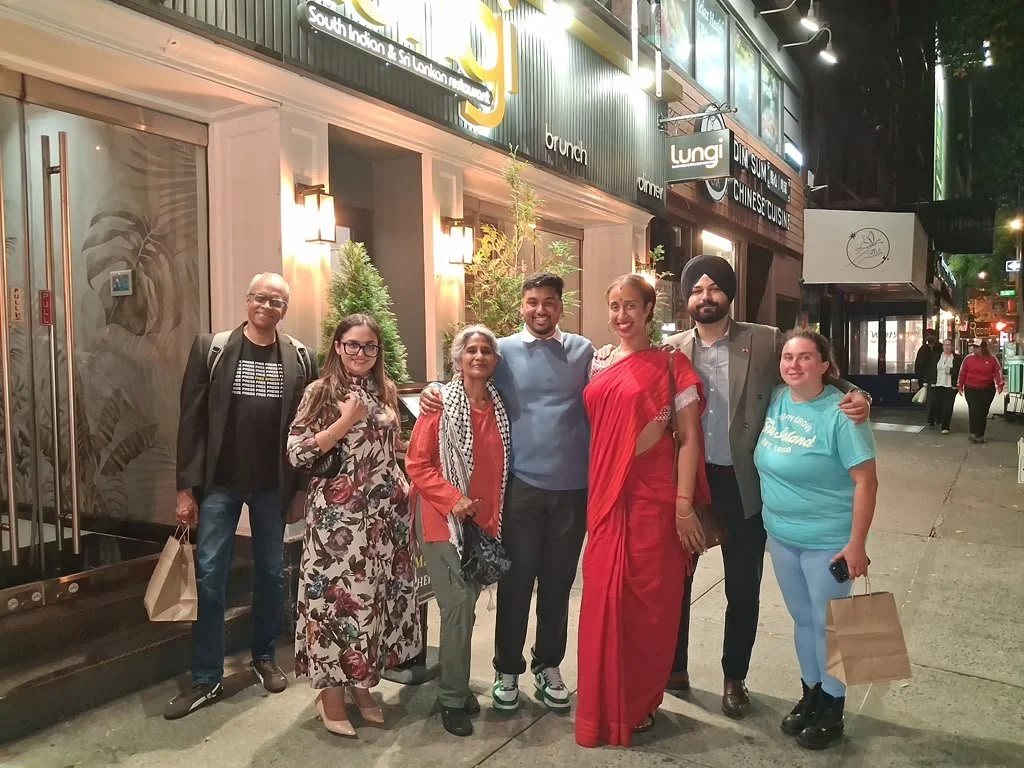
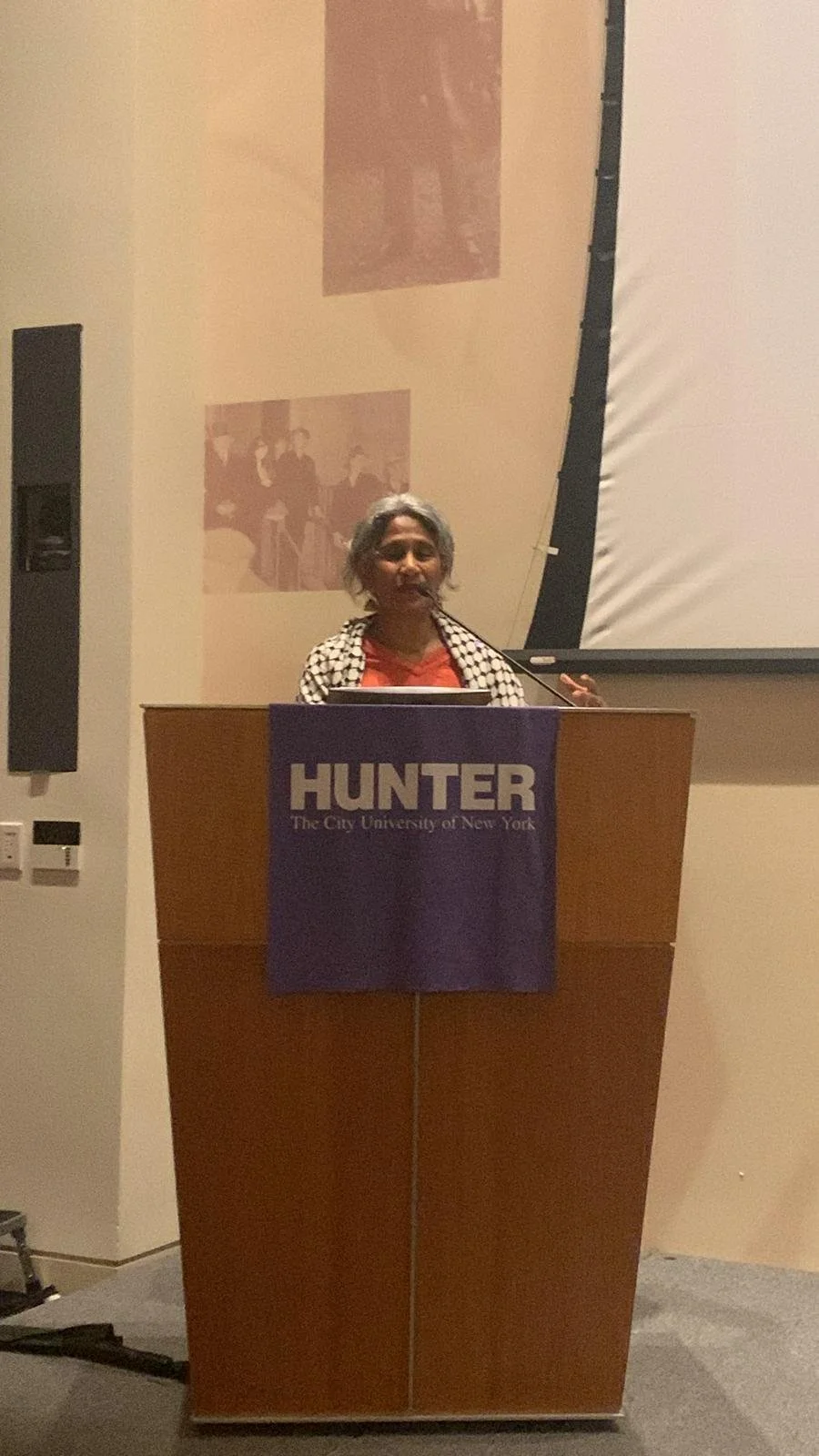
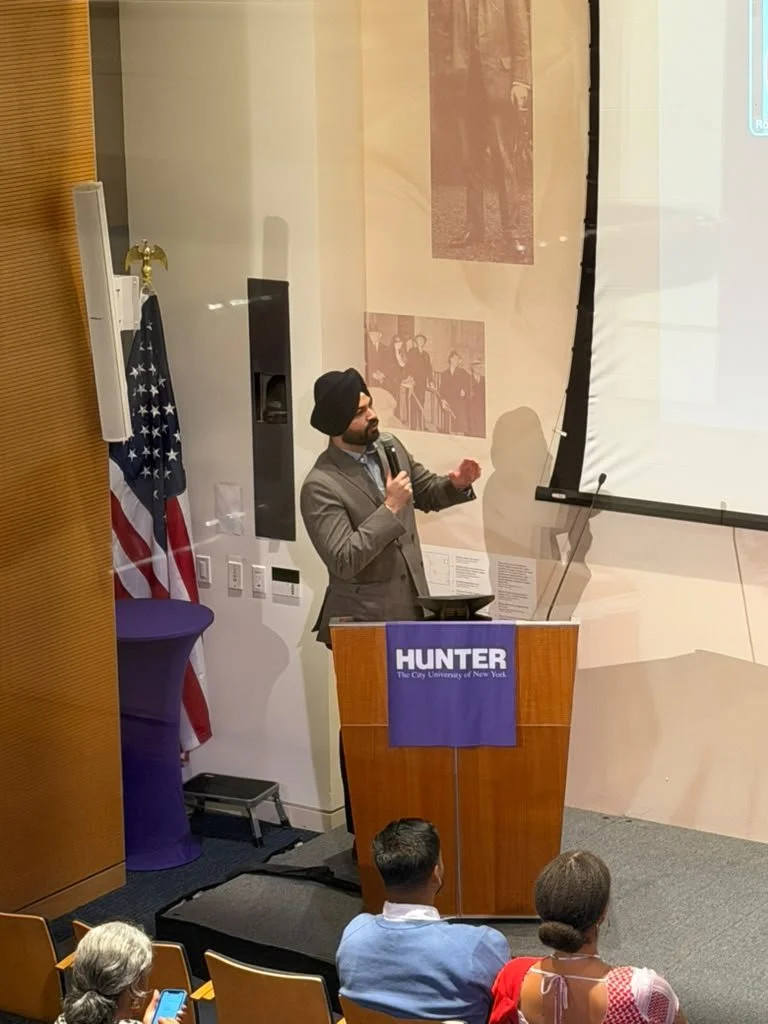
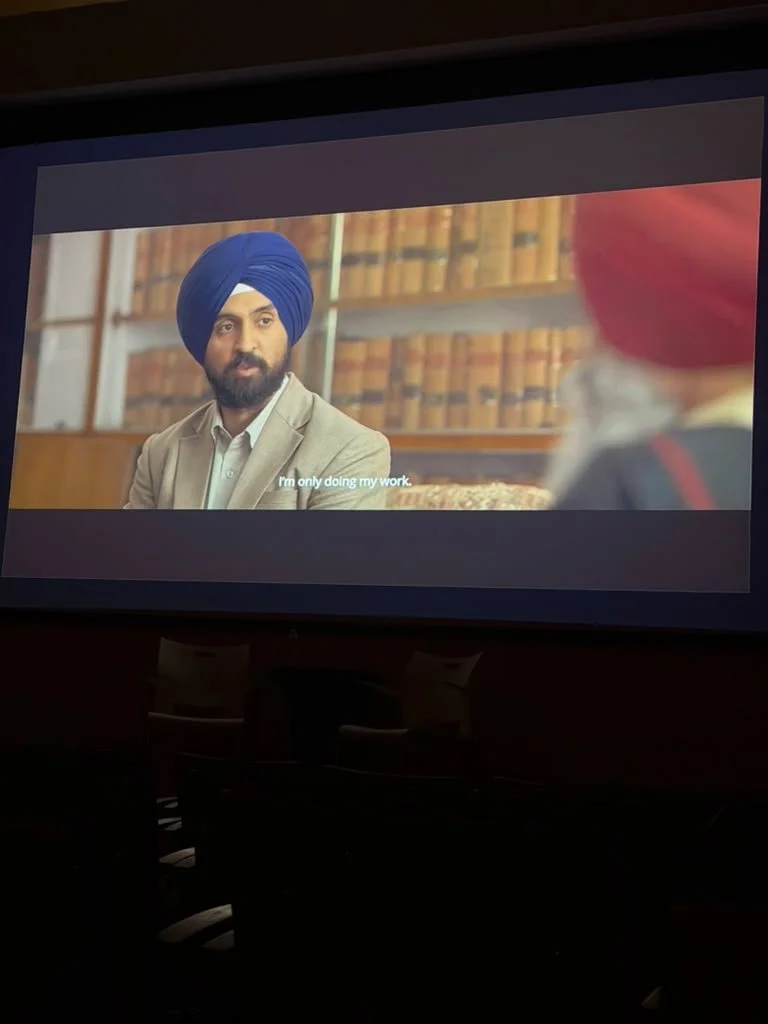
The gathering was also a reminder of what becomes possible when a film screening is treated as the beginning of a conversation rather than its conclusion. Sikh history, human rights, political memory, cinema and the current movement for democratic accountability in India all came together in the room.
We are grateful to Honey Trehan and Aseem Chhabra for joining us at such an extraordinary hour, to Japneet Singh for guiding the discussion, to Roosevelt House for co-sponsoring the event, and to everyone who came to watch, listen and engage.