
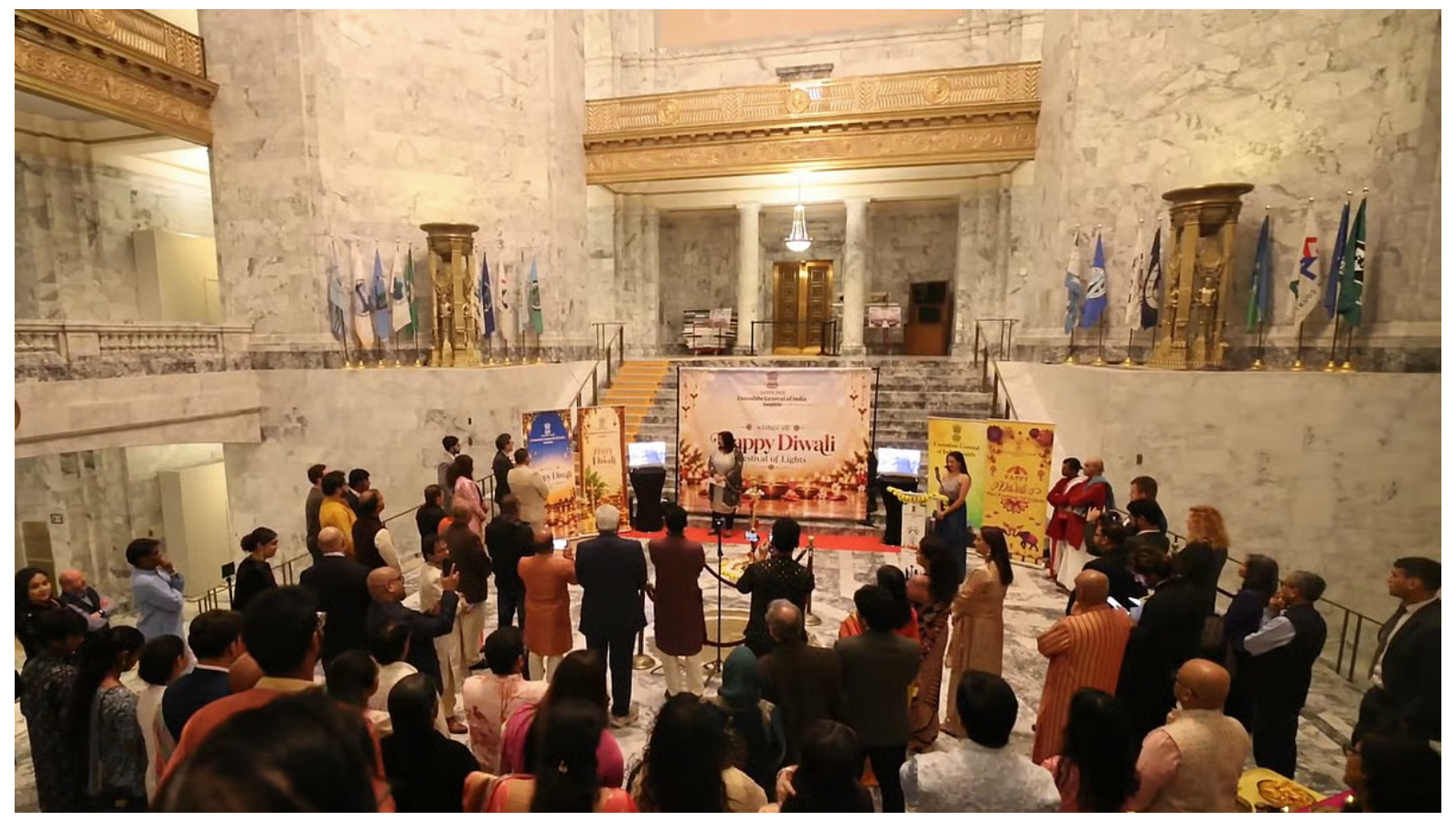
Diwali may be one step closer to becoming part of the United States' official national calendar. On November 9, Congresswoman Grace Meng of New York reintroduced the Diwali Day Act, legislation that would establish Diwali, or Deepavali, as a federal holiday. If enacted, it would become the 12th federal holiday in the United States. The legislation has attracted support from members of Congress across the country and from a remarkably broad collection of Hindu, Sikh, Jain, South Asian, Indo-Caribbean and Asian American organizations. Hindus for Human Rights is among the endorsing organizations.
Federal recognition of Diwali would be important for millions of Americans who have grown accustomed to celebrating one of the most significant days of their religious and cultural lives around work schedules, school calendars and other obligations. But the significance of this proposal goes beyond getting a day off. It asks a larger question: What does it mean for Diwali to become part of the American story?
Diwali is already American
For generations, Diwali has been carried to the United States by people whose histories stretch across India, Nepal, Sri Lanka, Bangladesh, Pakistan, the Caribbean, Southeast Asia and beyond. Its meanings are equally varied. Hindus themselves tell different stories about Diwali depending on region, tradition and family. Jains, Sikhs and Buddhists observe the period through their own histories and religious traditions. Indo-Caribbean communities have carried and transformed Diwali through generations far removed from the Indian subcontinent. That plurality is reflected unusually well in the coalition supporting the current legislation.
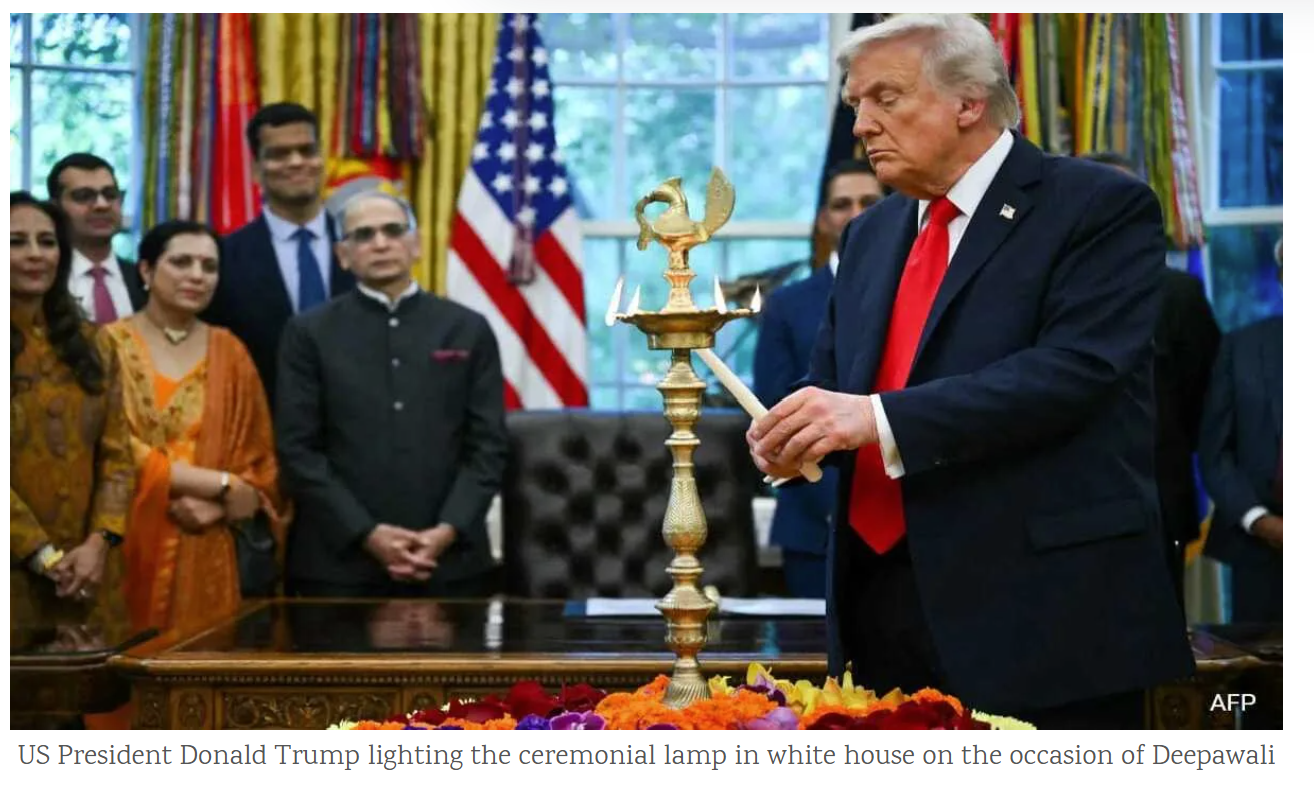
Donald Trump lighting a diya
Alongside Hindus for Human Rights are organizations including the Sikh Coalition, Sikh American Legal Defense and Education Fund, Asian Americans Advancing Justice, the Asian American Federation, the Indo-Caribbean Alliance, the International Commission on Dalit Rights, the Hindu Temple Society of North America, the Coalition of Hindus of North America and others. These organizations do not all share the same politics, theology or understanding of Hindu identity. That may actually be part of what makes the coalition significant. The lesson we are constantly learning (for good and for bad) in community is that recognition does not require uniformity.
Recognition does not mean ownership
Some of the coverage surrounding the bill has described Diwali principally as a Hindu festival and its growing visibility as evidence of the political arrival of the Indian or Hindu diaspora. There is truth in one part of that story. Diwali is profoundly important to Hindus, and Hindu Americans deserve to see their traditions treated with the same seriousness afforded to the traditions of other communities. Anti-Hindu hatred and violence must likewise be confronted directly rather than minimized or ignored.
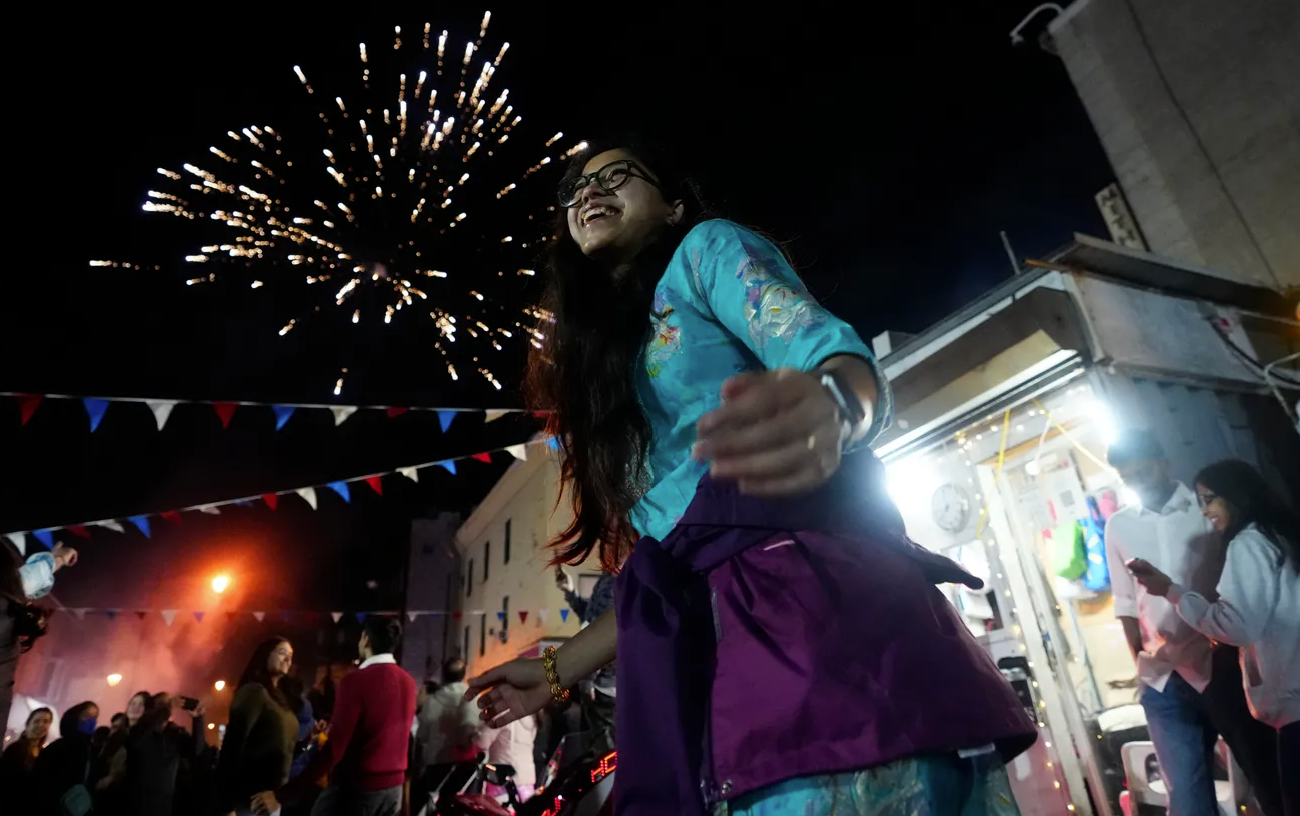
Celebrations in Jersey City, NJ
Congresswoman Meng explicitly connected the legislation to recent anti-Hindu and anti-South Asian hate, citing vandalism at temples, the alleged planned attack on a Hindu temple in Illinois during Navratri, and the racist disruption of a Diwali celebration in Washington State. But recognizing Hindu Americans should never require turning Diwali into the property of a single political conception of Hinduism. Indeed, the legislation itself describes Diwali as significant to Hindus, Sikhs, Jains and Buddhists and recognizes its place among South Asian, Southeast Asian and Indo-Caribbean communities.
That distinction feels particularly important at a moment when religious identity is so frequently recruited into nationalist politics. A pluralistic society can say clearly that anti-Hindu hate is real and unacceptable while also rejecting attempts to use concern for Hindus to silence criticism of Hindutva, caste discrimination or the policies of the Indian government.
A public calendar tells us who belongs
Holidays can seem symbolic. But public calendars are political documents in the broadest sense: they tell us whose histories, sacred days and collective memories the country recognizes. That is why battles over holidays have mattered throughout American history. New York City's public schools now include Diwali in their school calendar, although because Diwali fell on Sunday, November 8 this year, there was no additional weekday closure in the 2026–27 calendar. Pennsylvania formally recognized Diwali as a state holiday in 2024, while specifying that employers and government offices are not automatically required to close. Federal recognition would take that process considerably further.
For a Hindu child growing up in America, there is something meaningful about seeing Diwali printed alongside Christmas, Thanksgiving, Juneteenth and Martin Luther King Jr. Day rather than having to explain every year why an important family or religious celebration conflicts with school. The same is true for Sikh, Jain and other families whose traditions intersect with the festival season. Recognition says: you do not have to become less yourself in order to belong here.
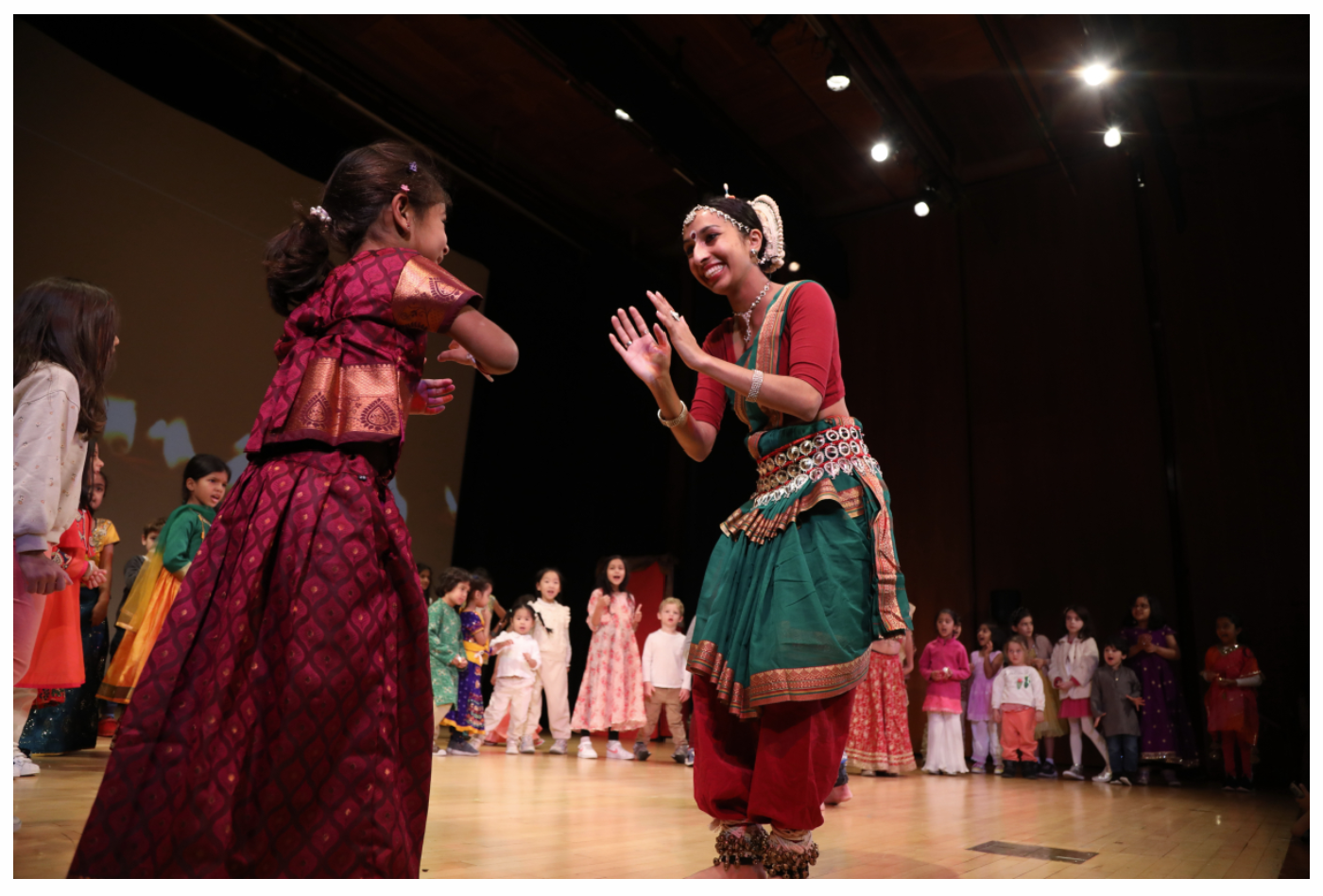
Diwali Family Day At celebrated at the Asia Society
A Diwali big enough for all of us
For some Dalit, Bahujan, Adivasi and anti-caste thinkers, the question goes deeper than differing interpretations of a festival. They challenge the very idea that “Hindu” identity has always represented a single, shared cultural experience, pointing instead to histories in which caste hierarchy shaped who had authority to define religion, tradition and belonging.
Those perspectives can sometimes be uncomfortable for people who experience Hindu identity primarily as a source of family, faith or community. But discomfort is not a reason to push them to the margins of the conversation. Nor should we approach such critiques as disappointing exceptions to an otherwise unified tradition. They are part of the tradition's history and part of the contemporary conversation about what Hindu identity means.
That is especially important when Diwali moves from a community celebration into the realm of public recognition. A federal holiday inevitably presents a story about what is being recognized and whom it represents. We should therefore resist the temptation to replace complexity with a single, reassuring account of “Hindu culture.” Taking Dalit, Bahujan, Adivasi and other critical perspectives seriously does not require everyone to reach the same conclusion about Diwali or Hindu identity. It requires something simpler and more demanding: that we listen to those perspectives as part of the culture itself, rather than treating them as attacks coming from outside it. A genuinely pluralistic recognition of Diwali should be spacious enough for celebration and attachment and also for critique.
References and further reading
Times of India: 5 Indian-origin lawmakers among 19 backing Diwali federal holiday bill in US
QNS: Rep. Meng reintroduces legislation to make Diwali a federal holiday
Moneycontrol: Five Indian-American lawmakers back bill to make Diwali a federal holiday in US. Who are they and what happens next?
The American Bazaar: Ami Bera, Ro Khanna among 19 lawmakers calling for Diwali to be declared a federal holiday
Mangalore Today: Bill in US Congress to recognise Diwali as federal holiday
Free Press Journal: US Lawmaker Grace Meng Reintroduces Diwali Day Act To Make Festival Of Lights A Federal Holiday
Frequently Asked Questions
Is Diwali a federal holiday in the United States?
No. Diwali is not currently a U.S. federal holiday. On November 9, 2026, Representative Grace Meng of New York reintroduced the Diwali Day Act, which would establish Diwali, also known as Deepavali, as the 12th federally recognized holiday if enacted.
What is the Diwali Day Act?
The Diwali Day Act is proposed federal legislation that would add Diwali to the list of U.S. federal holidays. Meng has described the bill as a way to recognize the importance of Diwali to millions of Americans and to affirm that Hindu, Sikh, Jain, Buddhist, South Asian, Southeast Asian and Indo-Caribbean communities are part of the American story.
Who supports making Diwali a federal holiday?
The legislation was reintroduced with 20 congressional co-sponsors and has been endorsed by a broad coalition of civil rights, religious and community organizations. These include Hindus for Human Rights, the Sikh Coalition, SALDEF, Asian Americans Advancing Justice, the International Commission on Dalit Rights, the Indo-Caribbean Alliance, the Hindu Temple Society of North America and others.
Is Diwali only a Hindu holiday?
No. Diwali is deeply important within many Hindu traditions, but it is also observed or marked in different ways by Sikhs, Jains and Buddhists, as well as by communities across South Asia, Southeast Asia and the Indo-Caribbean diaspora. Even among Hindus, the stories, rituals and meanings associated with Diwali vary widely by region and community.
That diversity matters. Public recognition of Diwali should not turn a varied and contested set of traditions into a single official account of what the holiday “means.”
Why do some Dalit, Bahujan and Adivasi communities have a different relationship to Diwali?
Some Dalit, Bahujan, Adivasi and anti-caste thinkers challenge dominant interpretations of stories associated with Diwali and other Hindu festivals. Figures portrayed as villains or asuras in one tradition may be remembered quite differently in another, including as ancestors, rulers or symbols of resistance.
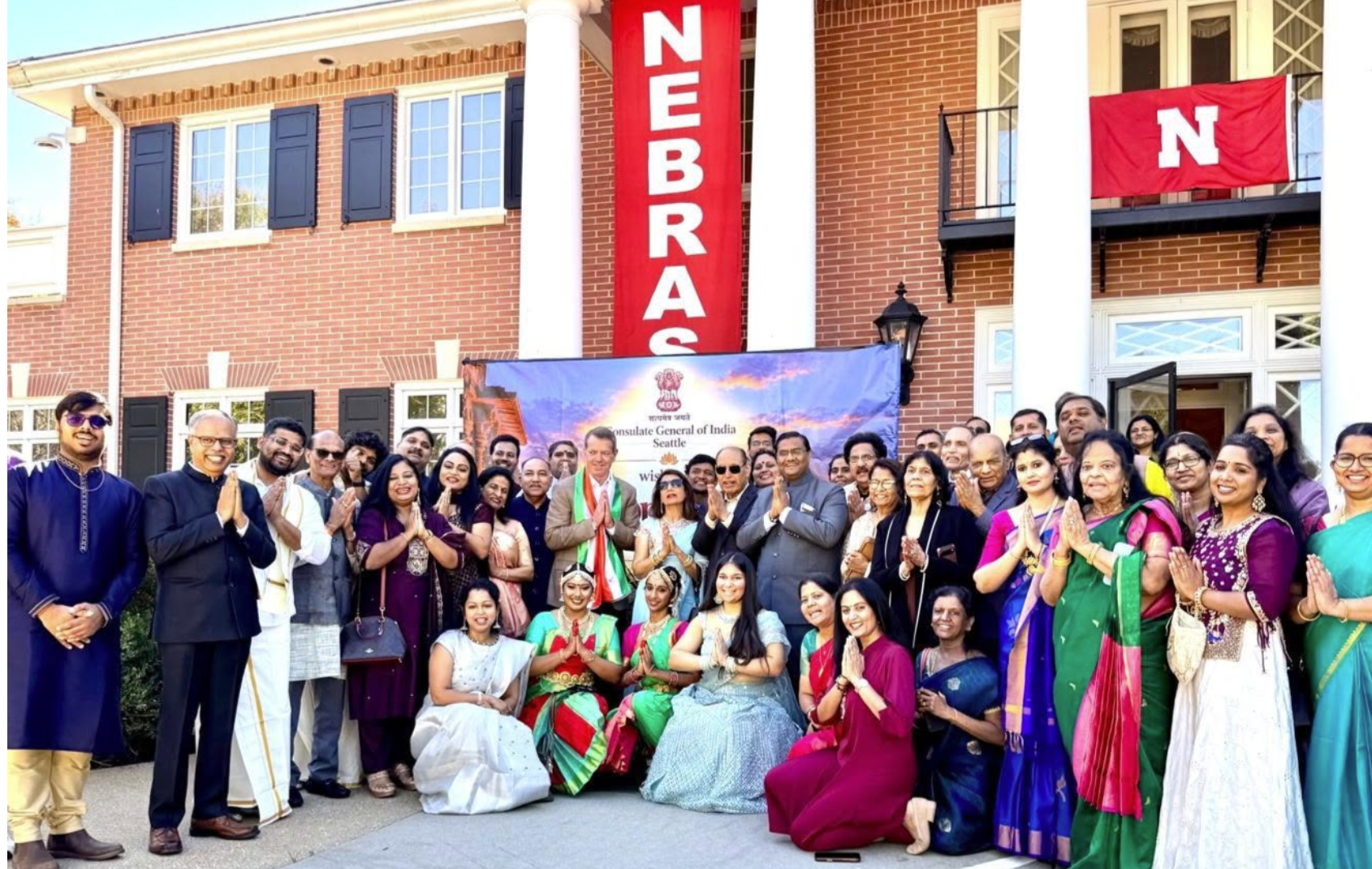
Diwali Gathering at the Governor’s Mansion in Lincoln, Nebraska
For some, the concern goes deeper than differing festival customs. It raises questions about caste, Brahminical authority and who has historically had the power to define what counts as Hindu culture.
These perspectives are not peripheral to understanding Diwali. They are part of the history and continuing conversation surrounding it.
Does acknowledging these critiques diminish Diwali?
It should not. Taking contested histories seriously does not require people to abandon celebration, devotion or family tradition.It does require us to recognize that the same cultural story may carry different meanings for communities shaped by different histories of caste, religion, region and power. A pluralistic approach makes room for celebration, reinterpretation, criticism and even non-participation.
Why does Hindus for Human Rights support federal recognition of Diwali?
Hindus for Human Rights supports recognition of Diwali because Hindu Americans and other communities for whom the festival is important should be able to observe it without having to choose between religious or cultural life and school or work. We also believe that recognition should reflect the actual complexity of the communities involved. A federal holiday should expand belonging, not establish one group or one interpretation as the official owner of Diwali.
Is criticism of Hinduism or caste the same as anti-Hindu hate?
No. Anti-Hindu prejudice and violence are real and should be confronted. At the same time, criticism of caste hierarchy, Brahminism, Hindutva, religious institutions or dominant understandings of Hindu identity should not automatically be categorized as anti-Hindu hatred. Maintaining that distinction is essential to both religious freedom and meaningful anti-caste work.
Would a federal Diwali holiday mean that everyone has to celebrate it?
No. Federal recognition does not require anyone to observe or endorse the religious meaning of a holiday. It would formally recognize Diwali on the federal calendar and provide a federal day off, just as federal recognition of Christmas does not require Americans to be Christian.
Recognition should create room for communities to celebrate. It should also leave room for people whose relationship to the festival is critical, complicated or entirely different.
Why does federal recognition of Diwali matter?
Public calendars help communicate whose histories and traditions are understood as part of the nation.
For many Hindu, Sikh, Jain and other families, federal recognition would mean no longer having to treat an important religious or cultural observance as something that must be fitted around the dominant calendar.
But recognition is most meaningful when it does more than add another festival to that calendar. It can also invite a more mature understanding of American pluralism: one capable of acknowledging that traditions are diverse, internally contested and continually changing.
What happens next with the Diwali Day Act?
The bill must move through the congressional legislative process before it can become law. Reintroduction does not itself make Diwali a federal holiday. The current proposal builds on earlier versions of the Diwali Day Act introduced in previous Congresses.