
Satluj: They Tried to Disappear a Film About the Disappeared
The attempted disappearance of a film about disappearances is not just censorship, it’s a warning about how fragile public memory becomes when the state decides which stories can be seen and heard.
Before most viewers in India had time to decide what they thought of Satluj, the film was already gone.
Starring Diljit Dosanjh and formerly titled Punjab ’95, Satluj tells the story of Jaswant Singh Khalra, the Sikh human rights defender who investigated alleged disappearances, extrajudicial killings, and secret cremations in Punjab during the 1980s and 1990s. After years of certification delays, title changes, and reported demands for cuts, the film briefly appeared on ZEE5 in India in early July 2026. Less than two days later, viewers began reporting that it had disappeared from the platform, in some cases while they were still trying to watch it.
That sudden removal transformed Satluj from a politically sensitive film into a wider conversation and a grass roots movement of screenings on the fly. The controversy is no longer only about Khalra, Punjab, or the film’s portrayal of state violence, instead the present-day anxiety around who gets to tell difficult histories, especially when those histories involve the state itself has come to the fore. The government reportedly sought the film’s removal on national security grounds. In response, Sikh organizations, local activists, village communities, and gurdwaras have reportedly organized screenings in public and religious spaces across Punjab and beyond. Diaspora organizations are beginning to plan screenings as well.
What might have remained an OTT release has become a debate about censorship and public grief. In village courtyards and gurdwara halls, Satluj is being watched not as entertainment, but as testimony: by people who lived through that era, and by younger viewers trying to understand the silences they inherited and which the state is trying to impose anew.
The world the film enters is one of the most painful and politically contested chapters in modern Punjab’s history. By the 1980s and early 1990s, Punjab was shaped by the demand for Khalistan, an independent Sikh homeland, and by the Indian state’s campaign against armed militant groups. That history cannot be reduced to one slogan or one side. For many Sikhs, the demand for Khalistan emerged from deep grievances over political autonomy, religious dignity, the trauma of Operation Blue Star, the anti-Sikh pogroms of 1984, and a wider sense that Sikh rights and security had been made vulnerable inside the Indian state. At the same time, armed militant groups carried out killings, intimidation, and violence that affected civilians, journalists, political opponents, police families, and ordinary Punjabis.
The state’s response was not simply routine law enforcement. In the name of defeating militancy and restoring order, Punjab saw a counterinsurgency campaign that human rights groups have long accused of torture, illegal detention, staged “encounter” killings, enforced disappearances, and secret cremations. This is the terrain Satluj moves through: a society where families searched police stations, jails, morgues, and cremation grounds for sons, husbands, brothers, and fathers who never came home; where a body could be burned as “unidentified” even while someone, somewhere, was still waiting for news.
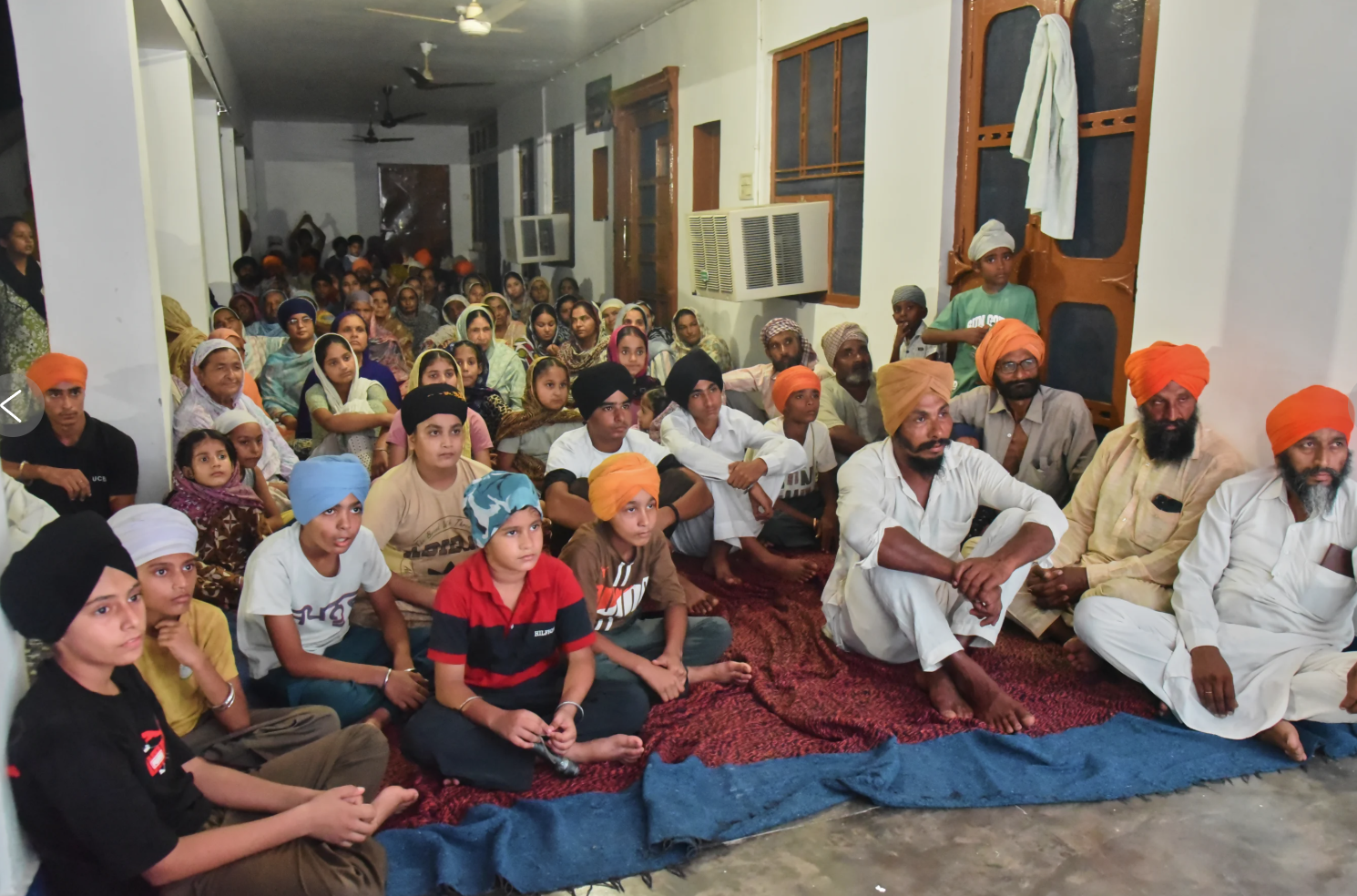
Villagers watch a special screening of the film “Satluj” at a Sikh temple at Tatley village, in Punjab’s Gurdaspur district, India, Wednesday, July 8, 2026. (AP Photo/Prabhjot Gill)
Khalra’s work was dangerous because it made the hidden visible. He and fellow activist Jaspal Singh Dhillon examined crematoria records and helped expose allegations that thousands of people had been killed and secretly cremated by police in Punjab. The horror was not only that people had died. It was that a system appeared to have emerged in which people could be detained, killed, cremated, misidentified or left unnamed, and then officially denied.
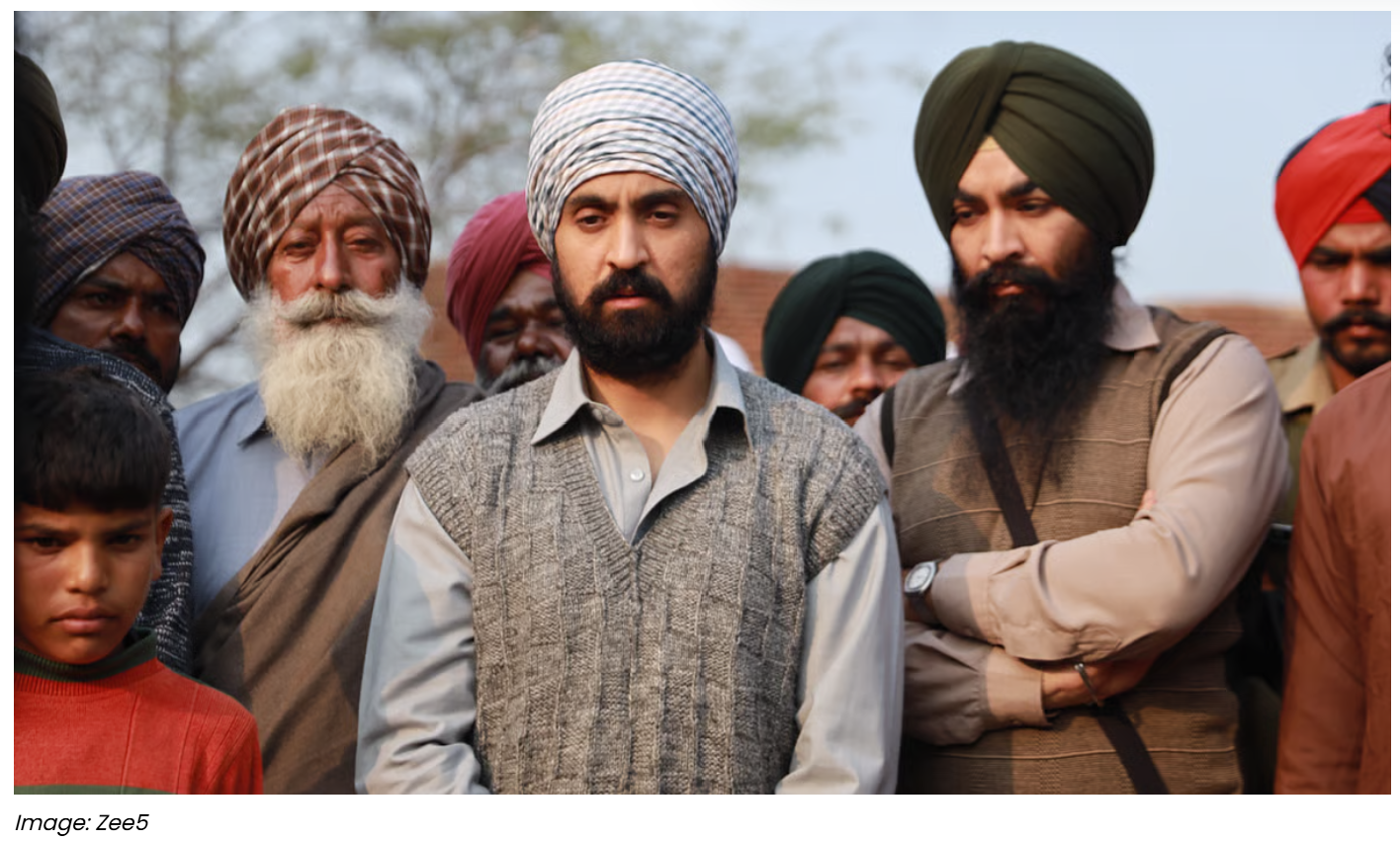
Satluj does not function like a conventional political thriller, even though it contains the machinery of one: files, registers, threats, surveillance, police pressure, official denials, a family under strain and a protagonist who keeps following the evidence as the danger closes in. Its tension comes from something colder than spectacle: the bureaucratic afterlife of violence. A name in a register. A stack of cremation records. A family with no body to mourn. A state that wants the matter closed. A human rights defender who insists that the dead are not disposable, and that the disappeared must be returned to history as human beings.
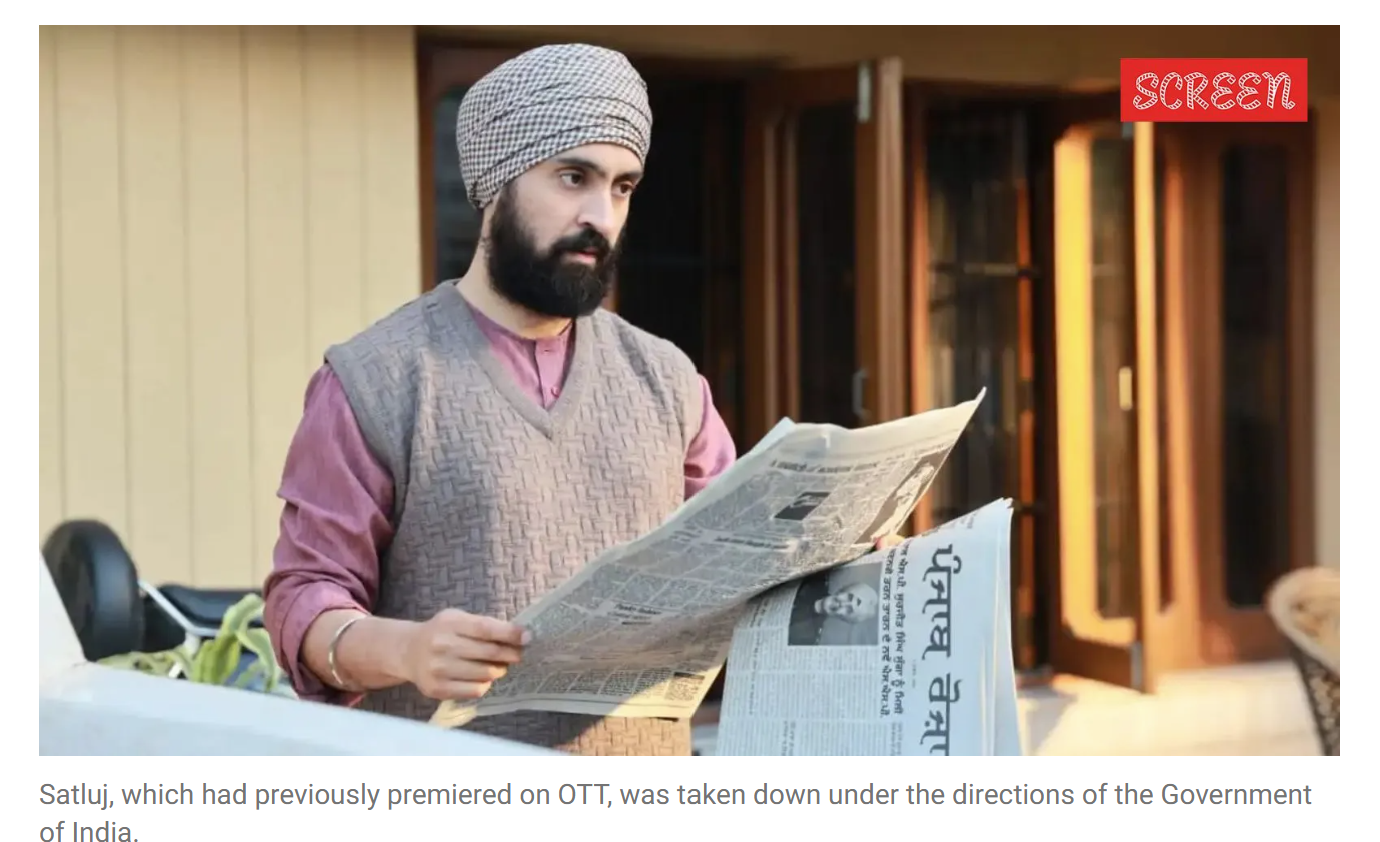
This is what made the film’s own fate so politically charged. A film made to recover names from silence briefly surfaced, then vanished. But censorship often misunderstands how culture works. It treats a platform as if it were the same thing as public memory. Remove the film, and the story will fade. Block the stream, and the conversation will quiet down.
What happens instead can be stranger and more powerful. The banned or buried work becomes an object of curiosity. The viewer becomes a witness. The act of watching becomes inseparable from the act of asking why watching was forbidden. The Streisand Effect gone Punjabi is perhaps now the Satluj Effect. Across Punjab and beyond, people are not only asking where they can see the film. They are asking why they were not trusted to see it. A film meant for private screens is now being watched collectively. The state may be able to pressure an OTT platform. It cannot so easily control a village courtyard, a gurdwara hall and a mobile projector.
MORE FILM AND CULTURE TAKES: SUBSCRIBE TODAY
Its removal from standard platforms has not ended the conversation. It has clarified the stakes. This is about who gets to narrate history when the state is implicated in violence; about whether “national security” can become a permanent password for erasure and whether communities have the right to mourn publicly and refuse the idea that patriotism mean forgetting or even erasing injustices rather than making them part of a complex national story.
What are people asking about the movie Satluj
What is Satluj?
Satluj is a 2026 film starring Diljit Dosanjh and directed by Honey Trehan. Formerly known as Punjab ’95, it is based on the life of Jaswant Singh Khalra, a Sikh human rights activist who investigated alleged enforced disappearances, extrajudicial killings, and secret cremations in Punjab during the 1980s and 1990s.
Why is Satluj trending?
Satluj is trending because it briefly appeared on ZEE5 after years of delays and censorship controversy, then was removed from the platform. Its removal transformed the film from a biographical drama into a national debate about censorship, artistic freedom, national security claims, and the right of communities to remember state violence.
Who was Jaswant Singh Khalra?
Jaswant Singh Khalra was a Sikh human rights activist from Punjab. Human Rights Watch reports that Khalra and Jaspal Singh Dhillon used government crematoria records in 1994 and early 1995 to expose more than 6,000 secret cremations by police in one district of Punjab. His work became central to the Punjab mass cremations case.
What happened to Jaswant Singh Khalra?
Khalra was abducted in 1995. Amnesty International reported shortly after his disappearance that he had not been seen since September 6, 1995, when he was arrested by police outside his home. Later legal proceedings and investigations led to convictions of police officials in connection with his abduction and murder.
Why was Satluj previously called Punjab ’95?
The film was previously known as Punjab ’95 because it centers on the events surrounding Jaswant Singh Khalra’s work and death in the context of Punjab’s insurgency and counterinsurgency period. The title and release path changed during a long censorship battle, with reports noting objections from certification authorities and demands for cuts before the film finally appeared under the title Satluj.
Was Satluj removed from ZEE5?
Yes. Multiple reports say Satluj was removed from ZEE5 in India shortly after its release. The News Minute reported that viewers began noticing the film had disappeared from the platform less than two days after release, while Times of India reported that the government planned to refer the film to an Inter-Departmental Committee under the Information Technology Rules.
Is Satluj banned?
Reports have described the film as effectively blocked or removed from streaming access, but the precise regulatory status has been reported in different ways. What is clear is that after its brief OTT release, the film became unavailable on ZEE5 in India, and the government reportedly moved to examine it through an IT Rules process.
How are people watching Satluj despite its removal?
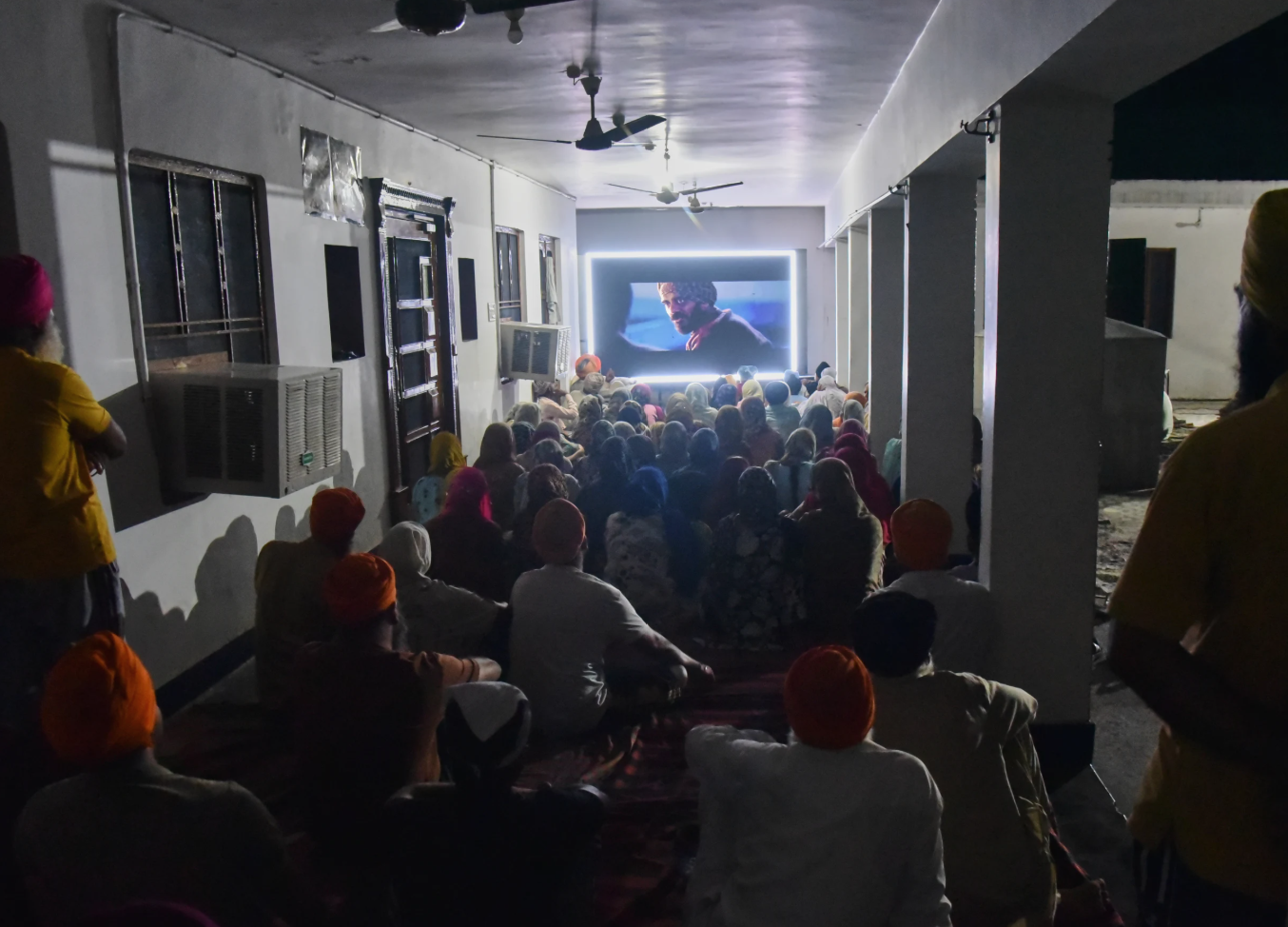
Reports say community groups, Sikh institutions, political organizations, village youth groups, and gurdwaras have organized public screenings in Punjab, Delhi, and other locations. These screenings have used village grounds, gurdwara spaces, projectors, and large screens, turning the film into a grassroots act of public memory.
Why are the community screenings important?
The screenings matter because they show that censorship can produce the opposite of silence. Instead of disappearing, Satluj has become a shared public event. AP described screenings where older people who lived through the period sat beside young people born after it ended, making the film a space for intergenerational memory and political education.
Why should human rights organizations care about Satluj?
Human rights organizations should care because Satluj raises questions far beyond film certification: enforced disappearances, alleged extrajudicial killings, police impunity, survivors’ dignity, censorship, and the right of communities to know their own history. These are not only cinema issues. They are democratic issues.
What is the broader lesson of the Satluj controversy?
The broader lesson is that painful histories do not disappear when governments or platforms suppress them. They often become more powerful. When a film about disappearances is itself removed from public view, censorship becomes part of the story it was trying to suppress.
Resources and Further Reading
Associated Press: Community screenings help Satluj bypass censorship
AP reports on how local Sikh groups, activists, and communities are organizing screenings in villages, gurdwaras, and community spaces after the film was removed from ZEE5.
Read AP’s report
The News Minute: Satluj taken down from ZEE5 in India
The News Minute reports that Satluj, formerly Punjab ’95, disappeared from ZEE5 in India less than two days after its OTT debut.
Read The News Minute’s report
Times of India: Government refers Satluj to IT Rules committee
Times of India reports that the government planned to refer the film to an Inter-Departmental Committee under the IT Rules after its removal from ZEE5.
Read the Times of India report
Indian Express: Why CBFC held up the film for years
Indian Express looks at the film’s long censorship battle, the CBFC objections, and the controversy around its release.
Read Indian Express coverage
MediaNama: OTT censorship concerns after ZEE5 removes Punjab ’95 / Satluj
MediaNama frames the takedown as part of a larger debate over unofficial censorship, OTT regulation, and platform accountability.
Read MediaNama’s analysis
Takes and analysis
Sabrang India: When cinema becomes a battlefield over memory and censorship
Sabrang situates Satluj within the politics of history, public memory, and the state’s discomfort with politically sensitive cinema.
Read Sabrang India’s take
Newslaundry: Jaswant Singh Khalra was harder to place than Satluj admits
Newslaundry offers a more complicated reading of Khalra’s political identity and the film’s handling of his life. Useful for readers looking for a critical, not purely celebratory, take.
Read Newslaundry’s analysis
Outlook India: What Satluj reveals about censorship, OTT platforms, and history
Outlook examines the film’s troubled release and what the controversy reveals about India’s battle over historical narratives.
Read Outlook’s analysis
True Scoop News: Village youth groups use projectors and large screens
True Scoop reports that local youth groups have organized screenings in village gurdwara courtyards and community spaces using projectors and large LED screens.
Read True Scoop’s report
Background on Jaswant Singh Khalra and Punjab’s disappeared
Human Rights Watch: “Protecting the Killers: A Policy of Impunity in Punjab, India”
Human Rights Watch documents the Punjab mass cremations case and the work of Jaswant Singh Khalra and Jaspal Singh Dhillon.
Read the Human Rights Watch report
Amnesty International: Fear of disappearance / fear of torture: Jaswant Singh Khalra
Amnesty’s 1995 urgent action documents Khalra’s disappearance and the concern that he was at risk of torture or death.
Read Amnesty’s urgent action
Supreme Court case: Prithipal Singh and Others v. State of Punjab
The Supreme Court case records the legal history surrounding Khalra’s abduction, investigation, and convictions of police officers.
Read the case summary
Punjab Disappeared: Mass cremations and Jaswant Singh Khalra
Punjab Disappeared provides background on Khalra’s documentation of illegal cremations and the continuing struggle for truth and accountability.
Read Punjab Disappeared’s backgrounder