
Kamakhya Temple, Ambubachi Mela and India’s Debate Over Menstrual Dignity
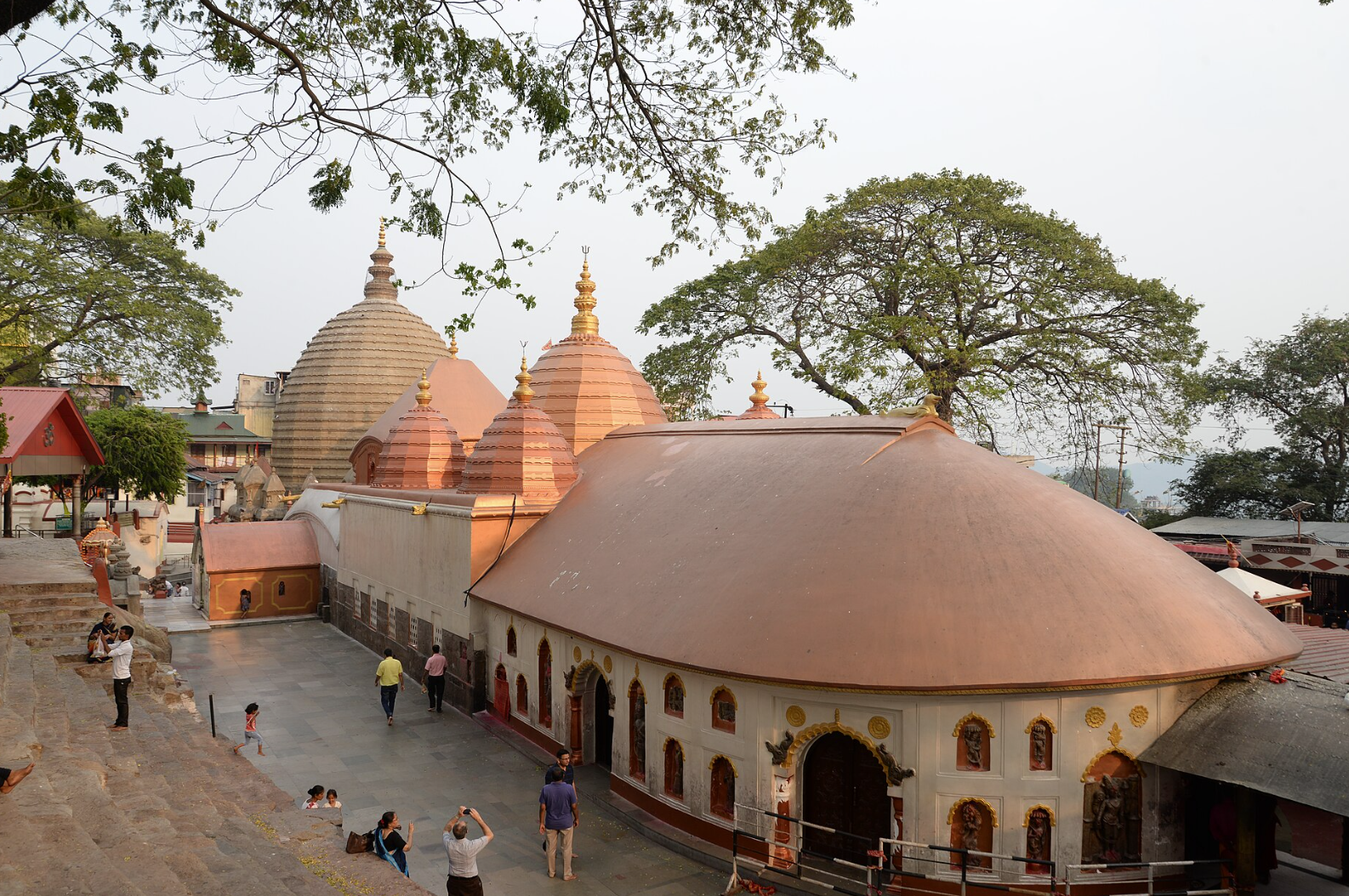
As lakhs of devotees gather for Ambubachi Mela, India is still debating whether menstruating people deserve dignity not only in worship, but in schools, workplaces, homes, temples, and public life. Each year, as the monsoon gathers over Assam, devotees make their way to Nilachal Hill in Guwahati for one of the most striking observances in Hindu life: Ambubachi Mela at Kamakhya Temple.
The festival marks the annual menstruation of Goddess Kamakhya, one of the most revered forms of the Divine Feminine in Shakta and Tantric traditions. During the observance, the sanctum is closed for a period of ritual seclusion and then reopened to devotees. In 2026, Ambubachi Mela began on June 22 and concluded on June 26. The Times of India reported that 7,96,777 devotees, including 75 international pilgrims, attended this year’s gathering.
Nearly eight lakh people gathered to honor the menstruation of the goddess. And yet, in many families, schools, workplaces, and temples, menstruating people are still asked to hide, withdraw, apologize, or accept exclusion as normal. This is the contradiction Ambubachi places before us: How can a society worship a menstruating goddess while shaming menstruating human beings?
Ambubachi Is Not Just a Festival Story
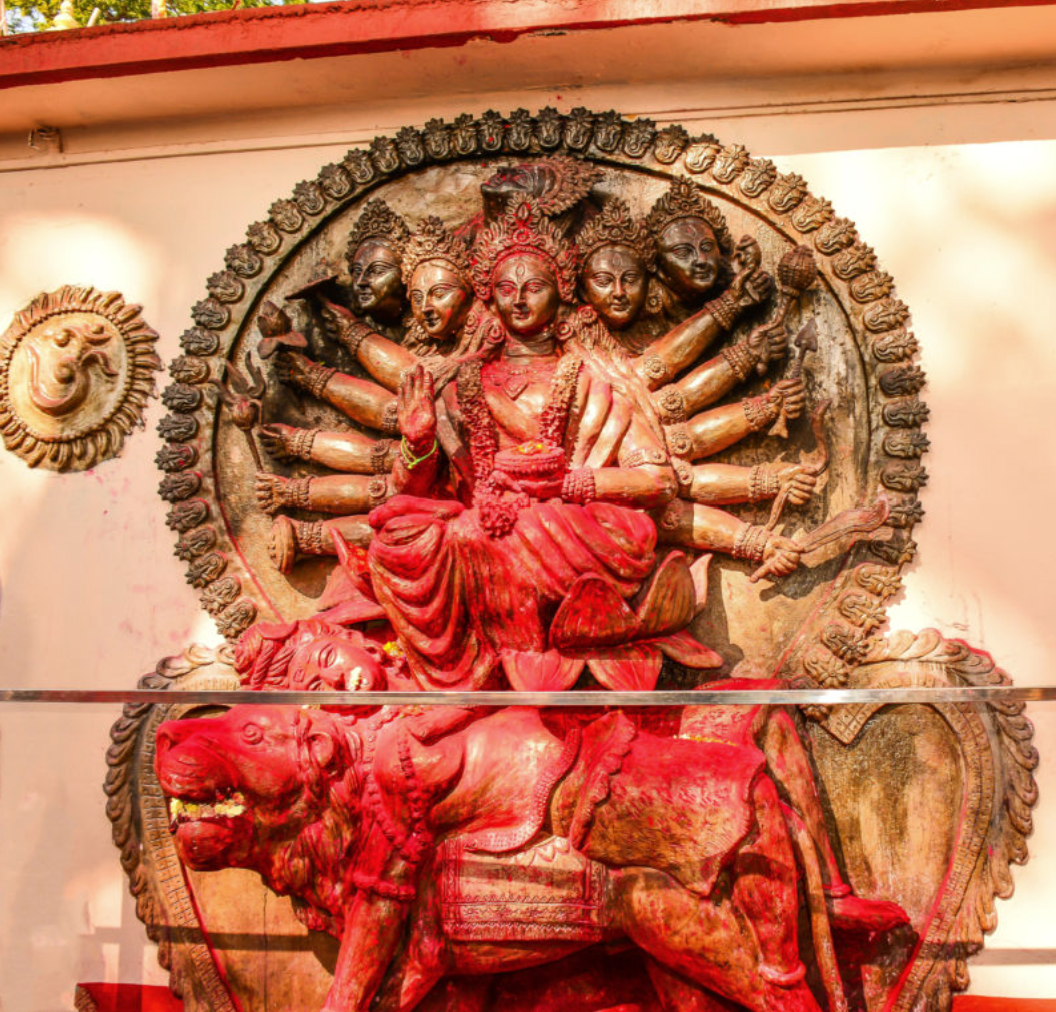
It would be easy to treat Ambubachi Mela as a colorful religious gathering: a story of pilgrimage, crowds, ritual, Tantra, and Assam’s spiritual tourism. But to do that would be to miss its deeper challenge. Ambubachi is not simply about revering the goddess in the abstract. It is about what kind of Hindu imagination we allow ourselves to inherit. nAt Kamakhya, menstruation is not treated as an embarrassment to be erased. It is placed at the center of sacred time. The goddess’s cycle is ritually acknowledged. Her body is not outside the sacred; her body is the site of the sacred.
Because across the world, and certainly across South Asian communities, menstruation is still often treated through the language of impurity, secrecy, shame, or inconvenience. Many people who menstruate are still told not to enter prayer rooms, kitchens, temples, or ritual spaces. Many are still expected to manage pain silently. Many students still miss school because they lack safe bathrooms, menstrual products, privacy, or basic support. Kamakhya gives us a different starting point. She reminds us that Hindu traditions are not one thing. They contain both exclusionary customs and liberating resources. They contain rules that have been used to police bodies, but also sacred imaginations powerful enough to challenge that policing.
Menstrual Dignity Is Now a Legal and Public Issue
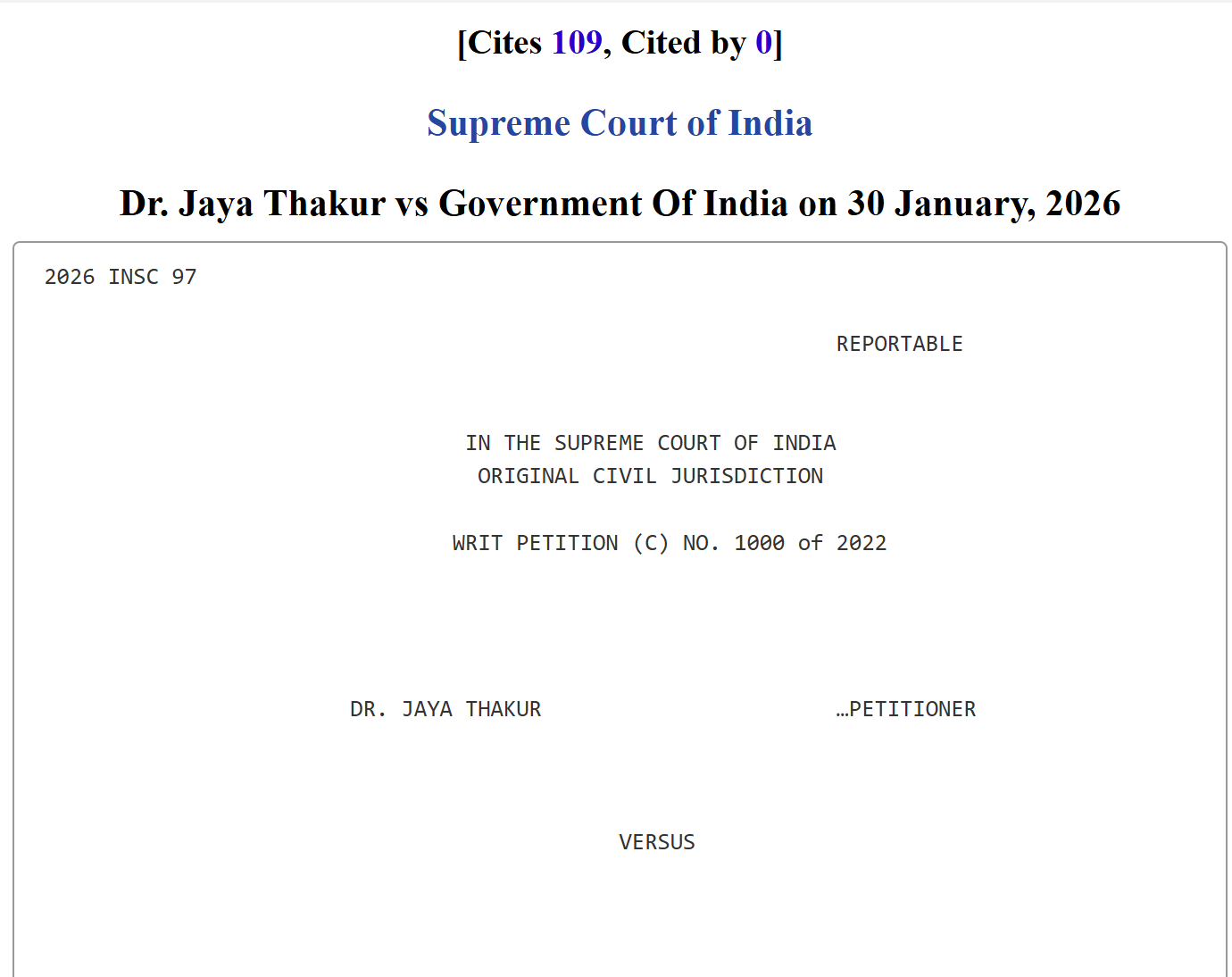
The timing of this year’s Ambubachi Mela is especially significant because menstrual dignity is also before India’s courts and policymakers. On January 30, 2026, the Supreme Court of India, in Dr. Jaya Thakur v. Government of India, recognized the right to dignified menstrual health as part of Article 21, the constitutional right to life and dignity. The Court linked menstrual health to privacy, education, health, participation, and equality. It also directed states and union territories to ensure functional gender-segregated toilets, water, soap, menstrual absorbents, menstrual hygiene management corners, and safe disposal mechanisms in schools. That is an extraordinary constitutional statement: menstruation is not a private inconvenience. It is a matter of dignity, health, education, and equal participation.
At the same time, the debate over menstrual leave shows how complicated this issue remains. On March 13, 2026, the Supreme Court declined to entertain a petition seeking a nationwide menstrual leave policy for women students and employees. The Court expressed concern that making menstrual leave compulsory by law could have unintended consequences for women’s employment, including discouraging employers from hiring women or reinforcing workplace stereotypes. This tension matters. Menstrual dignity cannot be reduced to one policy demand. It includes access to products, clean toilets, disposal facilities, pain care, privacy, public education, workplace flexibility, and freedom from stigma. It also requires care in how laws are designed, so that protections do not become new excuses for discrimination.
Kamakhya, Infrastructure, and the Politics of Pilgrimage
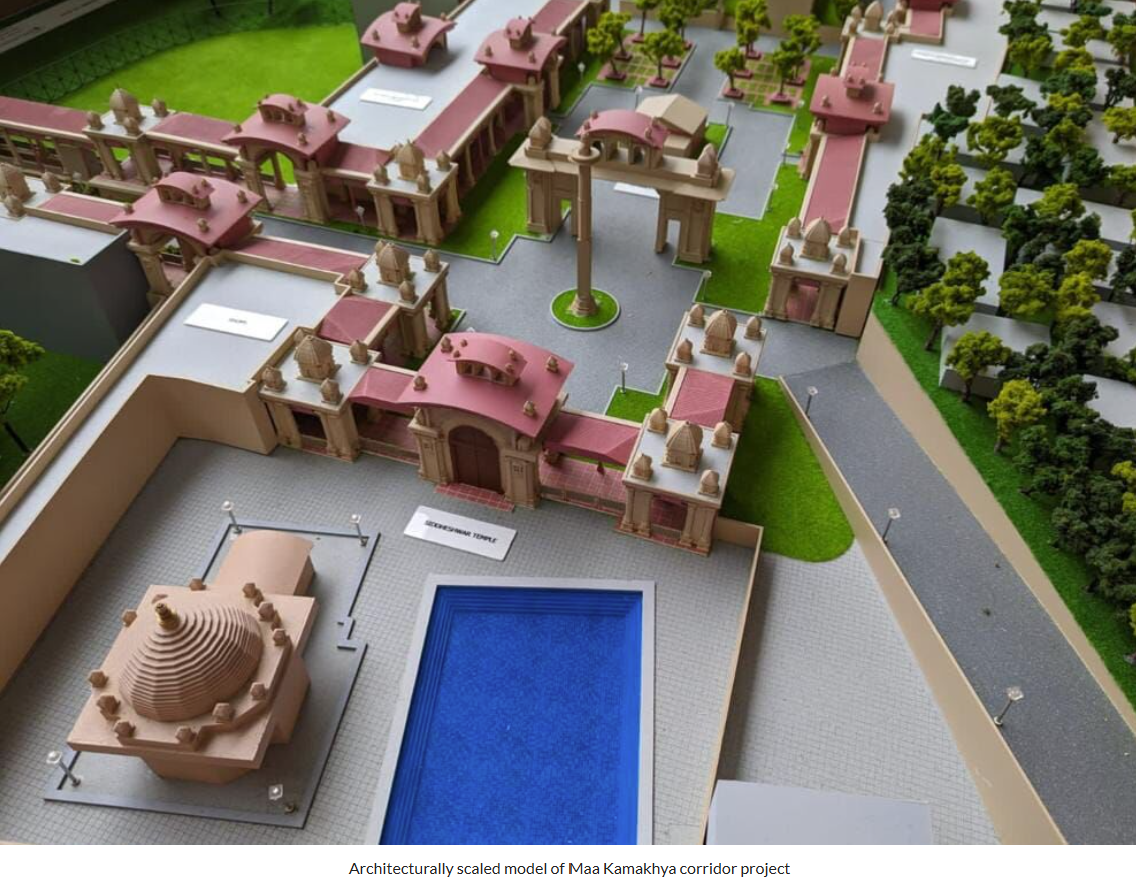
A scale model of the Kamakhya corridor project
Ambubachi is also part of a larger public conversation about temple infrastructure and state-backed religious development. The Kamakhya corridor project has recently been in the news, with reports that construction has begun after earlier legal and local concerns, including issues related to relocation, compensation, rehabilitation, and livelihood protection for nearby residents and traders.
If governments and institutions are willing to invest in pilgrimage infrastructure, then menstrual dignity must also be treated as infrastructure. Bathrooms are infrastructure. Water is infrastructure. Safe disposal is infrastructure. Accessibility is infrastructure. Health education is infrastructure. Freedom from shame is social infrastructure. The sacred cannot be separated from the material conditions that allow people to participate in public life.
At Kamakhya, the goddess menstruates. Her bleeding is honored as sacred, powerful, creative, and cosmic. But outside the temple gates, too many people are still taught to treat menstruation as something shameful, dirty, or disqualifying. A Hinduism rooted in justice must honor the body, not fear it. It must see dignity not as an abstract principle, but as something built into bathrooms, classrooms, workplaces, temples, language, and law. It must refuse to worship Shakti while humiliating the people through whom Shakti lives. The goddess is not outside the gate. She is the gate.
Frequently Asked Questions
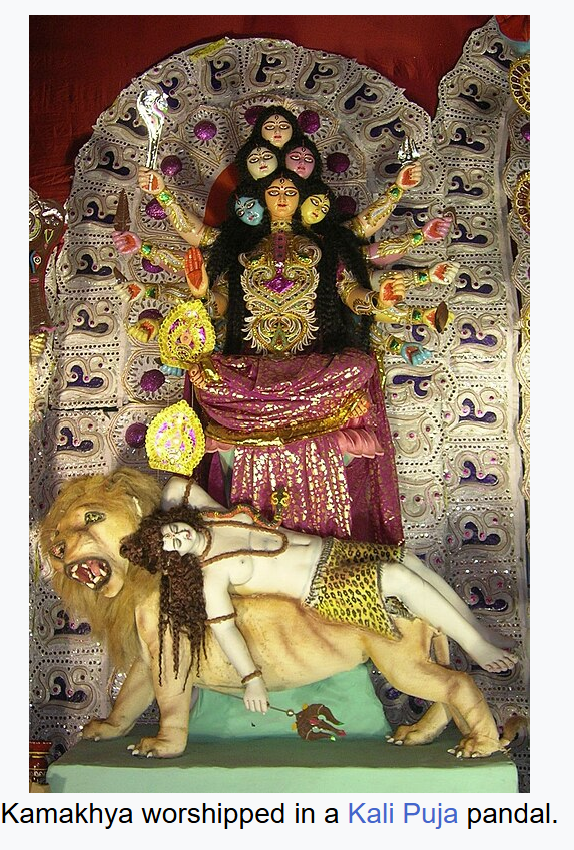
Kamakhya worshipped in a Kali Puja pandal
What is Ambubachi Mela?
Ambubachi Mela is an annual Hindu festival held at Kamakhya Temple in Guwahati, Assam. It marks the believed annual menstruation of Goddess Kamakhya and is associated with fertility, creation, monsoon, and the sacred power of the Divine Feminine. During the observance, the sanctum is closed for a period of ritual seclusion and then reopened to devotees.
When was Ambubachi Mela held in 2026?
In 2026, Ambubachi Mela began on June 22 and concluded on June 26. According to The Times of India, the sanctum was closed on Monday night and reopened Friday morning after the period of ritual seclusion.
How many people attended Ambubachi Mela in 2026?
The Times of India reported that 7,96,777 devotees, including 75 international pilgrims, attended Ambubachi Mela in 2026.
Why is Kamakhya Temple associated with menstruation?
Kamakhya Temple is associated with menstruation because it is one of the most important Shakti Peethas, sacred sites dedicated to the Divine Feminine, and is traditionally linked to the generative power of the goddess. According to one widely held Hindu tradition, the site marks the place where the yoni of Goddess Sati fell after Shiva carried her body in grief across the universe. Because of this association, Kamakhya is not centered on an anthropomorphic idol of the goddess, but on a sacred stone formation understood by devotees as a symbol of the goddess’s creative and reproductive power.
This makes Kamakhya one of the most powerful religious sites in South Asia for honoring the body, fertility, sexuality, and creation as sacred. In Shakta and Tantric traditions, the goddess is not treated as distant or abstract. She is embodied power: earth, blood, desire, birth, death, and renewal. Historically, the temple is also deeply rooted in the religious landscape of Assam and the ancient region of Kamarupa, where goddess worship, fertility traditions, Tantric practice, and local forms of devotion have long been intertwined. Ambubachi therefore reflects more than a single myth. It brings together Shakti worship, regional Assamese religious history, Tantric understandings of divine power, and the agricultural rhythms of the monsoon season.
Why is Ambubachi relevant to menstrual dignity today?
Ambubachi is relevant because it publicly honors divine menstruation while many menstruating people still face stigma, exclusion, inadequate facilities, and silence. The festival creates a powerful opportunity to ask whether reverence for the goddess can be extended into dignity for human beings.
Does Hinduism view menstruation as sacred or impure?
Hindu traditions are not uniform. Some customs treat menstruation through restriction or ritual separation, while traditions associated with Kamakhya offer a different vision, where menstruation is linked to sacred power, fertility, and creation. A progressive Hindu reading can draw on these liberatory resources to challenge shame and exclusion.
What did India’s Supreme Court say about menstrual health in 2026?
In Dr. Jaya Thakur v. Government of India, decided on January 30, 2026, the Supreme Court of India recognized dignified menstrual health as part of Article 21, the constitutional right to life and dignity. The Court connected menstrual health to privacy, reproductive health, education, and equal participation.
What directions did the Supreme Court give on menstrual hygiene in schools?

The Supreme Court directed states and union territories to ensure functional gender-segregated toilets, usable water connectivity, soap and handwashing facilities, free menstrual absorbents, menstrual hygiene management corners, and safe disposal mechanisms in schools.
Did India’s Supreme Court mandate menstrual leave in India?
No. On March 13, 2026, the Supreme Court declined to entertain a petition seeking a nationwide menstrual leave policy for women students and employees. The Court warned that a mandatory legal policy could create unintended employment discrimination or reinforce stereotypes, and said the issue should be considered by policymakers.
What does menstrual dignity mean?
Menstrual dignity means that people who menstruate have access to clean bathrooms, safe products, disposal facilities, health care, privacy, education, workplace flexibility, and freedom from shame or exclusion. It also means rejecting the idea that menstruation makes a person spiritually, socially, or physically lesser.
What should temples learn from Kamakhya?
Temples can learn that honoring the Divine Feminine should include honoring the real bodies of women, girls, trans men, and nonbinary people who menstruate. That means ending blanket exclusions, improving facilities, speaking openly about menstrual dignity, and refusing to treat bodily processes as pollution.
SUBSCRIBE FOR MORE STORIES LIKE THIS
Resources and Further Reading
Ambubachi Mela 2026 attendance and reopening of Kamakhya Temple
The Times of India reported that Ambubachi Mela concluded on June 26, 2026, with nearly 8 lakh devotees attending and the sanctum reopening after the period of ritual seclusion.
Read the Times of India report
Official Kamakhya Temple festival information
The Maa Kamakhya Devalaya official website describes Ambubachi Mela, also known locally as Ameti or Amoti, as one of the largest religious congregations in Northeast India, observed during the monsoon season around June 21 or 22.
Visit the official Maa Kamakhya Devalaya festival page
Supreme Court of India judgment on menstrual health and dignity
Dr. Jaya Thakur v. Government of India, decided on January 30, 2026, recognized dignified menstrual health as part of Article 21 and issued directions on school toilets, menstrual absorbents, hygiene management corners, and disposal systems.
Read the judgment on Indian Kanoon
Analysis of the Supreme Court menstrual health ruling
The Health and Human Rights Journal analyzed the January 2026 judgment as a constitutional moment for menstrual health, dignity, bodily autonomy, and equality in India.
Read the Health and Human Rights Journal analysis
Supreme Court debate on menstrual leave
The Times of India reported on the March 13, 2026 Supreme Court proceedings in which the Court declined to entertain a plea seeking nationwide mandatory menstrual leave, citing concerns about unintended employment discrimination.
Read the Times of India report on menstrual leave
Kamakhya corridor project and pilgrimage infrastructure
The Assam Tribune reported that construction had begun on the Kamakhya corridor project, while noting local concerns around relocation, compensation, rehabilitation, and livelihood protection.
Read The Assam Tribune report