
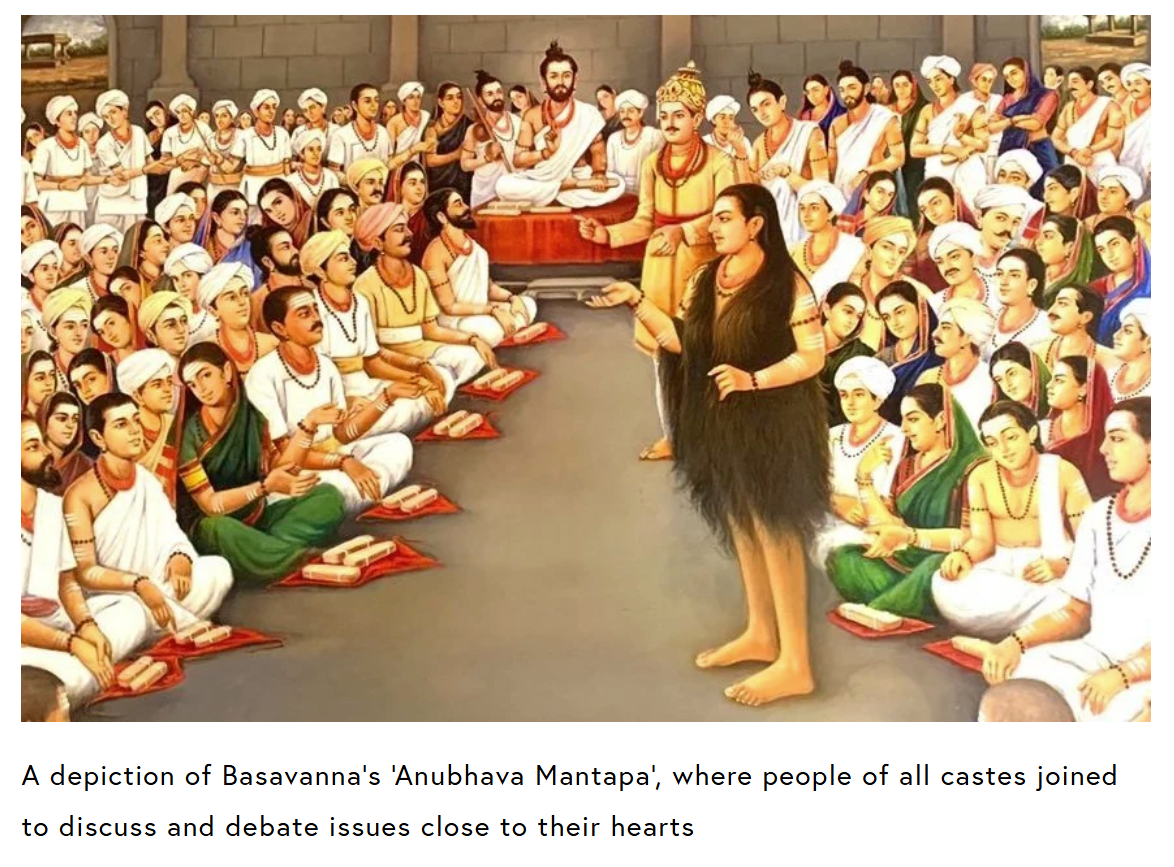
Basava Jayanti is celebrated to honor the birth anniversary of Basavanna, a great philosopher, poet, and social reformer whose legacy still speaks powerfully to our moment. Remembered as a 12th-century Hindu reformer, teacher, and poet associated with the growth of the Lingayat tradition, Basavanna is not only a saint to be admired. He is a challenge to every Hindu community that still hesitates to confront caste, hierarchy, and exclusion with honesty.
For Hindus for Human Rights, Basava Jayanti is not simply a day of reverence. It is a day of moral inventory. It asks whether devotion to Shiva can be separated from justice. It asks whether a religious tradition can claim spiritual depth while tolerating discrimination based on birth. It asks whether faith is being used to liberate human beings or to rank them. HfHR’s own work is clear that the struggle against caste oppression is central to practicing dharma rooted in justice, equality, and human dignity.
Basavanna’s importance lies not only in what he believed, but in what he built. In the tradition around him, the Anubhava Mantapa stands as a radically open space of dialogue, where people from different castes, professions, and social locations, including women, could speak, think, and shape a shared ethical life. That matters. A society organized around inherited superiority fears open conversation. Basavanna’s world made room for it. He helped imagine a spiritual community in which wisdom did not belong only to priests, elites, or those sanctioned by birth.
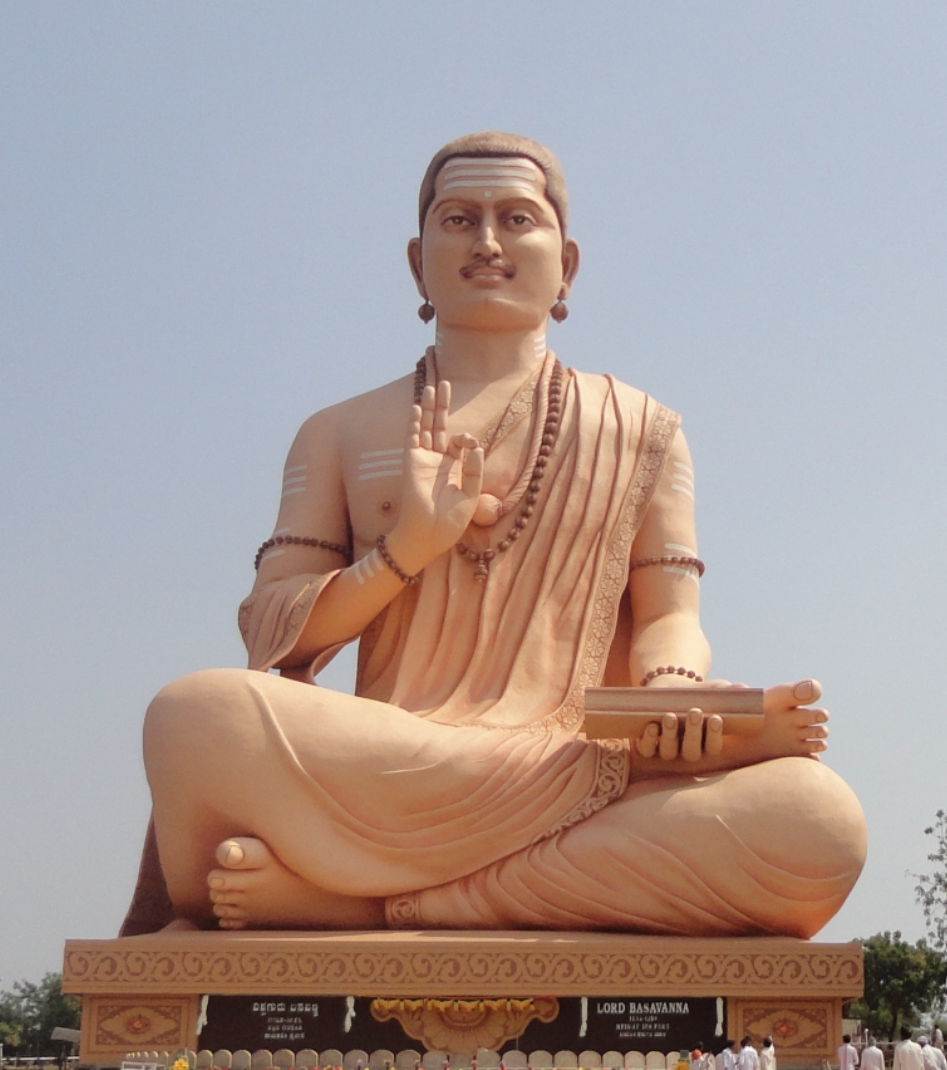
This is the worlds tallest Basava statue located in Basava Kalyana, Karnataka India. Inaugurated on 28th October 2012.
His teachings on kayaka and dasoha remain especially urgent. Kayaka, the dignity of labor, refuses the idea that some work is pure and some people are polluted by what they do. Dasoha, the sharing of what one earns, insists that spiritual life is not private self-improvement but an ethical relation to others. Together, these teachings cut directly against caste society, which has long tied occupation, status, ritual purity, and power to birth. Basavanna’s message was not that inequality could be softened. It was that the moral logic behind it had to be rejected.
Just as important was the form of his speech. The vachanas associated with Basavanna and the Sharanas helped make philosophy public. They were written in Kannada rather than being locked away in elite language and ritual control. That linguistic choice mattered then, and it matters now. It suggested that truth belongs in the language of the people, not only in the custody of gatekeepers. Faith, in this vision, becomes something lived, questioned, argued, and shared.
This is why Basava Jayanti should trouble us as much as it inspires us. It is easy to celebrate Basavanna through statues, speeches, and social media graphics. It is harder to follow him where he leads: into conflict with caste arrogance, into solidarity with those oppressed by inherited hierarchies, and into a vision of Hindu life that cannot be reduced to ritual prestige or social rank. Basavanna does not belong to the defenders of inequality. He belongs to the struggle against it.
That struggle is not over. Across South Asia and the diaspora, caste discrimination still shapes institutions, families, marriage, labor, belonging, and safety. Too often, people invoke Hindu tradition to deny, minimize, or sanitize that reality. Basavanna offers no comfort to such evasions. His legacy points in the opposite direction: toward an ethical Hinduism that measures devotion by how fully it refuses humiliation and how seriously it protects dignity.
Further Reading
For HfHR readers who want to learn more about Basava Jayanti, Basavanna’s anti-caste teachings, Lingayat philosophy, and progressive Hindu perspectives on equality and justice, these resources offer strong background and context:
Basavanna on Rejecting Caste — Hindus for Human Rights
A Hindus for Human Rights reflection on Basavanna’s rejection of caste hierarchy and why his teachings remain relevant to struggles for dignity and equality today.
https://www.hindusforhumanrights.org/en/blog/basavanna-our-role-model-on-rejecting-caste
Hinduism and Caste — Hindus for Human Rights
A helpful resource on caste in Hinduism, anti-caste values, and how Hindu traditions can be understood through a justice-centered lens.
https://www.hindusforhumanrights.org/hinduism-and-caste
Sharana Philosophy, Equality, and the Dignity of Labor — Basava Samithi
An introduction to key ideas in Sharana philosophy, including equality, devotion, kayaka, and dasoha.
https://www.basavasamithi.org/sharana-philosophy