
More than fifteen cities across three continents joined a weekend of protests over voter-roll exclusions, police repression and the right to peaceful dissent
What began as a series of U.S. solidarity demonstrations has grown into something much larger.
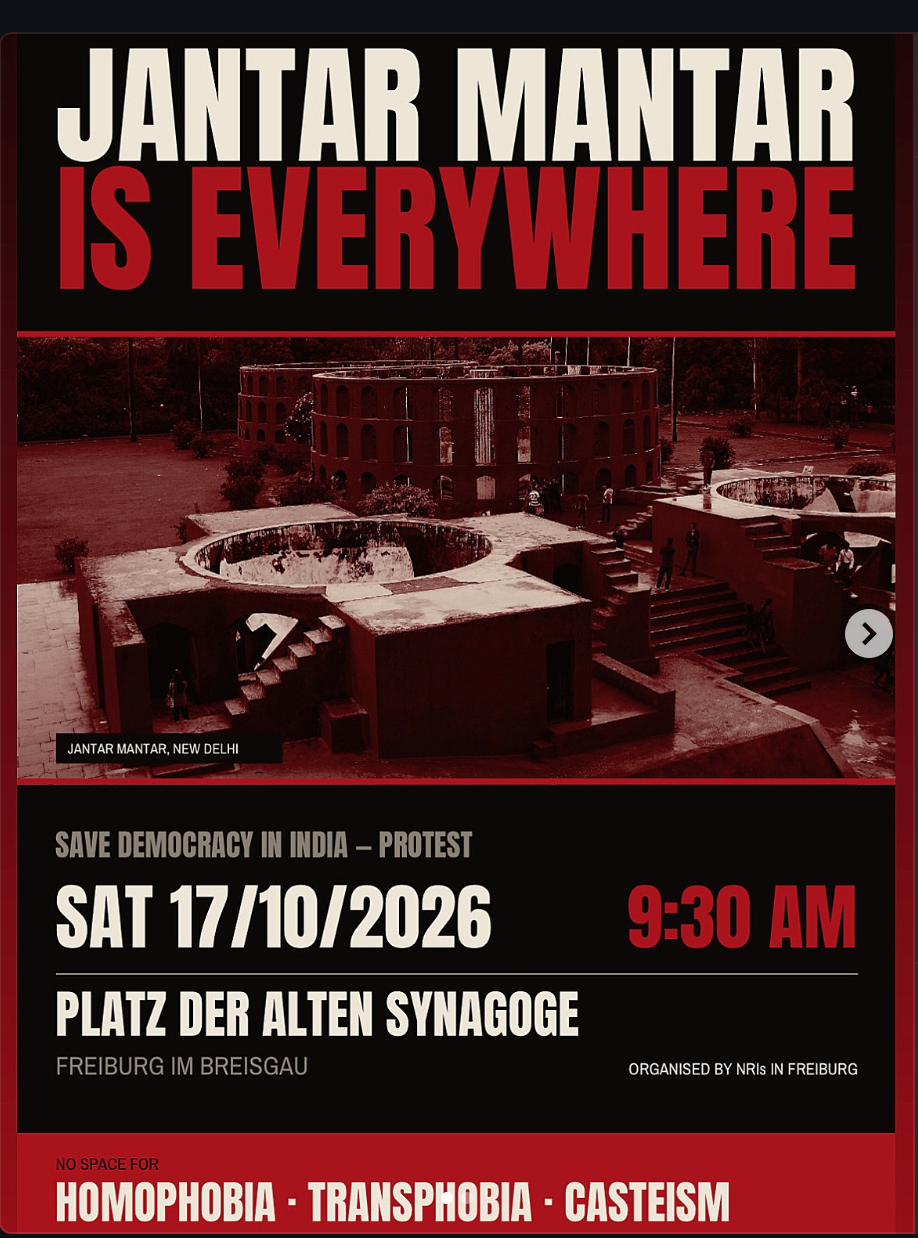
Over the weekend of October 17 and 18, people in more than fifteen cities across North America, Europe and Australia gathered in solidarity with students, journalists, activists and ordinary citizens in India demanding voting rights, electoral accountability and the freedom to protest without intimidation.
Actions took place or were organized in cities including New York, Los Angeles, Austin, Chicago, Philadelphia, Toronto, Montreal, Vancouver, London, Berlin, Dublin, Prague, The Hague, Göttingen, Freiburg, Erlangen, Gothenburg, Helsinki, Brisbane, Melbourne and Sydney.
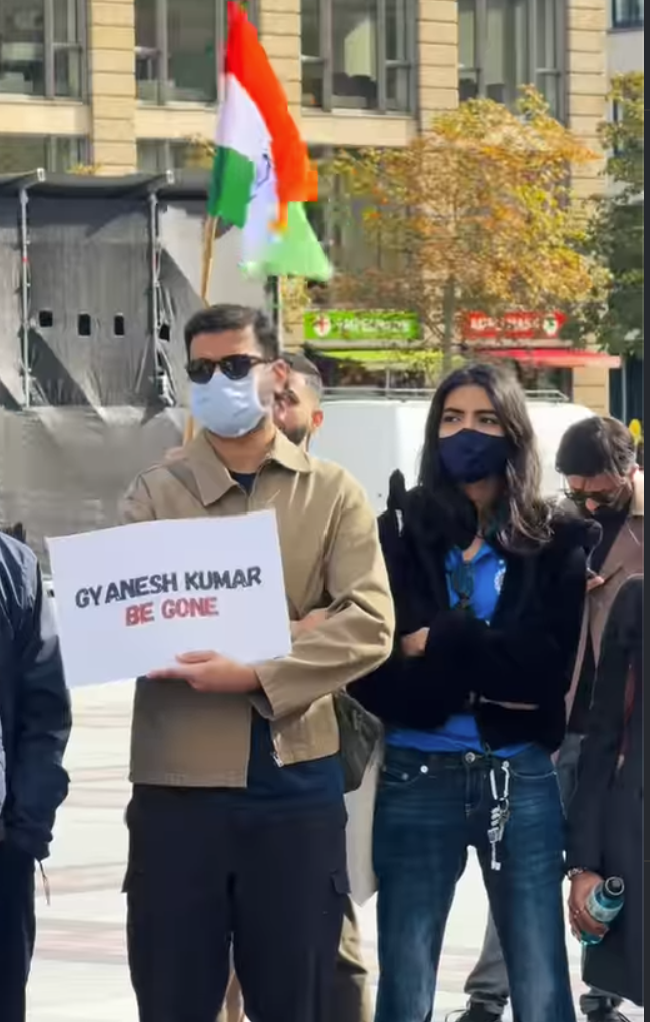
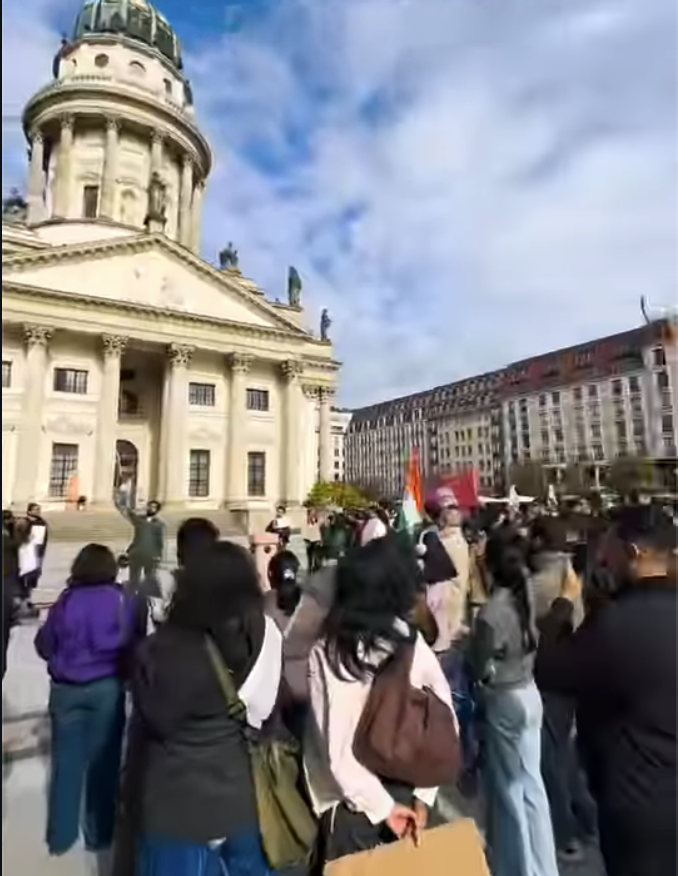
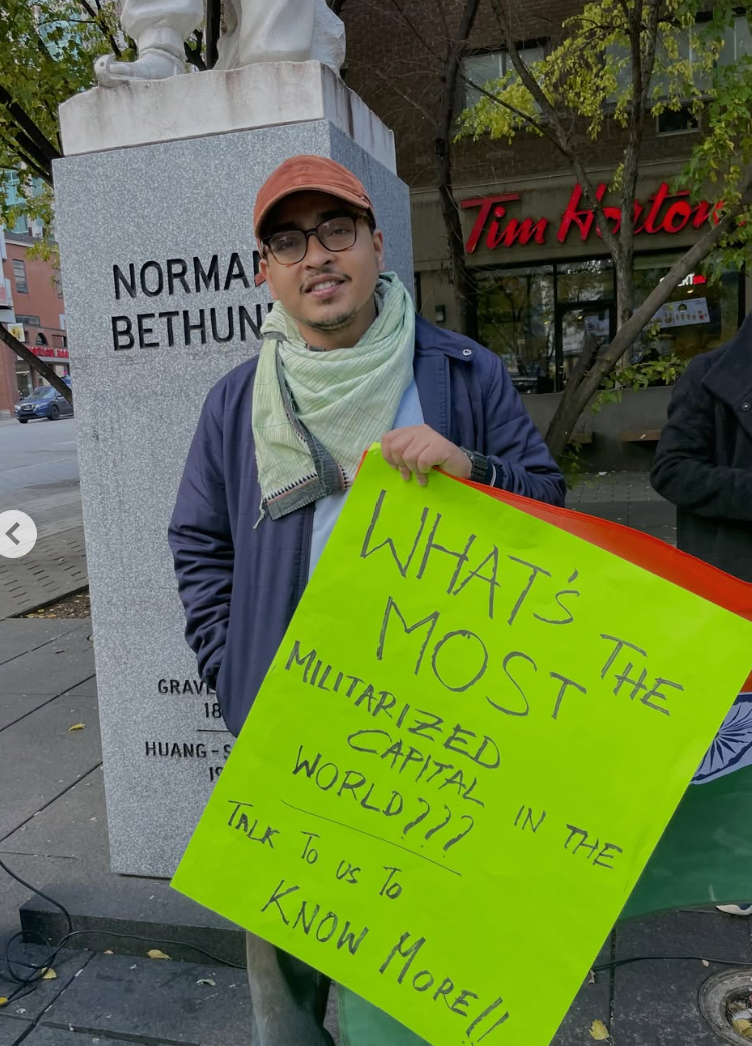
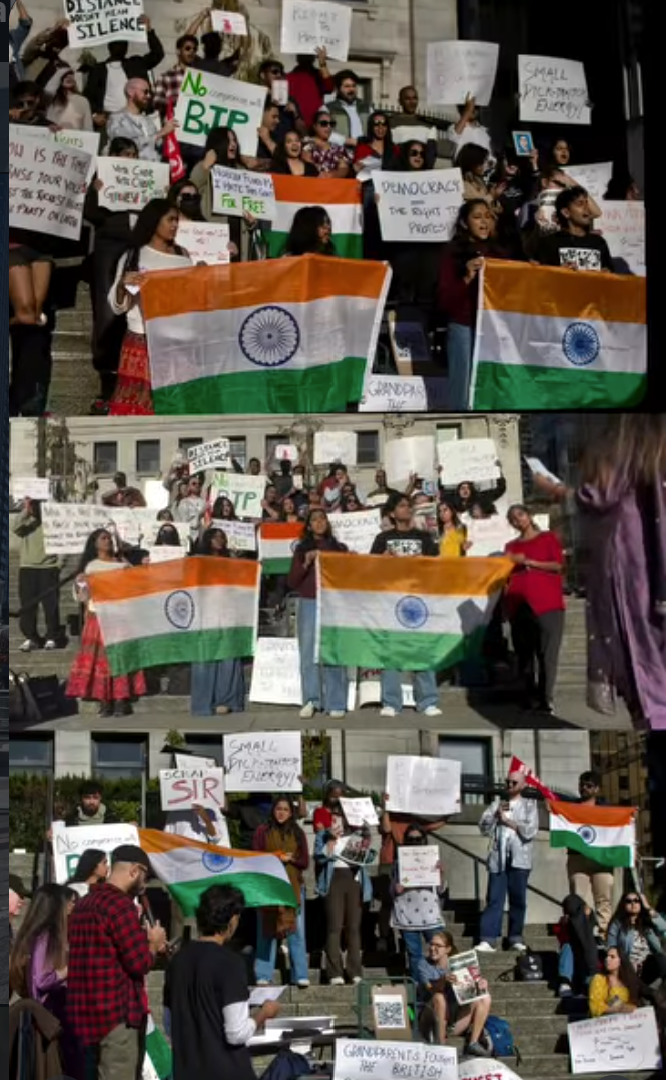
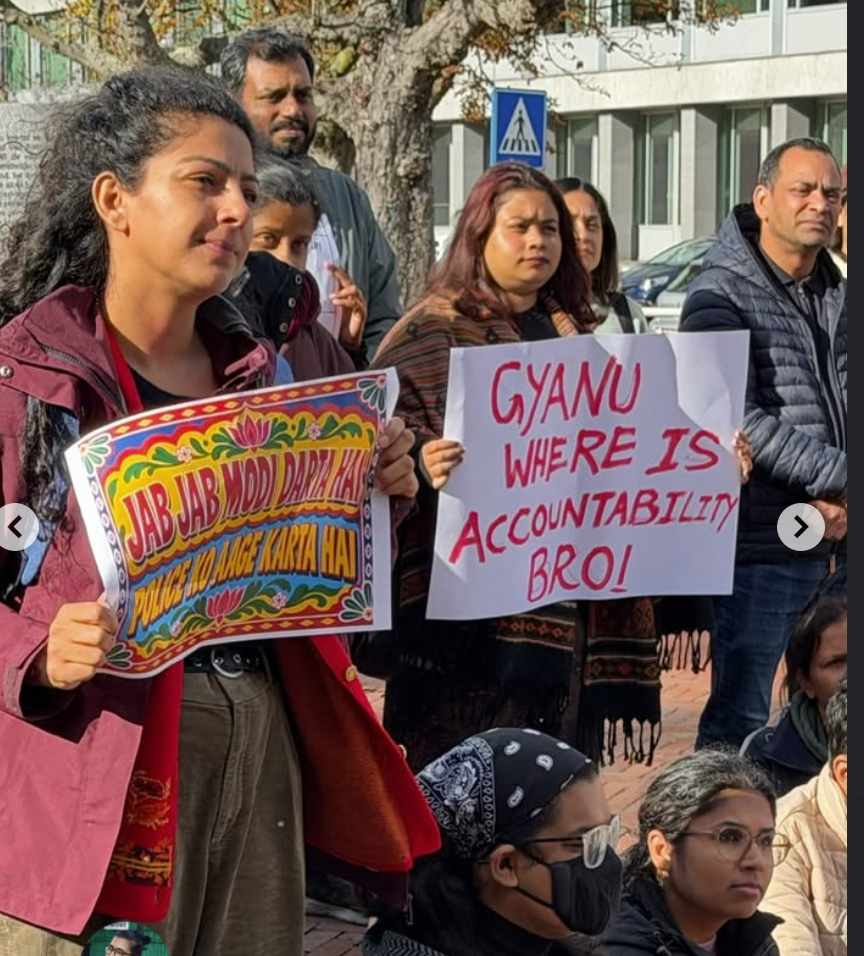
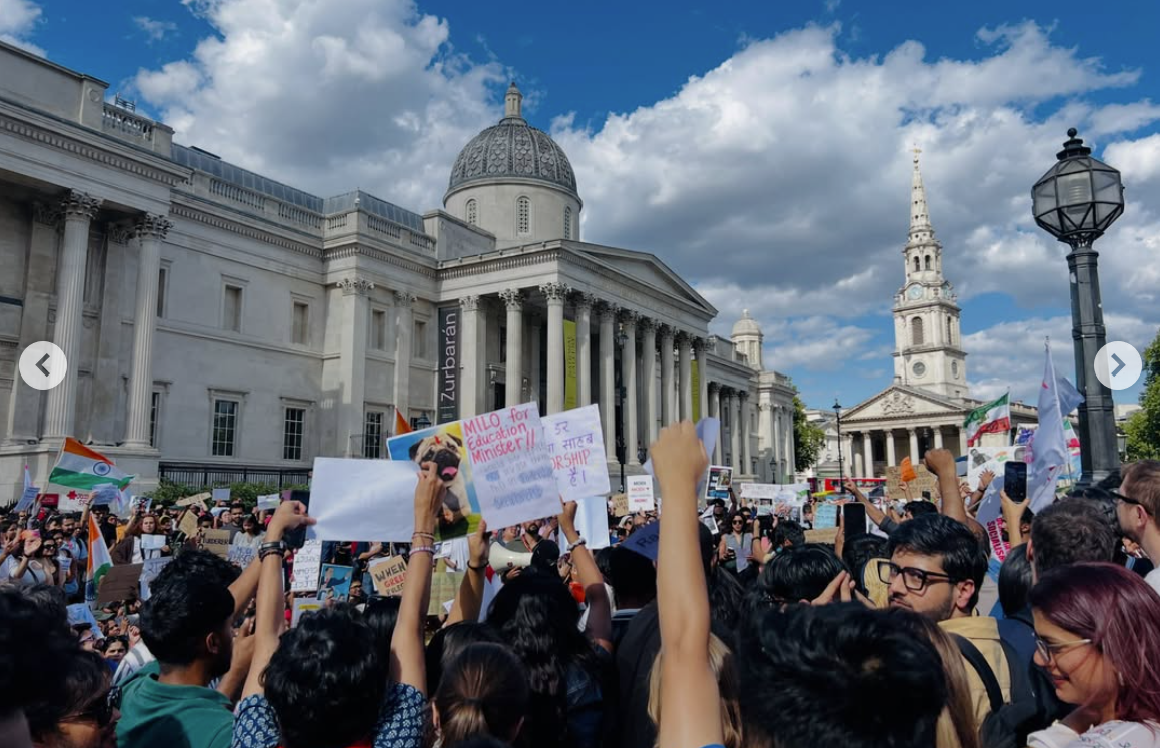
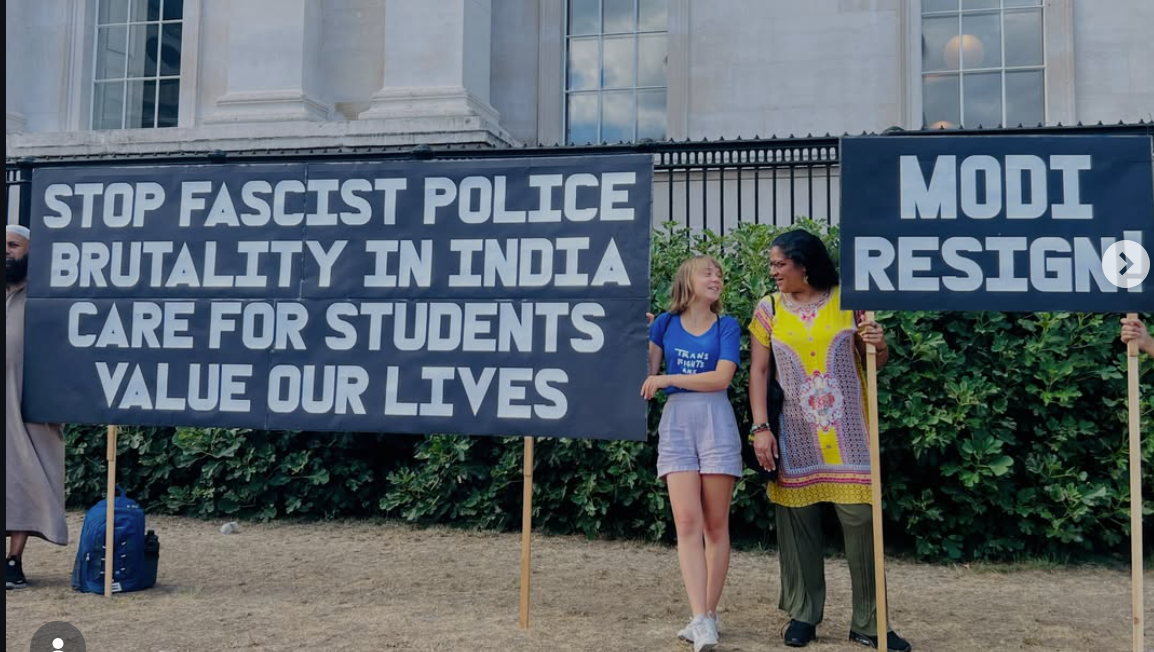
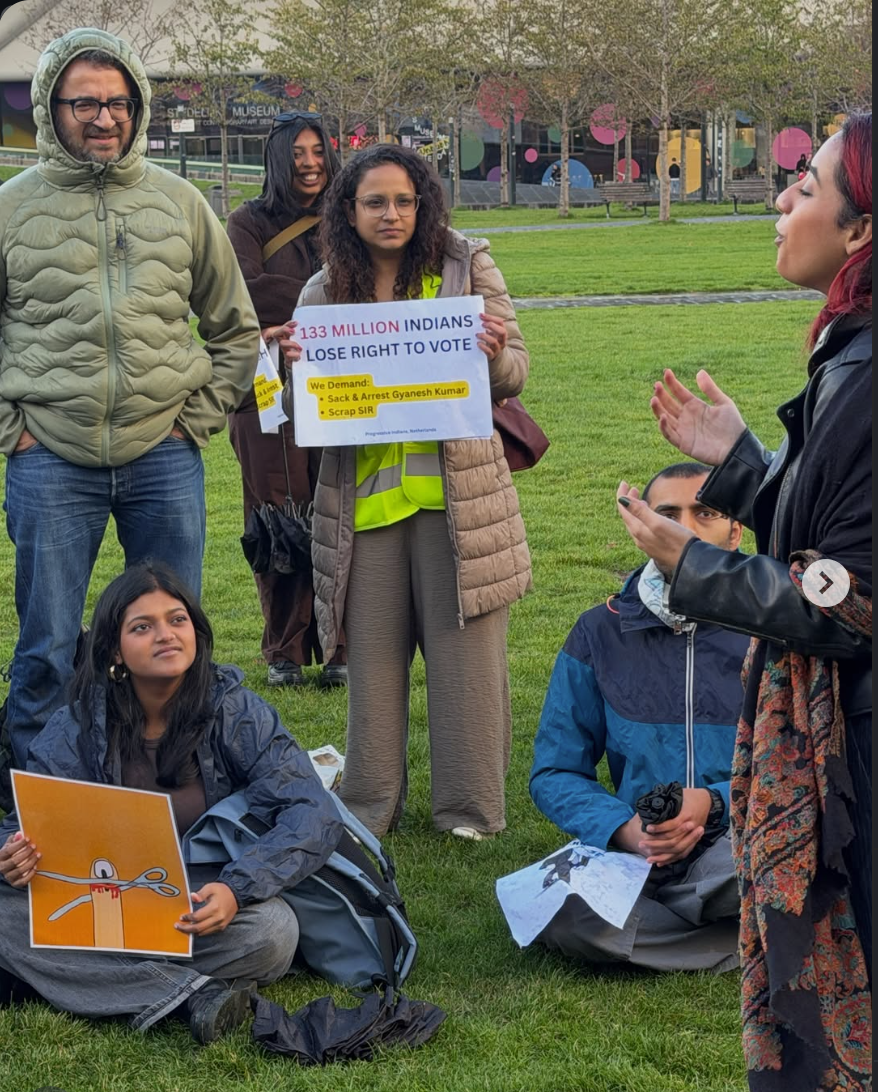
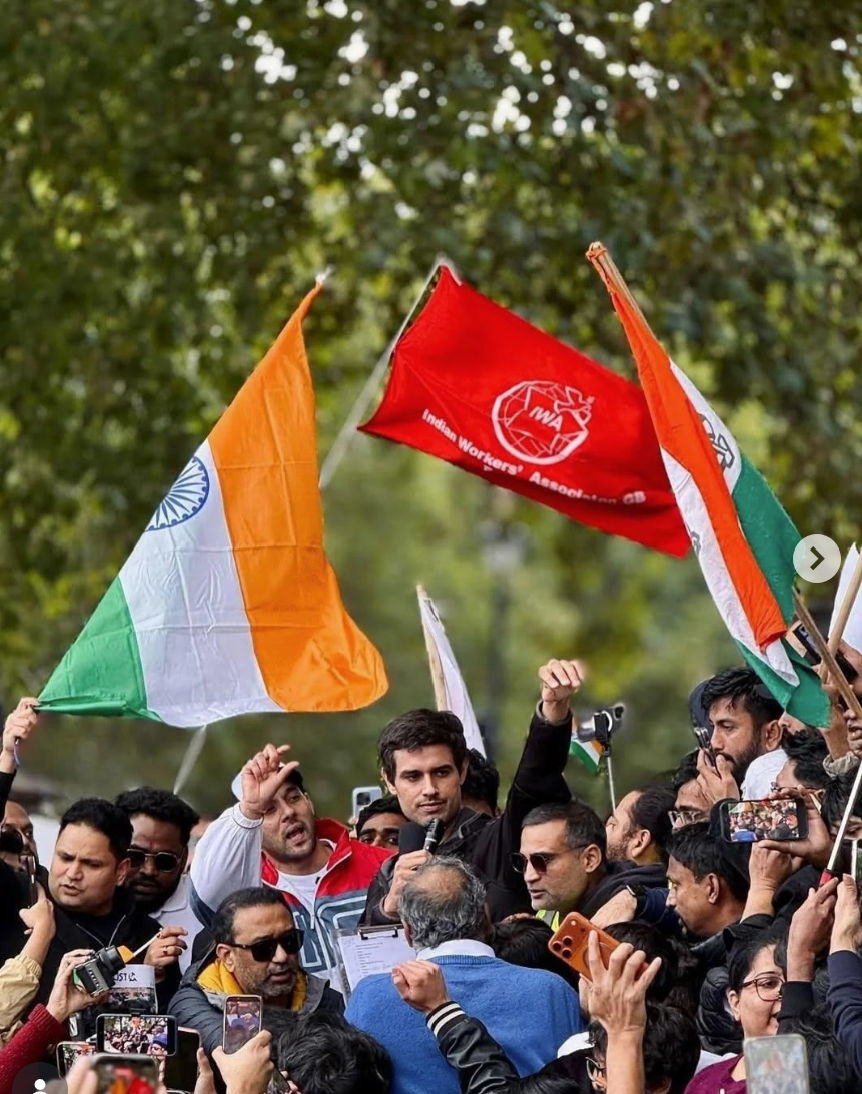
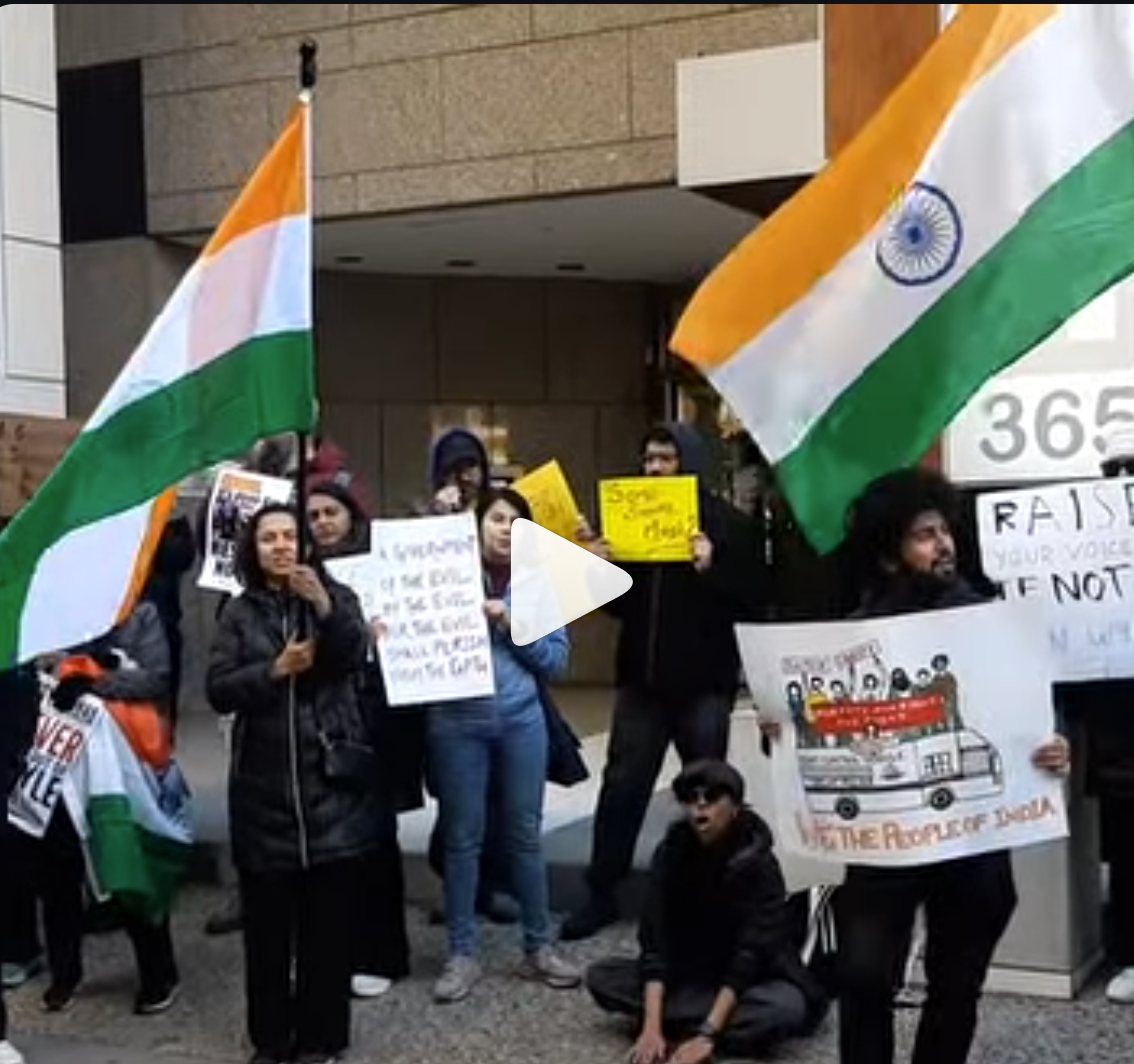
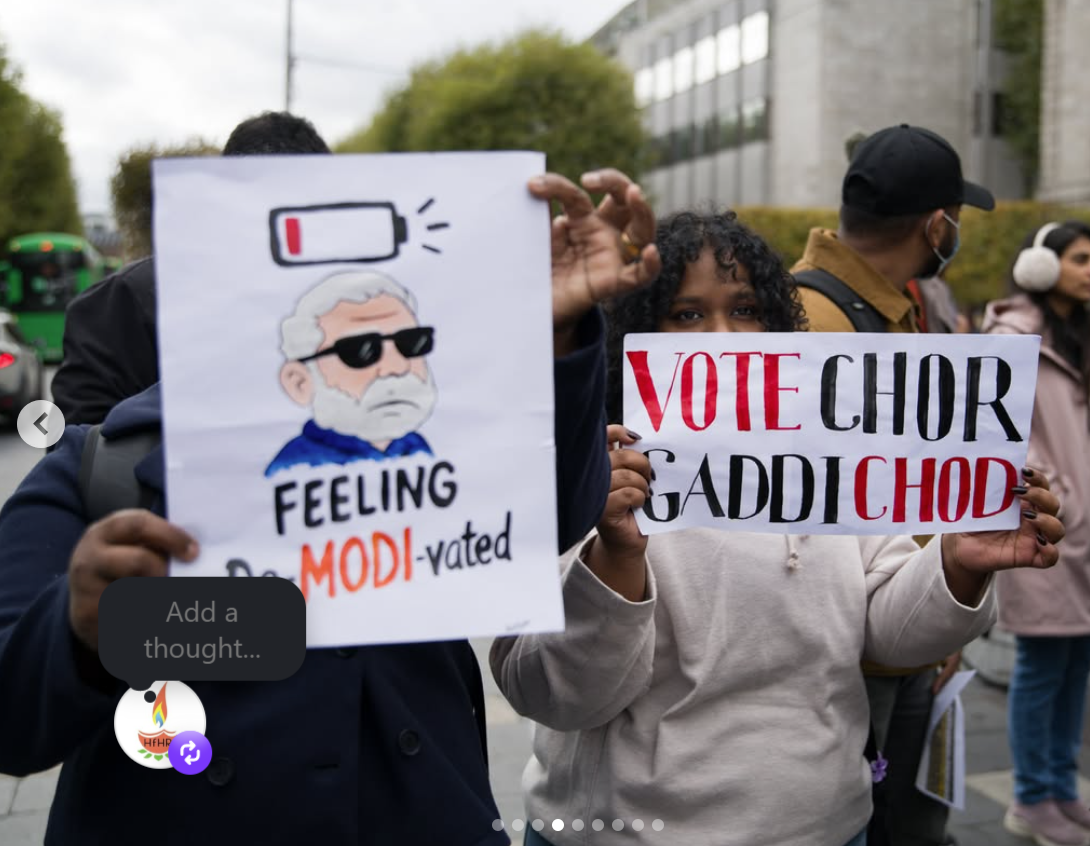
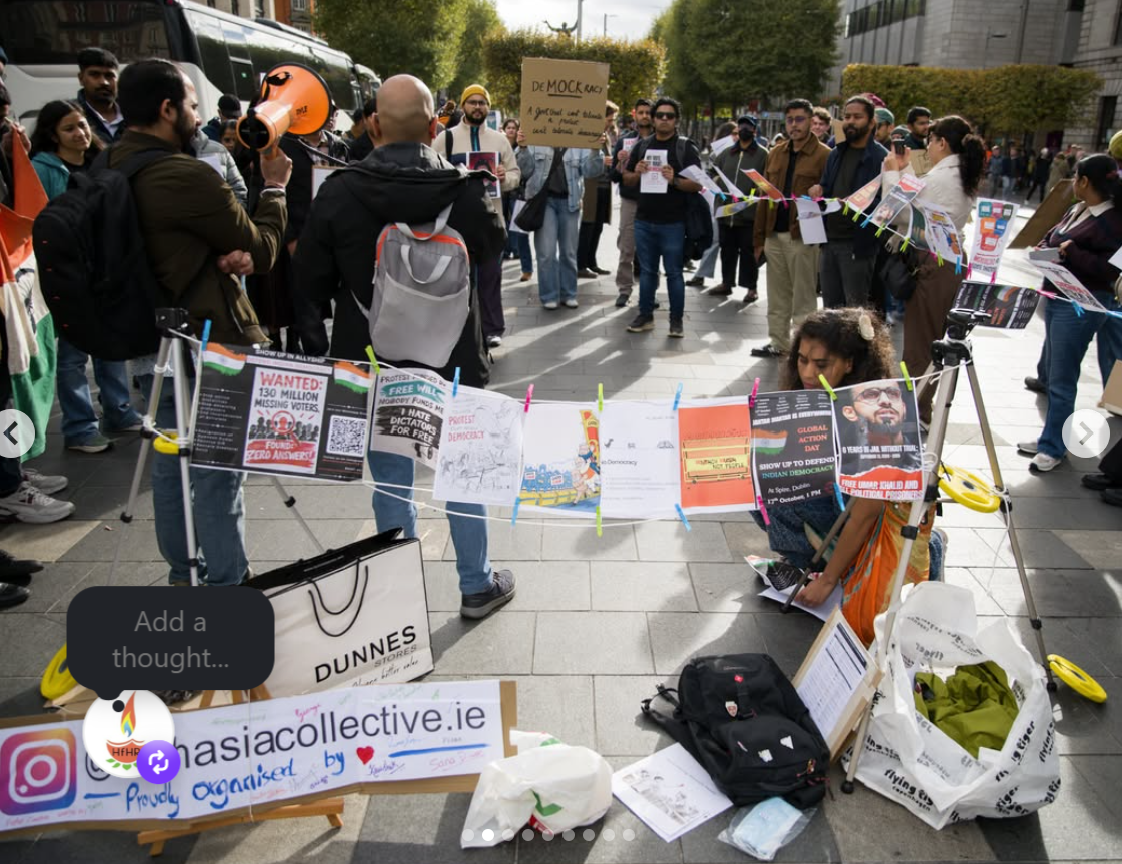
The mobilizations were decentralized and largely youth-led, coordinated by a growing international network of Indian diaspora organizations and solidarity groups. Hindus for Human Rights participated alongside groups including South Asia Solidarity Group in the United Kingdom, India Labour Solidarity, India Civil Watch International, International Solidarity for Academic Freedom in India, Indian Alliance Paris, South Asian Diaspora Action Collective in Canada and others.
A youth-led regrouping, South Asian Network for Global Action & Mobilization (SANGAM), helped document and amplify the rapidly expanding list of demonstrations around the world.
The protests came amid continuing controversy over India’s Special Intensive Revision (SIR) of electoral rolls.
The Election Commission has described SIR as an effort to rebuild and verify electoral rolls, and has argued that absence from a draft roll does not necessarily constitute permanent deletion because eligible voters can seek inclusion. But testimony from voters and continuing legal challenges have raised serious questions about errors and the burden placed on eligible citizens whose names have disappeared from draft rolls. Recent reporting has documented long-standing voters marked as permanently shifted, untraceable or even deceased despite remaining eligible and present at their registered addresses.
The controversy has fueled a wider protest movement in India demanding greater transparency from the Election Commission and the resignation of Chief Election Commissioner Gyanesh Kumar. Opposition parties and civil society organizations have also challenged the process in court, while the Supreme Court has issued notices in litigation concerning the SIR.
But the international demonstrations were about more than electoral rolls. They were also a response to the treatment of those who have taken to the streets in India to challenge the process. Students, political leaders, journalists, lawyers and civil society organizers have faced detentions, restrictions on movement and tight policing around demonstrations. In Bengaluru, for example, authorities allowed an October 16 march only under strict conditions restricting protest banners and slogans. For people gathering abroad in support, these questions are inseparable: the right to vote means little without the right to question institutions, organize collectively, report freely and protest peacefully.
A movement spreading across borders
The scale of the weekend was striking.
In London, demonstrators gathered near the Indian High Commission and at the Gandhi statue in Parliament Square. In Berlin, protesters assembled at Oranienplatz. In Dublin, participants gathered at the Spire. In The Hague, demonstrators met outside the International Court of Justice. Solidarity actions were also organized across Germany, including Göttingen, Freiburg and Erlangen, as well as in Prague, Gothenburg and Helsinki. Across Canada, protests took place in Toronto, Montreal and Vancouver.
The geographical spread mattered. These were not demonstrations organized from a single headquarters or built around one organization. They reflected a decentralized network of students, diaspora groups, civil society organizations and individuals responding to events in India from very different places.
In the United States, the movement continued to grow
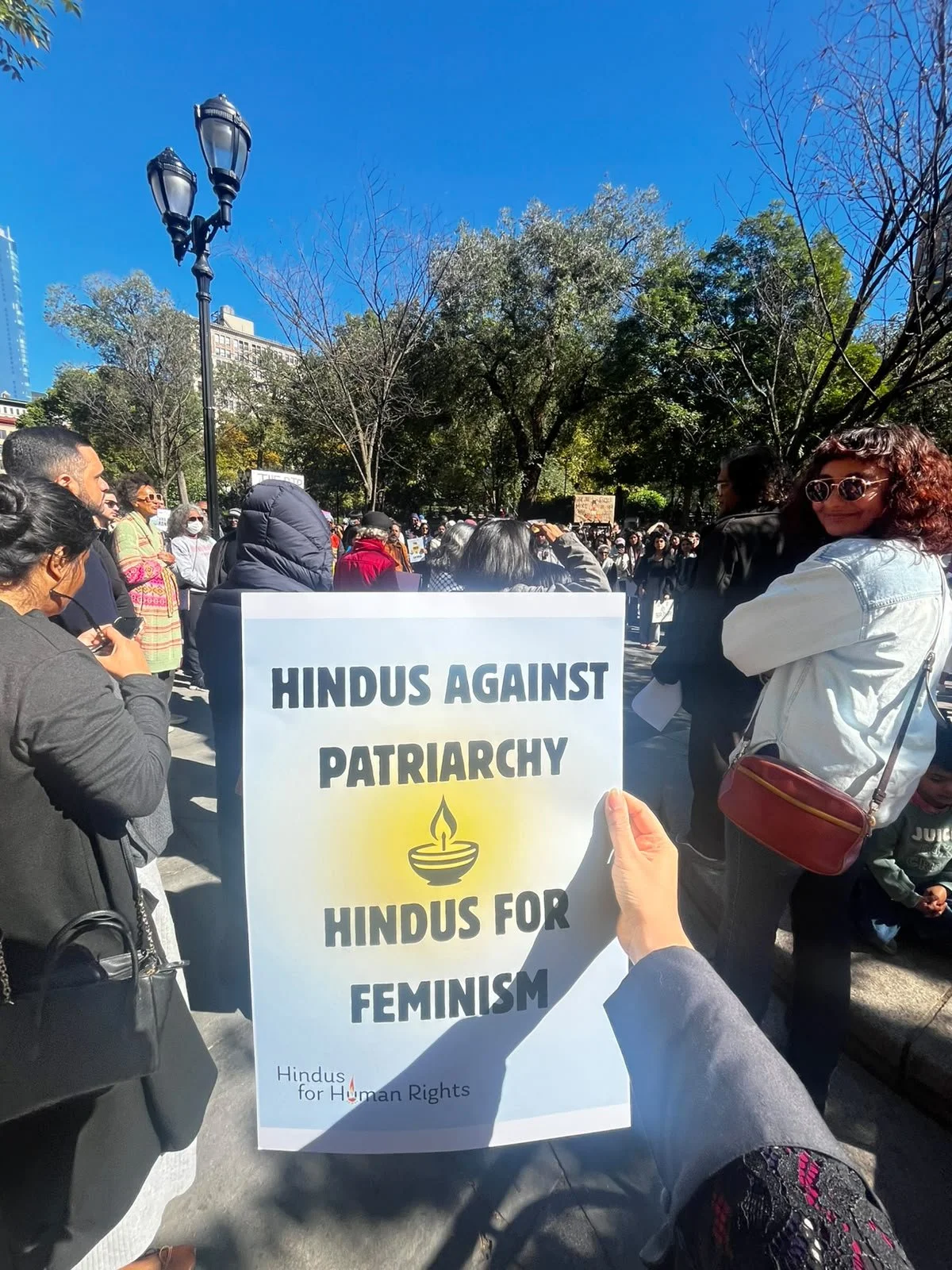
Hindus for Human Rights participated in or supported demonstrations across the United States, including in Chicago, Los Angeles, Philadelphia, Austin and New York, following an earlier round of protests in New York, Washington, DC, the Bay Area and Atlanta.
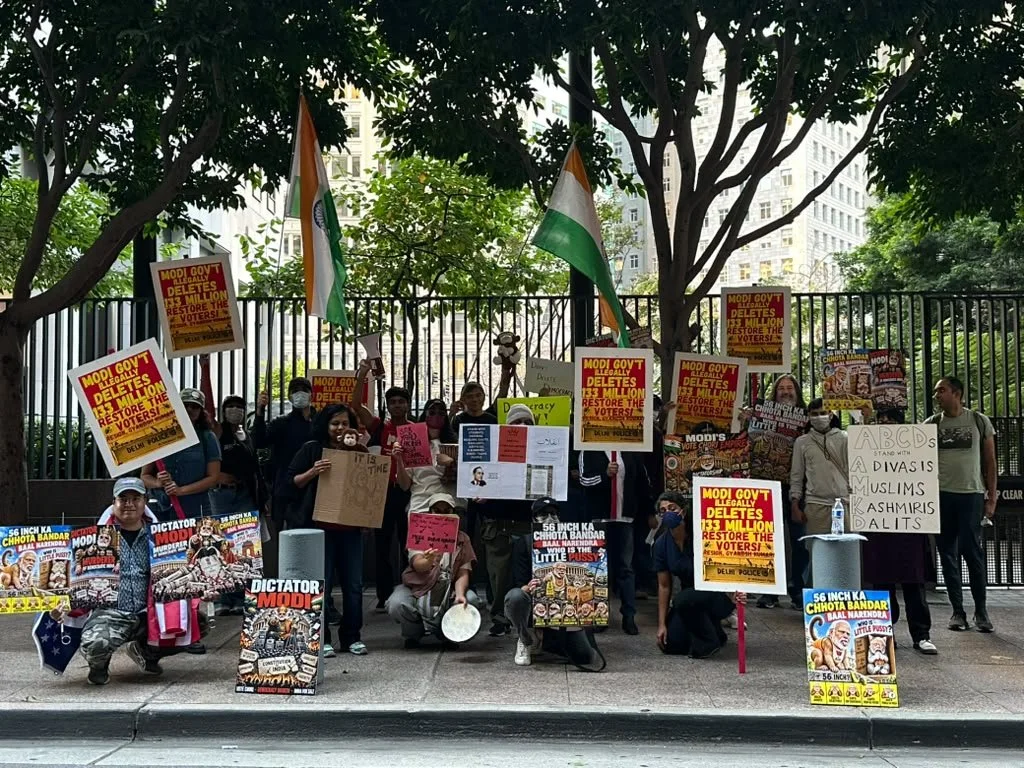
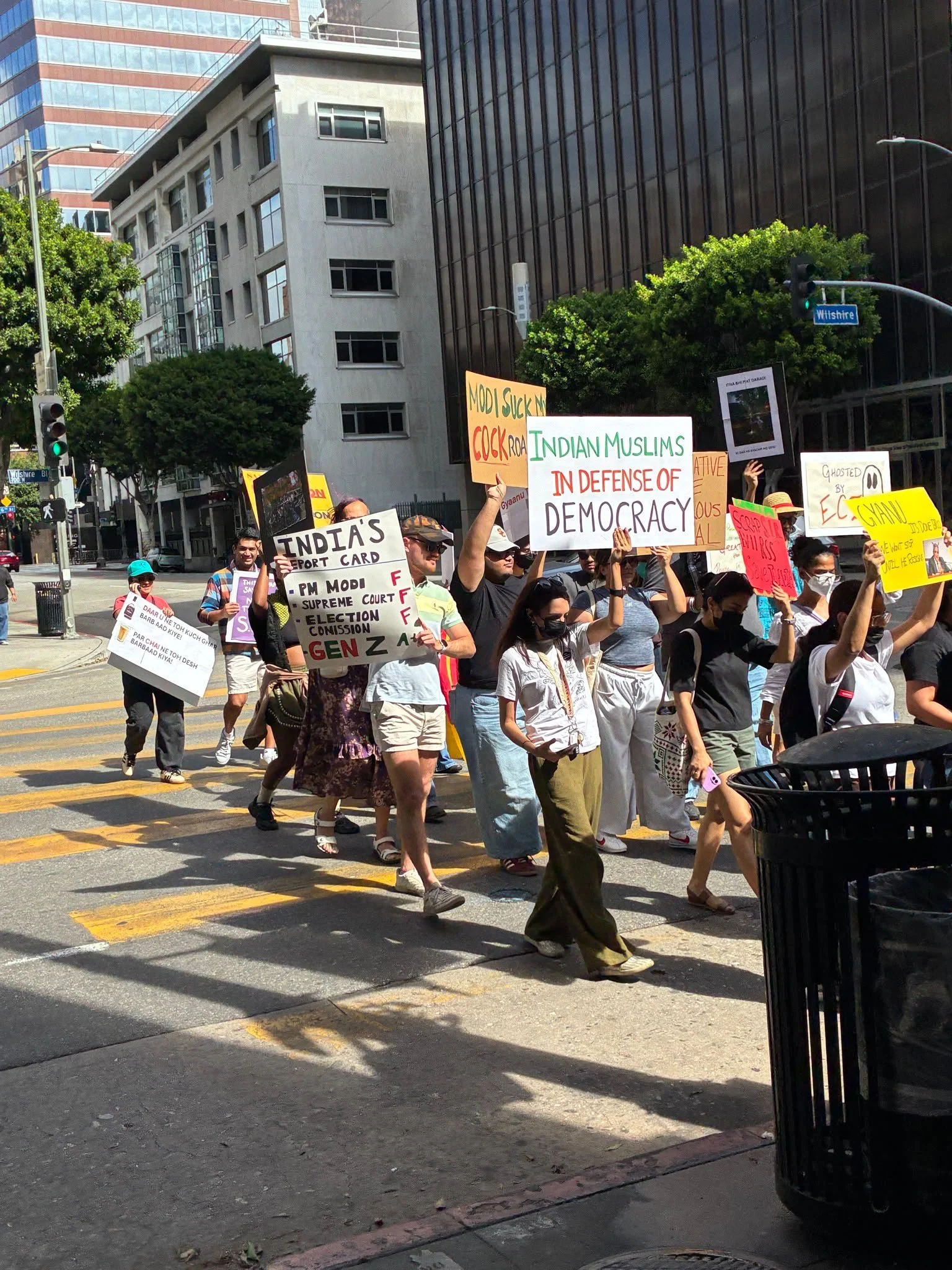
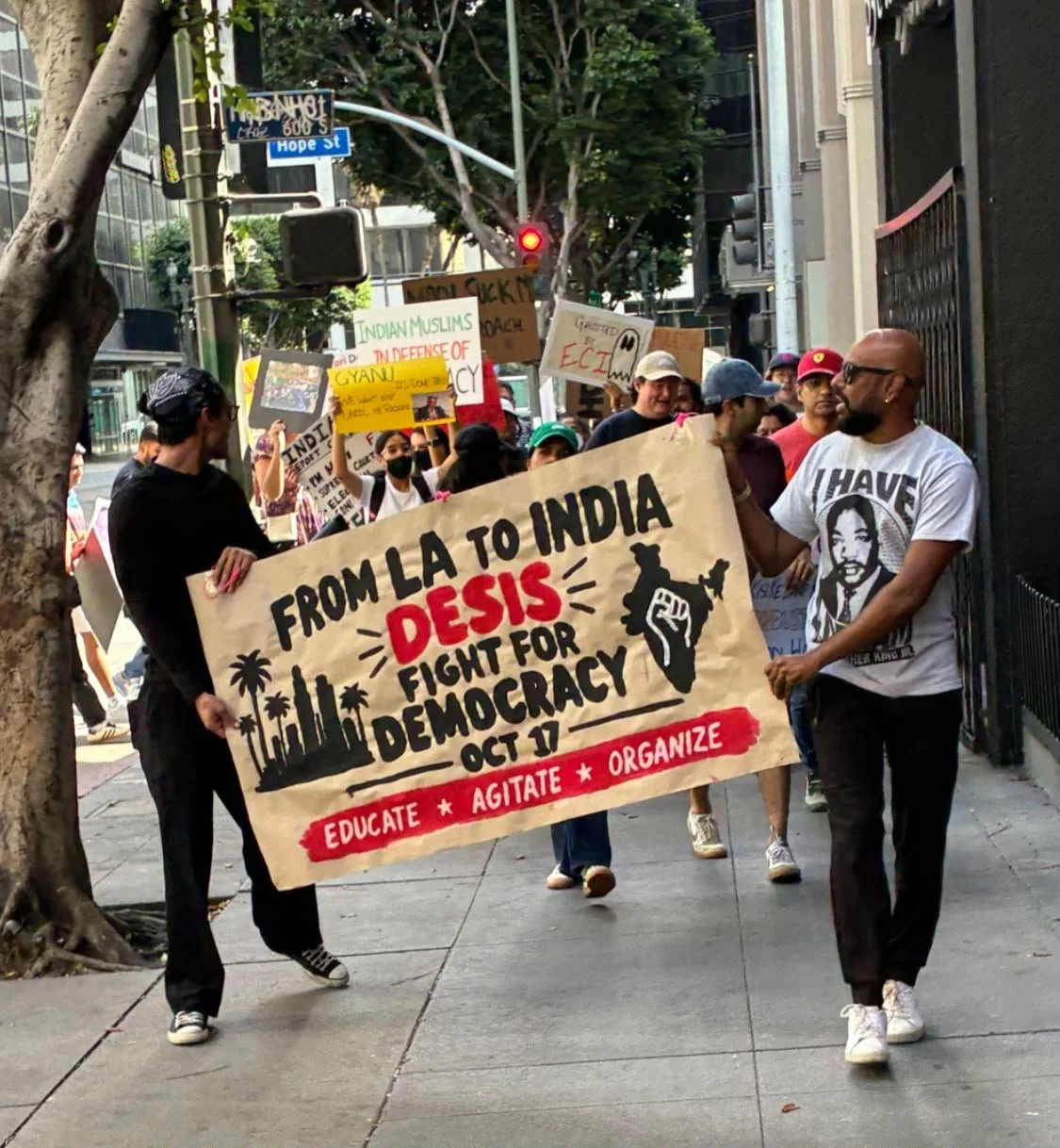
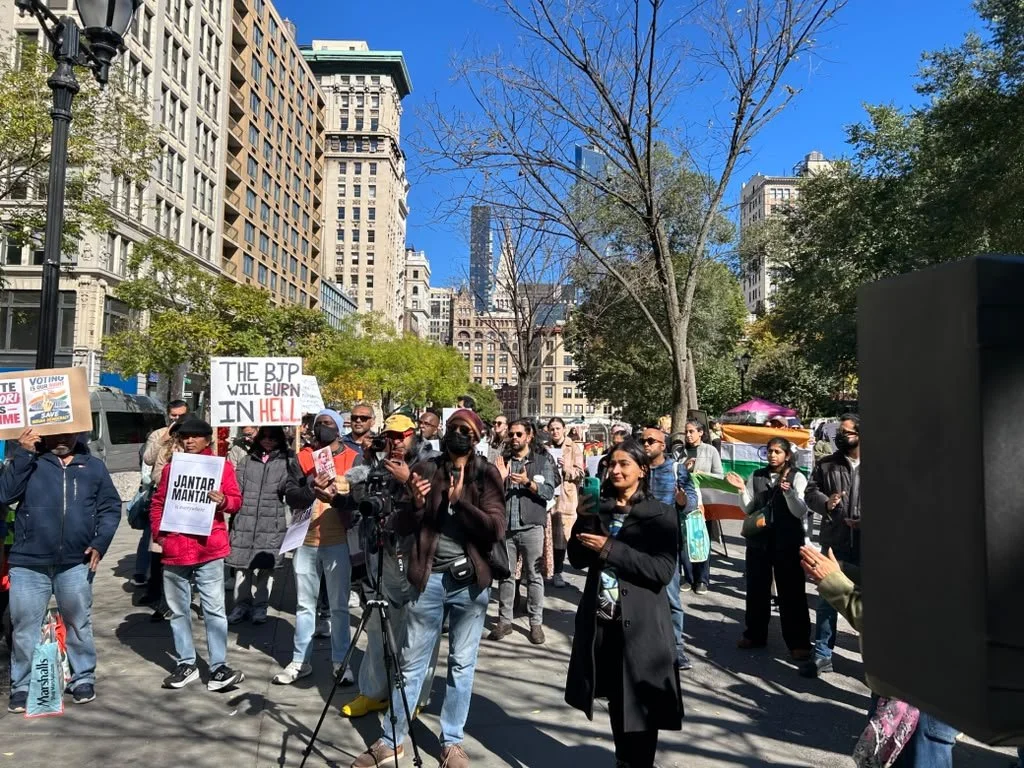
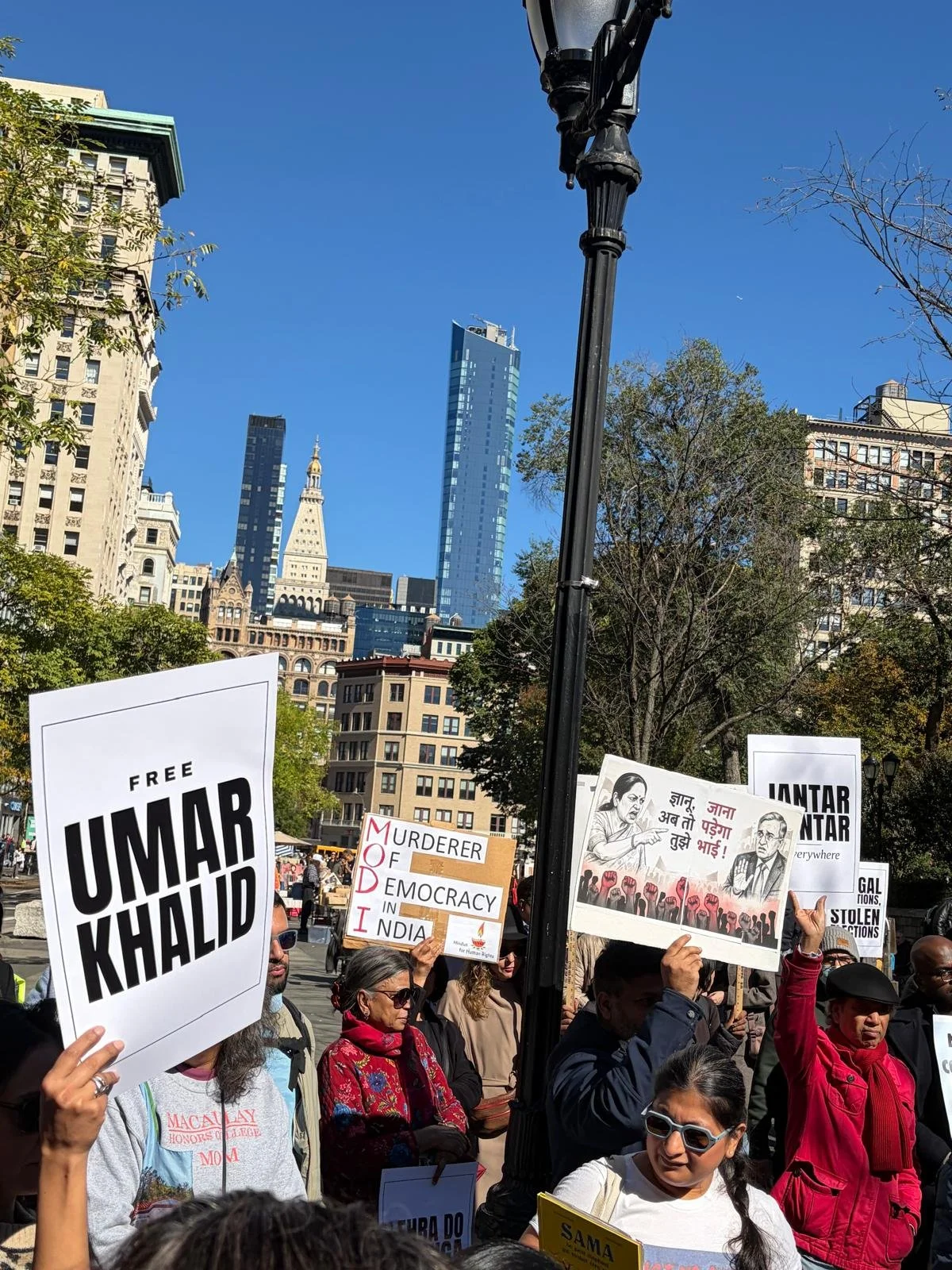
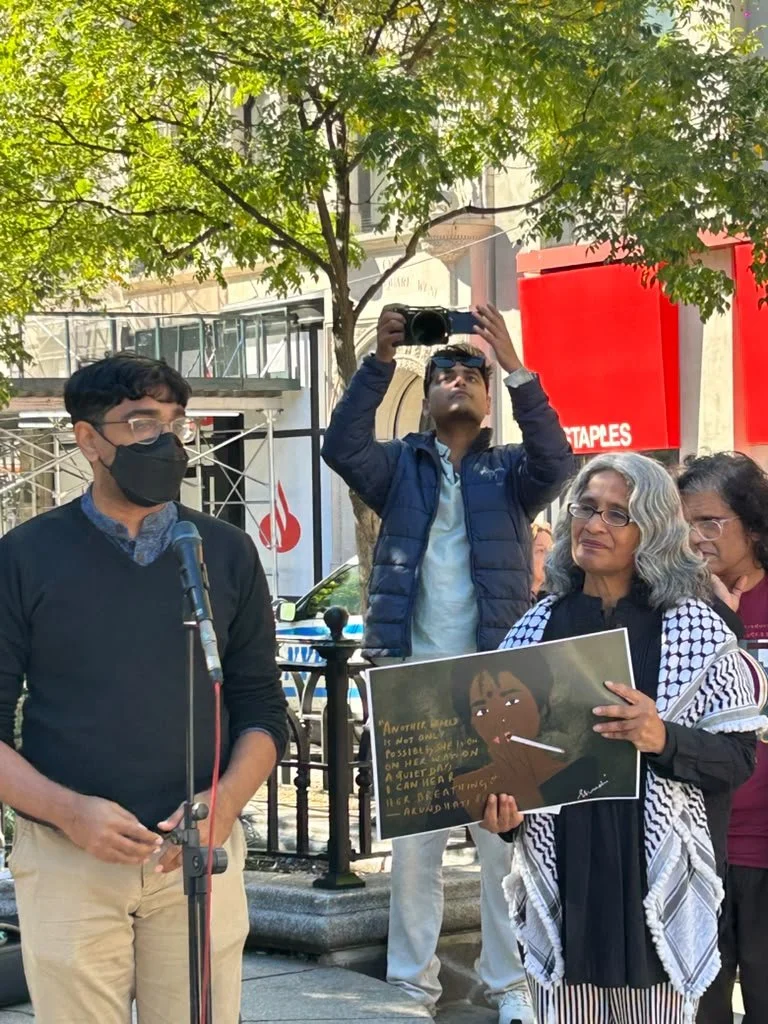
In New York, at least 200 people gathered at the Gandhi statue in Union Square.
The afternoon opened with “Vaishnava Jana To” and “Hum Dekhenge” and brought together writers, artists, comedians, advocates and community leaders. Shruti Ganguly read a special message from organizers in India, directly connecting the New York gathering with the movement on the ground.
A participant in a giant cockroach costume circulated throughout the crowd, bringing the irreverent imagery of India’s protest movement into Union Square.
Even a lone pro-BJP counter-protester who arrived with a whistle and dhol became part of the afternoon’s improvisational spirit. When he attempted to interrupt the rally, participants answered with pro-democracy chants. At one point, someone invited him to be interviewed, temporarily transforming disruption into conversation.
The rally ended with the crowd reading the Preamble to the Constitution of India together before singing “Hum Honge Kamyab,” or “We Shall Overcome.”
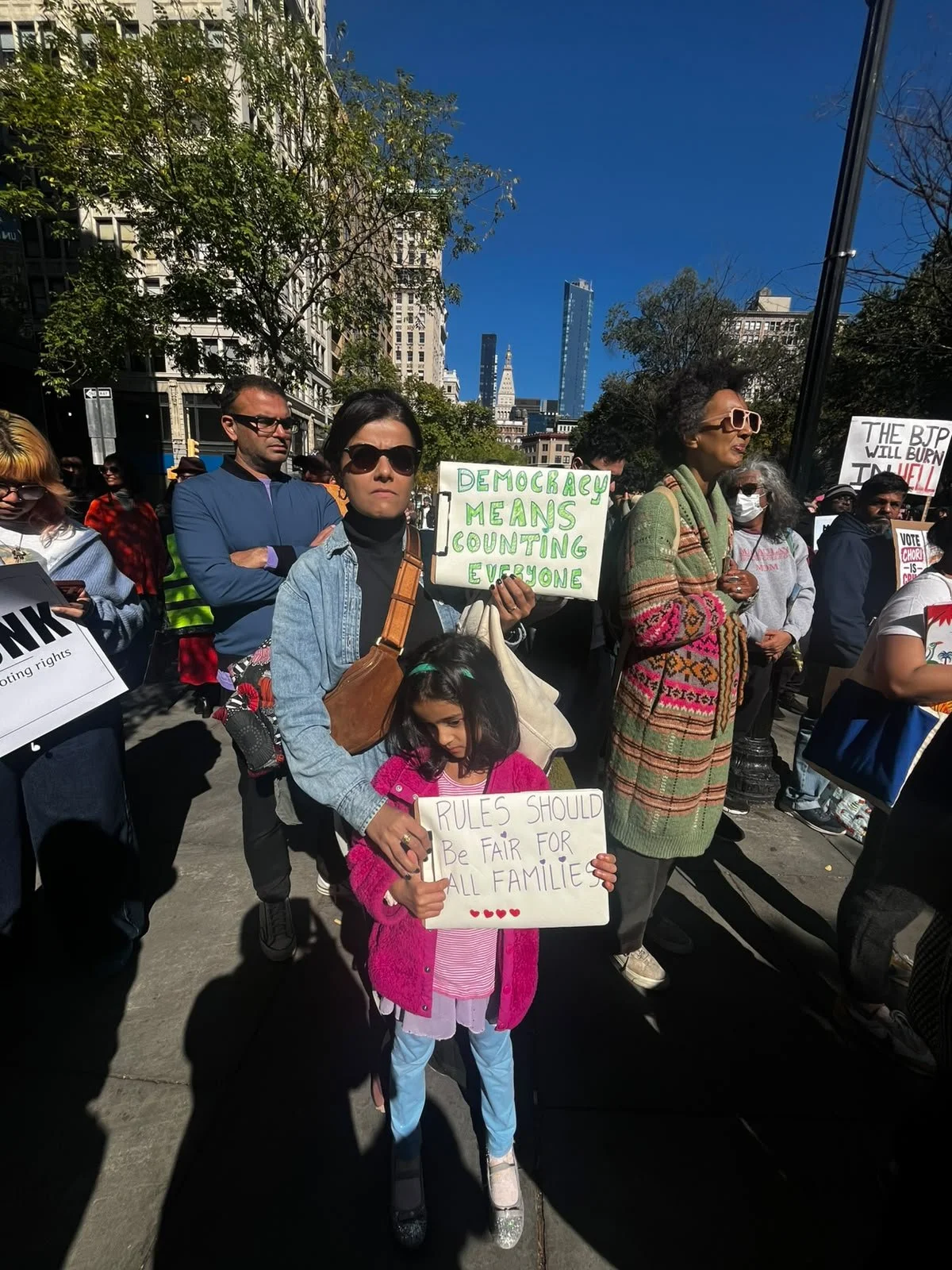
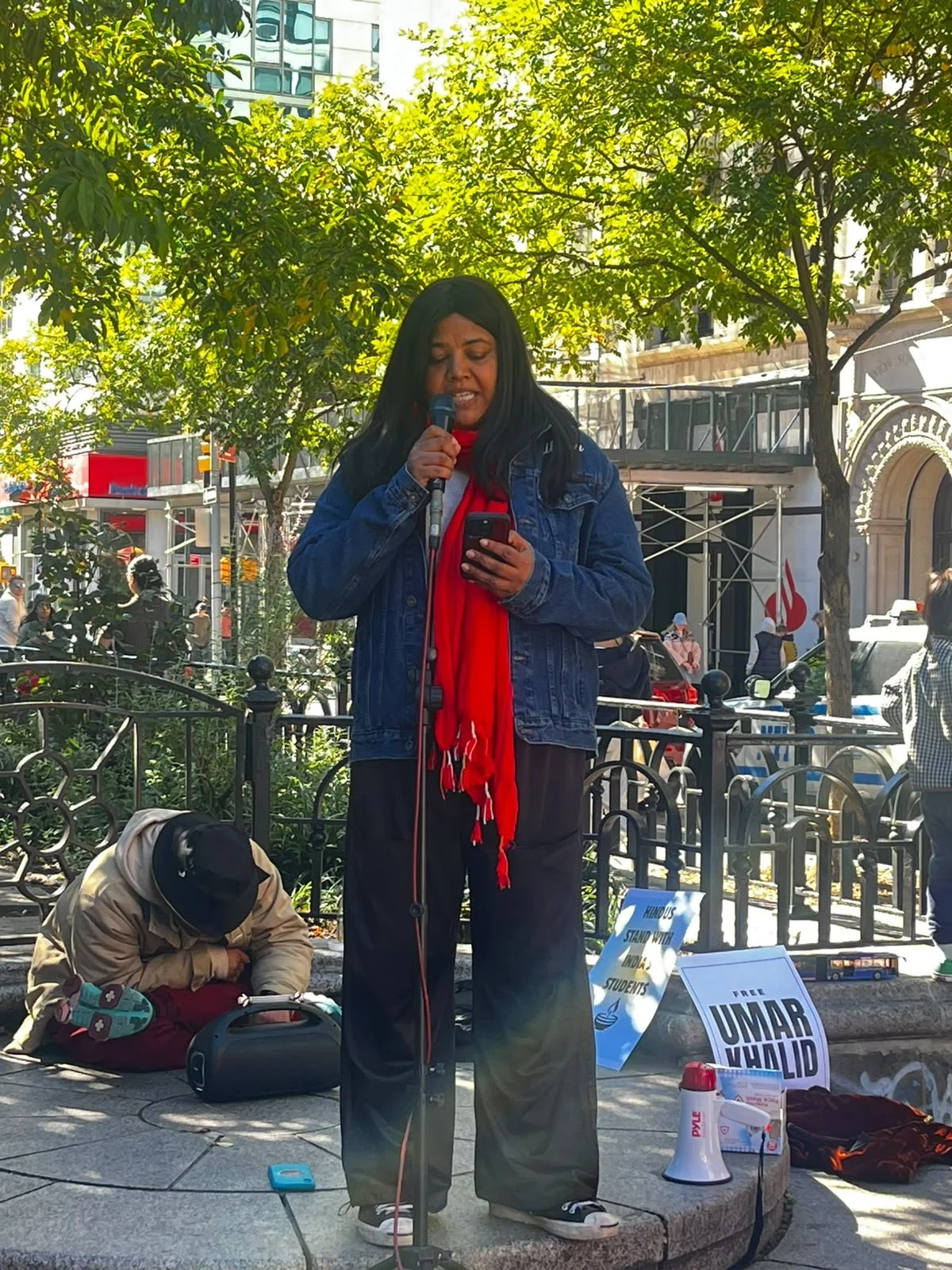
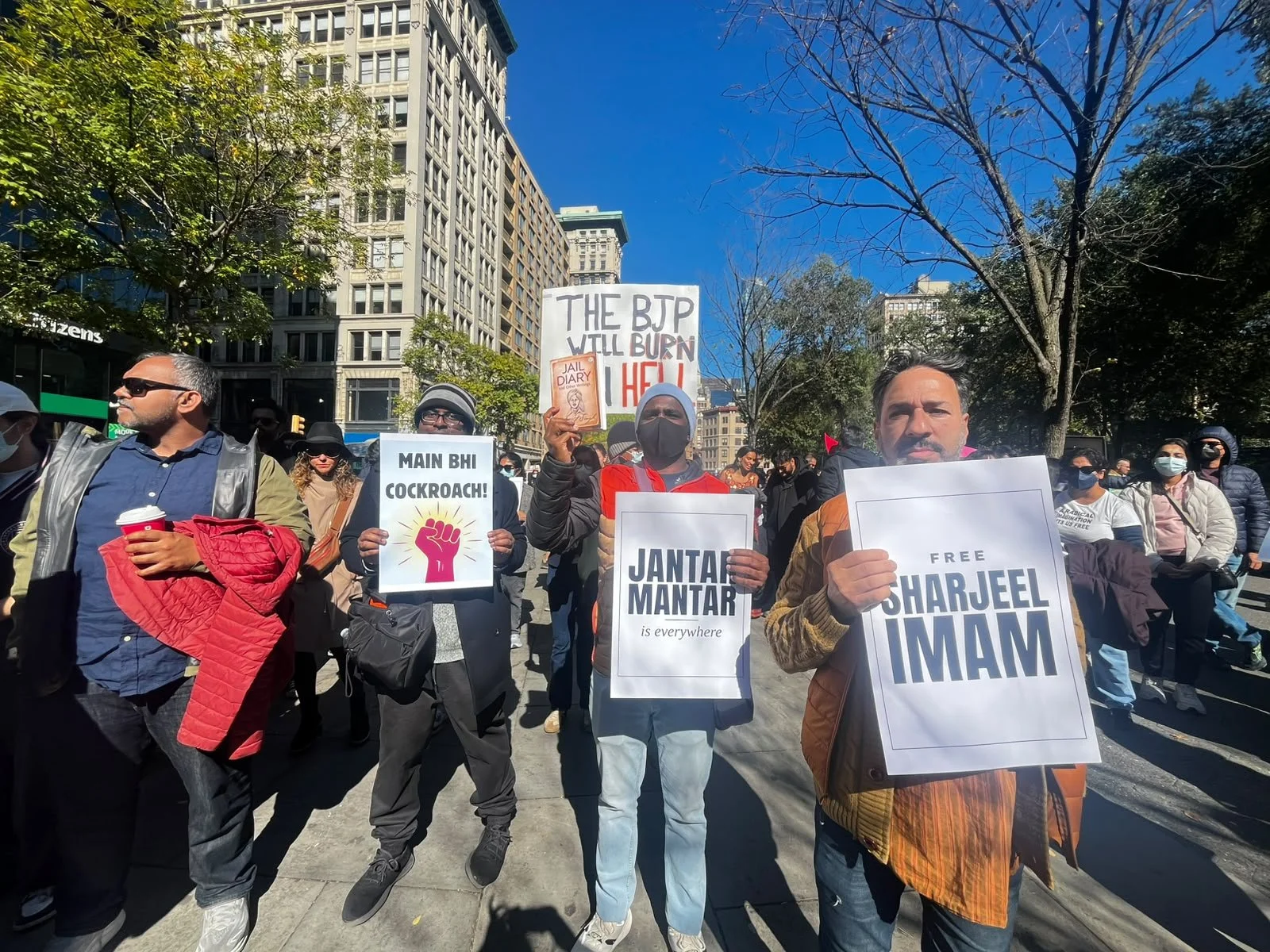
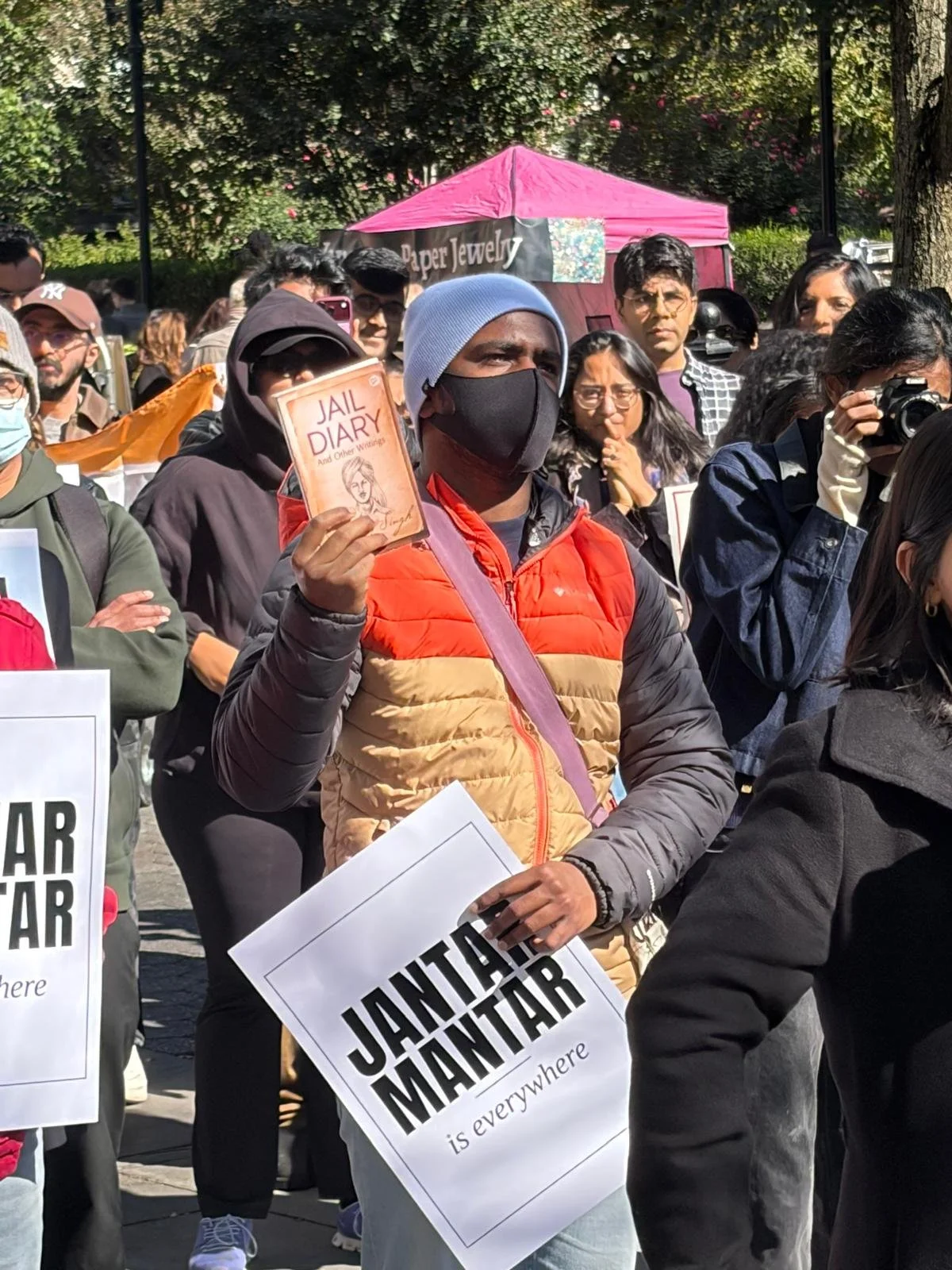
Solidarity without borders
This international response carries a particular meaning. The concern for India means concern for the constitutional principles that belong equally to all Indians: justice, liberty, equality and fraternity. That means standing with people whose names disappear from voter rolls. It means standing with students who organize, journalists who report, women who demand safety, religious minorities who insist on equal citizenship and citizens who expect institutions to answer to them.
Across more than fifteen cities and three continents, people came together around a different vision: that the right to vote, the right to dissent and the right to live with equal dignity are parts of the same democratic promise. The rallies may have taken place thousands of miles apart. Their message was shared and all the more powerful because of that.