
Songs, speeches, humor and a collective reading of India’s Constitution marked a powerful afternoon of solidarity in Union Square
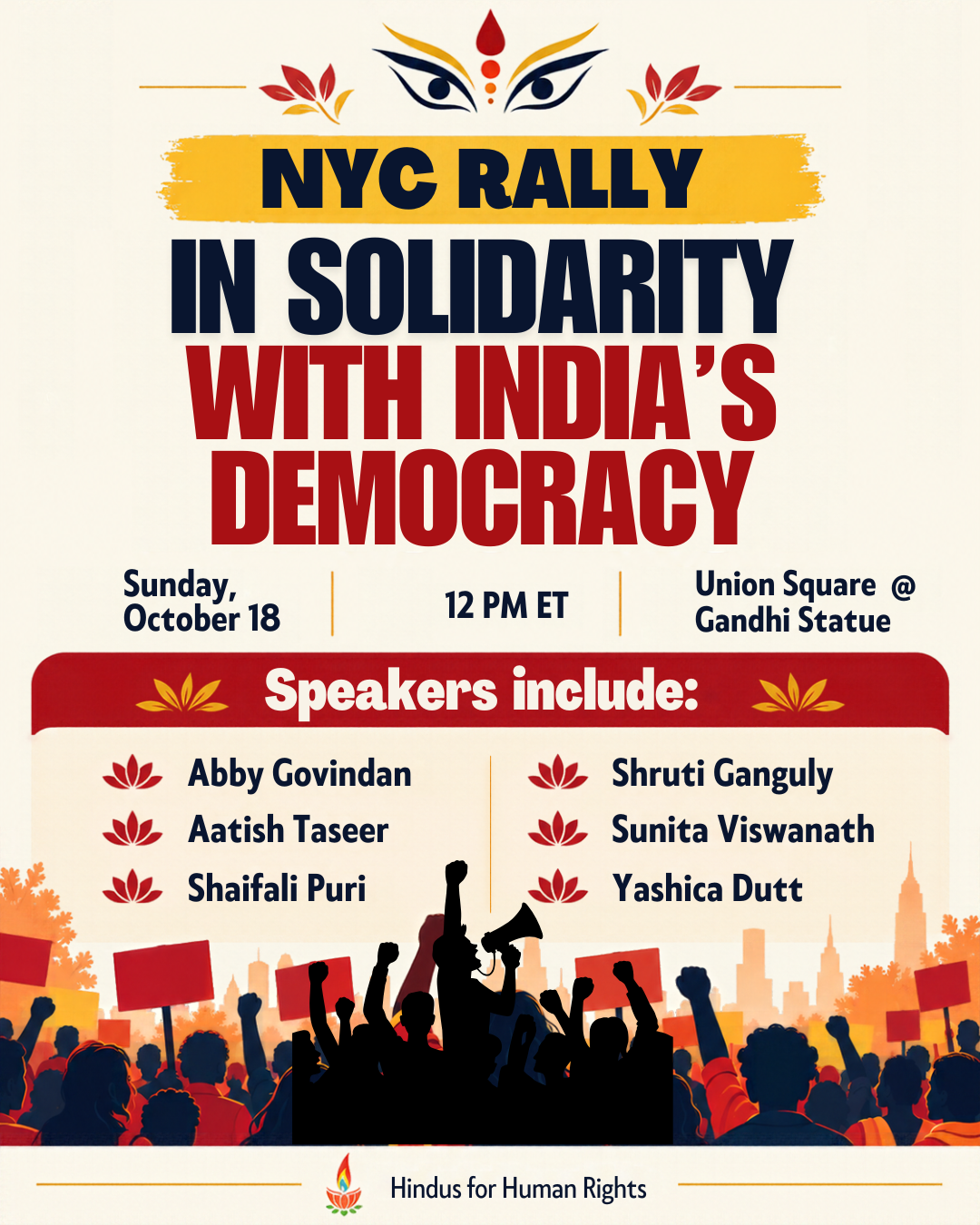
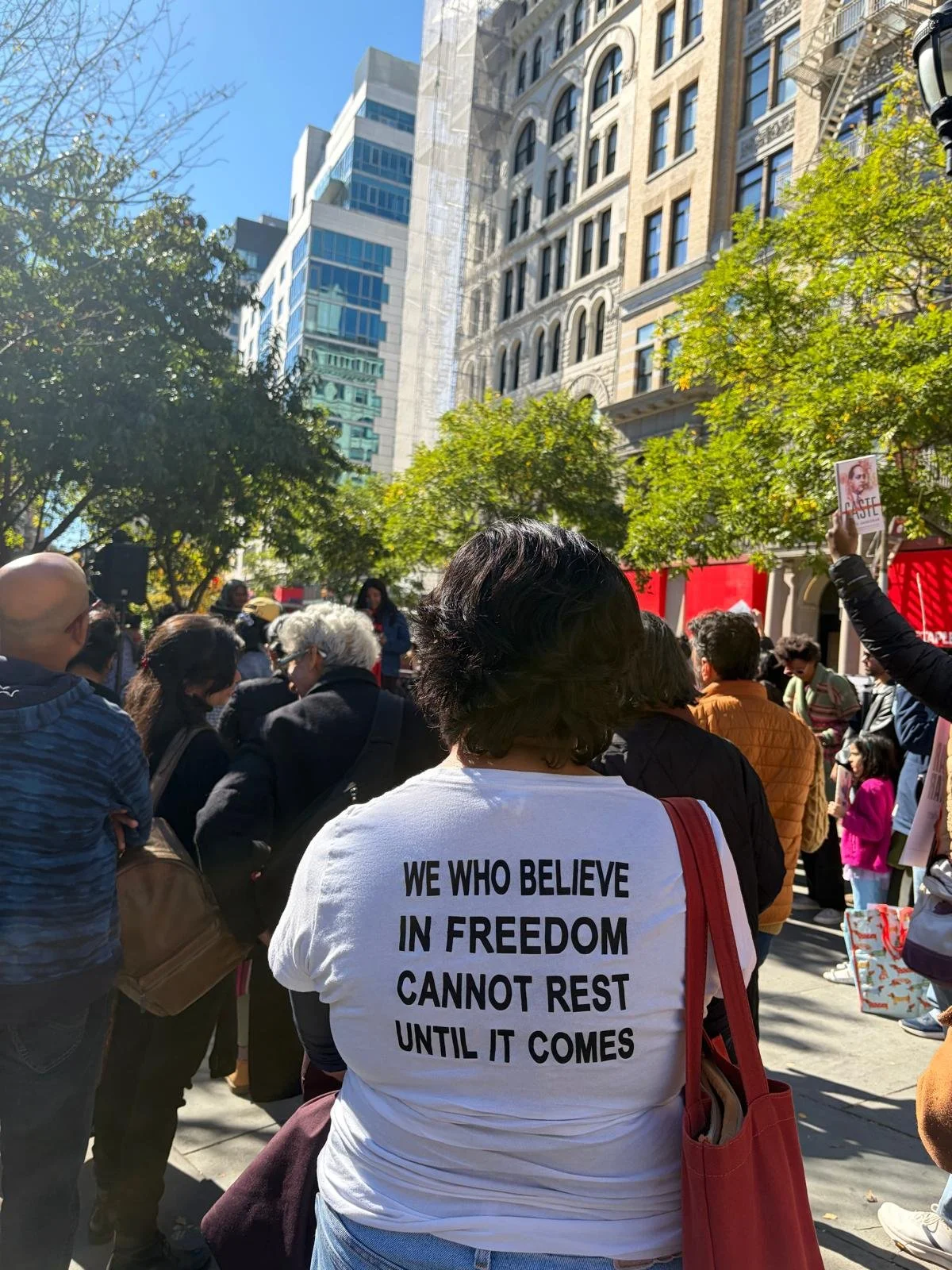
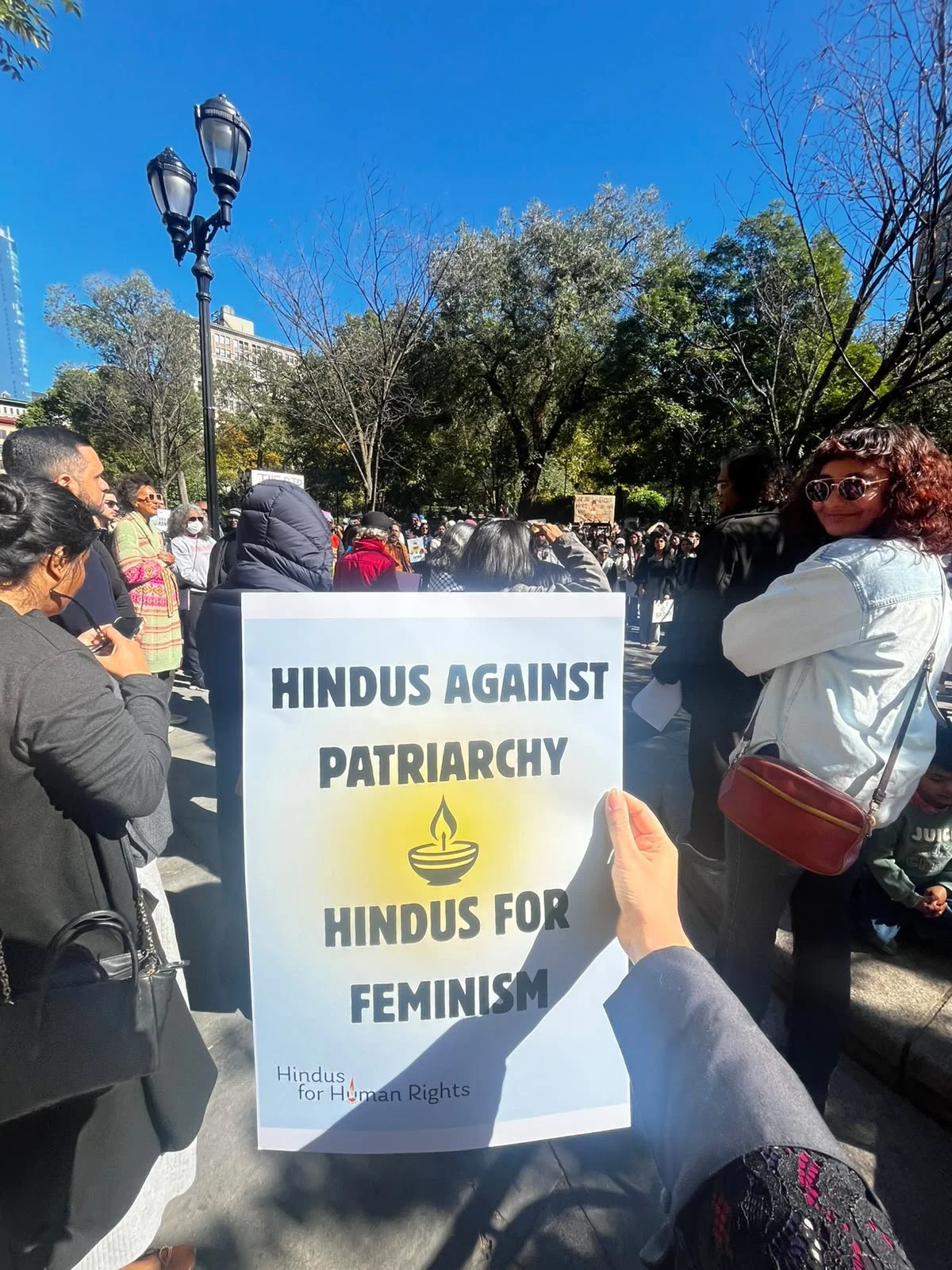
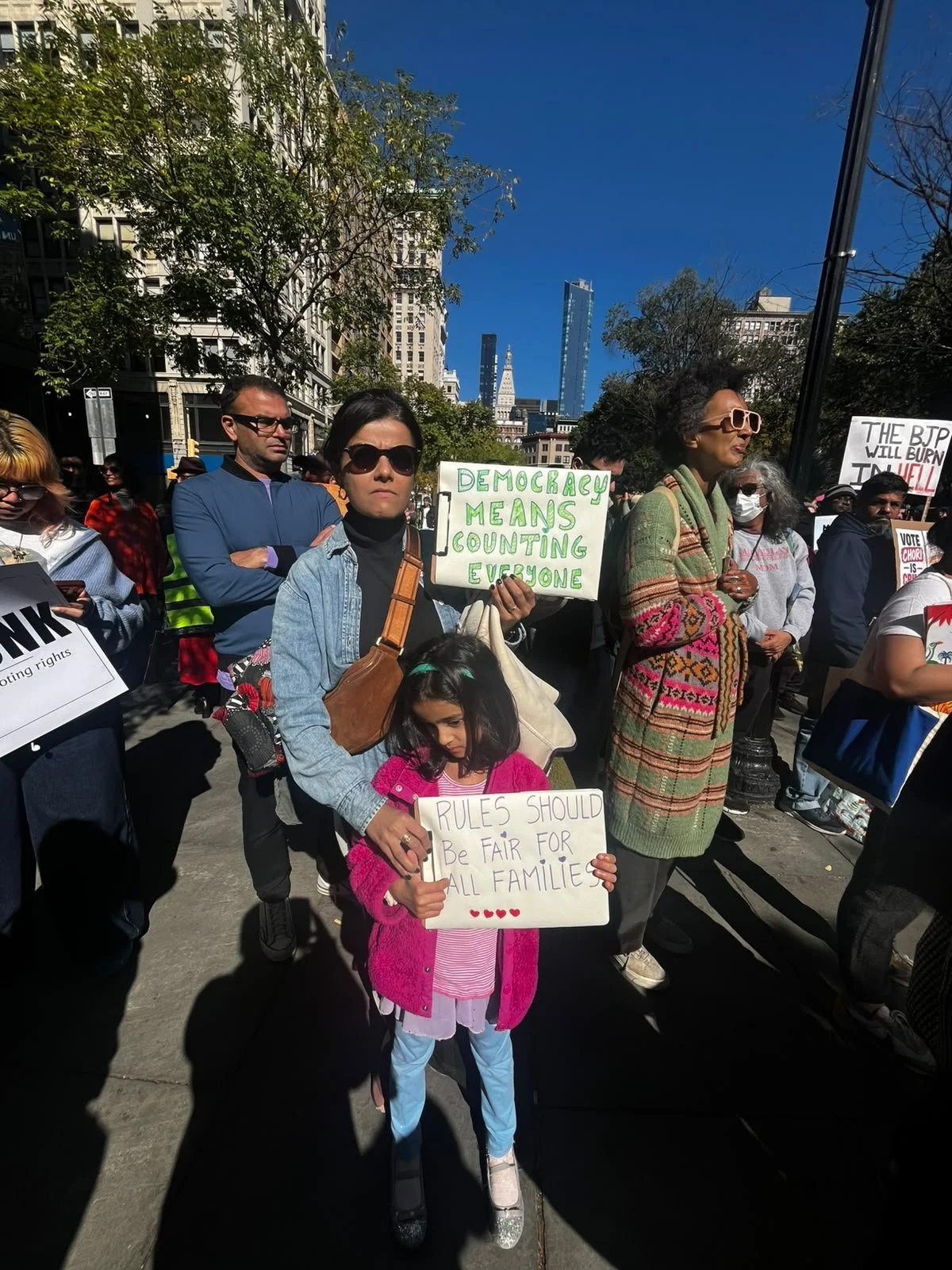
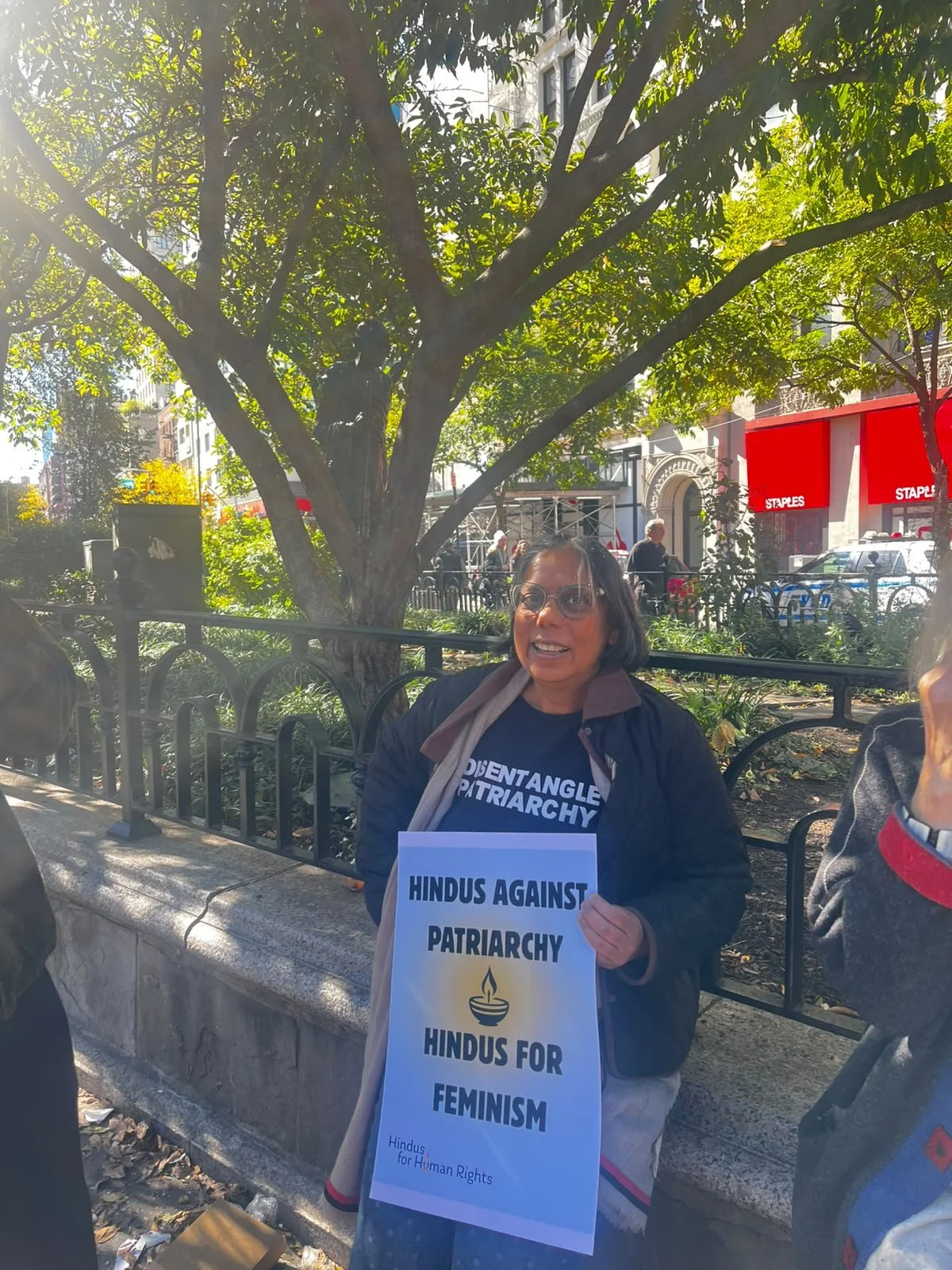
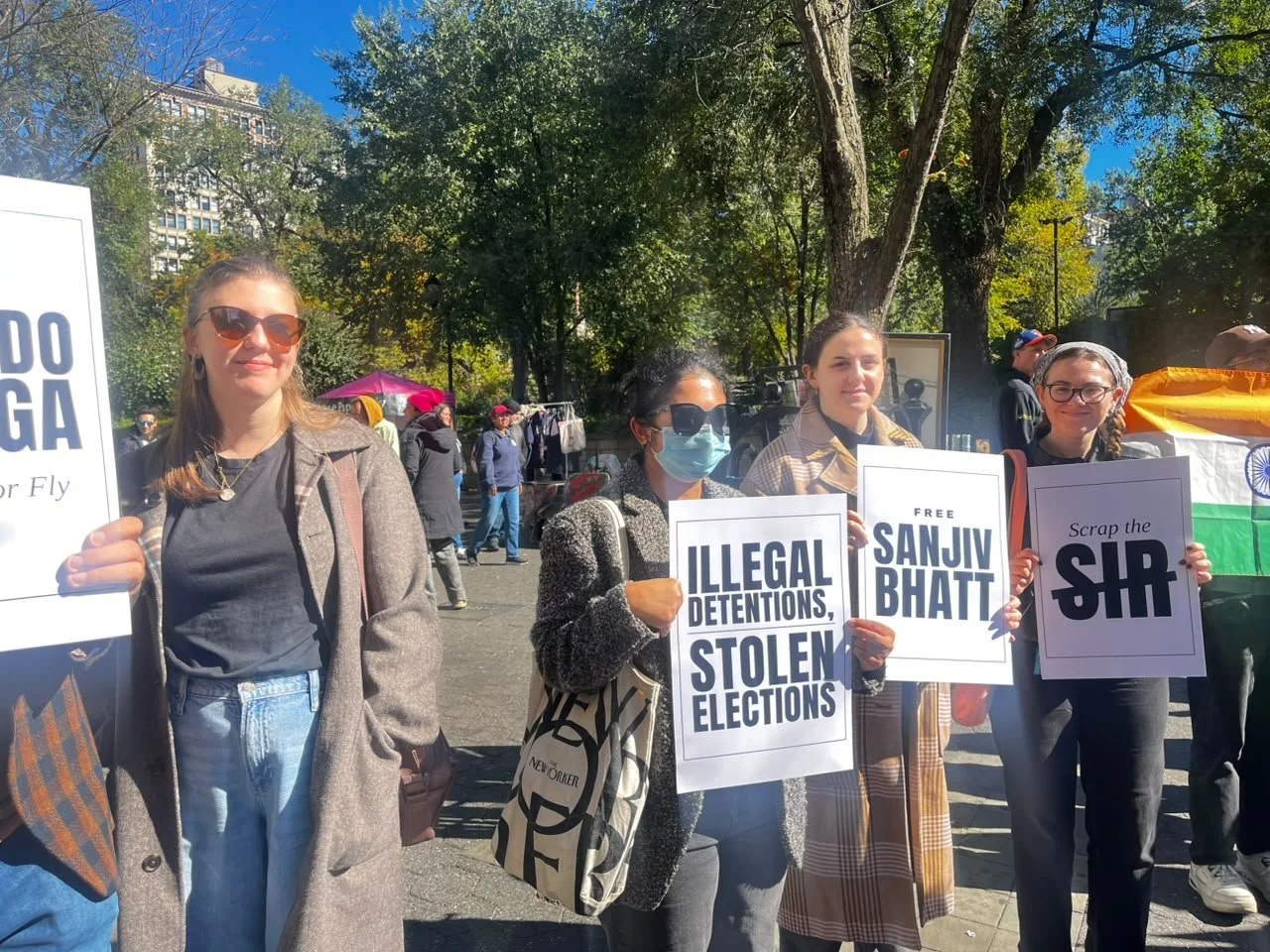
More than 200 people gathered at the Gandhi statue in New York City’s Union Square on Sunday for a rally in solidarity with people across India defending voting rights, democratic institutions and the right to peaceful protest.
The October 18 gathering was the latest in a growing series of U.S. demonstrations responding to concerns around India’s Special Intensive Revision of electoral rolls and the treatment of protesters challenging the process.
But the New York rally was about more than a list of demands. From beginning to end, it was filled with music, humor, argument, reflection and a remarkable sense of community.
The gathering opened with “Vaishnava Jana To,” the devotional song long associated with Mahatma Gandhi and its vision of compassion for the suffering of others, followed by “Hum Dekhenge,” Faiz Ahmed Faiz’s enduring song of resistance.
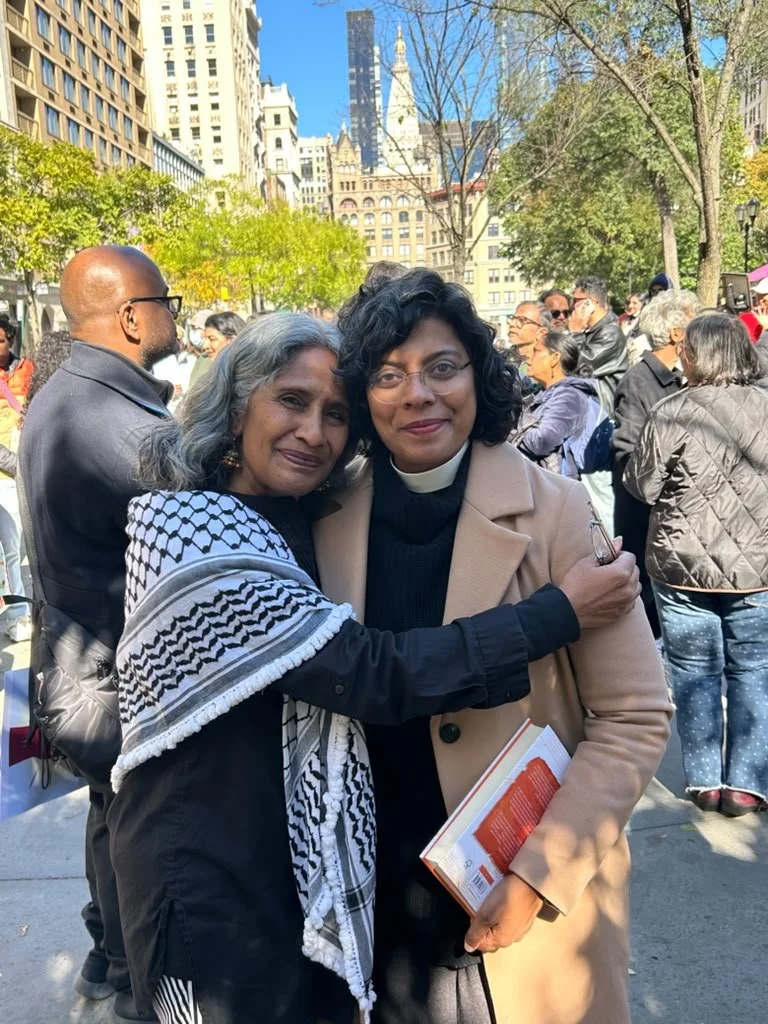
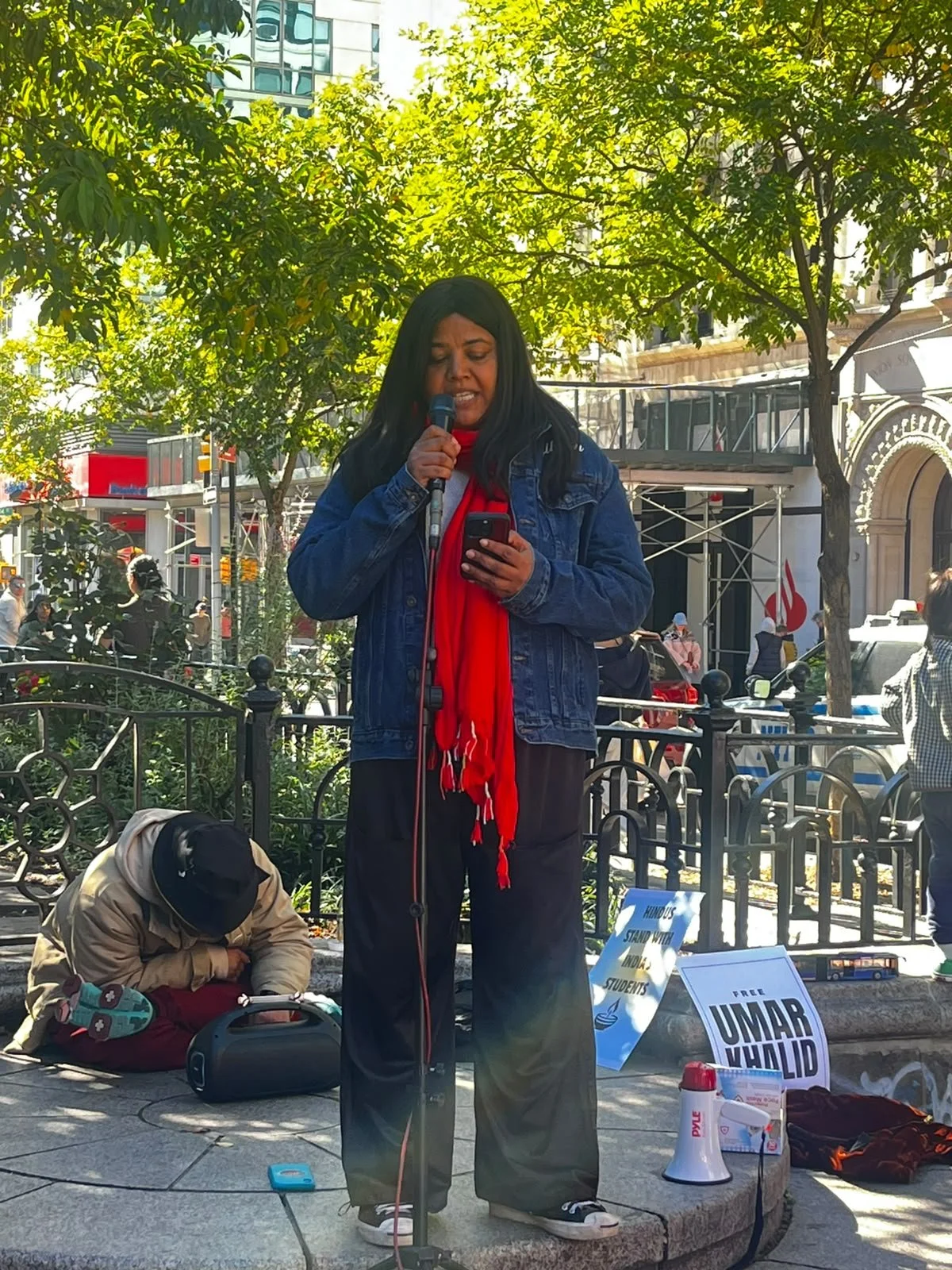
Speakers, artists, writers and advocates addressed the crowd throughout the afternoon, including Abby Govindan, Aatish Taseer, Shaifali Puri, Shruti Ganguly, Sunita Viswanath, Yashica Dutt, Mandeep Minhas, Kaneez Surka and Anurima Bhargava.
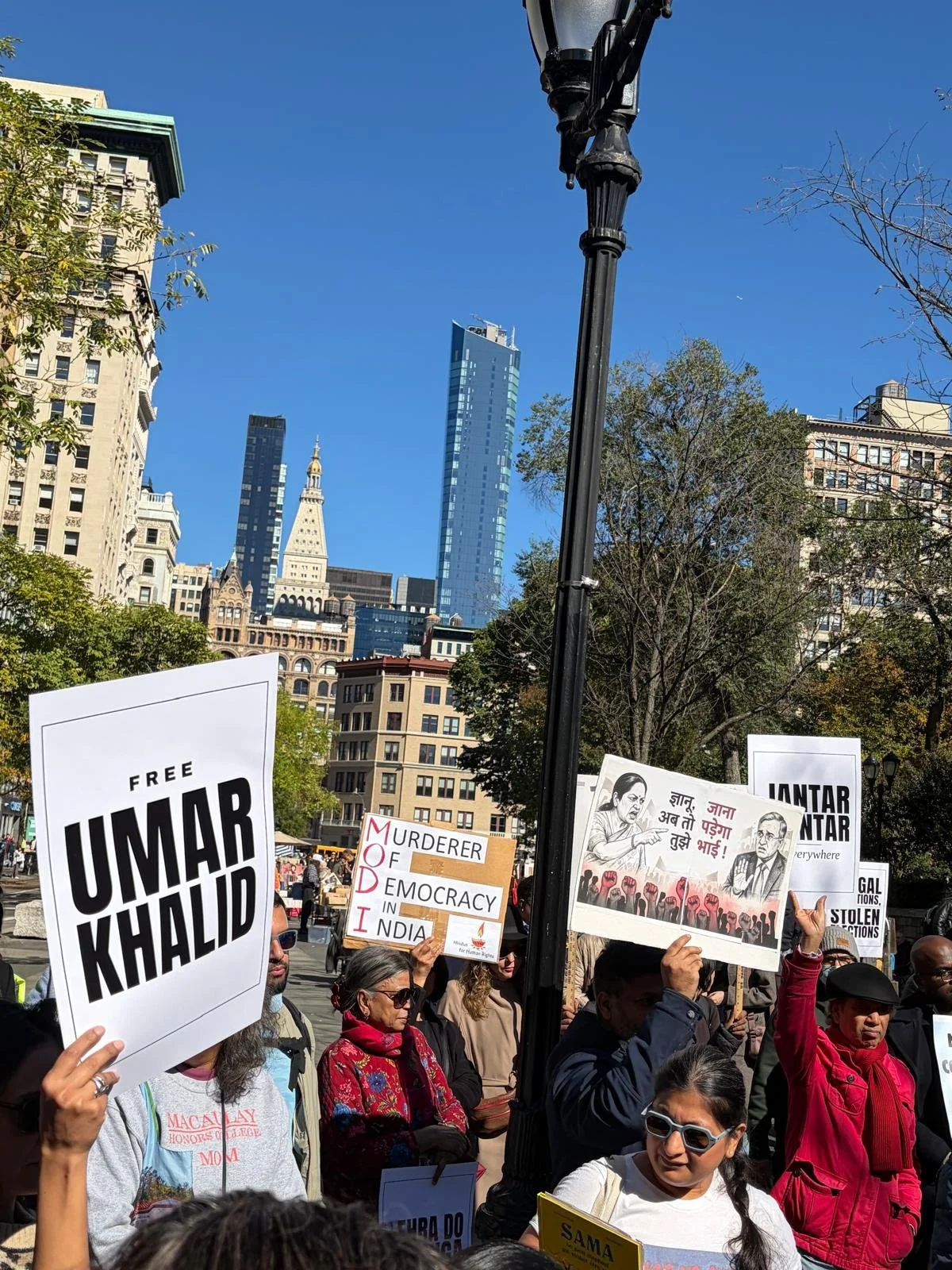
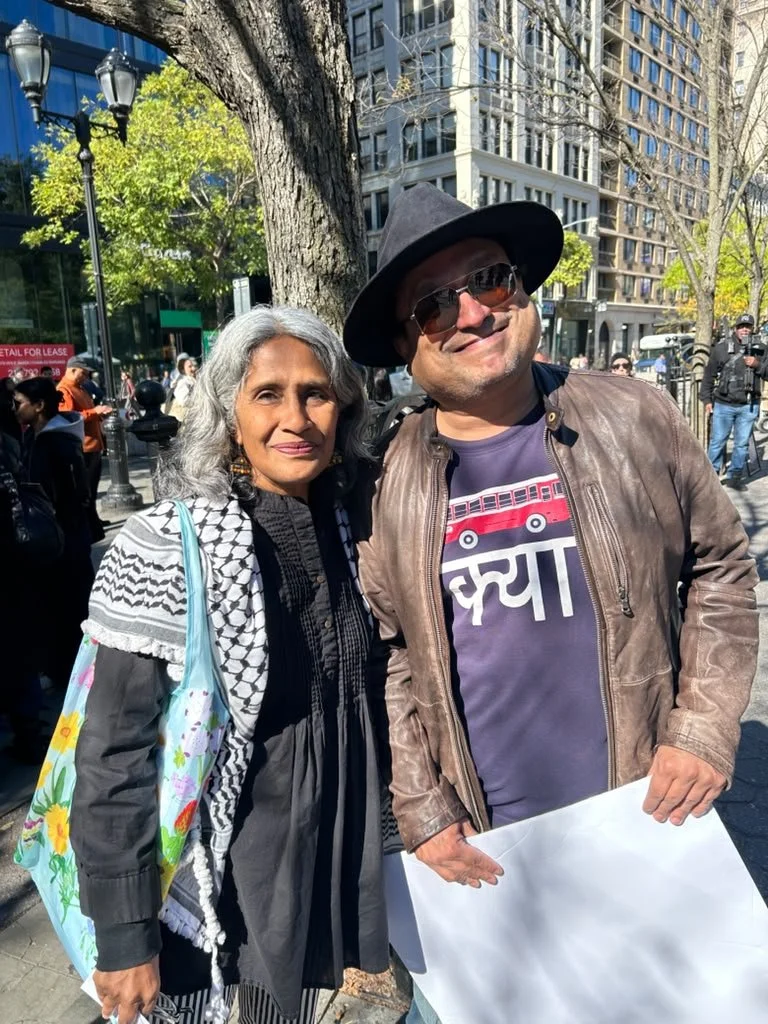
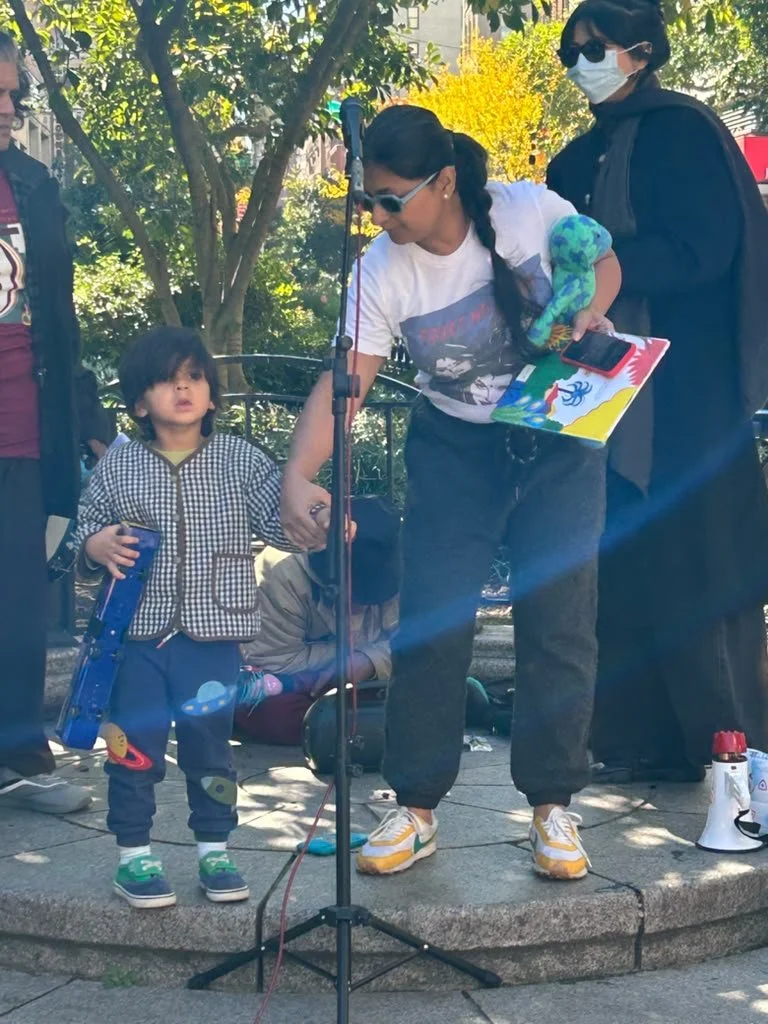
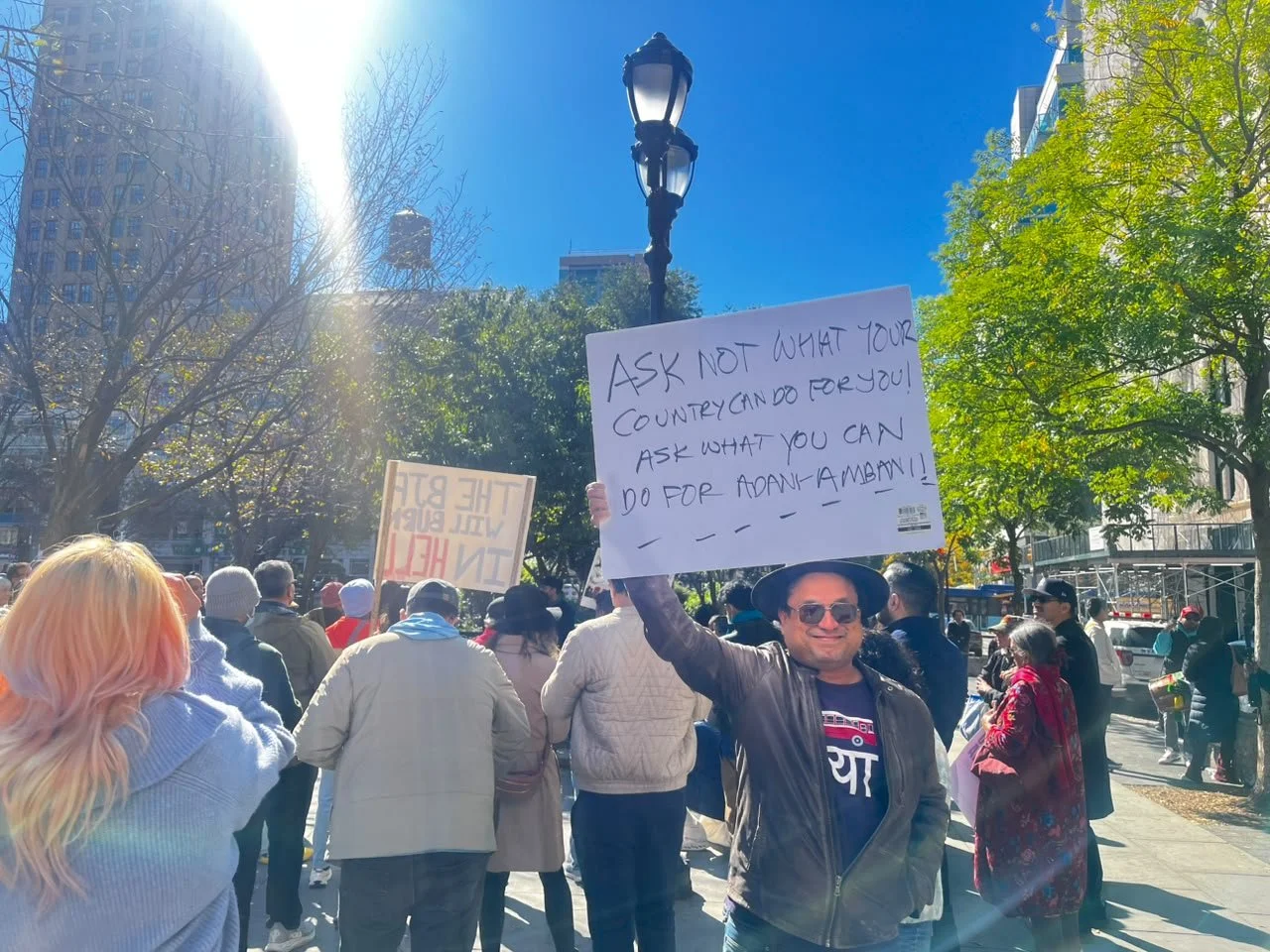
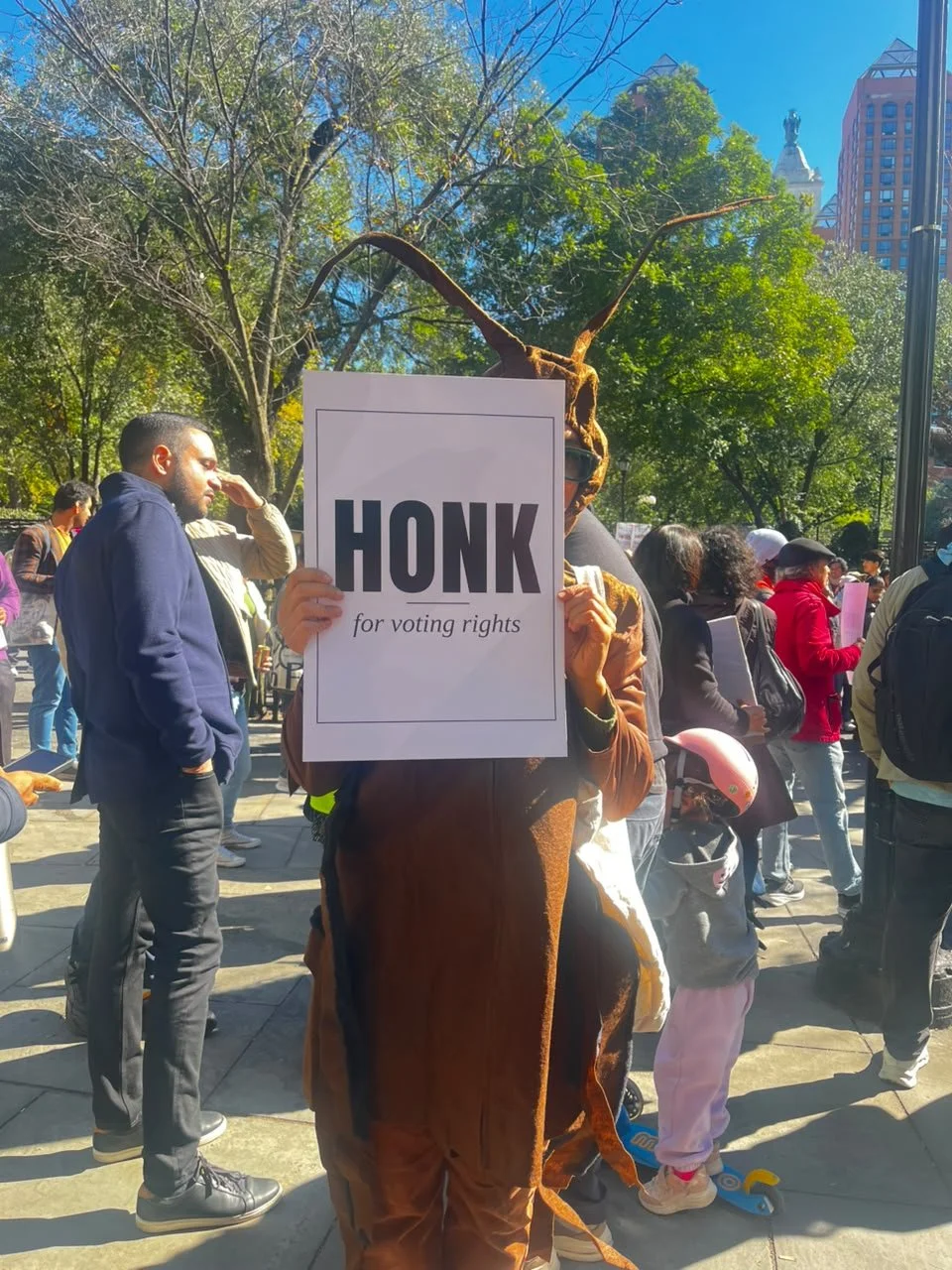
Shruti Ganguly also read a special message from India’s Citizens for Justice and Peace, connecting the gathering in New York directly with those organizing and protesting on the ground in India. The atmosphere was serious without ever becoming solemn. At one point, a participant dressed as a giant cockroach began circulating through the crowd, a playful reference to the imagery that has emerged from the protest movement in India. The human cockroach quickly became part mascot, part street theater, interacting with demonstrators throughout the rally.
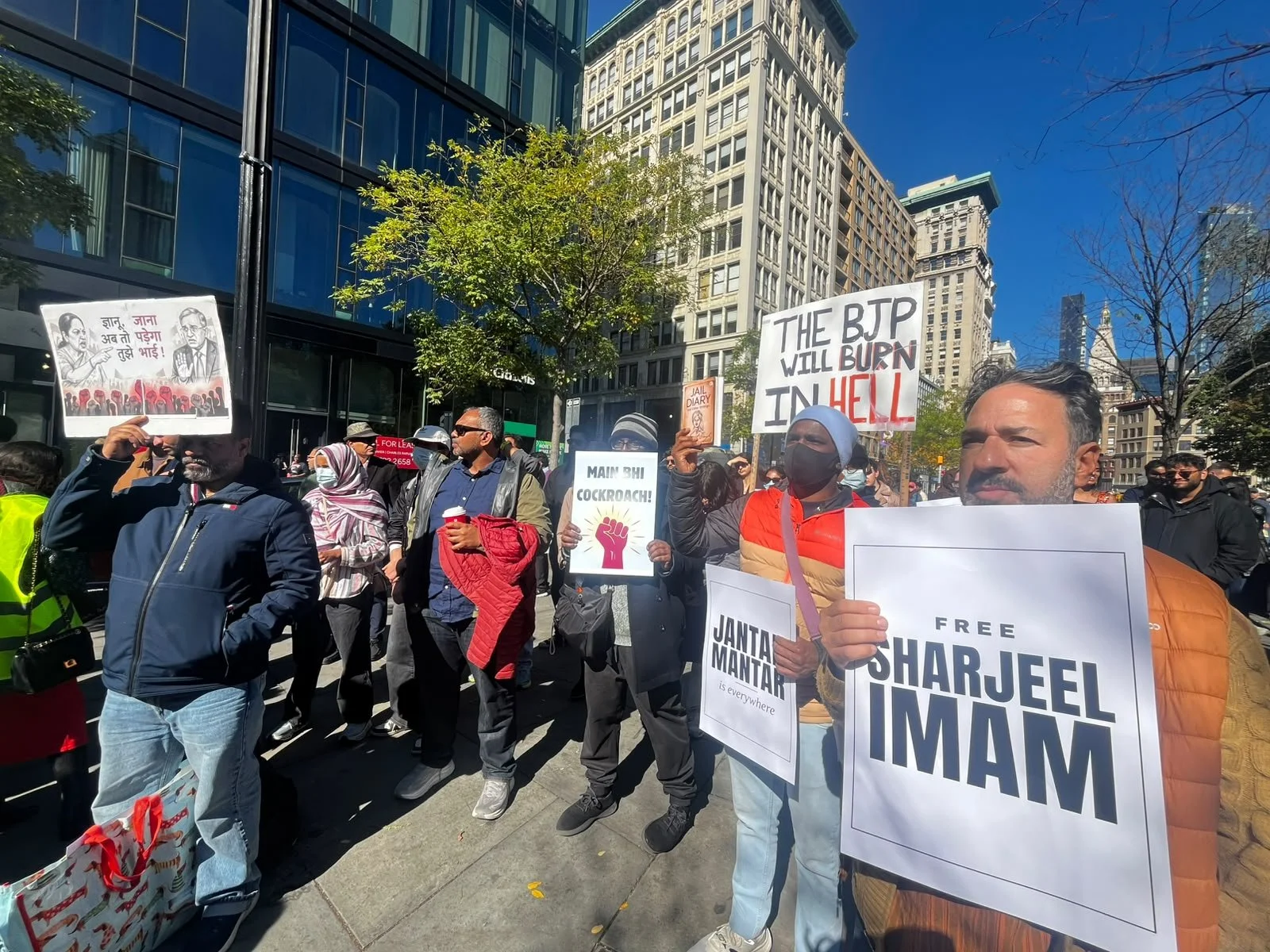
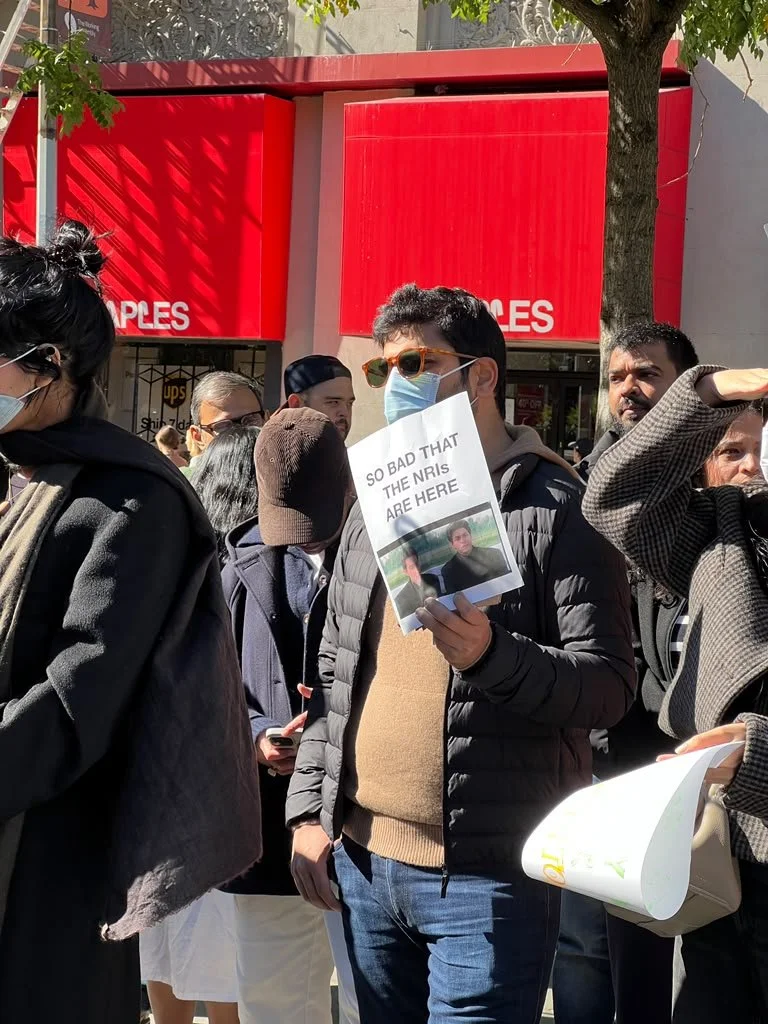
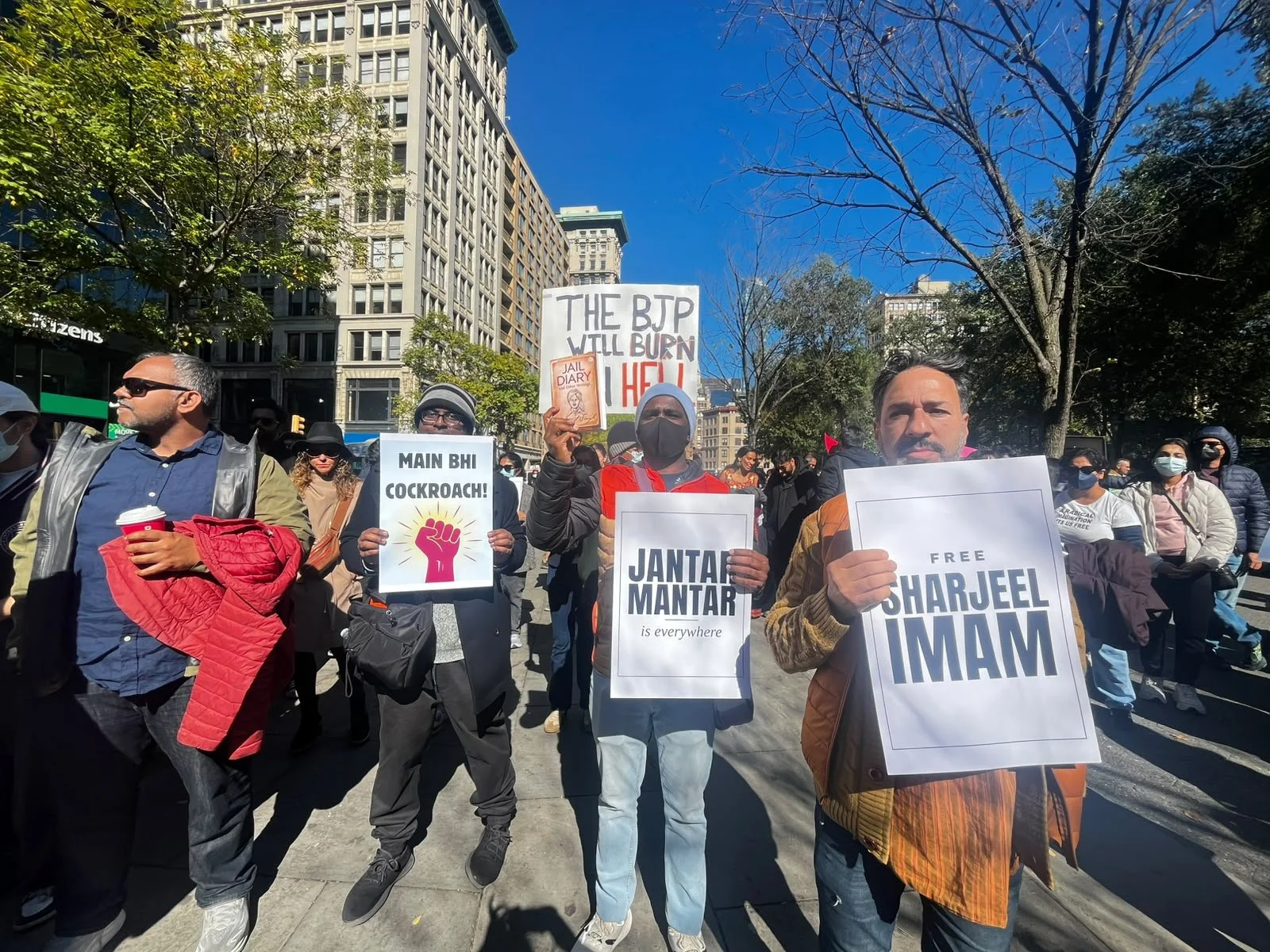
Even an attempt to disrupt the event became an unexpectedly funny demonstration of the crowd’s spirit. One pro-BJP counter-protester arrived with a whistle and a dhol and repeatedly tried to interrupt the program. Each time he began playing, participants, including Gaurav Sabnis, responded with pro-democracy chants.
Eventually, someone asked the heckler whether they could interview him. For the next several minutes, the whistling and drumming stopped while he earnestly gave an interview. Democracy, it turned out, had found one more way to keep the conversation going. Throughout the afternoon, the rally returned again and again to a central principle: protecting democracy means protecting both the right to vote and the right to dissent.
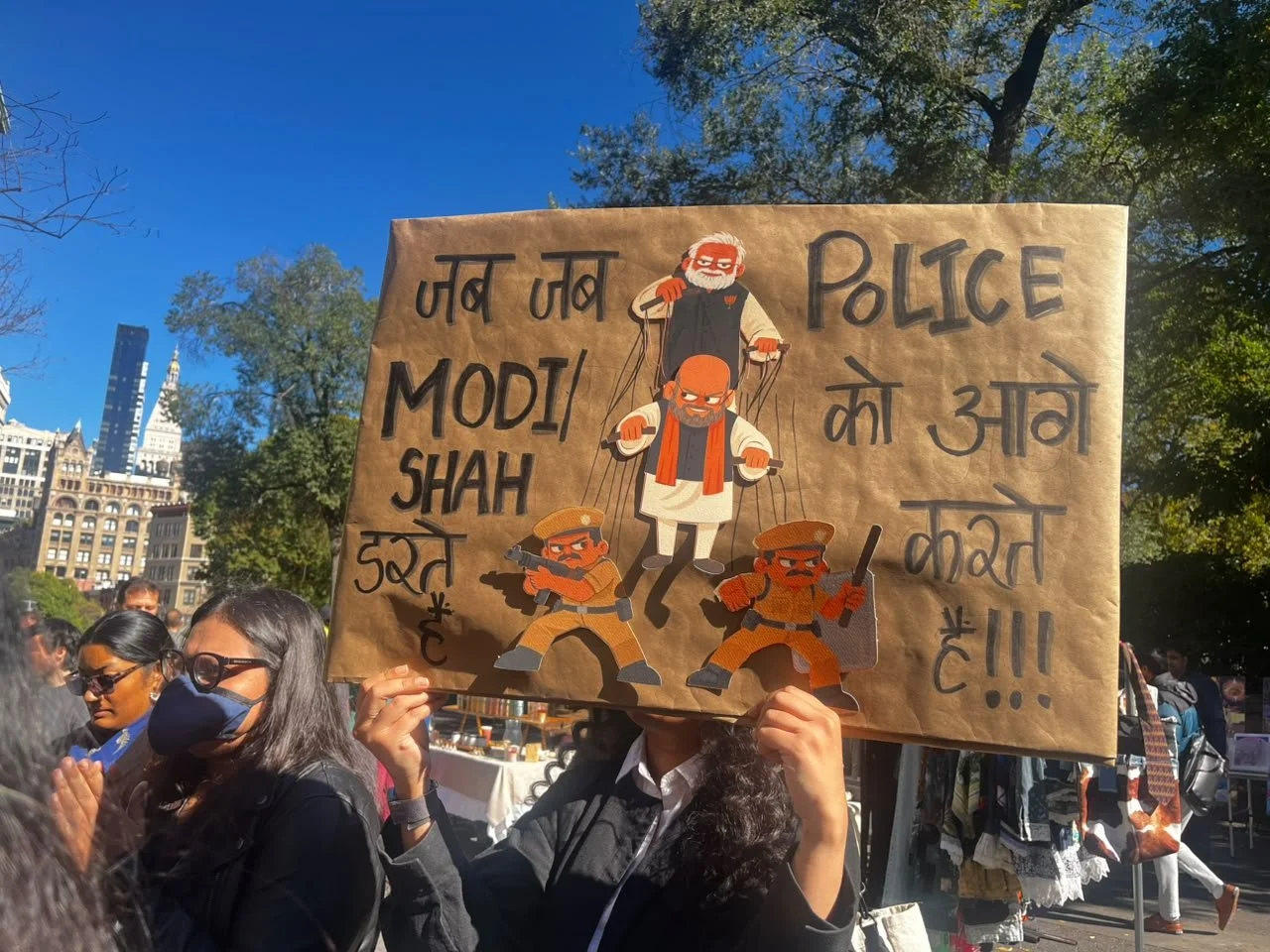
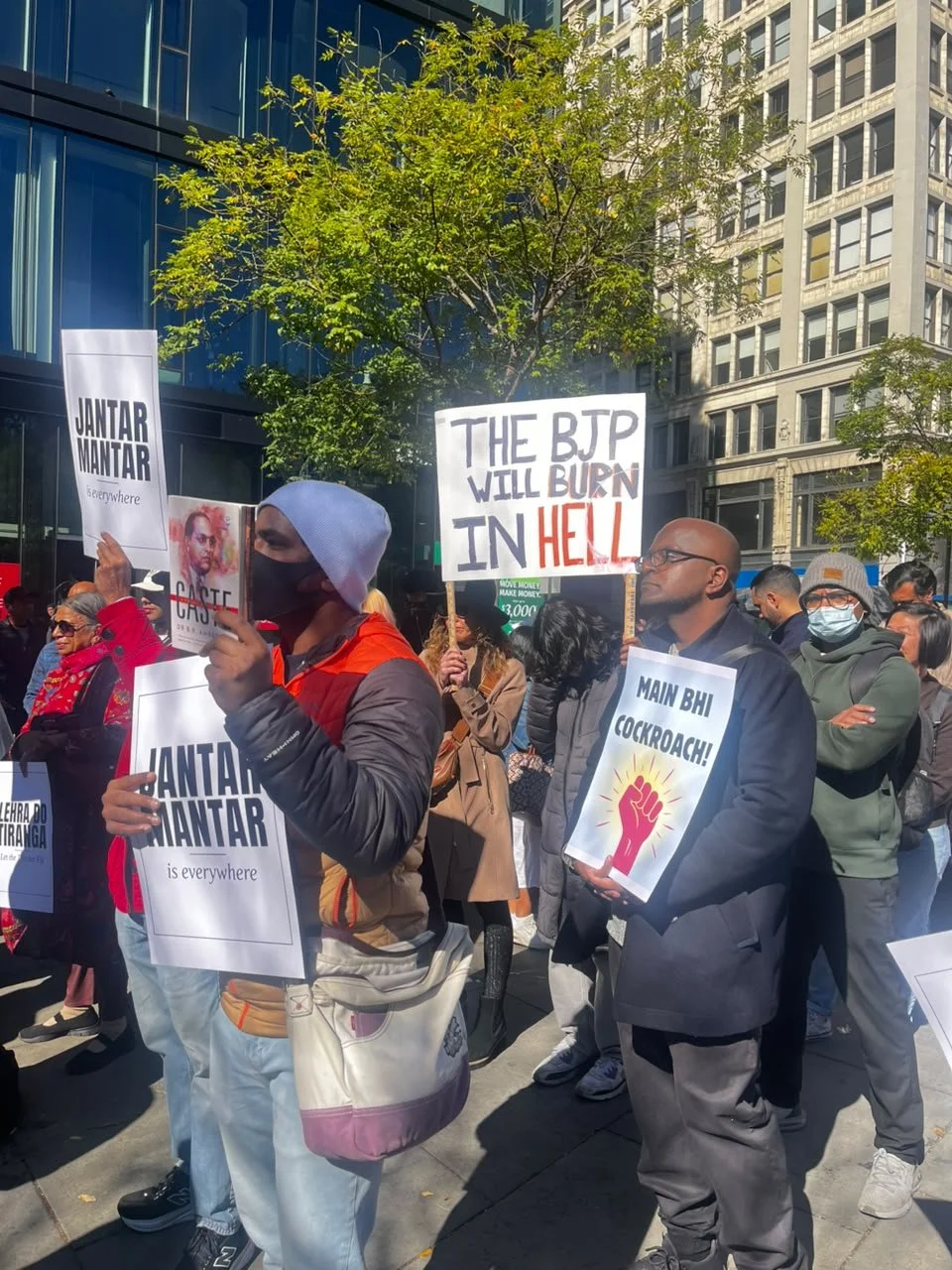
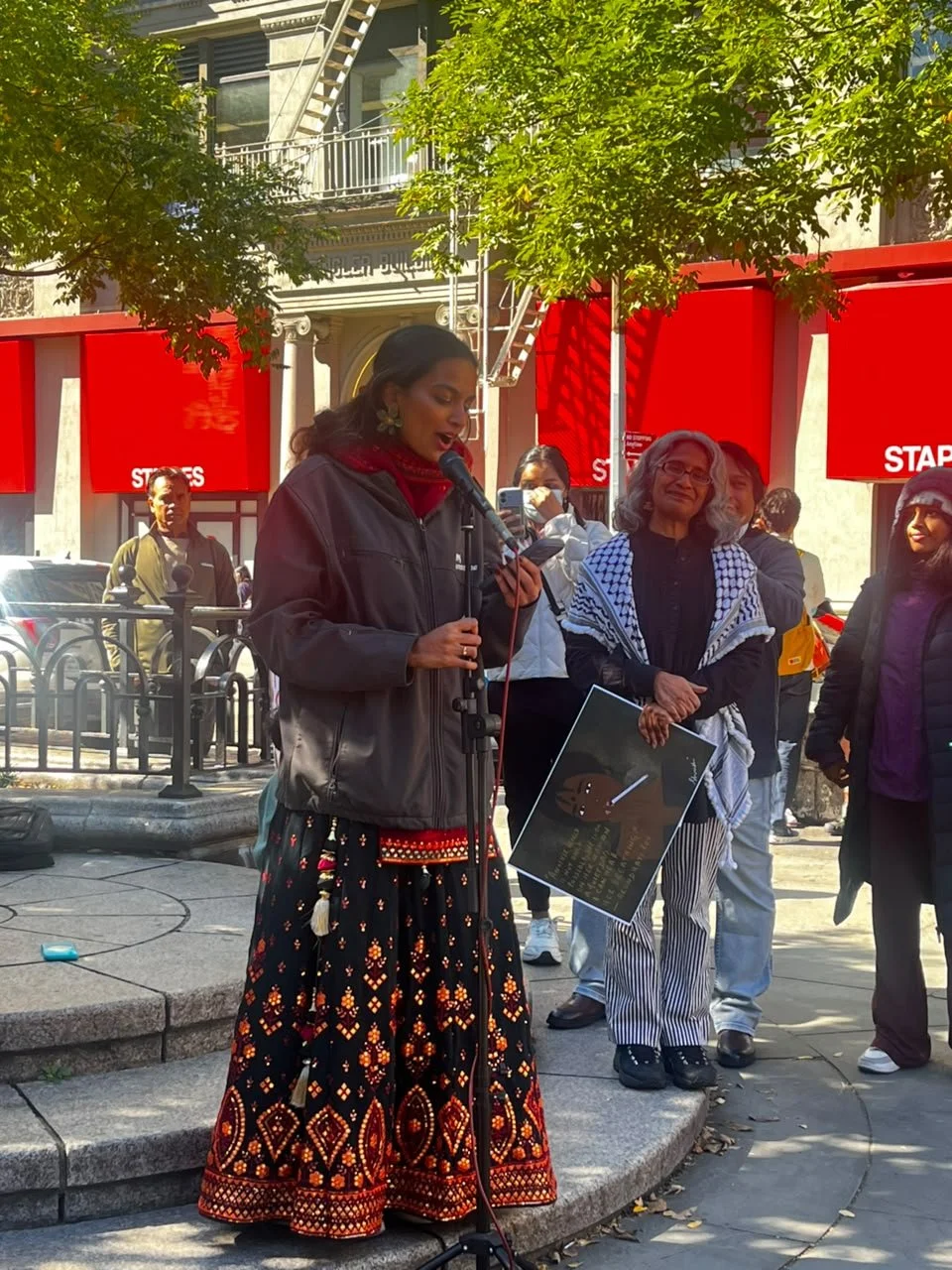
The demonstrations in the United States have focused in part on the Election Commission of India’s Special Intensive Revision (SIR) of electoral rolls. Protesters have raised concerns about the large numbers of people left off draft rolls and have called for eligible voters to be restored, for greater electoral accountability, and for citizens to be able to challenge public institutions peacefully.
The New York gathering also highlighted the safety and equality of women, including concerns raised by women journalists and protesters in India. These questions are deeply connected. Democracy cannot depend simply on holding elections. It depends on whether citizens can participate equally, whether public institutions remain accountable, and whether people can speak, organize and protest without fear.
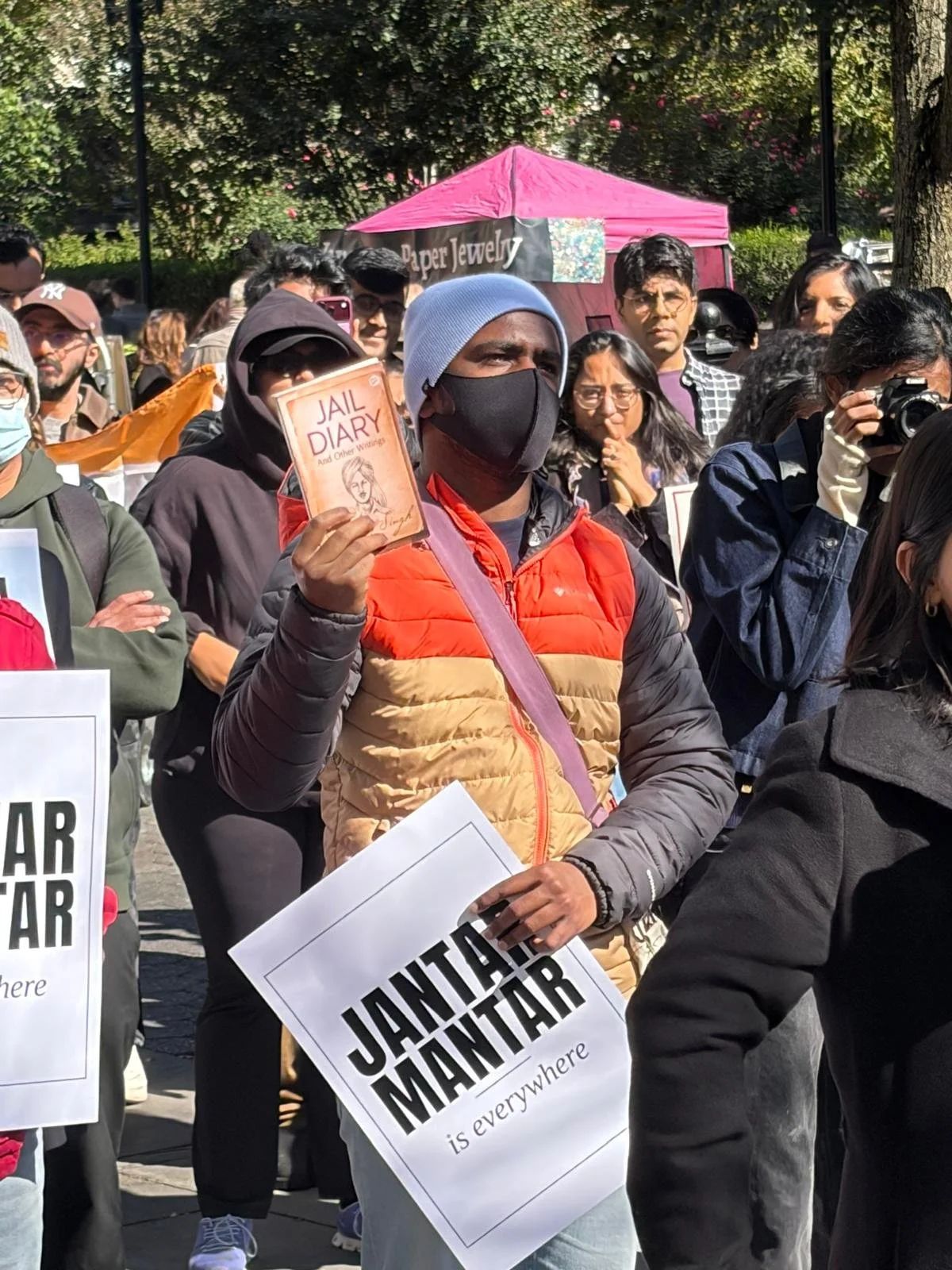
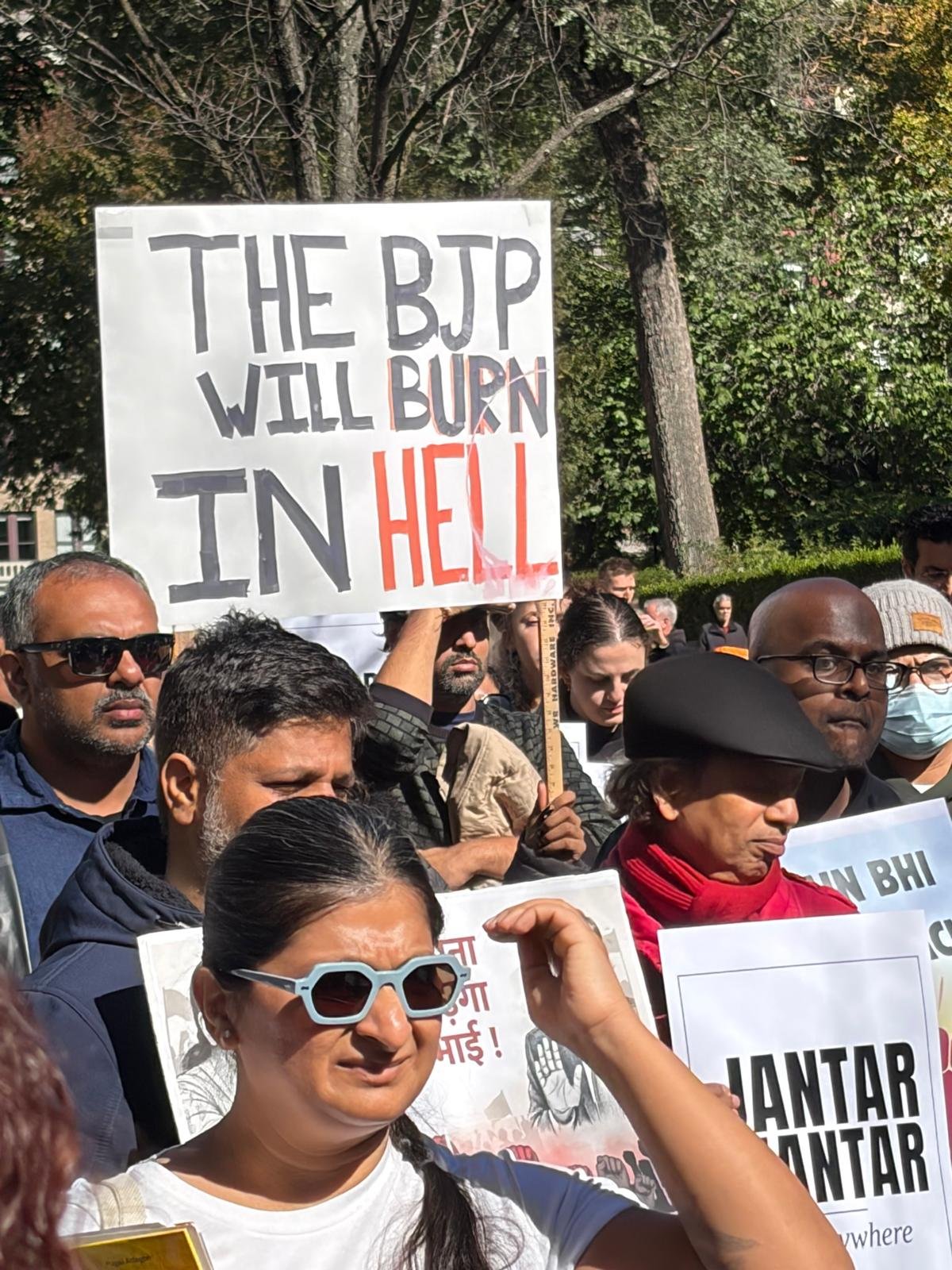
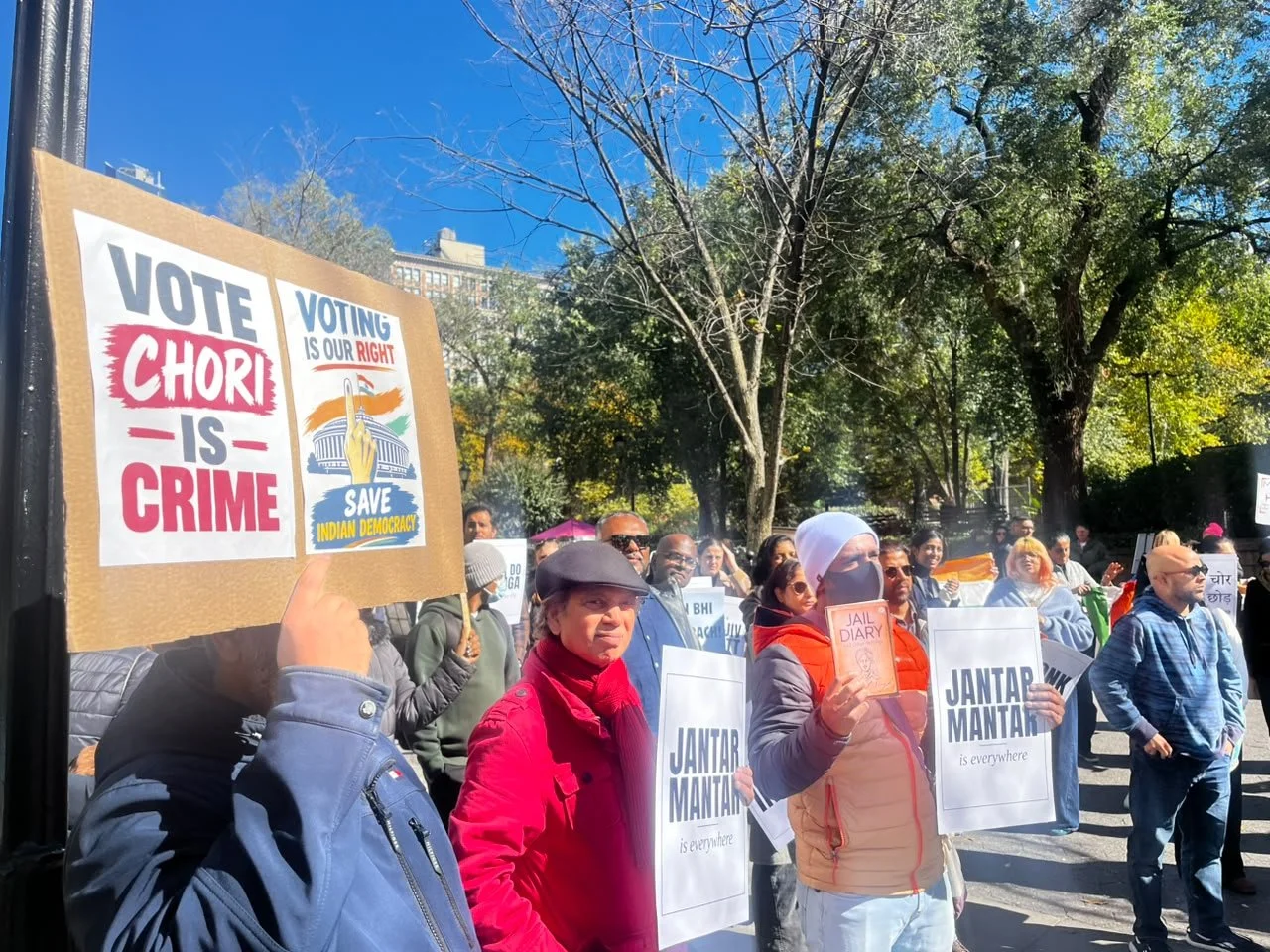
The rally closed in a way that captured that broader vision. Together, the crowd read aloud the Preamble to the Constitution of India, affirming its commitments to justice, liberty, equality and fraternity. Then the gathering ended with “Hum Honge Kamyab,” India’s version of “We Shall Overcome.” For a movement built around defending democratic participation, there may have been no better way to end the afternoon.