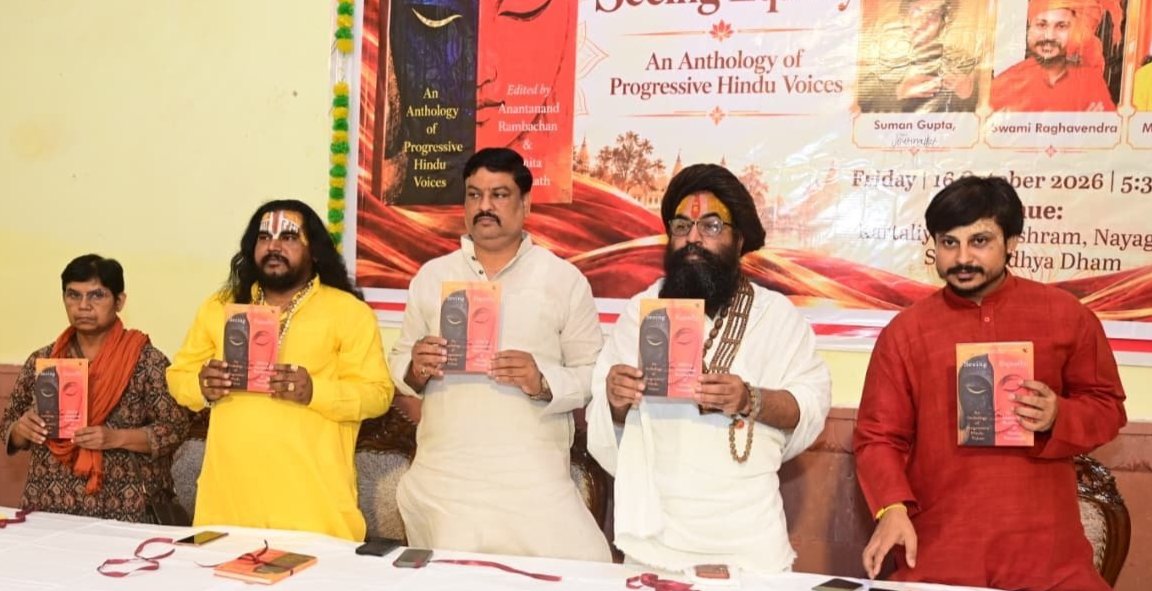
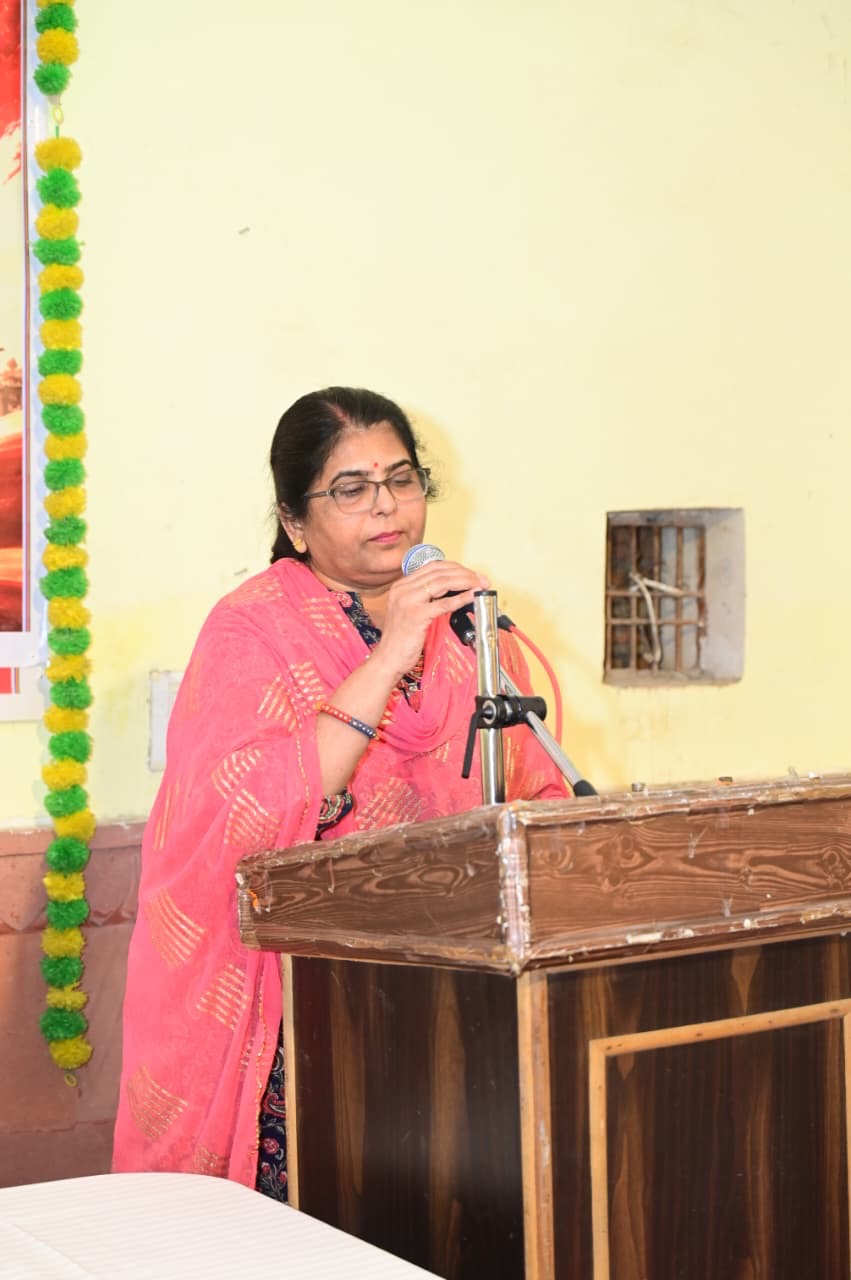
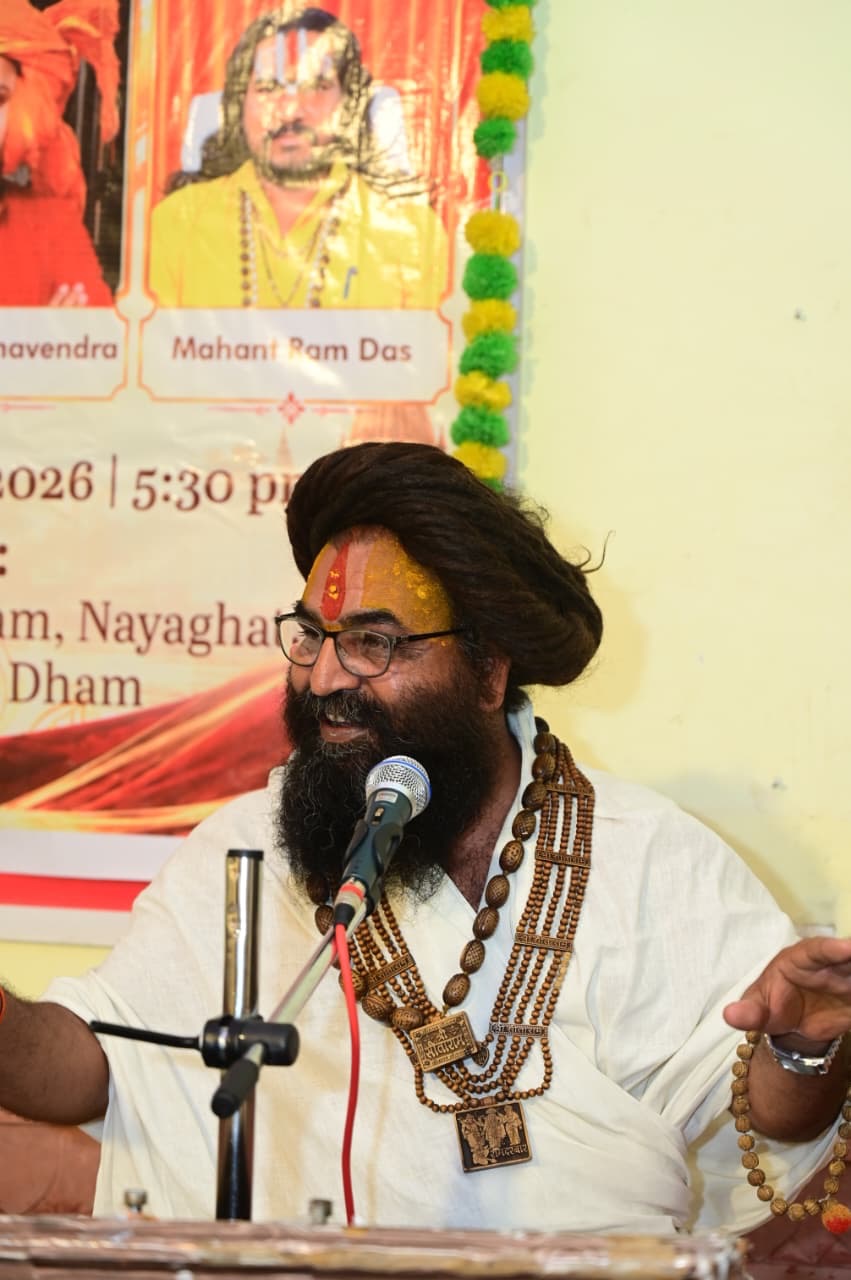
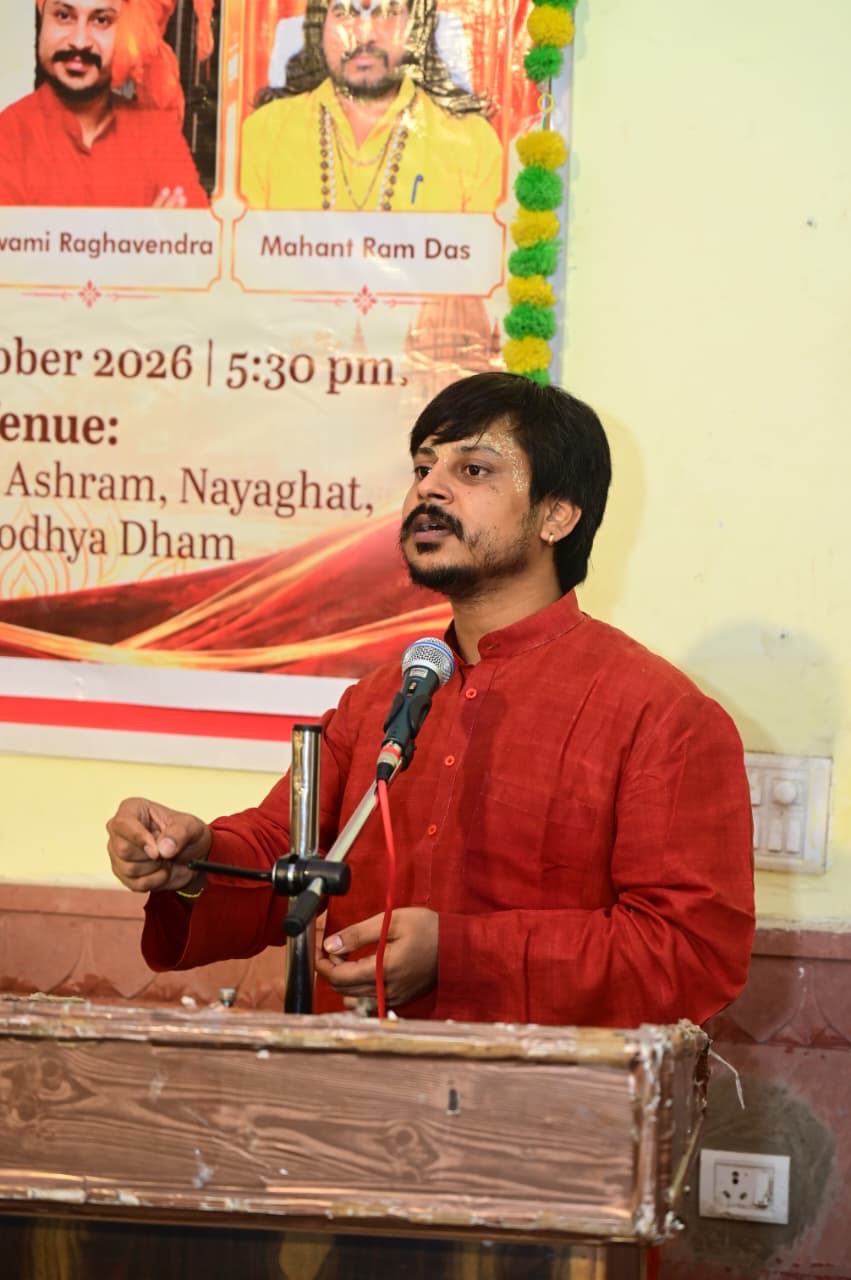
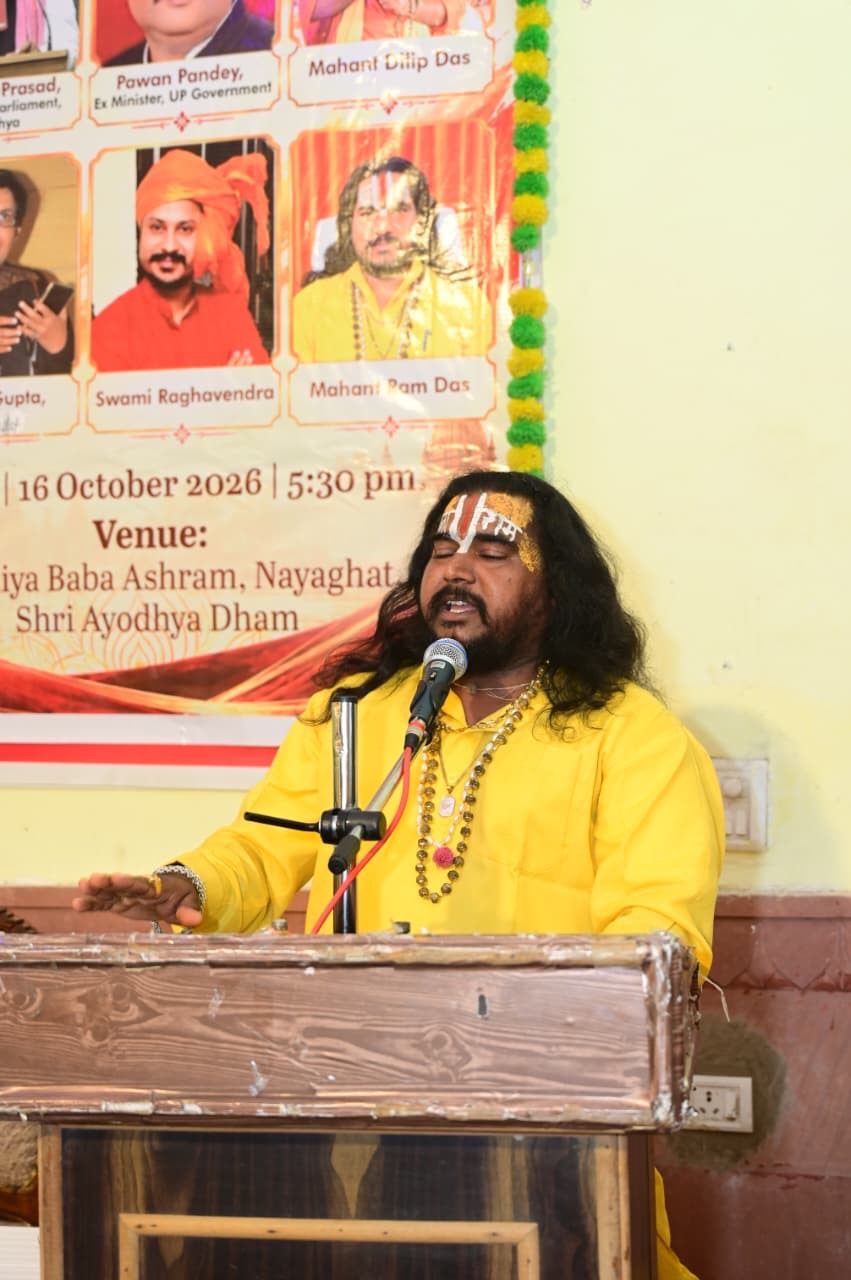
AYODHYA, October 16, 2026 — Seeing Equally: An Anthology of Progressive Hindu Voices, published by Westland Books, was launched Friday at Kartaliya Baba Ashram in Naya Ghat, Ayodhya, followed by a public discussion on equality, social justice, religious harmony, and the humane traditions within Hindu thought.
Edited by Prof. Anantanand Rambachan and Sunita Viswanath, the book brings together 13 essays presenting progressive Hindu perspectives grounded in equality, social justice, interfaith harmony, and the public good. Speakers at the event emphasized the need to strengthen the humane dimensions of religion and revive the spirit of sarva dharma sambhava, or equal respect for all faiths, in Ayodhya.
Moderating the program, Suman Gupta said the ideal of sarva dharma sambhava is passing through a serious crisis. He recalled that a period of intense conflict began in Ayodhya after 1984, and noted that in the 1990s, people singing “Ishwar Allah Tero Naam” at Ram ki Paidi were jailed for singing the devotional song. Against that history, he said, the launch and discussion of Seeing Equally in Ayodhya represents a new ray of hope.
Former minister Pawan Pandey said religion teaches love, compassion, and humanity, but alleged that the Rashtriya Swayamsevak Sangh (RSS) and Bharatiya Janata Party (BJP) are using religion for political and commercial purposes. Referring to Kashi Vishwanath, Ujjain Mahakal, and the Ram Mandir in Ayodhya, he raised questions about alleged irregularities involving religious institutions. He described Seeing Equally as an important effort to foreground the humane and inclusive dimensions of religious life.
Pandey also alleged that RSS-linked figures spread hatred toward Muslims while accepting financial support from companies connected to beef exports, describing this as a contradiction within the politics of the Sangh.
Mahant Dilip Das, referring to the image of Ardhanarishvara on the book’s cover, said this form of Lord Shiva represents the highest expression of harmony and the complementary existence of women and men. He said the Sanatana Dharma tradition is broad and generous, but argued that those associated with the Sangh Parivar are working to narrow it. The true strength of religion, he said, lies in its diversity, openness, and capacity to embrace everyone.
Mahant Ram Das focused on the persistence of caste discrimination among sadhus and religious leaders. He said that even after renouncing family life and entering the path of sannyasa, caste-based discrimination can continue among ascetics. If caste distinctions remain even within communities dedicated to religion and renunciation, he said, that should prompt serious introspection. Religious communities must confront discrimination within themselves if equality and social justice are to be realized.
Swami Raghavendra said that allegations and controversies ranging from “vote theft” to the misuse or theft of donations have raised serious questions about democratic and social life in India. He alleged that RSS ideology has been influenced by Zionism and said Ayodhya must be freed from religious hatred and ideological narrowness. He described Seeing Equally as a constructive effort in that direction.
Swami Raghavendra also noted that the book includes 13 essays by religious leaders and thinkers working in support of a humane vision of religion, religious harmony, equality, and public welfare. He said the book demonstrates that Hindu traditions contain many voices that reject caste discrimination, religious extremism, and the politics of hatred in favor of love, compassion, and coexistence.
He added that Ayodhya’s identity should not be understood only through religious faith. The city also carries a legacy of shared culture, dialogue, and human relationships, and strengthening that inheritance is an urgent need today.
More than 100 people attended the event, including Mahant Anand Das, Mahant Ramnayan Das, Mahant Rammanohar Das, Mahant Shatrughna Das, Jata Baba, Mahant Sanatkumar Das, Mahant Kanhaiya Das, Saurabh Das Naga, Anshul Das, Kuldeep Upadhyay, Rambaksh Yadav, Pradeep Tripathi, Akhilesh Pandey, Rajiv, Rampreet, Harish, Nayan, Bambam, and Manas Das.
Speakers agreed that the purpose of religion should be to bring society together, protect human dignity, and strengthen social relationships rooted in compassion and justice. The launch of Seeing Equally in Ayodhya was presented as an important step toward advancing a more humane, inclusive, and egalitarian religious consciousness.
Seeing Equally: An Anthology of Progressive Hindu Voices is available to order online through Amazon India. For press inquiries, high-resolution photos, event video, or additional information about the Ayodhya launch, please contact Hindus for Human Rights.
MEDIA CONTACT
David Dasharath Kalal
david@hindusforhumanrights.org
###