
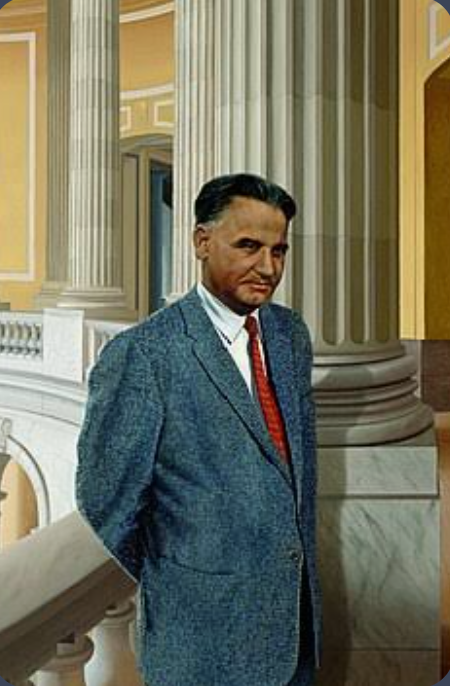
Modern conservative commentators and Hindu nationalists invoke Dalip Singh Saund —the first Indian American and first Sikh elected to the United States Congress in 1956- with a familiar blend of pride and revisionism. In the contemporary right-wing imagination, he is used as a decorative token of Indian civilizational achievement: proof of diasporic triumph and early Indian influence in the West. However, this selective reverence hides the fact that Saund was neither a mascot for cultural majoritarianism nor a prototype for ethno-nationalist pride. His life, public philosophy, and legislative career stood as a direct repudiation of the core tenets that define Hindutva today.
Born in Punjab in 1899, Saund was a Punjabi Sikh whose political awakening came when British imperialists imposed repressive policies such as the Rowlatt Act and state-sanctioned violence in Jallianwala Bagh. He left India for Berkeley, California because he was convinced that India’s path to freedom required industrial modernization. He arrived in California in 1920 to study at UC Berkeley and earned a Ph.D. in mathematics. However, despite his credentials, he faced institutional racism and a ruling by the US Supreme Court in the Bhagat Singh Thind decision, which denied him and other Indians legal status or acquired property.
Saund didn’t succumb to bitterness or insularity. He survived by living among other pioneering Punjabi farmers and trusted Euro-American friends who held leases and land titles in their names on the farmers’ behalf. He was inspired by Woodrow Wilson’s doctrine of self-determination, Lincoln’s Gettysburg speech on government of, by, and for the people. These concepts gained practical urgency during the rise of India’s Non-cooperation movement led by Mahatma Gandhi in 1920. Central to Saund’s worldview was the Sikh metaphysical principle of Ik Onkar—the divine oneness and radical equality of all human beings. Blending Sikh egalitarianism (seva) with Abraham Lincoln’s democratic idealism and Mahatma Gandhi’s nonviolent anticolonialism, Saund operated on the idea that a true democracy cannot tolerate second-class citizenship.
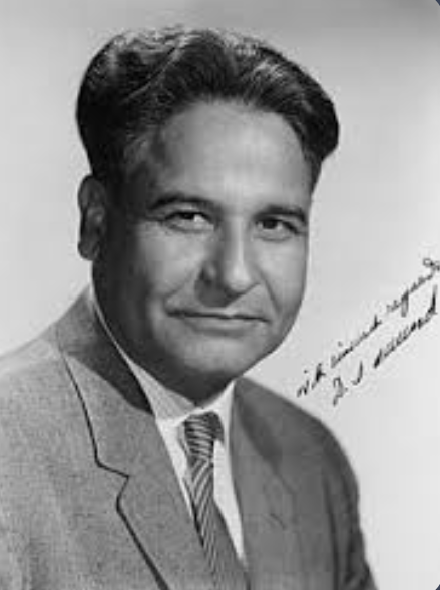
Saund became a prolific speaker and lectured before churches, educational forums, and clubs on British Colonialism, on Indian self-rule, and Gandhian non-violent resistance. He did not allow his defense of Indian culture to descend into apologetics, as he openly condemned the historical caste system and untouchability - characterizing them as a social cancer. He recognized that Indians and South Asians at large couldn’t achieve economic security without political franchise, and he directed his efforts in the USA towards civil rights. He led the legislative fight for the Luce-Celler Act of 1946, which finally dismantled Asian naturalization bans. When he won a seat in the House representing California’s 29th District, he did so on an unapologetically progressive, coalition-building platform.
Saund’s humanist vision clashes fundamentally with Hindutva. Hindutva, or Hindu nationalism, defines belonging not through equal constitutional citizenship, but through ethno-religious hegemony (Hindu Rashtra), where non-Indic religious minorities are treated with suspicion unless subsumed into a majoritarian cultural frame. In Congress, Saund championed the Civil Rights Acts of 1957 and 1960 and attacked Southern voter suppression, living out a decolonial politics centered on minority rights and constitutional equity. To enlist Dalip Singh Saund in the service of sectarian nationalism is to erase the very principles he fought for. He was not an apostle of majoritarian chauvinism, but an ardent defender of universal pluralism. Reclaiming his true legacy requires rejecting his co-optation and remembering the man as he lived: an immigrant who fought hierarchy everywhere, insisting that freedom is hollow unless it belongs to all.
by Krishna K.
The views expressed in this article are those of the author and do not necessarily reflect the views of Hindus for Human Rights.