
When the Panthers Took to the Streets: The Founding of the Dalit Panthers and the Fight Against Caste
The Dalit Panthers were born from a simple, unbearable truth: constitutional promises do not enforce themselves.
In 1972, more than two decades after India’s Constitution abolished untouchability, Dalit communities continued to face caste violence, social boycott, sexual violence, landlessness, humiliation, and political abandonment. The language of freedom had entered the law, but caste remained alive in the village, the street, the police station, the classroom, the workplace, and the imagination of the nation.
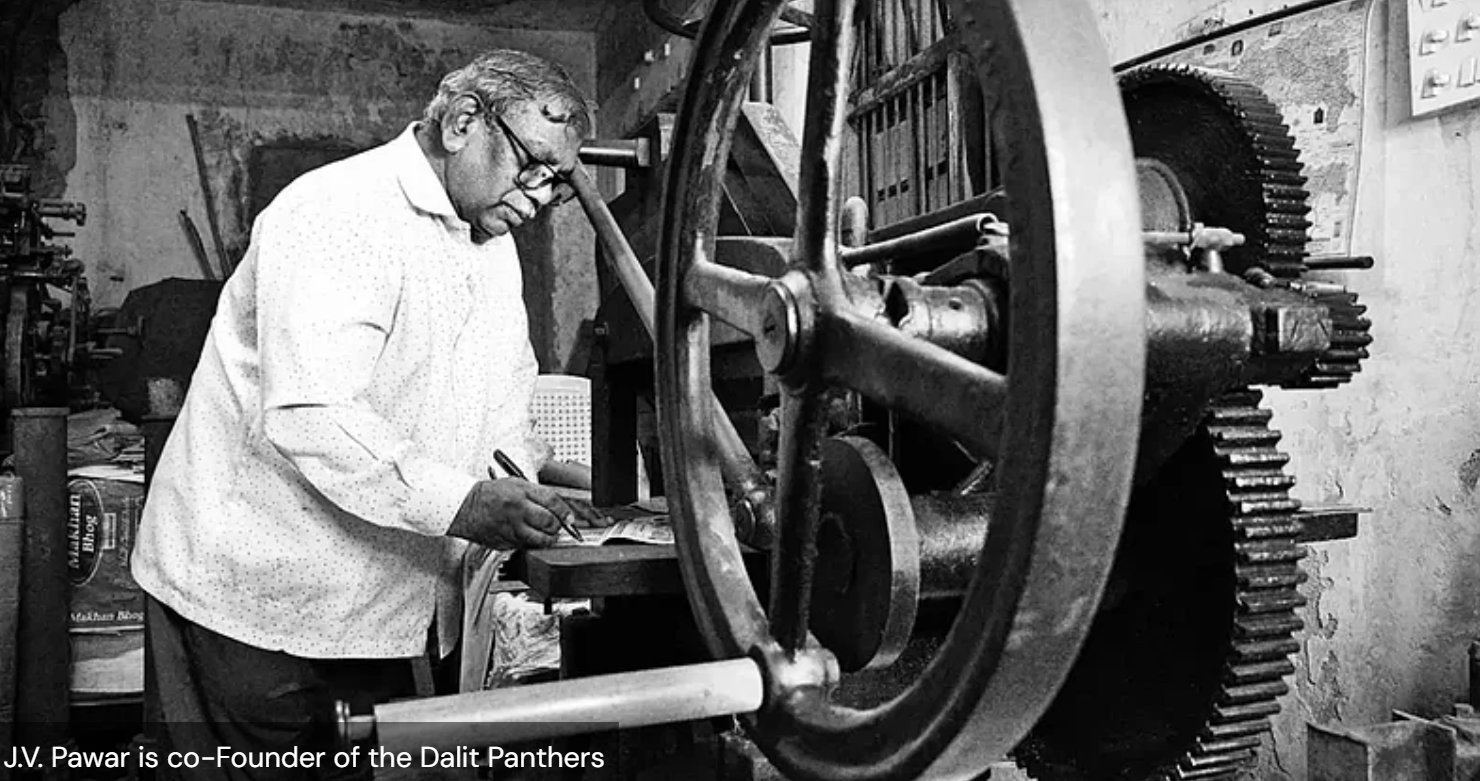
It was in this atmosphere that young Ambedkarite writers and activists in Maharashtra began to organize under a new name: the Dalit Panthers. The movement is most closely associated with Namdeo Dhasal, J.V. Pawar, and Raja Dhale, along with a broader constellation of Dalit, Buddhist, literary, and radical activists. Its founding is often traced to May 29, 1972, when Dhasal and Pawar decided, while walking through Bombay, that a militant organization was needed to confront atrocities against Dalits. A wider public gathering followed on July 9, 1972, helping turn the name into a movement.
The exact date matters less than the rupture. The Dalit Panthers announced that the time for polite appeals had run out.
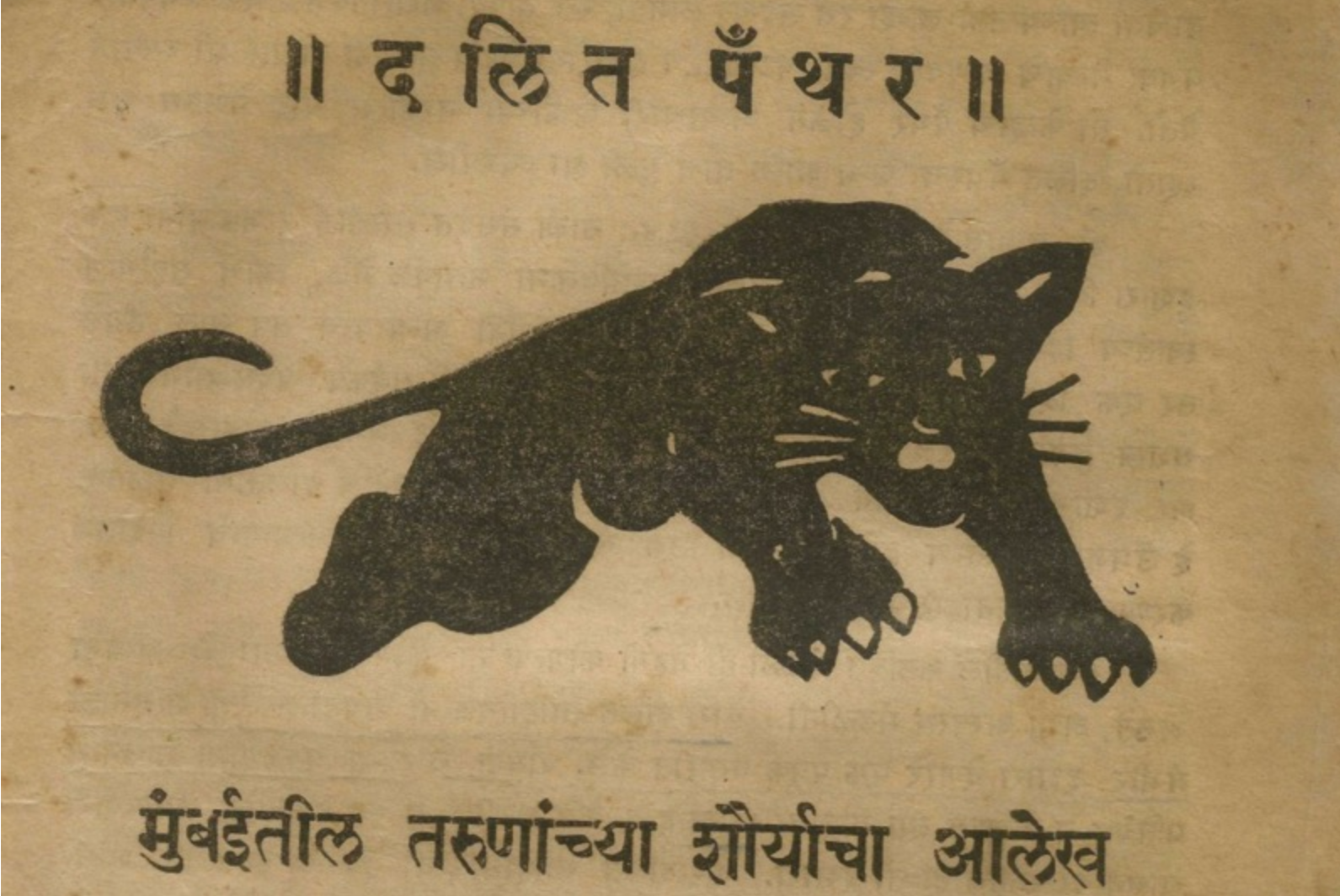
Their name consciously echoed the Black Panther Party in the United States. This was not imitation for style’s sake. It was a recognition that oppressed people across the world were asking related questions about dignity, self-defense, state violence, poverty, and the limits of liberal promises. The Dalit Panthers saw caste not as a private religious custom or an old social habit, but as a system of organized violence. They insisted that those crushed by that system had the right to speak in a language equal to their pain.
The Founding
The Dalit Panthers did not appear from nowhere. They emerged from a specific political and moral failure by society at large.
Dr. B.R. Ambedkar had given India a vocabulary of constitutional morality, social democracy, annihilation of caste, and dignity rooted in equality. Yet after his death in 1956, the Ambedkarite movement faced fragmentation, especially through splits in the Republican Party of India. Many young Dalits felt that older political formations had become too compromised, too cautious, or too distant from the everyday terror faced by Dalit communities.
In Maharashtra, a series of caste atrocities sharpened this anger. Accounts of the movement often point to incidents in Bawda and Brahmangaon, where Dalit communities faced boycott, humiliation, and sexualized violence. These were not isolated acts of cruelty. They reflected a social order in which dominant caste power could punish Dalits for claiming water, land, dignity, or public presence.
The Panthers responded by taking to the streets. They visited sites of atrocity. They organized public meetings. They used poetry, speeches, pamphlets, and protest to force caste violence into public view. Their politics was not only electoral. It was cultural, literary, bodily, and confrontational.
They understood that caste survives partly by making its violence seem normal. Their task was to make that normalcy impossible.
Dalit as a political horizon
One of the most powerful aspects of the Dalit Panthers was their expansion of the word “Dalit.”
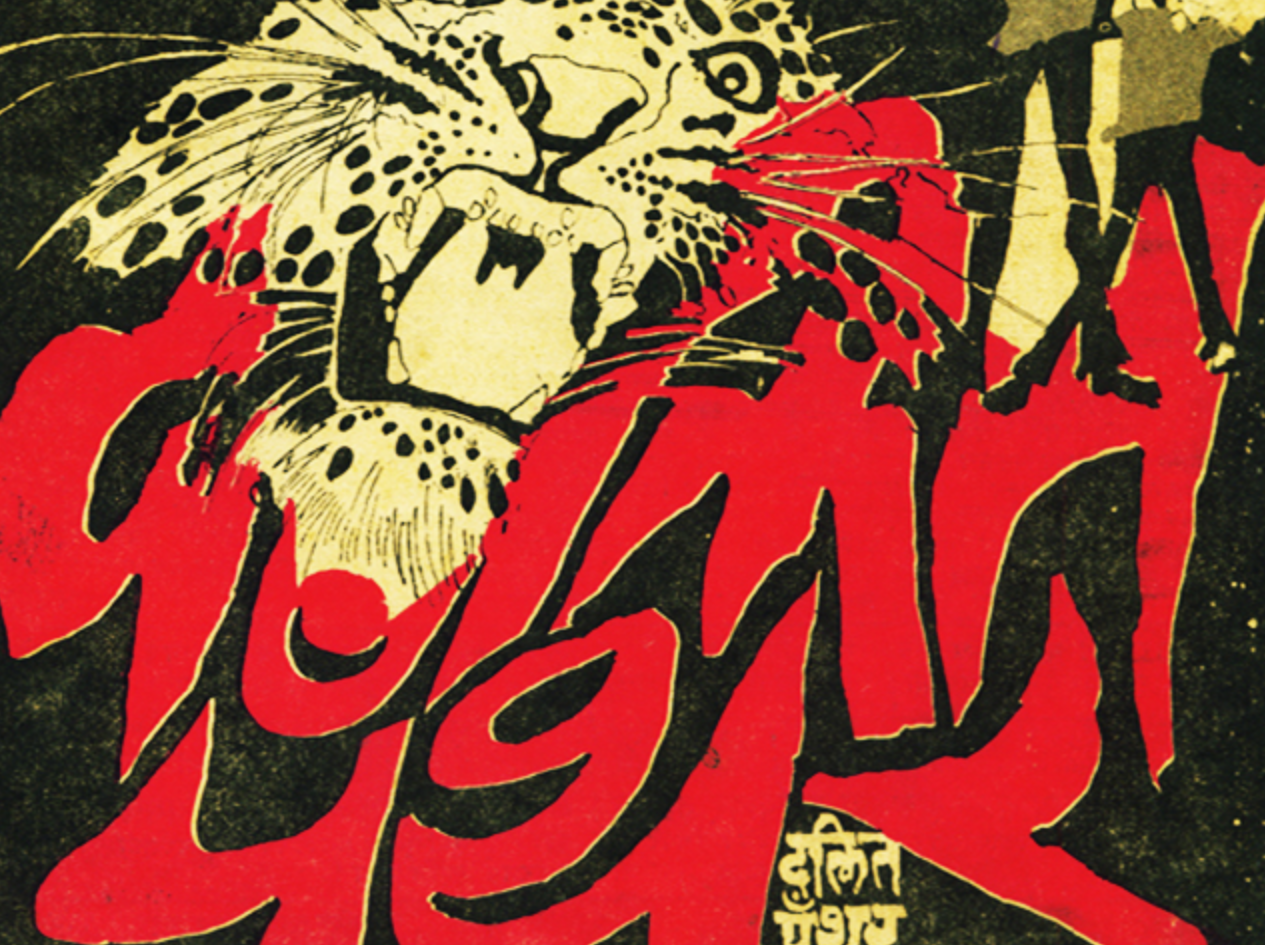
In the Dalit Panther manifesto, “Dalit” did not refer only to one caste location. It included Scheduled Castes, Scheduled Tribes, Neo-Buddhists, working people, landless and poor peasants, women, and all those exploited politically, economically, and in the name of religion.
This was a radical move. It refused to treat caste oppression as separate from class, land, gender, labor, and religious power. It also refused the sentimental language that dominant society often used to domesticate Dalit suffering. “Dalit” was a political identity forged through injury, consciousness, and revolt. The Panthers were not asking to be included politely in a Brahminical order. They were asking why that order existed at all.
This remains one of the most important lessons of their founding. Anti-caste politics cannot be reduced to diversity language, symbolic representation, or a better seat at an unjust table. The Dalit Panthers demanded structural transformation: land, labor rights, dignity, safety, education, cultural power, and the destruction of caste hierarchy itself.
Literature as a weapon of dignity
The Dalit Panthers were not only activists. They were writers, poets, editors, speakers, and cultural workers. Their politics emerged alongside the explosion of Dalit literature in Maharashtra.
This matters because caste is not maintained only through law or economics. It is maintained through stories: stories about purity, pollution, karma, birth, merit, family honor, religious duty, and who is allowed to imagine themselves as fully human.
Dalit literature shattered those stories. It brought the language of the basti, the laboring body, the insult, the hunger, the sexual violence, the police lathi, and the remembered village into public writing. It rejected refinement as a condition for truth. It refused the aesthetic expectations of caste society.
Namdeo Dhasal’s poetry, Raja Dhale’s essays, J.V. Pawar’s writing, Baburao Bagul’s fiction, and the wider world of Dalit literary revolt changed Indian public language. They made it harder for the nation to speak about equality while ignoring the people crushed beneath its social order.
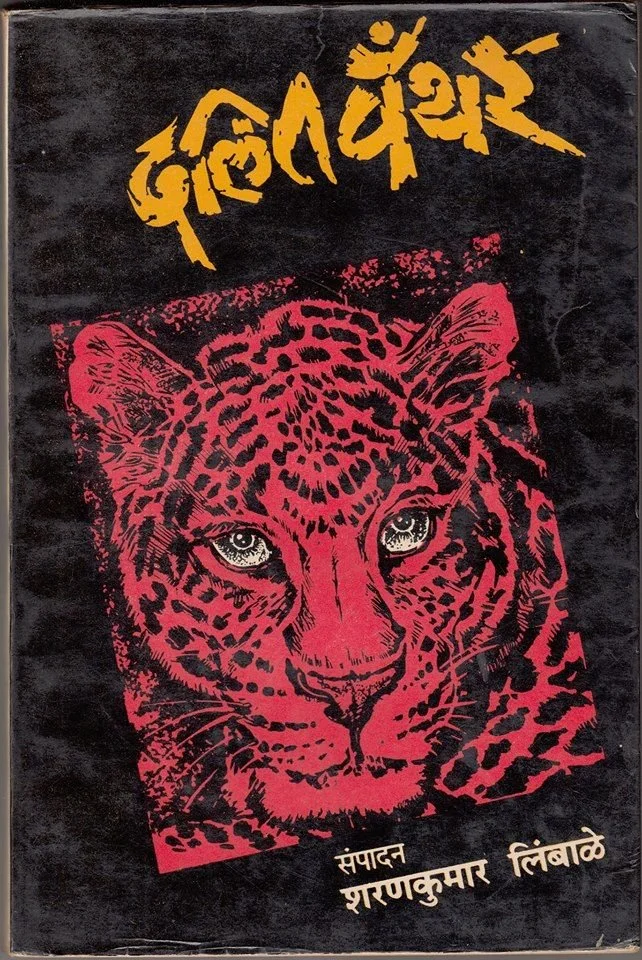
The founding of the Dalit Panthers was therefore also a literary event. It was a rebellion in vocabulary.
Human rights impact of the Panthers
The Dalit Panthers force us to confront a central contradiction: India had constitutional rights, but Dalit communities were still denied the conditions required to live those rights.
The right to equality means little without protection from caste violence. The right to dignity means little when a person can be beaten for drawing water, entering a temple, marrying across caste, wearing certain clothes, asserting land rights, or refusing hereditary humiliation. The right to freedom of speech means little when Dalit testimony is dismissed as anger, exaggeration, or disorder. The right to political participation means little when representatives are absorbed into systems that leave village power untouched.
The Panthers were not patient with the gap between law and life.
Their impatience should not be romanticized simplistically. The movement was internally contested. Its rhetoric could be militant, and its strategies raised difficult questions about violence, self-defense, revolutionary speech, and democratic politics. It eventually fractured under ideological tensions, state repression, personality conflicts, and the difficulty of sustaining a mass organization.
But the moral force of the Panthers remains clear. They exposed the obscenity of asking oppressed people to remain calm while the world remains violent.
Why this history matters now
The founding of the Dalit Panthers is not simply a story from the 1970s. It is a mirror held up to the present.
Caste discrimination continues in India and across the diaspora. It appears in housing, marriage, employment, temples, schools, universities, kitchens, spiritual spaces, technology workplaces, social media abuse, political intimidation, and the silencing of Dalit, Bahujan, Adivasi, and anti-caste voices. It survives because it adapts. It learns new languages. It hides behind culture, family, “tradition,” “merit,” “community reputation,” and claims that caste is either gone or too sensitive to name.
The Dalit Panthers remind us that caste must be named.
Their legacy also matters for Hindu communities. A human rights-centered Hindu approach cannot treat caste as an unfortunate social problem outside religion. Caste has been justified, ritualized, normalized, and transmitted through religious language, social practice, and inherited authority. To confront caste honestly is not to attack Hinduism. It is to refuse a Brahminical social order that has harmed millions while claiming sacred legitimacy.
The Panthers help clarify the difference between faith and hierarchy. Faith can be a source of liberation, humility, solidarity, and moral courage. Hierarchy demands obedience, purity, and silence. Anti-caste work asks religious communities to choose.
The Panthers demanded power.
The Dalit Panthers entered history as young people who refused to inherit the discipline of humiliation. They were angry, brilliant, flawed, urgent, literary, political, and impossible to ignore.
Their founding was not merely the creation of an organization. It was the announcement of a new grammar of anti-caste resistance.
They challenged the state. They challenged dominant caste society. They challenged the failures of existing political leadership. They challenged the idea that suffering should be made respectable before it can be heard. They challenged the nation’s comfort with celebrating freedom while Dalits continued to live under terror.
More than fifty years later, the question they raised still stands: What is the value of democracy if caste remains sovereign in everyday life?
The answer cannot be symbolic inclusion alone. It must be annihilation of caste in law, land, labor, culture, religion, education, and public memory. It must mean listening to Dalit leadership without trying to soften it for dominant comfort. It must mean treating caste violence as a human rights crisis, not a local dispute. It must mean refusing to protect the reputation of tradition at the expense of the dignity of people.
The Dalit Panthers were founded because enough was enough.
That is still a necessary sentence.
Deeper Questions on the Dalit Panthers
Who founded the Dalit Panthers?
The Dalit Panthers were founded in Maharashtra in 1972 by young Ambedkarite activists, most prominently Namdeo Dhasal and J.V. Pawar. Raja Dhale soon became one of the movement’s most visible and influential figures. Other writers, organizers, and activists also helped shape the movement, which grew from the energy of Dalit youth, Buddhist communities, literary circles, and anti-caste organizing in Bombay and beyond.
Some accounts mark May 29, 1972 as the founding moment, when Dhasal and Pawar decided to create the organization. Others emphasize the July 9, 1972 gathering that helped make the Panthers a broader public force. Both dates point to the same political awakening: Dalit youth were no longer willing to wait for justice from leaders and institutions that had failed them.
Why were they called the Dalit Panthers?
The name was inspired by the Black Panther Party in the United States. The Dalit Panthers saw a powerful connection between Black struggles against racism and police violence in the U.S. and Dalit struggles against caste violence, humiliation, and state neglect in India.
The name “Panther” communicated alertness, self-respect, and the refusal to be prey. It carried the message that oppressed communities had the right to defend their dignity, organize collectively, and speak in a language stronger than petition and pleading.
The connection to the Black Panthers also placed Dalit politics within a global language of liberation. It said that caste was not merely a local custom. It was part of a wider world of racial, colonial, economic, and social domination.
What did the Dalit Panther manifesto say?
The Dalit Panther manifesto offered a broad and radical definition of “Dalit.” It included Scheduled Castes, Scheduled Tribes, Neo-Buddhists, workers, landless and poor peasants, women, and all those exploited politically, economically, and in the name of religion.
This definition matters because it connected caste to other forms of oppression. The Panthers did not see caste as separate from landlessness, poverty, patriarchy, labor exploitation, or religious domination. They understood caste as a total social system that required a total social response.
The manifesto’s demands were not simply about representation. They were about food, clothing, shelter, employment, land, the end of untouchability, and freedom from social and physical injustice.
Were the Dalit Panthers an Ambedkarite movement?
Yes, the Dalit Panthers were deeply shaped by Ambedkarite thought, especially Ambedkar’s critique of caste, his insistence on dignity, and his call for social democracy. But they also represented a generational break within post-Ambedkar politics.
Many young Panthers felt that existing Ambedkarite and Dalit political institutions had become too fragmented or ineffective in responding to caste atrocities. They wanted a sharper, more immediate, more confrontational politics.
In that sense, the Panthers were both inheritors and disruptors. They carried Ambedkar’s fire into a new era, but they did so with the urgency of youth, the language of street protest, and the force of literary rebellion.
Why did the Dalit Panthers decline?
The Dalit Panthers declined because of a combination of internal and external pressures. Ideological differences, personality conflicts, state repression, political co-optation, debates over Marxism and Ambedkarism, and the difficulty of building durable organizational structures all contributed to the movement’s weakening.
But decline should not be confused with failure.
The Panthers changed the language of anti-caste politics. They expanded the meaning of Dalit identity. They energized Dalit literature. They placed caste atrocities at the center of public debate. They inspired future movements, writers, student activists, and cultural workers. Their organizational life was limited, but their moral and political afterlife remains immense.
What is the human rights legacy of the Dalit Panthers?
The Dalit Panthers asserted an absolute refusal to separate dignity from material life. They understood that rights are not real when people remain landless, hungry, unsafe, humiliated, and excluded from power.
Their work helps us see caste as a human rights crisis that crosses law, labor, gender, religion, culture, and political representation. They also remind us that oppressed communities do not owe dominant society comfort, softness, or gratitude for partial reforms.
The Panthers demanded a world beyond caste. That demand remains.
Further Reading and Sources
Dalit Panthers Manifesto
A primary text for understanding the Panthers’ radical definition of “Dalit,” their critique of caste and class power, and their revolutionary political vision.
https://ia803204.us.archive.org/0/items/idoc_pub_dalit-panthers-manifesto/idoc_pub_dalit-panthers-manifesto.pdf
J.V. Pawar, “The day when they said ‘enough is enough’ and launched the Dalit Panther,” Forward Press
An excerpt from J.V. Pawar’s history of the movement, especially useful for the May 29, 1972 founding account and the immediate caste atrocities that shaped the Panthers’ emergence.
https://www.forwardpress.in/2020/05/the-day-when-they-said-enough-is-enough-and-launched-the-dalit-panther/
J.V. Pawar, “Dalit Panthers: Founding A Movement,” Outlook India
A first-person account of the founding, early actions, Black Panther inspiration, and public emergence of the movement in 1972.
https://www.outlookindia.com/national/dalit-panthers-founding-a-movement-magazine-309588
“From Panthers to Political Dalits: Revisiting the Legacy of Dalit Panthers in India,” CASTE: A Global Journal on Social Exclusion
A scholarly reassessment of the Panthers’ ideological legacy, radicalism, internal contradictions, and long-term influence on Dalit politics.
https://journals.library.brandeis.edu/index.php/caste/article/download/693/1955
Disha Wadekar, “Black Panthers and Dalit Panthers,” Columbia Center for Political Economy
A useful comparative essay on the connection between Black liberation struggles in the United States and Dalit anti-caste radicalism in India.
https://cooperism.law.columbia.edu/disha-wadekar-black-panthers-and-dalit-panthers/
“The Black Panther–Dalit Panther connection,” The Leaflet
A short accessible piece on Ambedkarite thought, Black radicalism, and the transnational resonance of the Panther name.
https://leaflet.mithilastack.in/stories/ambedkar-jayanti-2024/the-black-panther-dalit-panther-connection