
Ganatantra Diwas After the Gen Z Uprising: Nepal’s Republic Is Still Being Made
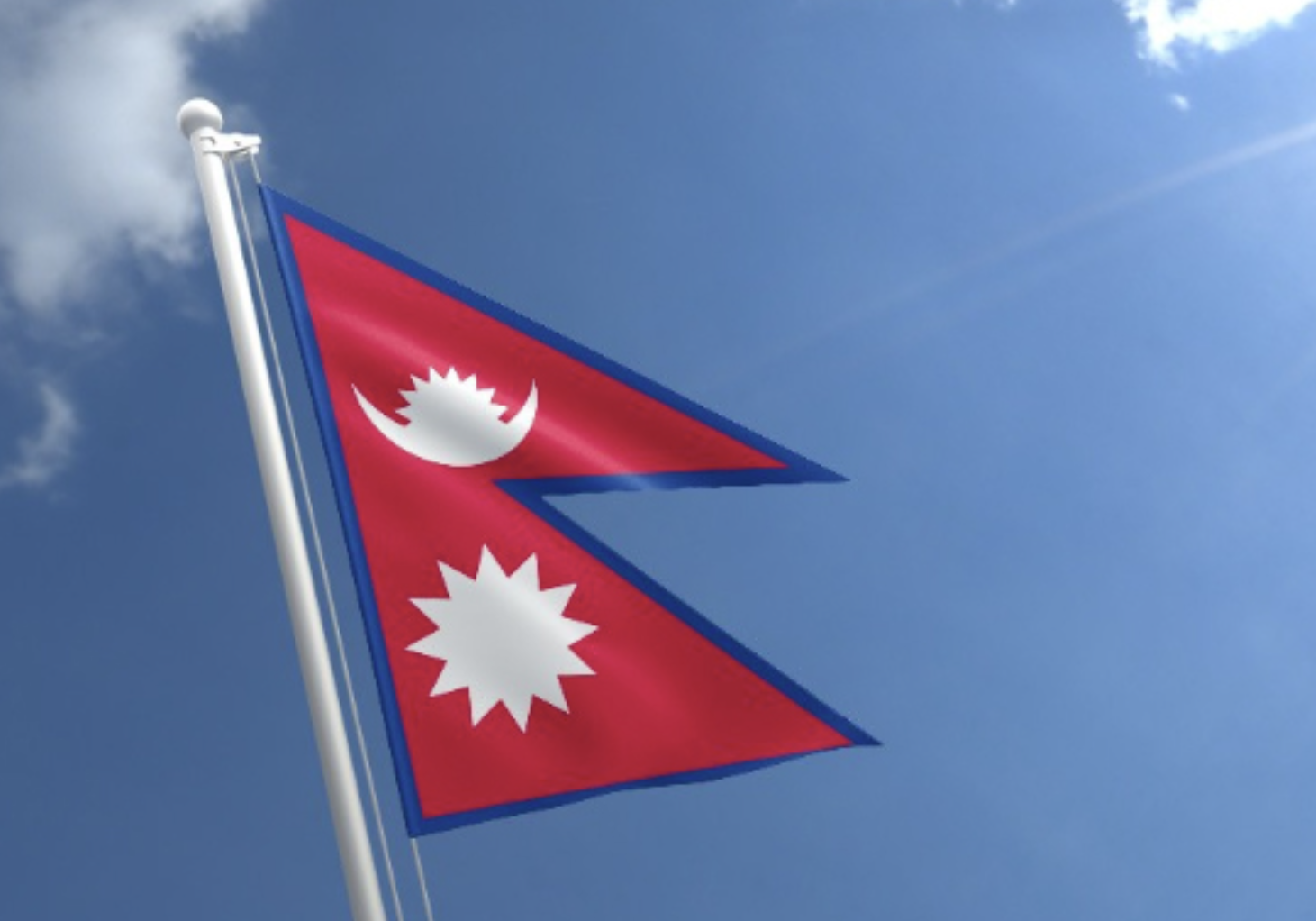
Ganatantra Diwas, Nepal’s Republic Day, is not only a national commemoration. It is a question asked every year: What does it mean for a people to govern themselves?
In 2026, that question has unusual force. Nepal marks Ganatantra Diwas in the aftermath of the September 2025 Gen Z protests, a youth-led democratic uprising that began after the government banned major social media platforms and quickly widened into a revolt against corruption, nepotism, unemployment, political stagnation, and a state that seemed more willing to silence young people than answer them. The protests led to the resignation of Prime Minister K. P. Sharma Oli, the appointment of former Chief Justice Sushila Karki as interim prime minister, snap elections in March 2026, and the rise of Balendra Shah, known widely as Balen, as Nepal’s youngest prime minister.
That sequence is extraordinary. But Ganatantra Diwas asks for more than a celebration of change at the top. It asks whether the deeper moral architecture of the republic is being repaired.
Nepal became a federal democratic republic in 2008 after years of struggle, including the 2006 People’s Movement that helped end direct royal rule. The declaration of the republic ended the 240-year Shah monarchy and reimagined the state not as the possession of a king, a dynasty, or a religious order, but as the shared political home of the people. Later, Nepal’s Constitution described the country as secular, inclusive, democratic, socialism-oriented, and federal republican. Those words matter. They carry the memory of sacrifice, but they also create a standard by which the present must be judged.
Ganatantra Diwas is therefore not nostalgia. It is not a parade of completed achievements. It is a day of unfinished obligations.
The September protests were about more than social media
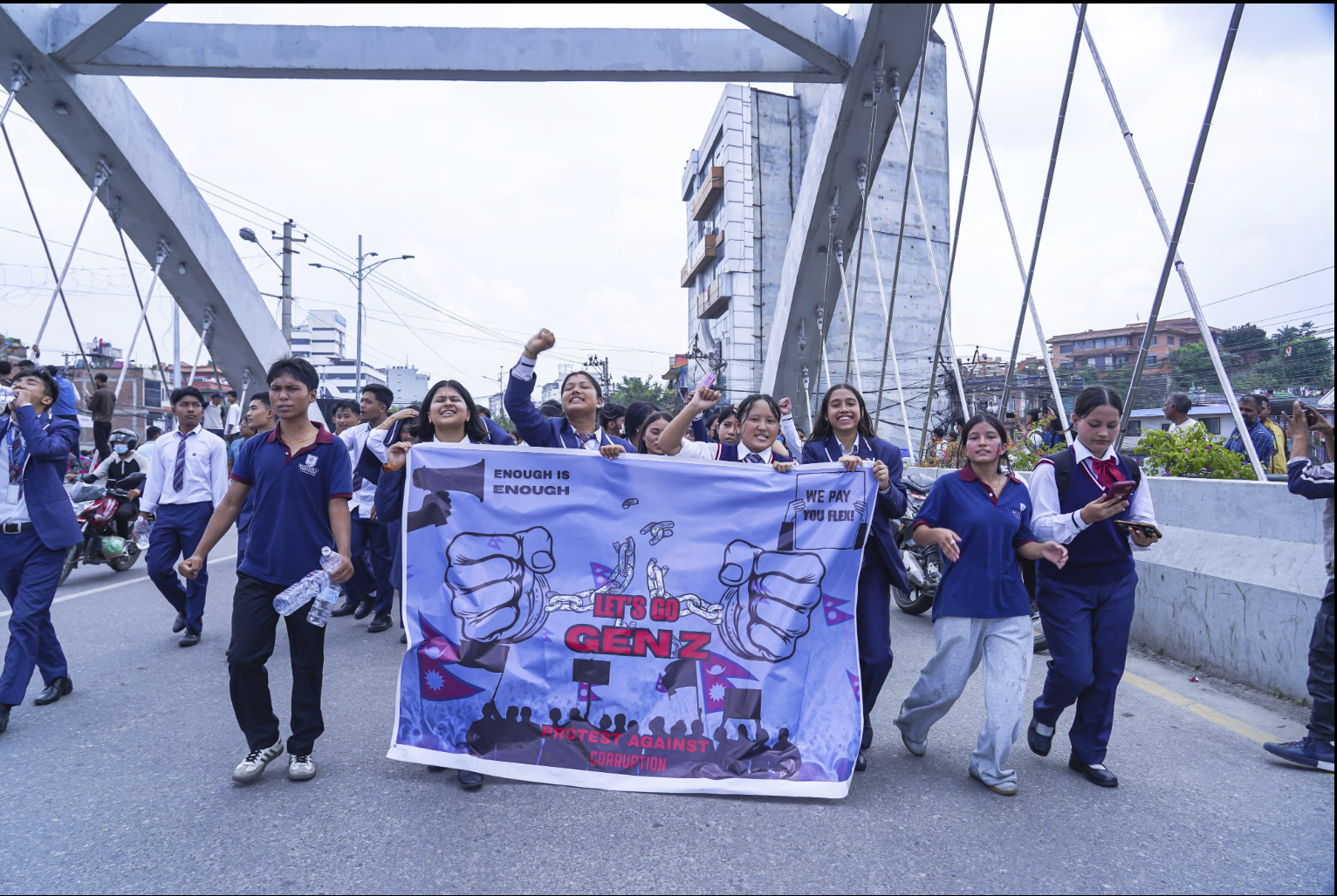
Students protest against corruption and the Nepalese government’s ban on social media platforms in Kathmandu, Nepal, on September 8, 2025. © 2025 Ambir Tolang/NurPhoto via AP
The September 2025 protests are sometimes summarized as a response to a social media ban. That is true, but incomplete.
The ban mattered because it touched the nerve of democratic life. For a generation whose public square often exists online, shutting down digital platforms was not a small administrative act. It was experienced as a state attempt to cut off speech, organizing, criticism, and visibility. Young people saw the ban as part of a wider pattern: a political class insulated from accountability, a culture of corruption, elite privilege displayed online, and a future in which ordinary youth were expected to migrate, wait, or stay silent.
The protests became a demand for voice. They were about the right to criticize power, the right to organize, the right to a future not mortgaged to corruption, and the right to live in a state where public office carries responsibility rather than impunity.
The state’s response turned a crisis of legitimacy into a human rights emergency. Reports described the use of deadly force, live ammunition, deaths, injuries, and a public demand for accountability. Buildings burned, public anger spilled beyond the discipline of protest, and the country entered one of the most volatile moments in its recent democratic history. But the central moral fact remains: when young people take to the streets to demand accountable government, a democratic state must not answer them with bullets.
Ganatantra Diwas after September cannot be a simple patriotic ritual. It must be a day of mourning, reckoning, and recommitment.
Republic does not only or simply mean No King
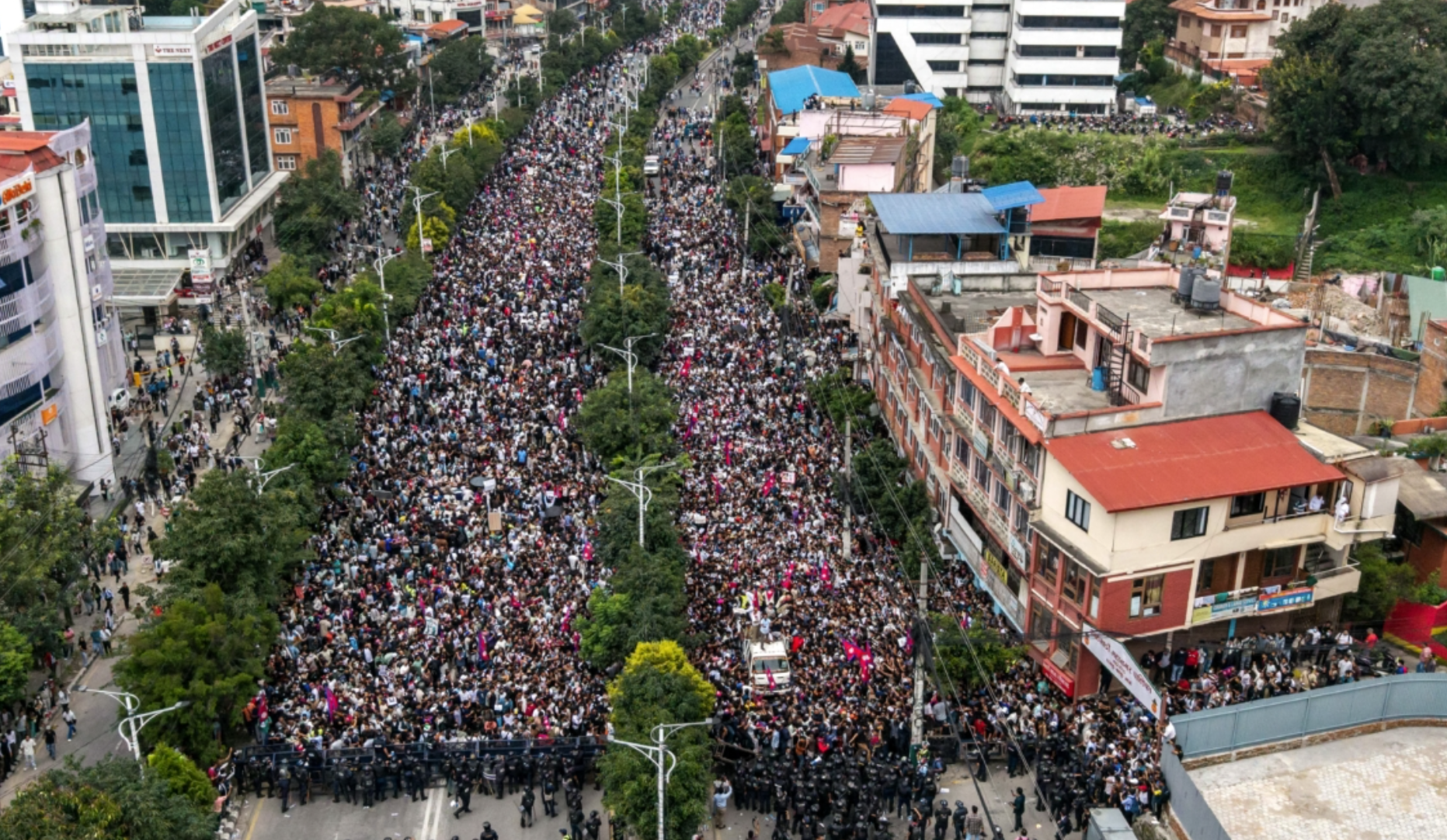
September 2025’s youth-led “Gen-Z” protests
Nepal’s republic was born from the rejection of monarchy, but republicanism means more than replacing a king with elected officials. A republic is not merely the absence of royal rule. It is the presence of public accountability.
That distinction matters because frustration with democratic failures can easily be redirected into nostalgia for strong rule, religious majoritarianism, or the fantasy of a purified past. In recent years, Nepal has seen renewed calls for the restoration of the monarchy and the return of Hinduism as a state religion. These calls often grow from real grievances: corruption, instability, economic hardship, and disappointment with political parties. But the answer to democratic failure is deeper democracy, not the restoration of hierarchy.
A human rights-centered Hindu perspective should be especially clear on this point. Hindu traditions are vast enough to include many forms of devotion, practice, language, philosophy, dissent, and community life. They do not need a monarch to protect them. They do not need a state religion to make them meaningful. Religion becomes smaller, not stronger, when it is fused with coercive power.
A secular republic, at its best, is not anti-religious. It protects religion from domination by the state and protects citizens from domination in the name of religion. It allows Hindus, Buddhists, Muslims, Christians, Kirat communities, Jains, Sikhs, atheists, Indigenous traditions, Dalit communities, Madhesi communities, women, queer and trans people, and linguistic and regional minorities to belong without having to pass through a single gate of national identity.
Ganatantra Diwas should therefore be understood as a defense of plural belonging.
What has happened since September?
Since the protests, Nepal has moved quickly through a dramatic political transition. Oli resigned. Sushila Karki, Nepal’s former chief justice and the first woman to lead the government, was appointed interim prime minister. Her caretaker government was tasked with restoring order, investigating the violence, and holding elections. Those elections were held in March 2026, and they marked a major generational shift in Nepali politics.
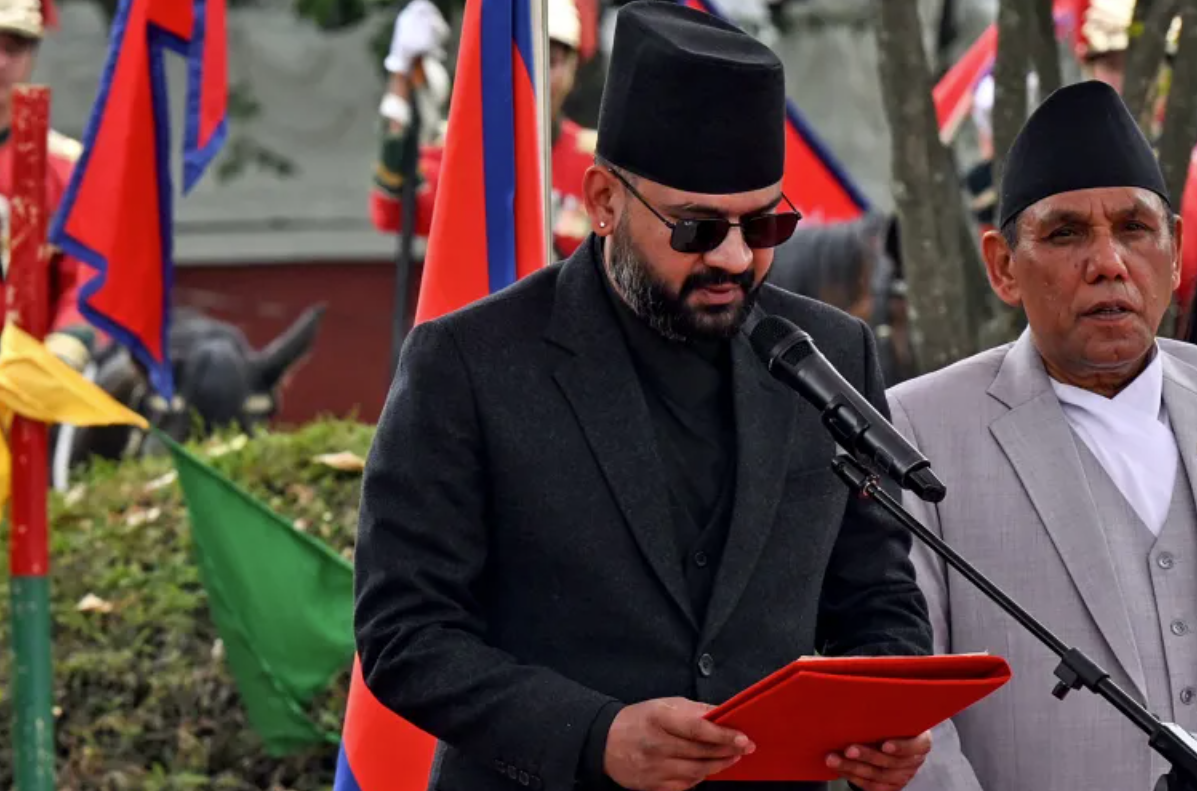
Rastriya Swatantra Party (RSP) leader Balendra Shah (2nd R) takes oath as prime minister during a swearing-in ceremony in Kathmandu on March 27, 2026 [AFP]
Balendra Shah’s rise reflects the same public impatience that powered the protests: frustration with entrenched parties, anger at corruption, and a desire for leadership that speaks to youth, transparency, and national renewal. But a movement’s victory at the ballot box is not the same as the completion of its moral work.
The test now is governance. Can a post-uprising government protect civil liberties even when criticism is directed at itself? Can it pursue anti-corruption work without turning accountability into spectacle or vendetta? Can it make space for student unions, labor organizing, press freedom, women’s leadership, Dalit justice, minority rights, and dissenting voices? Can it transform the anger of September into durable institutions rather than another cycle of charismatic politics?
The most urgent test remains justice for those killed and injured. The republic cannot move forward by burying reports, delaying investigations, or treating victims as symbolic martyrs while denying them truth. Accountability is not revenge. It is the minimum language of a democratic state.
Ganatantra Diwas and the human rights promise of Nepal
The deepest meaning of Ganatantra Diwas is sovereignty. Not the sovereignty of rulers, borders, armies, or parties alone, but the sovereignty of the people.
Human rights give that sovereignty substance. Without freedom of expression, sovereignty is hollow. Without due process, it is fragile. Without protection from state violence, it is dangerous. Without economic dignity, it is incomplete. Without caste justice, gender justice, religious freedom, and minority protections, it belongs only to some.
Nepal’s Constitution speaks in a language of inclusion, secularism, democracy, social justice, and federalism. Those promises are not decorative. They are the ethical grammar of the republic. They insist that Nepal’s diversity is not an obstacle to nationhood. It is the foundation of it.
This matters across South Asia, where religion is often used to narrow citizenship and where majoritarian politics tries to turn ancient traditions into modern weapons of exclusion. Nepal’s republican experiment offers another possibility: a society shaped by religious and cultural depth, but not governed by religious supremacy; a state that honors memory without making hierarchy sacred; a public life where democracy is not reduced to elections but extended into dignity, accountability, and freedom from fear.
The republic is made in the street, the court, the ballot, and the conscience
Ganatantra Diwas remembers 2008, but 2026 reminds us that a republic is never made once.
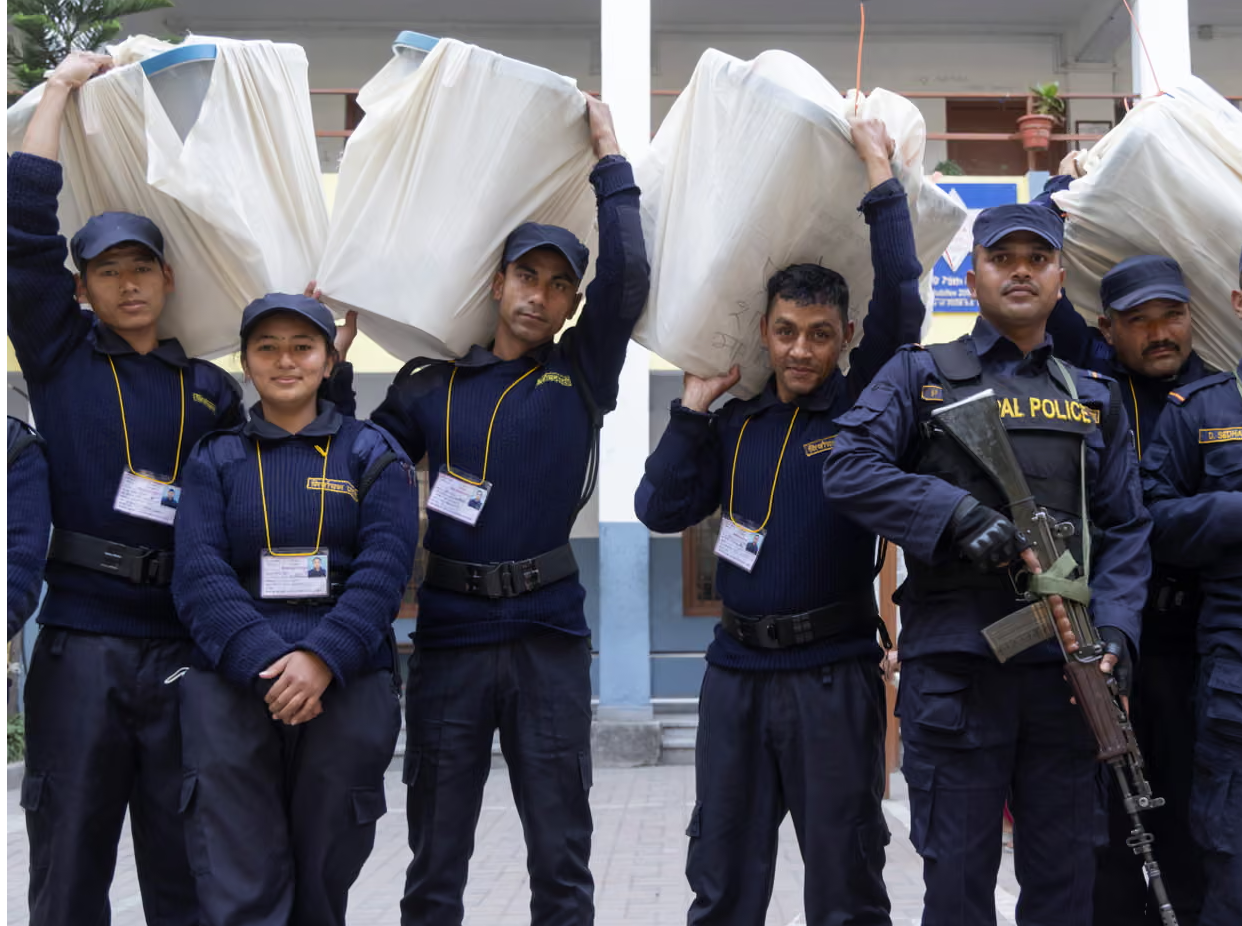
Nepali police officers carry ballot boxes in Kathmandu, Nepal, on Thursday after parliamentary elections. Photograph: Narendra Shrestha/EPA
It is made when people resist authoritarian rule. It is made when young people refuse censorship. It is made when courts defend rights. It is made when elections are held in moments of uncertainty. It is made when victims demand truth. It is made when citizens insist that the state belongs to them, not to a party, dynasty, caste order, religious majority, or security apparatus.
It is also made through restraint. Protest movements must resist the intoxication of destruction. Governments must resist the temptation to treat dissent as disorder. Political leaders must resist the old habit of using public office for private gain. Religious communities must resist being recruited into projects of exclusion. Democracy depends not only on courage, but on discipline, accountability, and care.
Ganatantra Diwas 2026 is therefore both a celebration and a warning. Nepal’s republic has survived monarchy, war, instability, and repeated crises of trust. It has also produced new generations unwilling to inherit silence. That is a sign of democratic life.
The task now is to ensure that the young people who demanded a future are not remembered only as protesters, voters, or symbols. They must be treated as citizens whose rights, grief, labor, imagination, and dissent are part of the republic itself.
Deeper Questions for Ganatantra Diwas 2026
What is Ganatantra Diwas in Nepal?
Ganatantra Diwas, or Republic Day, commemorates Nepal’s transformation into a federal democratic republic after the abolition of the monarchy in 2008. It marks a decisive break from royal rule and a commitment to a political order based on popular sovereignty, constitutional government, and democratic participation.
But its meaning should not stop at the historical event. Ganatantra Diwas asks whether the promise of the republic is being lived in the present. A republic is not only a constitutional category. It is a relationship between people and power. When citizens cannot speak freely, when state violence goes unpunished, when corruption defines public life, or when entire communities are treated as less fully belonging, the republic remains unfinished.
Why do the September 2025 Gen Z protests matter for Ganatantra Diwas?
The Gen Z protests matter because they returned Ganatantra Diwas to its most basic question: who owns the state?
The protests began after a sweeping social media ban, but they grew because many young Nepalis saw the ban as a symptom of something larger. Their anger was directed at corruption, inequality, nepotism, unemployment, and a political class that appeared disconnected from ordinary life. In that sense, the protests were not simply about digital access. They were about democratic dignity.
The state’s violent response made the human rights stakes unavoidable. A republic cannot claim legitimacy while treating youth dissent as a threat to be crushed. This year’s Ganatantra Diwas must therefore honor not only the founding of the republic in 2008, but the continuing demand that the republic answer to its people.
Is secularism in Nepal anti-Hindu?
No. Secularism is not anti-Hindu. In Nepal’s constitutional context, secularism is tied to religious and cultural freedom. It protects the right of communities to practice, preserve, and transmit their traditions without turning one tradition into the coercive identity of the state.
This distinction is crucial. Nepal’s transition away from a Hindu monarchy did not require the rejection of Hindu life, Hindu practice, or Hindu philosophy. It rejected the idea that Hindu identity should be fused with royal authority and state power. A democratic republic can allow Hindu traditions to flourish more ethically precisely because devotion is not enforced from above.
A human rights-centered Hindu approach should defend this distinction. Faith has moral power when it stands with dignity, pluralism, and justice. It loses that power when it is used to rank citizens.
Why are calls to restore monarchy and a Hindu state dangerous?
Calls to restore monarchy and a Hindu state often emerge from genuine frustration with corruption, instability, and poor governance. Those frustrations should be taken seriously. But monarchy and religious nationalism do not solve the crisis of democracy. They replace democratic accountability with hierarchy.
A Hindu state would also narrow the meaning of Nepali belonging. Nepal is home to many religious, cultural, linguistic, caste, ethnic, Indigenous, regional, and political communities. A republic must belong to all of them equally. When religion becomes the official identity of the state, minorities are often asked to accept a reduced form of citizenship, and dissent within the majority tradition is also disciplined. The better answer to democratic disappointment is very likely not a return to royal power. It is a deeper republic: stronger institutions, freer speech, real anti-corruption work, social justice, and accountability for state violence.
What does accountability require after the protests?
Accountability requires truth, legal responsibility, reparative care, and institutional reform. It is not enough to mourn those killed or praise them as martyrs. Their families deserve answers. The injured deserve support. The public deserves transparent reports. Officials who ordered or enabled unlawful violence must face consequences through due process.
Accountability also requires remembering that state violence does not occur in isolation. It grows in cultures where inquiry reports are buried, police abuse is normalized, and political elites expect impunity. Ganatantra Diwas should be a reminder that a republic cannot be built on selective memory. Truth is not a threat to democracy. It is one of democracy’s foundations.
It should mean recommitment to secular democracy, not as a slogan, but as a lived guarantee of equal belonging. It should mean recommitment to civil liberties, including the right to criticize the government online and offline. It should mean recommitment to economic dignity so that young people are not forced to imagine their future only outside the country. It should mean recommitment to justice for those harmed by state violence. And it should mean recommitment to the plural, inclusive promise of Nepal’s Constitution.
Further Reading and Sources
Constitution of Nepal, 2015
The constitutional text is essential for understanding Nepal’s commitment to secularism, federalism, democracy, inclusion, human rights, and social justice.
https://ag.gov.np/files/Constitution-of-Nepal_2072_Eng_www.moljpa.gov_.npDate-72_11_16.pdf
Ganatantra Diwas / Republic Day in Nepal
A useful reference for the date and basic meaning of Ganatantra Diwas, which marks Nepal’s declaration as a federal democratic republic.
https://nepalicalendar.online/festivals/republic-day/2083
Human Rights Watch: “Nepal: Police Fire on ‘Gen Z’ Protest”
Early human rights reporting on the September 2025 protest crackdown, including the use of lethal force against youth-led demonstrations.
https://www.hrw.org/news/2025/09/09/nepal-police-fire-on-gen-z-protest
Amnesty International: “Nepal: Government must ensure accountability for unlawful killings and use of force during Gen-Z protests”
A deeper human rights briefing on policing failures, unlawful killings, and the demand for accountability after the September protests.
https://www.amnesty.org/en/latest/news/2025/12/nepal-government-must-ensure-accountability-for-unlawful-killings-and-use-of-force-during-gen-z-protests/
International Commission of Jurists: “Nepal: Publish Reports on Violent Crackdowns on Protests”
A joint call from major human rights organizations urging the release of inquiry reports and accountability for protest-related violence.
https://www.icj.org/nepal-publish-reports-on-violent-crackdowns-on-protests/
OHCHR: “Nepal: Türk appalled by protest killings, says violence is not the answer”
The UN human rights response to the escalating violence, emphasizing restraint, dialogue, and the need to hear young people’s voices.
https://www.ohchr.org/en/press-releases/2025/09/nepal-turk-appalled-protest-killings-says-violence-not-answer
The Kathmandu Post: “Global rights groups urge Nepal to unveil report on Gen Z protest crackdown”
Local Nepali reporting on demands for transparency and the release of inquiry findings after the September protests.
https://kathmandupost.com/national/2026/02/13/international-rights-groups-call-karki-government-to-unveil-inquiry-reports
AP: “Tens of thousands demonstrate in Nepal seeking restoration of ousted monarchy”
Useful background on the pro-monarchy and pro-Hindu-state demonstrations that form part of the wider debate over Nepal’s republican and secular future.
https://apnews.com/article/b6646466a04558c3cfa61b669acc726e
Al Jazeera: “Nepal’s youngest premier sworn in after releasing new rap song about unity”
Coverage of Balendra Shah’s rise to the prime ministership after the March 2026 elections and the generational shift in Nepali politics.
https://www.aljazeera.com/news/2026/3/27/nepals-youngest-premier-sworn-in-after-releasing-new-rap-song-about-unity
The Guardian: “Nepal: voting closes in election pitting old guard against powerful youth movement”
Helpful election background on the March 2026 vote, the political old guard, and the youth movement that followed the September uprising.
https://www.theguardian.com/world/2026/mar/05/nepal-election-2026-voting-balen-shah-sharma-oli