
2026 FIFA World Cup: The Legacies of Colonialism on the Football Pitch
65 years after the brutal assassination of Patrice Lumumba, Patrice Lumumba returned.
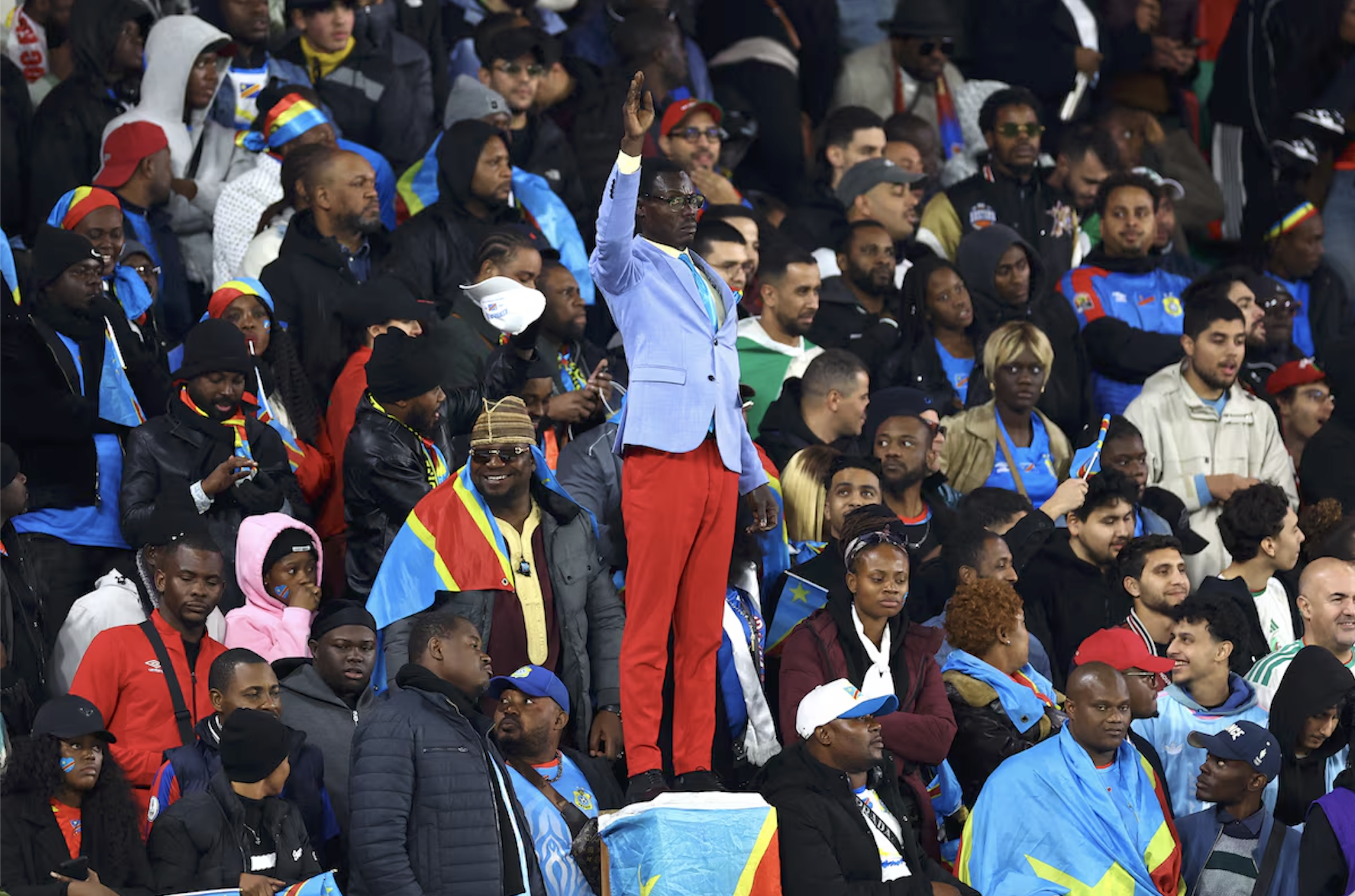
Michel Kuka Mboladinga, known as Lumumba Vea, has joined the Democratic Republic of Congo’s official delegation to the United States for the FIFA World Cup.
His name comes from the action that has earned him international recognition: during the DRC’s matches, he dresses like Lumumba and stands in a striking, motionless salute, channeling Lumumba’s power for the success of the national football team.
This is the first time the DRC has played in the FIFA World Cup in 52 years, and Lumumba Vea’s bold salute honors not only the team’s successes but the eerie fact that the DRC are playing on the soil of a nation who orchestrated their leader’s murder.
Left: Lumumba Vea stands during a DRC match
The DRC is just one example of the lasting legacy of colonialism; in fact, the football pitch is ripe with colonial tensions, and former colonies eager for the chance to claim victory and national pride in a public arena against the very countries who subjugated them. The World Cup reveals coloniality not as a thing of the past but as a living system of borders, talent pipelines, and national myth.
Matches such as France v Senegal, England v Ghana, dubbed ‘colonial derbies’, are often the most politically and emotionally charged games of the tournament, with deep historical significance felt in the air.
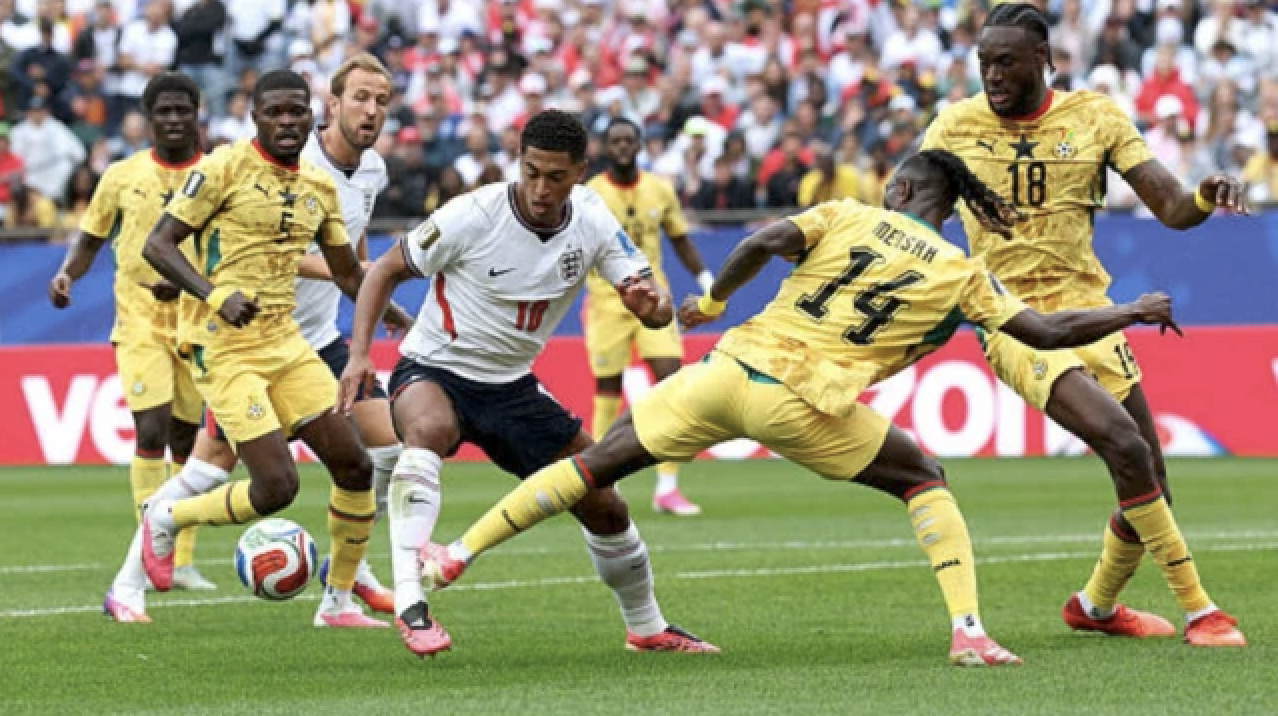
Colonial derbies bring up yet another key issue at the heart of coloniality on the football pitch; that of a diaspora sourced talent pool. Wealthy, ex-colonizer nations have the financial means to pick from a broad, globally sourced talent pool, as well as nationals who are descendants of migrants from the colonies.
Right: England v Ghana at the World Cup, June 23rd, 2026
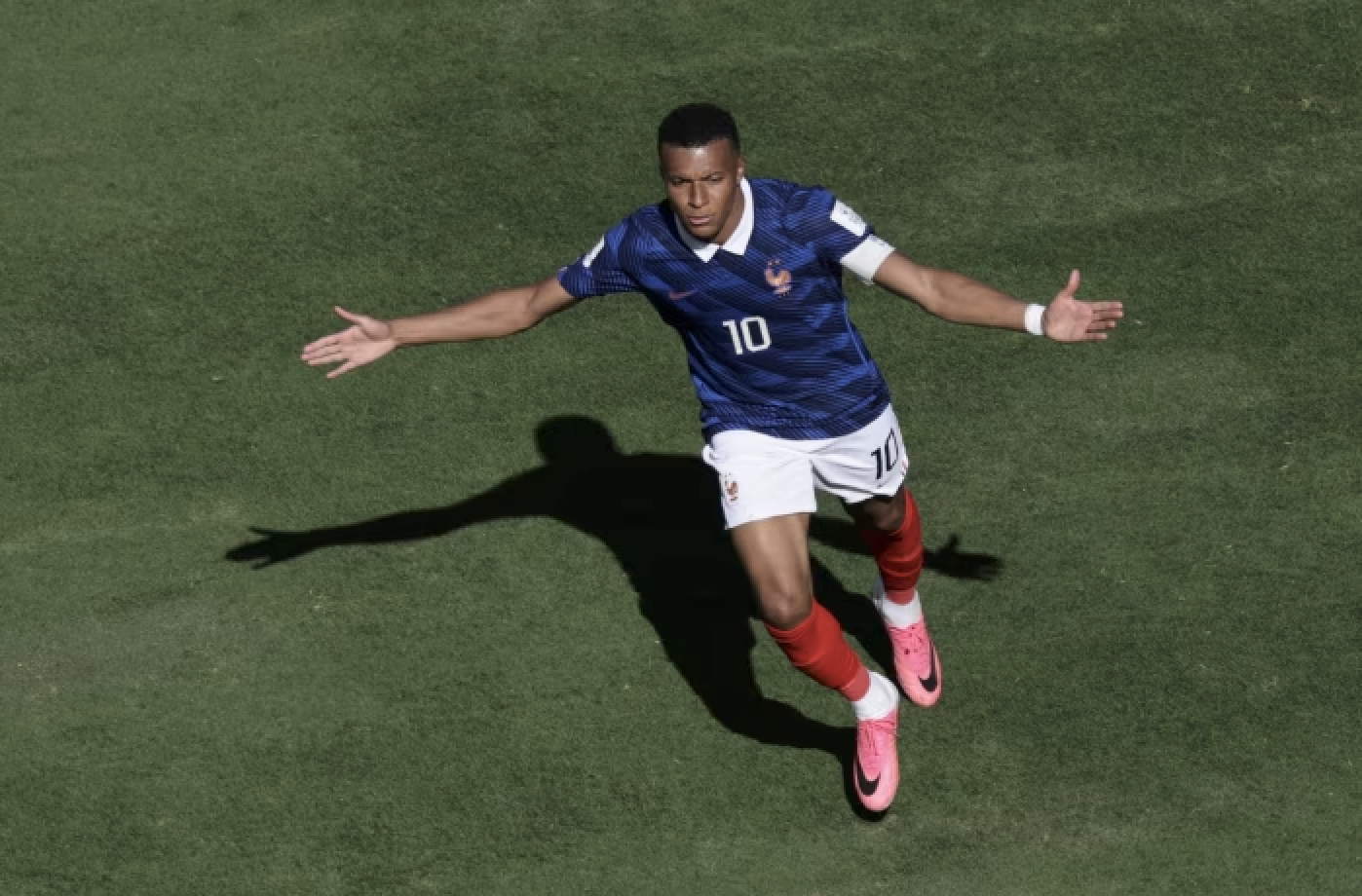
For example, on France’s national team, Les Bleus, the current top scorers – team captain Kylian Mbappé and forward Ousmane Dembelé – were born to Cameroonian-Algerian parents and Malian-Mauritanian-Sengalese parents, respectively. Other French national players on Les Bleus with French colonial heritage include Ibrahima Konaté (Malian heritage), Aurélien Tchouaméni (Cameroonian heritage), and Jules Koundé (Beninese heritage).
Left: Kylian Mbappé plays for Les Bleus
The irony? Football teams are benefiting from the very migrations their countries often demonize; the children of postcolonial migrations become national assets on the pitch, while many migrants and racialized citizens are cast as a social plague off the pitch.
Tensions further as there are even incidents of family members playing against one another on colonizer vs. colony teams; for example, Guéla Doué and his younger brother Désiré, play on the separate national teams of Côte D’Ivoire and France. The example of these brothers carry a lot of weight, demonstrating that home cannot always be embodied by a singular nation. In even one family, multiple national possibilities can exist at once. One brother embodies the former colony, and another the former metropole; but neither choice is false nor wrong. Both are products of the same history, the same diaspora, the same shared experience.
In the postcolonial order, does playing for a European team signal ‘making it’? Historically, yes, but this FIFA World Cup marks a shift in pitch politics. African players are dominating the field across all 48 teams, and African countries are receiving massive amounts of attention, both on and off the field.
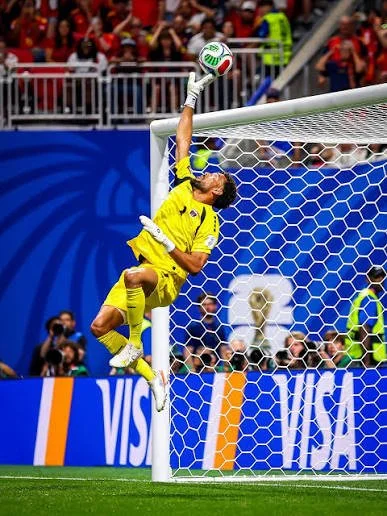
Morocco, who set a record by securing fourth place in the 2022 World Cup, drew 1-1 with Brazil, one of the historically strongest teams, and beat Scotland, securing them a spot in the next round. Egypt beat New Zealand 3-1 and tied with Belgium, and Ghana shocked audiences worldwide when they tied 0-0 with England. Cabo Verde, entering the World Cup for the first time, has reached international fame after their goalkeeper, Vozinha, stopped 7 attempted goals by Spain, causing an unexpected 0-0 draw.
The World Cup isn’t just about football – it’s loaded with centuries of history, politics, and national pride. It’s a time for nations who have been historically subjugated to prove their prowess on the international stage, to take back their power by themselves, for themselves; but it’s also a time for diplomacy – for people of all races, all jersey colors, all languages, to join in the street; singing, dreaming, cheering for a day when we are all liberated.
Right: Cabo Verde’s Vozinha stops an attempted goal