
Khan Sir Is More Than a Coaching Celebrity. He Is a Symbol of India’s Youth Crisis.
Who Is This Khan Sir Everyone is Talking About?
Khan Sir is the public name of Faisal Khan, a hugely popular Patna-based educator and founder of Khan Global Studies, whose online classes and coaching materials reach millions of students in India preparing for competitive exams. He is now at the center of a dispute involving rival coaching institutes, alleged violence, legal proceedings, and a public debate that has taken on caste and communal undertones. Khan Sir is trending because of a pretty dramatic controversy, but he matters more because because of what he and this story represent.
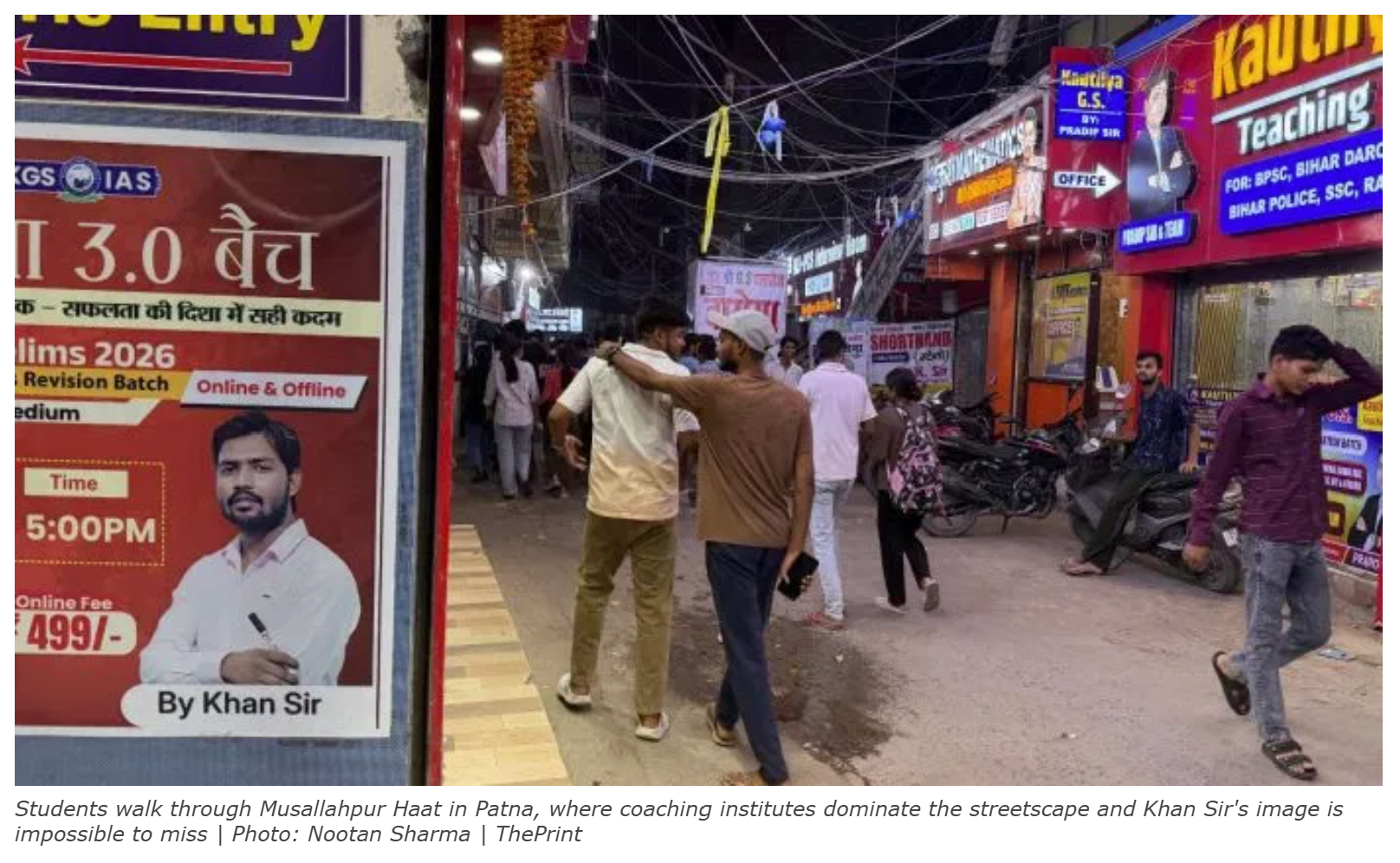
The legal facts are still developing, and so the case should not be judged yet (not that that’s stopping people). But the reaction around Khan Sir shows why he has become so much more than a teacher. For many young Indians, especially outside elite English-speaking spaces, he is a figure of access. He explains exams, current affairs, history, politics, and public knowledge in a language that feels close to the student rather than above them. He built a reputation by making difficult material feel usable, funny, direct, and affordable for young people who cannot buy their way into the polished confidence of India’s private-school pipeline.
That is why the current controversy around Khan Sir should not be understood as a crime drama about a coaching-center rivalry, or even just as the most recent viral scandal. It is also a story about how a tutor can become a national figure in the first place.
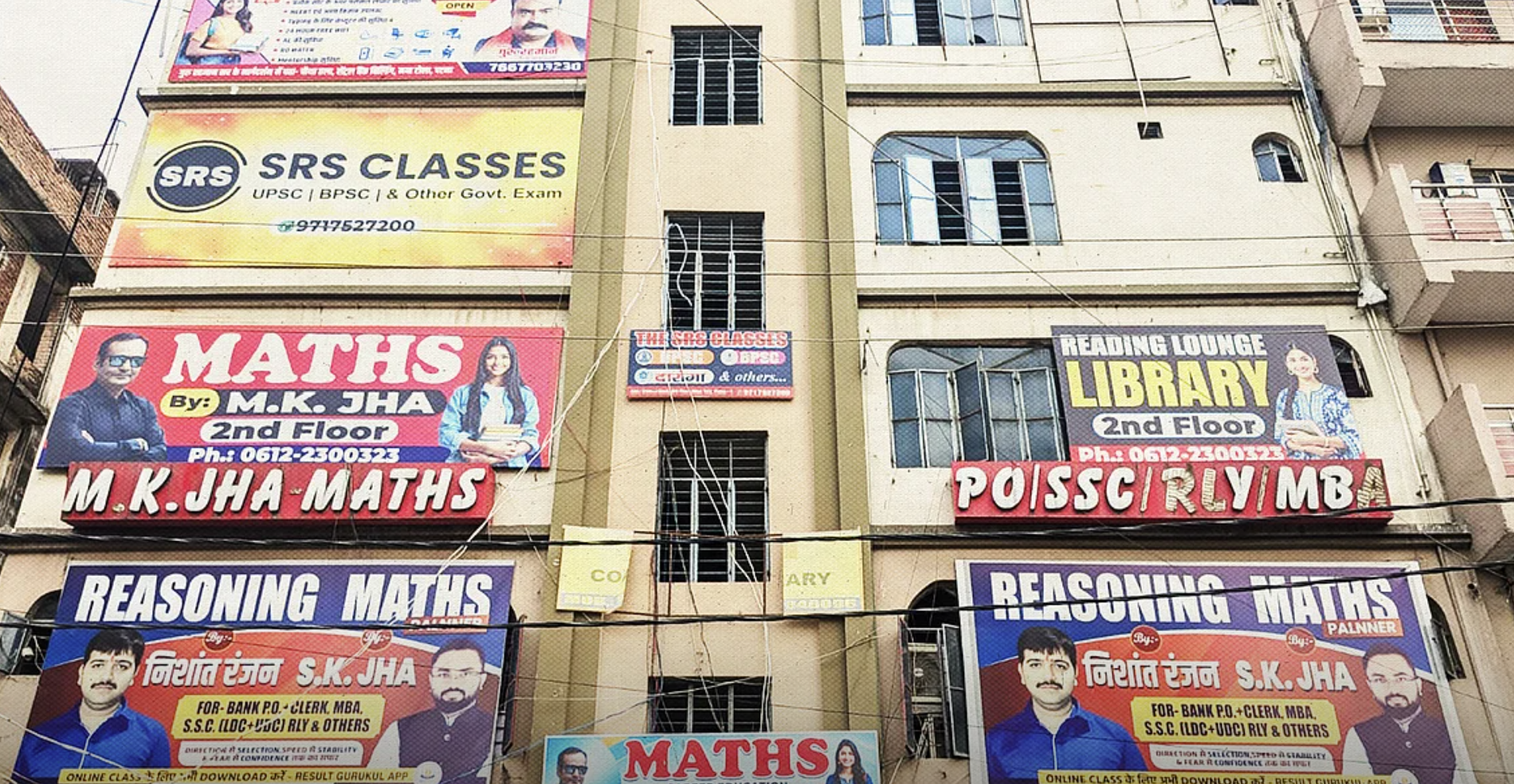
Signage of “ The Crazy Coaching Wars” of Bihar via Newslaundry
India’s young people are living through a strange contradiction. They are told that education is the road to dignity, employment, and national belonging. But the road is often full of toll booths: coaching fees, entrance exams, online courses, hostel costs, application fees, language barriers, paper leaks, result delays, and years of waiting. Into that gap steps the coaching celebrity: part teacher, part guide, part performer, part elder sibling, part motivational infrastructure. It is a very Indian job description, which is to say it contains five impossible roles and one plastic chair.
Khan Sir became powerful because he seemed to answer a hunger that formal institutions were not meeting. That hunger is the real subject of this story.
His popularity reveals a major shift in Indian education: authority no longer belongs only to universities, schools, official textbooks, or English-language experts. It also belongs to educators who can build trust online, speak in the idioms of ordinary students, and translate the state’s exam machinery into something that feels survivable.
Khan Sir’s rise belongs to the very same cntemporary India that produces coaching hubs in Patna, Kota, Delhi, Prayagraj, Hyderabad, and dozens of smaller cities. It is an India where students know the state mostly through forms, exams, admit cards, cutoffs, and waiting lists. The teacher who can decode that world becomes more than a teacher. He becomes a symbol of navigation towards the promise of success.
The Current Khan Sir Controversy
The current Khan Sir controversy has all the ingredients of a very modern Indian scandal: a celebrity (teacher), rival (coaching) empires, student fandoms, allegations of violence, caste and communal undertones, and a story that moved from Patna’s coaching lanes to national headlines almost overnight.
At the center is a dispute involving Khan Global Studies, founded by Khan Sir, and Gyan Bindu GS Academy, associated with Raushan Anand. Reporting has described allegations of vandalism, stone-pelting, firing claims and counterclaims, arrests, and legal proceedings connected to the rivalry. What might once have been treated as a local business dispute has become something larger because coaching centers in India are no longer just businesses. They are brands, identity camps, aspiration machines, and, sometimes, mini political ecosystems.
The story grew darker after Prince Yadav, Raushan Anand’s brother, who had been named in connection with the violence case, was later found dead in Nepal. That development added grief, suspicion, and more public speculation to an already charged controversy. Investigations and court processes are still ongoing, so claims about criminal responsibility need to be handled with care. But the broader lesson is already visible: when education becomes a high-stakes marketplace of hope, money, reputation, and loyalty, even a coaching dispute can become a national social drama.
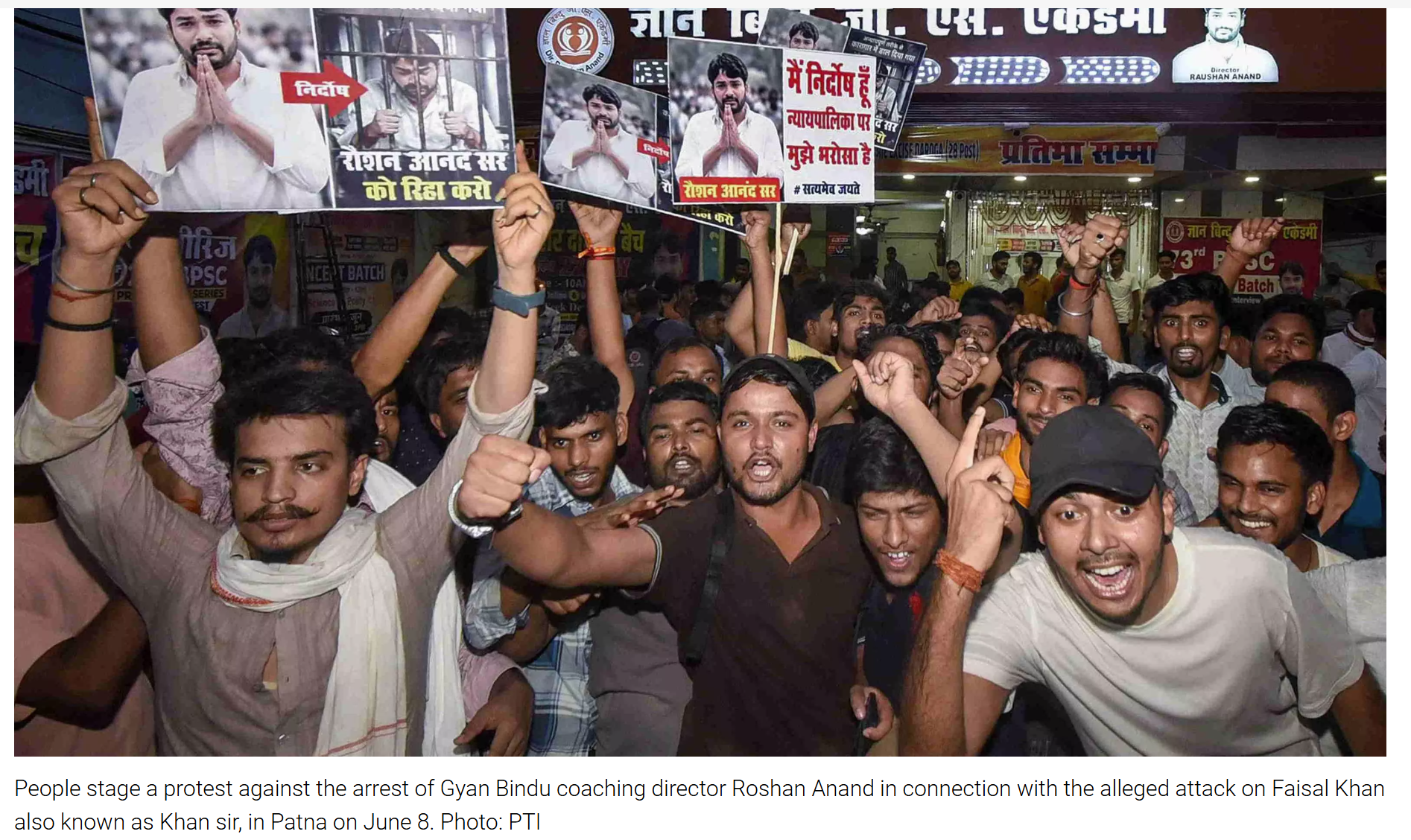
Khan Sir has also received interim legal protection in connection with the case while proceedings continue. That means the legal story is still developing. But the social media story is already visible. A coaching rivalry has become a public drama because coaching centers are no longer marginal businesses. They are institutions of aspiration. They have students, fans, critics, loyalists, rivals, guards, marketing teams, result claims, political connections, and online armies. In some cities, they function almost like parallel public systems. That is why a conflict between coaching centers can become national news, they are not just selling classes, they are selling hopeful futures.
Khan Sir as a Symbol of Non-Elite Aspiration
Khan Sir’s appeal comes partly from the fact that he does not sound like the traditional gatekeepers of Indian merit. He is not polished in the way elite institutions often reward. His classroom persona is informal, comic, blunt, and accessible. His language signals that knowledge does not have to arrive wearing a tie and speaking English through its nose. That matters in a country where language, accent, caste, class, region, and schooling still determine who is treated as or even believed to be intelligent before they even begin speaking.
For many students, Khan Sir represents the possibility that intelligence can be local, funny, rough-edged, and still serious. He embodies a democratic desire: that knowledge should not be locked behind English fluency, elite manners, or metropolitan confidence. This is the best version of what he symbolizes. It is why so many students feel protective of him. They are not only defending a teacher. They are defending a version of themselves that rarely receives respect in elite India.
Symbols are Never Completely Innocent
But symbols are never completely innocent in their signification. The same conditions that make Khan Sir beloved also make the coaching celebrity dangerous as a structure. When one teacher becomes the face of opportunity, students can begin to relate to education through fandom. Criticism feels like betrayal. Rival institutes become enemies. Legal questions become identity questions. A teacher becomes not only an educator but a brand and a site of emotional investment. So this story becomes one about the system that produces teacher/coaching-celebrities because formal education is too distant, too bureaucratic, or too untrustworthy. Instead of asking why public schools are weak, why exams are unreliable, why government jobs are scarce, or why coaching centers are barely regulated, the national conversation becomes a fight over personalities: Khan Sir, Raushan Sir, this institute, that institute, this fan base, that allegation. The well-known distractions of celebrity absorb and deflect the anger that should be directed at the system.
And Then it Always Becomes Communal
One of the most troubling parts of the Khan Sir controversy is the way it has reportedly been pulled into caste and communal language. The Quint reported that what began as a dispute between coaching centers began to acquire a Muslim-versus-Yadav (Yadav is a major OBC caste community with significant political influence in Bihar) or Hindu-versus-Muslim framing in parts of the public conversation.
A dispute about coaching centers, violence, marketing claims, legal accountability, or business rivalry too predictably is framed as another Hindu-Muslim spectacle. Caste identity is turned into a shortcut for proper analysis and the structural issue disappears.
Instead of asking who regulates coaching centers, people ask which community to blame. Instead of asking how result claims are verified, people ask which identity is under attack. Instead of asking why students are forced into this private exam economy, people are handed yet another script of communal grievance. This is how polarization works, turning governance failures into identity dramas.
What the Khan Sir Story Reveals About Youth Politics

Instagram posts abound with this question
Khan Sir’s symbolic power also tells us something important about youth politics in India. Young people are not only responding to parties, manifestos, or speeches. They are responding to figures who seem to understand their daily humiliations and disempowerment: the exam form, the coaching fee, the failed attempt, the pressure from home, the fear of aging out, the knowledge that one wrong year can become a family crisis.
That is why the educator-influencer has become politically meaningful. A teacher who can speak to that pain can become a kind of unofficial youth leader, even without holding office. He can shape how students understand the state, history, religion, nationalism, employment, and their own worth.
If educators become political-cultural figures, they should be held to higher standards, not lower ones. Their influence should come with scrutiny: of their institutions, their claims, their safety practices, their public messaging, and the ecosystems they help build. A democratic society should welcome popular educators who expand access to knowledge. But it should not confuse popularity with a permission structure to move outside of accountability.
The Rights Question
We also need to ask: What kind of system makes students so dependent on coaching camps in the first place? Who profits from their deep anxiety? Who protects them from misleading result claims, predatory fees, online harassment, and communal mobilization? Who gives students a grievance process when something goes wrong? Education cannot only be a market. It is a public good. It shapes citizenship, dignity, employment, and the ability of young people to imagine a life beyond fear. When private coaching centers become the institutions students trust most, the state should be embarrassed. Not because every coaching center is bad, but because the hunger they meet is evidence of a public failure.
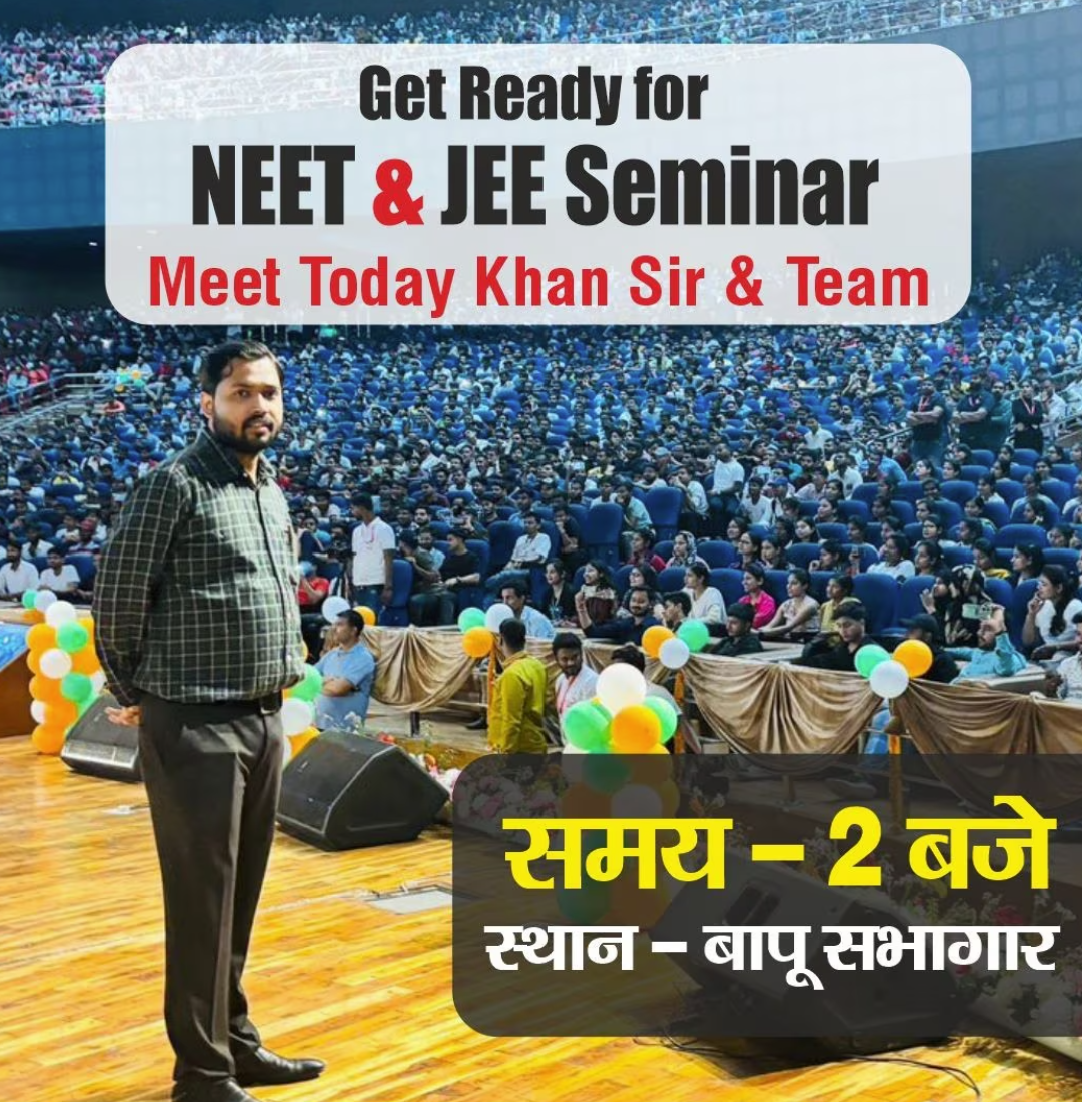
Khan Sir ad for NEET prep
This connects to other education crises, including the NEET paper leak and the broader crisis of exam accountability. But the Khan Sir story has its own distinct meaning: it shows how the search for accessible education can produce charismatic figures who become larger than the classrooms they teach in.
Vidya, Power, and Responsibility
A faith-inflected view should take education seriously not only as career preparation, but as moral work. In many Indian traditions, vidya is not merely information. Knowledge is connected to liberation, discernment, service, and human flourishing. A teacher is not just a content distributor. A teacher carries responsibility for the dignity of students. That responsibility becomes even greater when the teacher becomes a public figure. When millions listen, trust becomes power. When students build their hopes around an institution, that institution must be transparent, safe, accountable, and careful with its influence.
The point is not to condemn Khan Sir or canonize him. The harder and more useful task is to understand why he became necessary to so many students — and what that necessity tells us about India. The Khan Sir controversy should not end as another viral online news scandal swallowed by the next algorithmic emergency. It should push a serious conversation about the coaching industry and the young people who depend on it. Coaching centers should be regulated through enforceable safety standards, verified result claims, transparent fees, student grievance systems, anti-harassment rules, and mental health support. If institutes are large enough to shape public life, they are large enough to be accountable.
Political actors and media platforms should also resist communalizing education disputes. If violence occurred, investigate violence. If fraud occurred, investigate fraud. If safety rules were violated, enforce safety rules. Turning every conflict into Hindu versus Muslim or caste versus caste is lazy and unsafe because it converts questions of power, regulation, and accountability into another round of identity warfare.
Most importantly, India must strengthen the public pathways that coaching centers now replace. Students need schools and colleges that prepare them well, exam systems they can trust, affordable higher education and employment. Khan Sir became a symbol because millions of students are searching for a way through a system that feels stacked against them.
_________________________________________________________________________________________________________________
What People Are Really Asking About Khan Sir
Who is Khan Sir, beyond the viral name?
Khan Sir is the public name of Faisal Khan, a Patna-based educator and founder of Khan Global Studies. He is widely followed by students preparing for competitive exams, especially because his teaching style is direct, funny, accessible, and rooted in the language of students who are often left out of elite educational spaces.
But “Who is Khan Sir?” is not only a biographical question. It is also a question about why so many students are looking outside formal institutions for teachers they can trust. His popularity says something about the distance between India’s official education system and the young people trying to survive it.
Why is Khan Sir so popular with students?
Khan Sir is popular because he makes public knowledge feel less intimidating. He explains exams, current affairs, history, politics, and general studies in a style that feels conversational rather than ceremonial. For many students, that matters. They are not looking for another gatekeeper in a blazer explaining their future to them like a bank loan officer. They are looking for someone who makes the exam world feel, if not fair, at least navigable.
His appeal also comes from affordability and language. In a country where English fluency and elite schooling still shape who is treated as “smart,” Khan Sir’s popularity represents a democratic hunger for knowledge that sounds local, humorous, impatient, and usable.
What is the Khan Sir controversy actually about?
The Khan Sir controversy refers to a dispute involving Khan Global Studies and rival coaching figures in Patna. Reporting has described allegations of vandalism, stone-pelting, firing claims and counterclaims, arrests, and legal proceedings connected to a coaching-center rivalry. The facts are still developing, and the legal questions should not be reduced to online certainty.
But the controversy matters because it reveals how powerful coaching institutions have become. These are not just classrooms with whiteboards. They are businesses, brands, fan communities, political-cultural spaces, and, for many students, the closest thing to a working ladder into the future.
What happened to Khan Sir?
In trying to understand the Patna coaching-center dispute, the legal proceedings involving Khan Global Studies, and the public debate around rival coaching institutes. That search phrase captures the confusion of a story moving faster than verified facts.
The responsible answer is: the case is still developing, and viral claims should be treated carefully. The more important question is why a coaching dispute became national drama. The answer lies in the status coaching centers now hold in India: they are where aspiration, money, identity, employment anxiety, and youth politics increasingly collide.
Why did the Khan Sir controversy become communal or caste-coded?
Some reporting has described the dispute as taking on Muslim-versus-Yadav or Hindu-versus-Muslim framing in parts of the public conversation. Yadav is a major caste community, classified among India’s Other Backward Classes, with deep political significance in Bihar and much of North India.
That shift is dangerous because it turns a dispute about coaching centers, business rivalry, violence, regulation, and accountability into another identity spectacle. Turning every conflict into Hindu versus Muslim or caste versus caste is lazy and unsafe because it converts questions of power, regulation, and accountability into another round of identity warfare.
What does Khan Sir symbolize in India’s national conversation?
Khan Sir symbolizes the rise of non-elite educational aspiration in India. He represents the desire for knowledge that is affordable, vernacular, accessible, and not controlled by elite institutions. For many students, he stands for the possibility that intelligence does not have to arrive in English, from Delhi, with a private-school accent and a laminated confidence certificate.
But he also symbolizes the risks of coaching celebrity culture. When teachers become brands and students become fan bases, education can slide into devotion, rivalry, and spectacle. The same figure who makes knowledge accessible can also reveal how dependent students have become on private coaching empires.
What should change after the Khan Sir controversy?
The answer is not to pick one coaching camp and cheer louder. India needs stronger regulation of coaching centers, verified result claims, enforceable safety rules, transparent fee structures, student grievance systems, and mental health protections. It also needs political and media cultures that do not turn every education dispute into an identity war.
The deeper answer is public investment. Students should not have to depend on charismatic private educators to access knowledge, dignity, and opportunity. Khan Sir became a symbol because many young people feel the formal system is not speaking to them. A serious response would build institutions that do.
FURTHER READING
ThePrint — “The cult of Khan Sir and Patna’s coaching war”
https://theprint.in/ground-reports/khan-sir-controversy-bihar-coaching-industry/2956647/
The Quint — “‘Khan Sir’ Row: Bihar’s Coaching Centre Rivalry is Now a Muslim vs Yadav Fight”
https://www.thequint.com/news/khan-sir-coaching-centre-rivalry-fir-hindu-muslim-bihar
Newslaundry — “Bullets, Thars and toppers: Inside Bihar’s crazy coaching wars”
https://www.newslaundry.com/2026/06/13/bullets-thars-and-toppers-inside-bihars-crazy-coaching-wars
The Federal — “From Patna firing to Nepal death: The murky Khan Sir vs Roshan Sir rivalry”
https://thefederal.com/category/states/north/bihar/khan-sir-raushan-sir-bihar-coaching-market-rivalry-prince-yadav-246643
The Economic Times — “Bihar court protects Khan Sir from arrest amid coaching institute violence”
https://economictimes.indiatimes.com/news/india/bihar-court-protects-khan-sir-from-arrest-amid-coaching-institute-violence/articleshow/131870638.cms
Times of India — “‘Don’t take harsh action’: Court grants ‘Khan Sir’ interim relief, upholds ‘no coercive action’ order”
https://timesofindia.indiatimes.com/city/patna/not-to-take-harsh-action-court-grants-khan-sir-interim-relief-upholds-no-coercive-action-order/articleshow/131870099.cms