
NEET Paper Leak in India: How an Exam Scandal Is Ruining Students’ Futures
The NEET paper leak controversy has become one of the clearest examples of how institutional failure in India falls hardest on young people and their families. NEET, the National Eligibility cum Entrance Test, is India’s high-stakes entrance exam for undergraduate medical education. For millions of students, it can determine whether they gain access to medical college, whether years of coaching and family sacrifice pay off, and whether an imagined future remains possible.
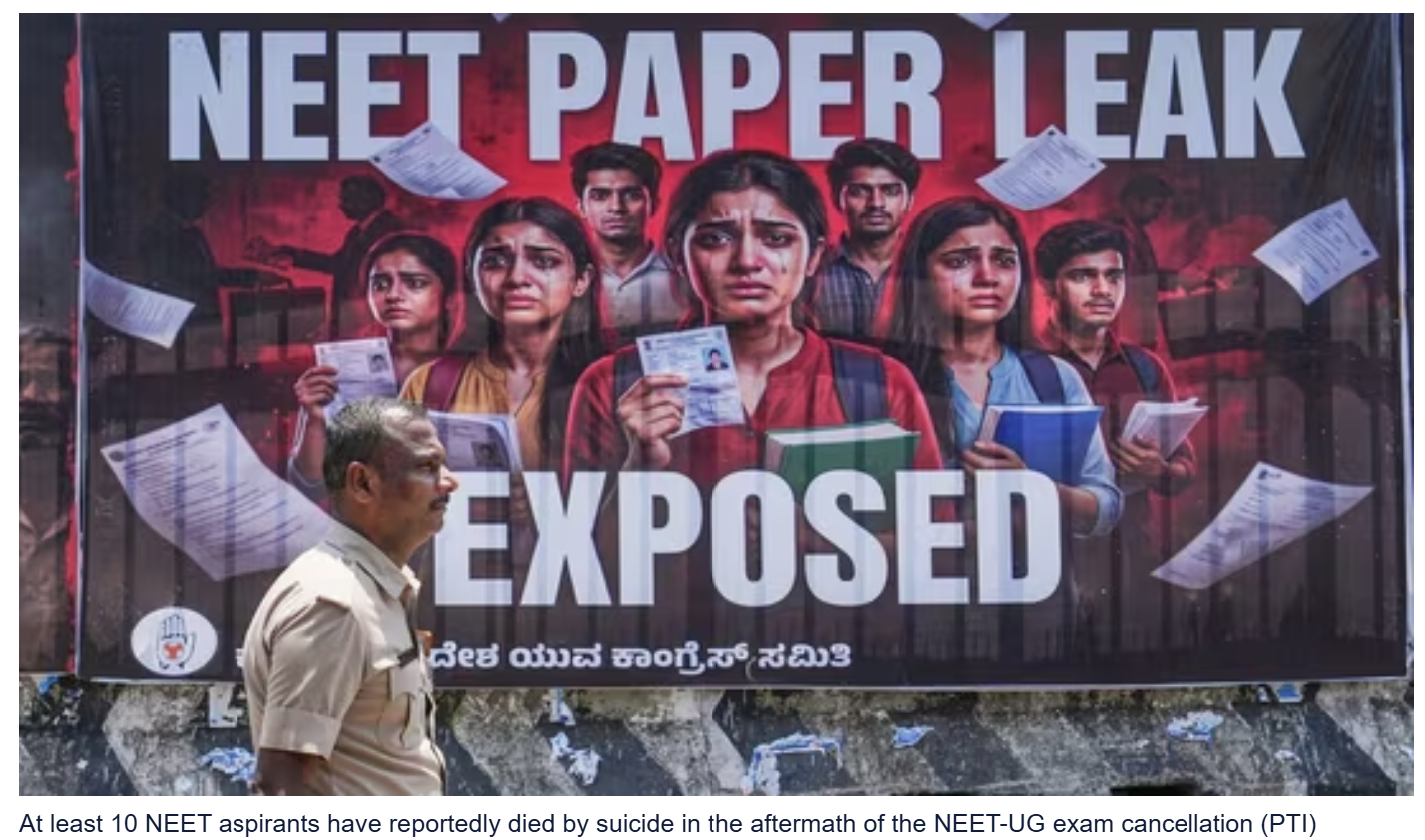
When the paper leaks, it is not only the exam that is compromised. It is the fragile bargain families made with the state: study hard, sacrifice quietly, trust the system — and do not ask who benefits when the system breaks.
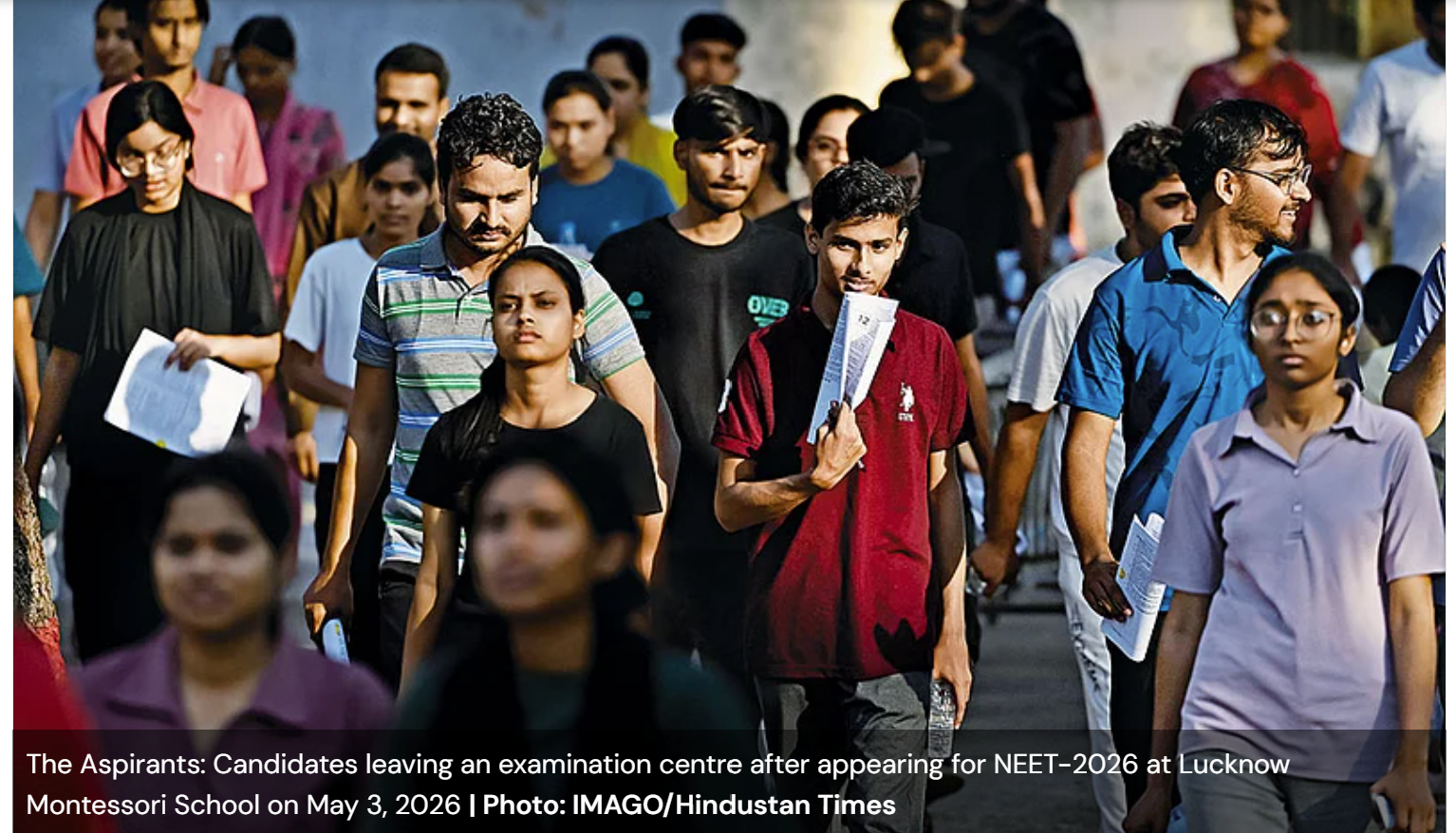
At the center of the current NEET-UG paper leak row are allegations that the medical entrance exam was compromised, leading to cancellation, a re-test, a CBI probe, student protests, a temporary crackdown on Telegram, and a nationwide political fight over the National Testing Agency, or NTA. But behind the headlines are students pushed back into extreme anxiety, families who had already spent years preparing for one decisive moment, and a public education system that increasingly asks ordinary people to absorb the cost of government failure.
The most devastating reports are not only about leaked papers. They are about student deaths. Hindustan Times reported that at least 11 NEET aspirants died by suicide in the 46 days between the cancellation of NEET-UG 2026 and the scheduled re-test. Outlook later reported 13 deaths. The Indian Express reported on a Lucknow student whose family said she had done well in the original exam but became depressed after it was cancelled and could not concentrate before the re-test.
These deaths should not be treated as isolated tragedies or private family sorrows. They are part of a larger system that has normalized unbearable pressure and then failed to protect students when that system breaks.
What Happened in the NEET Paper Leak Case?
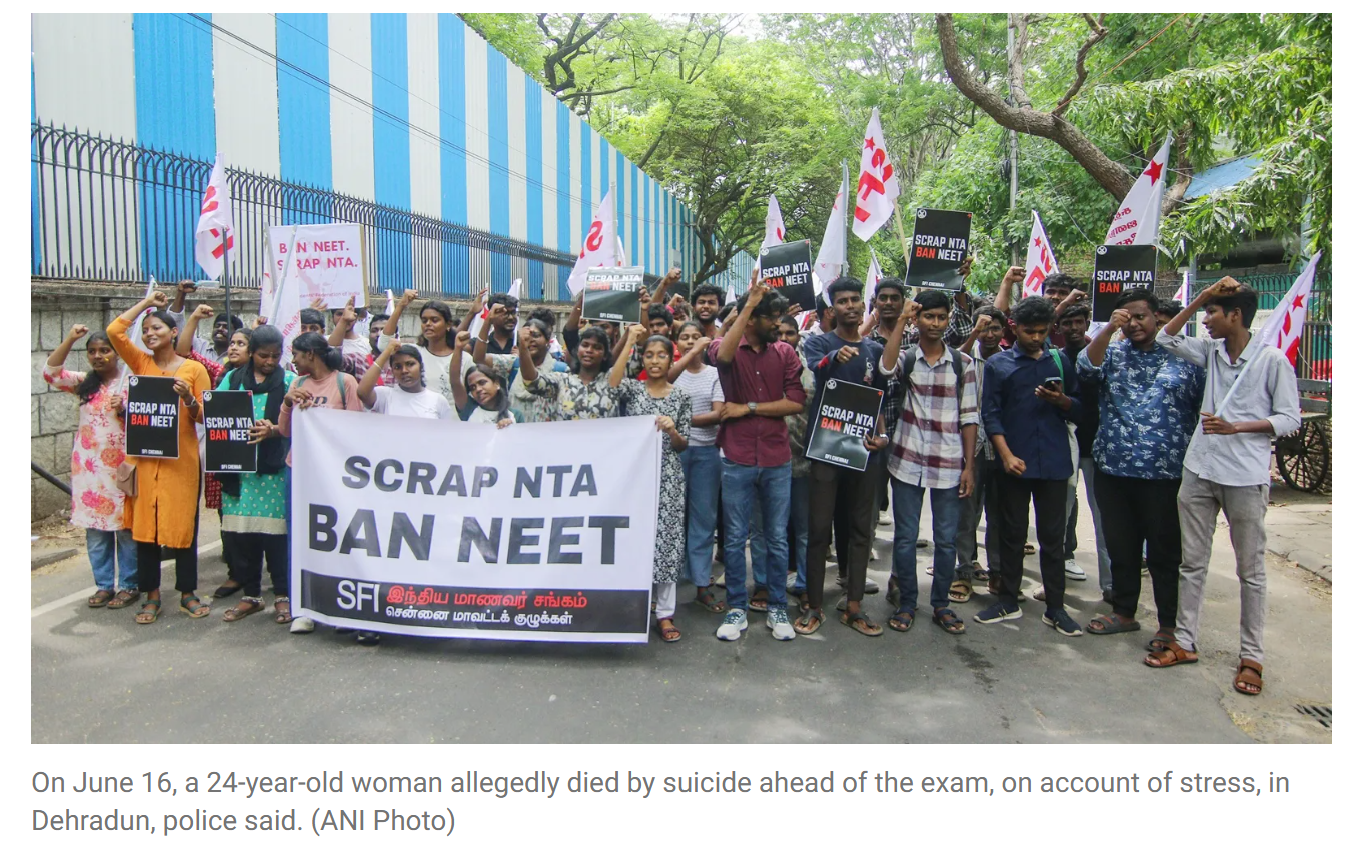
NEET-UG is India’s national entrance exam for undergraduate medical education. More than 22 lakh students appeared for NEET-UG 2026. After allegations of a paper leak and irregularities, the exam was cancelled and a re-examination was scheduled.
The cancellation created a second crisis almost immediately. Students who had already spent months or years preparing were forced back into uncertainty. Some had felt they performed well. Others had begun imagining their next steps. Families that had paid for coaching, travel, lodging, and preparation were suddenly told that the process itself could not be trusted.
The state response was also extraordinary. Authorities reportedly imposed heightened security measures for the re-test and restricted access to Telegram, the messaging platform, amid fears that leaked or fake exam papers could circulate online. Telegram challenged the restrictions in the Delhi High Court, raising serious questions about whether blocking an entire platform is a lawful or effective response to an exam security failure.
Subscribe to our Newsletter
That is the heart of the issue. Instead of a trustworthy examination system that prevents leaks before they happen, students were met with emergency controls, policing, platform restrictions, and re-tests after the damage had already been done.
The Human Toll of an Exam System SCRIBE Built on Scarcity
The NEET paper leak is a scandal because it exposes unfairness. But it is a crisis because it exposes cruelty.
India’s entrance exam culture is built around scarcity. There are too few quality public seats, too few affordable pathways into higher education, and too many students competing for life-changing opportunities. That scarcity has created a coaching economy in which families often spend beyond their means because they believe there is no other route to dignity, mobility, and security.
When the exam system fails, the burden does not fall equally. Wealthier families may be able to afford another round of coaching, another year of preparation, another city, or another application. Poorer and middle-class families may not. For many students, especially those from marginalized caste, class, regional, linguistic, and rural backgrounds, one compromised exam can mean the collapse of years of sacrifice.
This is why the NEET paper leak must be understood as a rights issue. The right to education is not meaningful if access to professional education depends on a system that can be bought, leaked, manipulated, or repeatedly disrupted. Equal opportunity is not real if some students can purchase preparation while others are left to gamble their futures on a broken process.
The Telegram Ban Shows the Limits of Crisis Governance
One of the most politically revealing parts of the NEET leak story is the reported restriction on Telegram before the re-test.
The government’s stated concern was exam integrity. That concern is legitimate. Messaging platforms can be used to circulate leaked papers, fake papers, rumors, scams, and panic. But a broad platform restriction also raises serious civil liberties questions. Does blocking Telegram actually stop paper leaks? Or does it create the appearance of action while avoiding harder questions about who had access to the paper, how the leak occurred, who profited, and why the NTA’s safeguards failed?
If a leaked exam paper can spread through one platform, it can spread through another. Fake or leaked material can move through WhatsApp, Signal, private coaching networks, printed copies, or in-person fraud. A platform ban may disrupt communication, but it does not fix corruption inside the exam pipeline.
A rights-based policy response should focus on the source of the leak: chain of custody, procurement systems, printing and distribution protocols, insider access, coaching-center corruption, and accountability within the NTA and related agencies. Digital restrictions may be part of a narrow emergency response, but they cannot substitute for institutional reform.
The NTA Problem: Who Is Accountable?
The National Testing Agency was created to professionalize and centralize India’s major entrance exams. But the NEET-UG paper leak controversy raises a blunt question: if the agency cannot protect the integrity of one of India’s most important exams, who is accountable?
Accountability cannot mean arresting a few middlemen after a leak and declaring the matter closed. It must reach the leadership, governance structures, exam-security systems, and chains of decision-making that allowed such a failure to happen. A credible response would require an independent investigation into the full chain of the leak, along with a public audit of the NTA’s exam-security protocols. Students and families deserve a clear explanation of what went wrong, what has changed, and how future exams will be protected.
The government also owes real support to students forced into re-examination. That should include compensation where appropriate, mental health support for affected students and families, and clear grievance systems for those harmed by cancellation, delay, or administrative confusion. The response must also confront the wider ecosystem around exam fraud, including coaching networks, brokers, and markets that profit from anxiety and unequal access.
Finally, India needs transparent standards for when exams are cancelled or re-held, and stronger parliamentary or judicial oversight of high-stakes national exam systems. The deeper question is not only whether one paper was leaked. It is whether India’s examination state has become too centralized, too opaque, too punitive, and too disconnected from the lives of students.
Why This Became a Political Flashpoint
The NEET paper leak has moved from education news into national politics because it was never only an education story. Rahul Gandhi launched a student outreach campaign from Kota, one of India’s most famous coaching hubs, and described the education system as an “extortion machine.” The BJP has accused the opposition of politicizing the issue. But students and families already know the issue is political, because education policy is political.
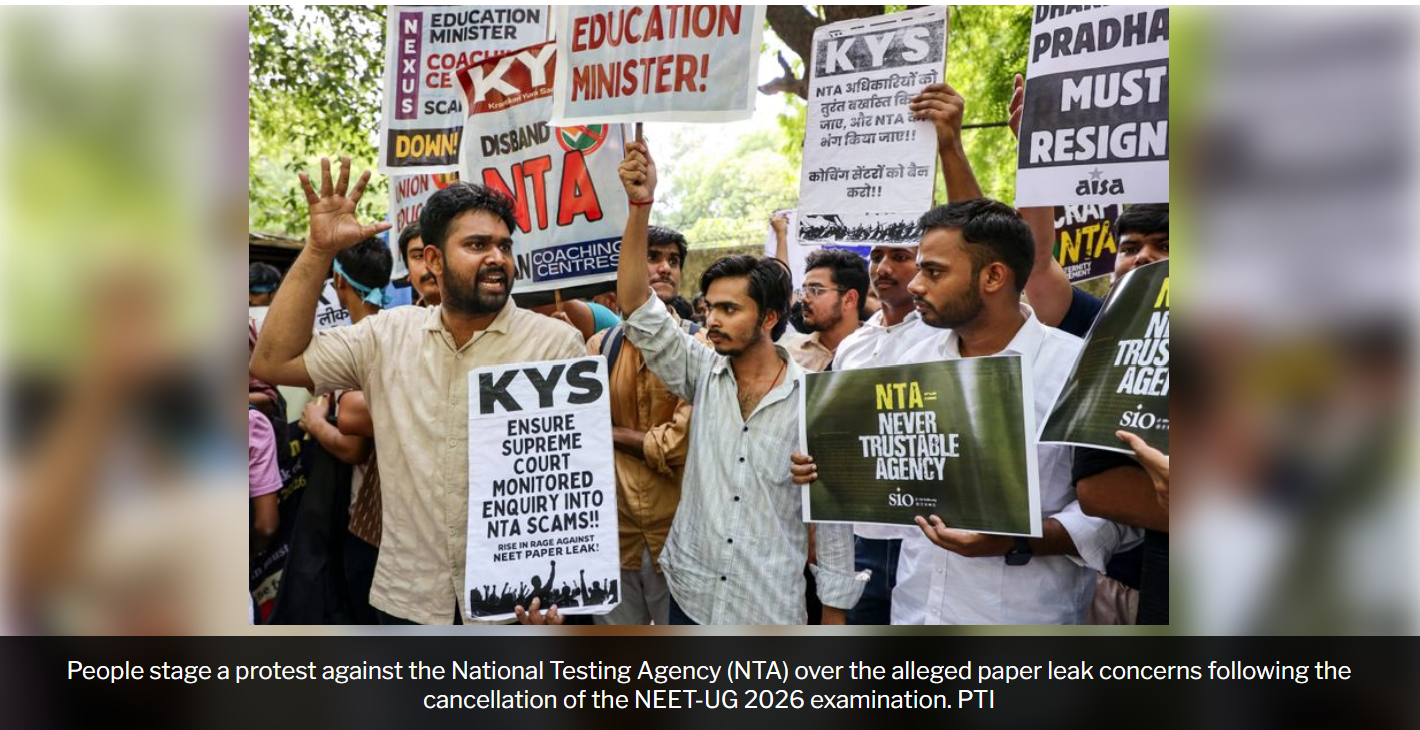
Who gets access to medical education, who can afford coaching, who bears the cost of a cancelled exam, who is believed when they allege irregularities, and who resigns after institutional failure are all political questions. They are not made political by being spoken aloud. They were political the moment a young person’s future was made dependent on a system that could fail without anyone at the top immediately taking responsibility.
The problem is not that political leaders are talking about NEET. The problem would be if they turn student suffering into another partisan spectacle without delivering reform — India does not need one more press conference where everyone discovers students exist five minutes before demanding their votes.
A meaningful political response would ask why India’s public education system has created such desperation around a single exam, why coaching centers have become shadow institutions of opportunity, and why students are expected to endure repeated trauma while agencies avoid deep accountability.
A Faith-Inflected Human Rights View
A human rights lens rooted in Indian ethical traditions begins with a simple moral claim: young people are not raw material for a competitive machine. They are human beings with dignity, inner life, family obligations, and futures that should not be sacrificed to corruption or administrative failure.
In many Indian traditions, knowledge is not only a private asset. Vidya is linked to liberation, duty, service, and the flourishing of society. Medical education carries an even deeper public purpose because it prepares young people to serve the health and well-being of others. When access to that education is distorted by leaks, fraud, and unequal opportunity, society is not only failing students. It is weakening the moral foundations of public life.
A just education system should not force students into impossible pressure and then blame them for breaking under it. It should not allow public institutions to fail while private coaching industries profit. It should not treat re-tests, police cases, and internet restrictions as enough.
The NEET paper leak is a test of India’s conscience. It asks whether the country can protect the dreams of its young people with the same urgency that it protects the reputation of its institutions.
What Should Change Now
India does not need another cycle of outrage, re-test, arrests, and silence. It needs structural reform.
First, there must be full transparency about the NEET paper leak: how it happened, who benefited, who failed to prevent it, and what safeguards are being implemented. Second, the NTA must be subject to meaningful public oversight. A centralized testing agency cannot operate like a black box when its decisions shape the lives of millions.
Third, students affected by the cancellation and re-test deserve support, not just instructions. That means mental health services, helplines, counseling, grievance redress, and clear communication. Fourth, exam reform must address inequality. A single high-stakes test in a deeply unequal country will always privilege those with money, coaching access, language advantage, and social support.
Finally, the government must resist the temptation to solve governance failures through censorship or digital shutdowns. The answer to a paper leak is not simply a platform ban. The answer is institutional integrity.
What People Are Asking About the NEET Paper Leak
What is the NEET paper leak?
The NEET paper leak refers to allegations that the NEET-UG 2026 medical entrance exam was compromised through leaked question papers or related irregularities. The controversy led to cancellation, a re-test, investigations, protests, and scrutiny of the National Testing Agency.
What does NEET-UG mean?
NEET-UG stands for National Eligibility cum Entrance Test for Undergraduate medical courses. It is the national entrance exam for admission to MBBS, BDS, and other undergraduate medical programs in India.
What is the NTA paper leak issue?
The NTA paper leak issue refers to questions about whether the National Testing Agency had adequate systems to protect exam papers, prevent leaks, investigate irregularities, and communicate transparently with students.
Why was the NEET exam cancelled?
The exam was reportedly cancelled after allegations of a paper leak and irregularities. A re-test was then scheduled, forcing students to prepare again amid uncertainty and stress.
Why are students protesting the NEET UG paper leak?
Students are protesting because a paper leak destroys the fairness of the exam. Many students spent years preparing and large sums on coaching. A compromised exam means honest students are punished while corrupt networks profit.
What is the connection between NEET paper leak and Telegram?
Authorities reportedly restricted Telegram before the NEET re-test because of fears that leaked or fake papers could circulate on the platform. Telegram challenged the restriction in court, raising questions about digital rights, free expression, and whether platform bans actually solve exam fraud.
Is blocking Telegram a good solution to NEET paper leaks?
Blocking Telegram may disrupt some forms of circulation, but it does not address the root problem: how the paper leaked, who had access to it, and why exam security failed. A real solution requires institutional accountability, not only digital restrictions.
Why is the NEET paper leak a human rights issue?
It is a human rights issue because it affects equal access to education, student mental health, family debt, public trust, and the right of young people to a fair chance. When an exam system fails, the consequences fall hardest on students with the least power.
What should the government do after the NEET paper leak?
The government should ensure an independent investigation, public accountability for NTA failures, transparent exam-security reforms, student compensation and counseling, regulation of coaching-linked fraud, and safeguards against future leaks.
Resources and Further Reading
Hindustan Times — “The human toll of NEET: 11 reported suicides after paper leak forced re-test”
https://www.hindustantimes.com/india-news/the-human-toll-of-neet-11-reported-suicides-after-paper-leak-forced-retest-101781771406022.html
The Indian Express — “‘Upset since paper leak’: Lucknow NEET aspirant dies by suicide”
https://indianexpress.com/article/cities/lucknow/upset-paper-leak-lucknow-neet-aspirant-dies-suicide-10745973/
The Tribune — “Amid NEET paper leak row, Rahul Gandhi launches nationwide student drive from Kota”
https://www.tribuneindia.com/news/india/after-neet-paper-leak-rahul-launches-nationwide-student-drive-from-kota/
The Indian Express — “Leaks, loans and student stress: Rahul Gandhi’s Kota outreach before NEET retest”
https://indianexpress.com/article/india/exam-structure-or-rejection-system-for-aspirants-students-join-as-rahul-gandhi-kicks-off-campaign-in-kota-10745067/
Rediff — “NEET re-exam: HC seeks Centre’s reply on Telegram ban”
https://www.rediff.com/news/report/telegram-challenges-india-ban-over-neet-paper-leak-fears/20260617.htm
Outlook India — “NEET-UG 2026 Paper Leak Scandal: Collapse of Trust, Student Suicides and India’s Medical Entrance Crisis”
https://www.outlookindia.com/national/neet-ug-2026-paper-leak-scandal-collapse-of-trust-student-suicides-and-indias-medical-entrance-crisis
The Quint — “NEET Paper Leak, NTA Failures and Student Suicides: How a Broken Exam System Failed India’s Students”
https://www.thequint.com/news/education/neet-paper-leak-student-suicides-examination-crisis-india
Times of India — “‘Once a paper leaks, people will find ways’: Telegram restriction ahead of NEET re-test sparks debate over exam security”
https://timesofindia.indiatimes.com/education/news/once-a-paper-leaks-people-will-find-ways-telegram-restriction-ahead-of-neet-re-test-sparks-debate-over-exam-security/articleshow/131792810.cms