
March 23 and the Unfinished Meaning of Freedom: Remembering Bhagat Singh, Rajguru, and Sukhdev
Every year on March 23, people across India remember Bhagat Singh, Shivaram Rajguru, and Sukhdev Thapar, who were executed by the British in Lahore Central Jail in 1931. The date is observed as Shaheed Diwas, and their memory is also tied to Hussainiwala, where their bodies were secretly cremated after the execution.
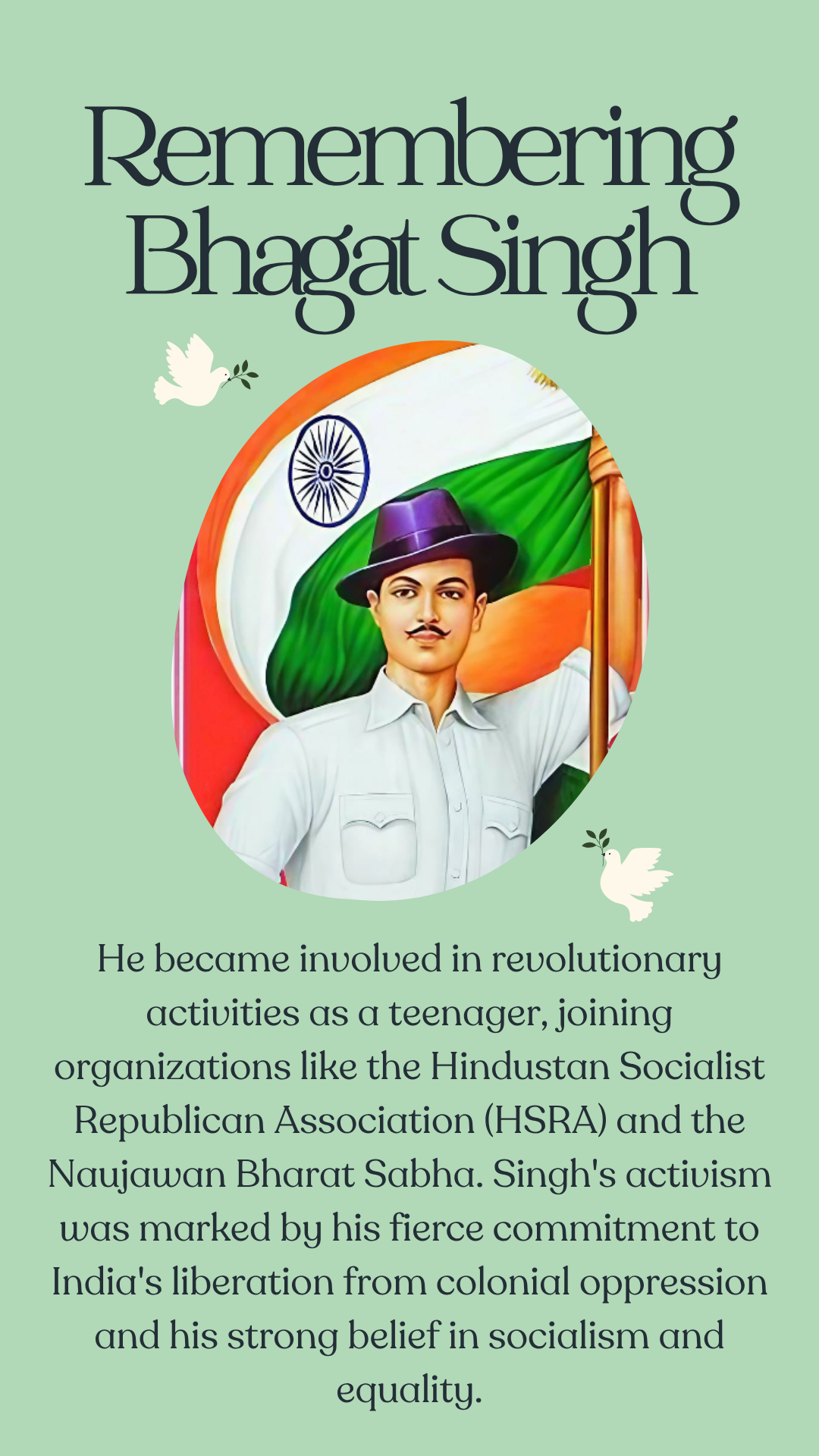
But March 23 should be more than a ritual of patriotic remembrance. These three revolutionaries are often turned into familiar icons: the hat, the slogan, the martyr’s pose, the textbook paragraph. In that flattening, Bhagat Singh becomes larger than life while Rajguru and Sukhdev are pushed to the edge of public memory, named but less often studied. Even today, the unevenness of remembrance is visible in the real world: Rajguru’s birthplace memorial has recently undergone restoration work, while access and preservation issues around Sukhdev’s ancestral home have continued to provoke frustration among those trying to protect his legacy.
To remember them well, we have to resist the urge to make them simple.
Bhagat Singh was born in 1907 in Banga, in Lyallpur district, now in present-day Pakistan. He came of age in a household already shaped by anti-colonial politics, and over time moved into the orbit of more radical organizations, including the Naujawan Bharat Sabha and the Hindustan Socialist Republican Association. In 1928, in the aftermath of Lala Lajpat Rai’s fatal injuries during protests against the Simon Commission, Singh and his comrades targeted the police official they held responsible; J.P. Saunders was killed instead. In 1929, Bhagat Singh and Batukeshwar Dutt threw bombs in the Central Legislative Assembly in Delhi in protest against repressive colonial legislation, then surrendered. While imprisoned, Singh also helped lead a hunger strike over the treatment of political prisoners.
That sequence of events made him famous, but fame is not the same thing as understanding. Bhagat Singh mattered not only because he was fearless, but because he was intellectually restless. In his Assembly Bomb Case statement, he and Dutt described the bombing as an effort “to make the deaf hear,” and explained that their protest was linked to labor repression and the silencing of the exploited. The same archive of his writings that preserves “Why I Am an Atheist” also preserves a wider body of work on language, revolution, prison conditions, youth politics, and national liberation. Scholars and archival institutions continue to stress that reducing him to a martyr alone obscures the depth of his political thought.
That fuller Bhagat Singh is often less convenient for official memory. He was not simply anti-British; he was anti-imperial, anti-exploitation, and increasingly drawn toward socialist analysis. In his public arguments, the issue was never only who ruled India, but what kind of India would emerge from struggle. His writing on communal violence also pushed against the fusion of religion and politics, arguing that political unity becomes possible only when religion is not allowed to dominate public life. That makes him unusually alive in the present. He is not just a face from the past; he is one of the anti-colonial figures most difficult to domesticate.
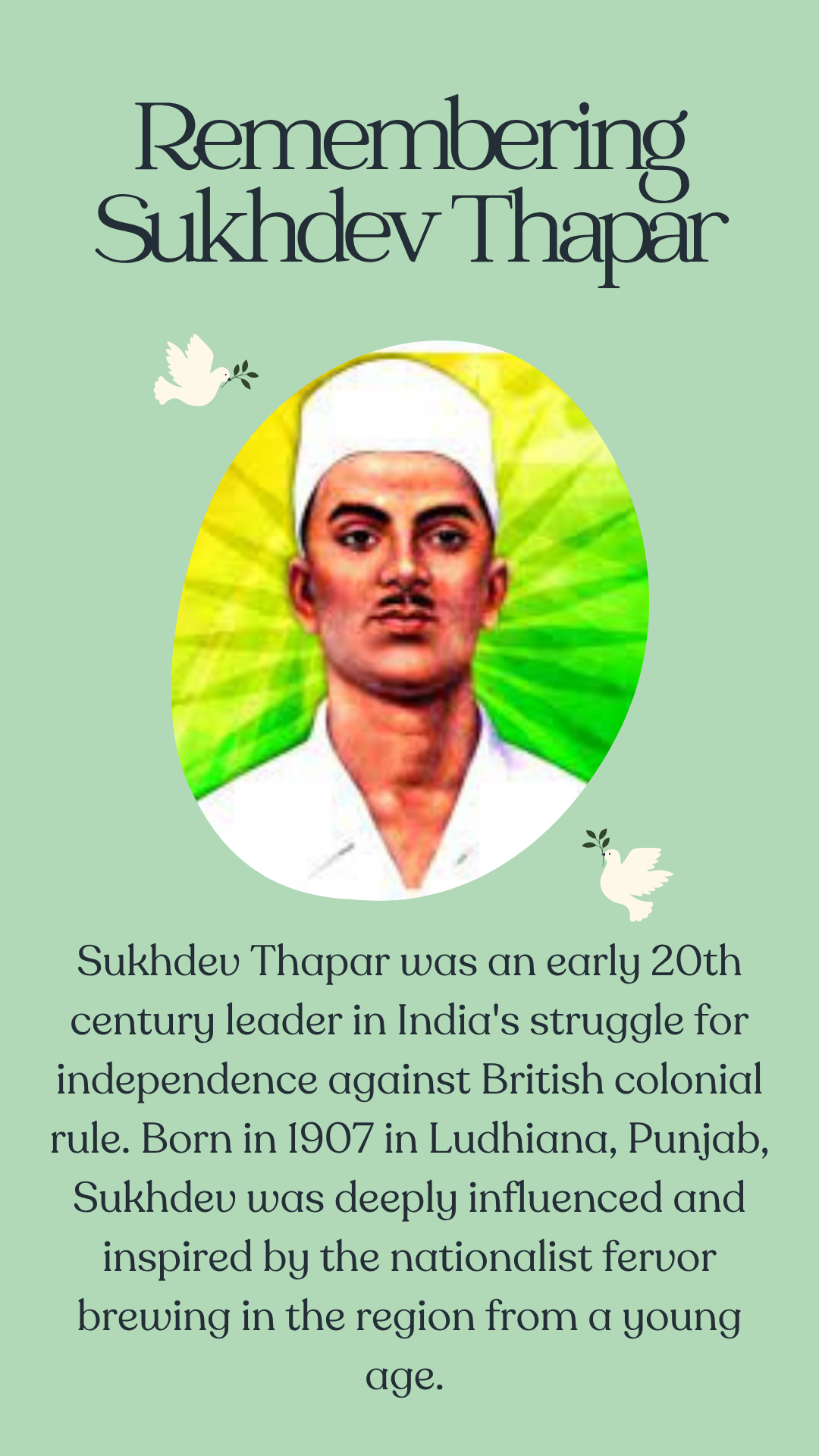
Sukhdev Thapar deserves to be remembered with the same seriousness. Born in 1907 in Ludhiana, Sukhdev was a central organizer in the revolutionary underground. Government-linked cultural records describe him not simply as a comrade of Bhagat Singh, but as a builder of revolutionary cells in Punjab and other parts of North India. He also worked with young people connected to National College in Lahore, helping cultivate political consciousness rather than merely participating in spectacular action. If Bhagat Singh became the movement’s best-known public mind, Sukhdev was one of its indispensable organizers.
That matters because movements are rarely carried only by the people history most loves to photograph. Behind every dramatic action is someone doing the slower work of structure, recruitment, discipline, and trust. In public memory, Sukhdev is too often cast as part of a trio rather than as a political actor in his own right. But the Lahore Conspiracy Case itself makes clear how seriously the colonial state regarded him. He was not incidental to the struggle; he was one of the people helping give it shape.
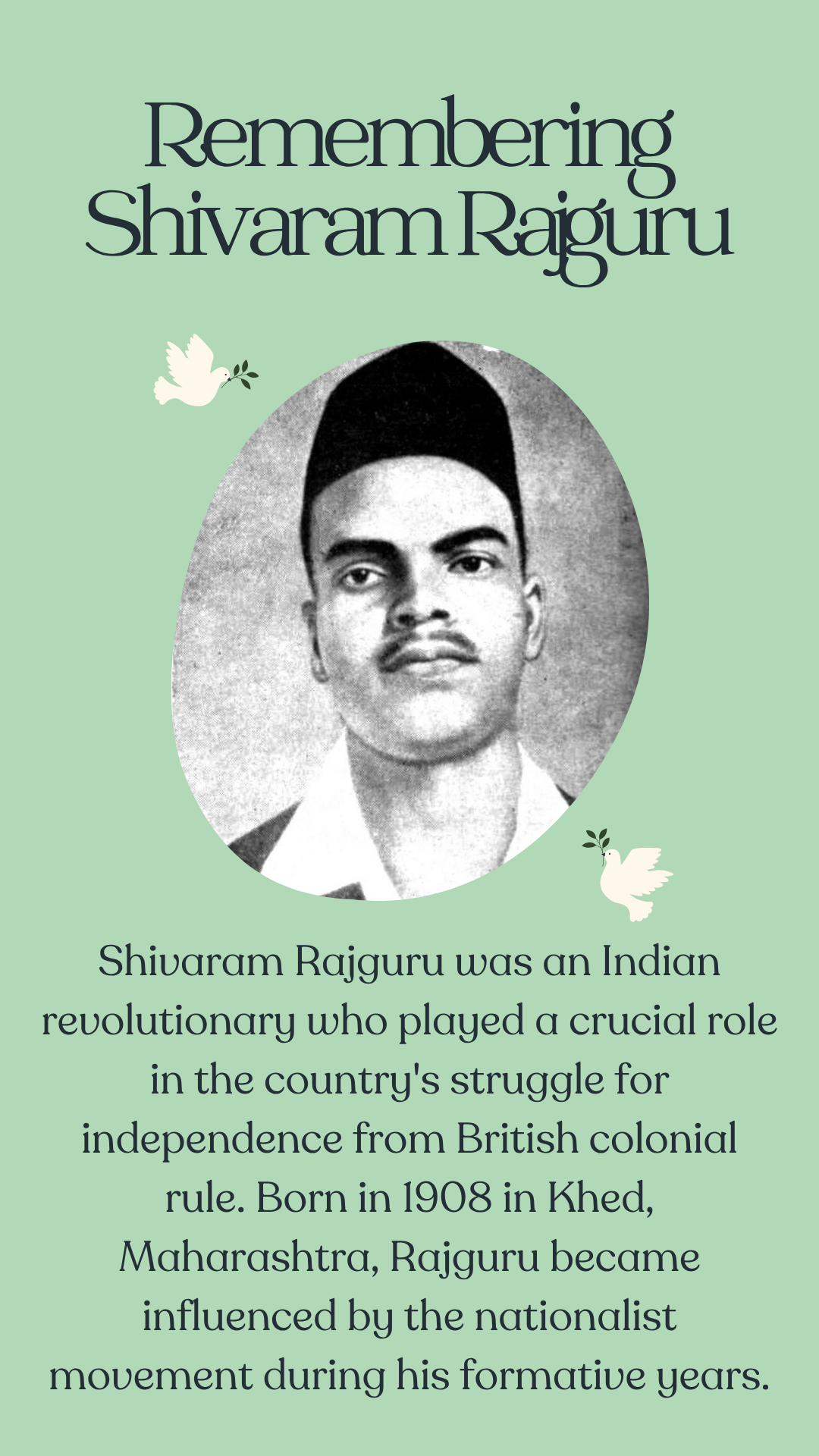
Rajguru, too, is often remembered in outline rather than in depth. Born in 1908 in Khed, in present-day Maharashtra, he was a member of the HSRA and a key participant in the Saunders action in Lahore. His story reminds us that this revolutionary current was not confined to a single province or a single political culture. Rajguru’s life tied Maharashtra to Punjab, underground action to political commitment, and regional memory to a wider anti-colonial imagination. The recent restoration of his birthplace memorial is a reminder that his legacy still commands reverence, even if it does not always receive the same interpretive attention as Bhagat Singh’s.
Taken together, the three men reveal something essential about the independence struggle: it was never a single, tidy story. It contained constitutionalists and revolutionaries, mass movements and clandestine networks, moral witness and militant retaliation, prison hunger strikes and public organizing. One does not have to romanticize violence to recognize why Bhagat Singh, Rajguru, and Sukhdev struck such a deep chord. Their actions came in response to colonial brutality, repressive laws, and the crushing of dissent. Their trials and executions transformed them into symbols not because people loved death, but because people recognized sacrifice in the face of empire.
That is where March 23 becomes politically alive in the present. The easiest way to remember these revolutionaries is to praise their courage while ignoring their questions. The harder way is to ask what they were actually struggling against: not just foreign rule, but humiliation, exploitation, repression, and division. Bhagat Singh’s own writings tied freedom to workers’ rights, human dignity, and resistance to communal politics. Read that way, Shaheed Diwas is not merely a day for slogans. It is a challenge to any politics that wants the prestige of anti-colonial memory without the discomfort of equality, dissent, and justice.
There is another reason this date resists simplification. The geography of their memory itself unsettles narrow nationalism. Bhagat Singh was born in a place that is now in Pakistan. All three were executed in Lahore, also now in Pakistan. Their cremation site is remembered at Hussainiwala near today’s border. Their story belongs to India, but it also belongs to a larger, broken geography of Punjab and to a subcontinent whose anti-colonial histories long predate the rigid identities of the present.
So on March 23, remembrance should be more demanding than homage. Bhagat Singh should be remembered not only as a martyr, but as a thinker. Sukhdev should be remembered not only as one of the three, but as an organizer and strategist. Rajguru should be remembered not only as a brave comrade, but as a revolutionary whose life linked regions, traditions of resistance, and generations of anti-colonial commitment. To remember them honestly is to refuse both amnesia and simplification. It is to admit that freedom was never just a transfer of power. It was, and remains, an argument about the kind of society worth building.
FAQ: Bhagat Singh, Rajguru, and Sukhdev
Why is March 23 observed as Shaheed Diwas? What about other
March 23 is observed as Shaheed Diwas because Bhagat Singh, Shivaram Rajguru, and Sukhdev Thapar were executed by the British in Lahore Central Jail on March 23, 1931, making the date one of the most emotionally charged anniversaries in the history of India’s anti-colonial struggle. But March 23 is not the only day on which India remembers its martyrs. At the national level, January 30 is officially observed as Martyrs’ Day in memory of Mahatma Gandhi and all who died in the freedom struggle, marked each year by a nationwide two-minute silence. Beyond these better-known dates, states, regions, and communities also maintain their own calendars of sacrifice — including observances such as Tarapur Shahid Diwas in Bihar and Bhasha Shahid Divas in Barak Valley — so, depending on how one counts national, regional, linguistic, and community memorial traditions, India remembers its martyrs on several other dates as well.
That multiplicity matters. It tells us that the story of Indian freedom was never singular. It was not made by one leader, one ideology, one language, or one method of struggle. January 30 tends to foreground Gandhi, mourning, and the moral force of nonviolence. March 23 foregrounds a different current: revolutionary militancy, socialist critique, youth politics, and the refusal of empire on radically uncompromising terms. Other martyr days preserve memories that are regional, linguistic, religious, or institution-specific, reminding us that the struggle for dignity and self-rule was experienced differently in different places. In that sense, the many dates of Shaheed Diwas are not a confusion in the national calendar; they are evidence of a broad, contested, plural national memory. They suggest that independence was won through a crowded coalition of sacrifices, and that public remembrance is still a way of arguing about whose courage, politics, and suffering get placed at the center of the nation’s story.
Who were Bhagat Singh, Rajguru, and Sukhdev?
They were Indian anti-colonial revolutionaries associated with the Hindustan Socialist Republican Association. Bhagat Singh became the most famous of the three because of his public political writing, the Assembly bombing case, and his prison hunger strike. Sukhdev was a key organizer in Punjab and North India, and Rajguru was an important HSRA cadre and participant in the Saunders action.
Why were Bhagat Singh, Rajguru, and Sukhdev executed?
They were sentenced to death in connection with the Lahore Conspiracy Case, which grew out of the killing of British police officer J.P. Saunders in Lahore in 1928. Saunders was targeted in retaliation after Lala Lajpat Rai died following police violence during protests against the Simon Commission.
What was the Lahore Conspiracy Case?
The Lahore Conspiracy Case was the colonial prosecution that tied Bhagat Singh, Rajguru, Sukhdev, and others to revolutionary activities, especially the Saunders killing and the broader HSRA network. The case became one of the most famous political trials of the independence era and helped turn the accused into national symbols.
What did Bhagat Singh believe in politically?
Bhagat Singh’s politics went beyond patriotism in the narrow sense. His writings and statements show commitments to anti-imperialism, socialism, rational thought, prison reform, and opposition to communal division. His Assembly Bomb Case statement linked political action to exploited workers and silenced masses, and his other writings show sustained engagement with religion, language, and social justice.
Was Bhagat Singh only a revolutionary fighter, or also a writer?
He was very much a writer and political thinker. Archives dedicated to his legacy preserve essays, letters, pamphlets, and statements, including “Why I Am an Atheist,” court statements, prison letters, and documents related to political prisoners’ rights. His enduring influence comes as much from his ideas as from his martyrdom.
What role did Sukhdev play in the freedom struggle?
Sukhdev Thapar was a leading organizer of revolutionary cells in Punjab and other parts of North India. He also educated and influenced youth connected to National College in Lahore. He is often overshadowed in popular memory, but historical records show he was central to the organizational side of the revolutionary movement.
What role did Rajguru play in the freedom struggle?
Shivaram Rajguru was an HSRA member from present-day Maharashtra who played a major role in the 1928 Saunders action and became one of the best-known revolutionary martyrs of the independence movement. His life also reflects the cross-regional character of militant anti-colonial politics.
Where were Bhagat Singh, Rajguru, and Sukhdev cremated?
They are commemorated at the National Martyrs Memorial in Hussainiwala, near Ferozepur. According to the district memorial account, their bodies were secretly taken there after execution and cremated on the banks of the Sutlej. Hussainiwala remains one of the most important sites of remembrance associated with the three martyrs.
Why do Bhagat Singh, Rajguru, and Sukhdev still matter today?
They still matter because their legacy speaks to questions that remain unfinished: what freedom means beyond flags, how states respond to dissent, how youth enter political struggle, and whether nationalism can be separated from justice and equality. Bhagat Singh’s political writings in particular remain relevant because they connect liberation to labor, secularism, and social transformation, not just national pride.