
Rosa Parks, and the Growing Library of Freedom
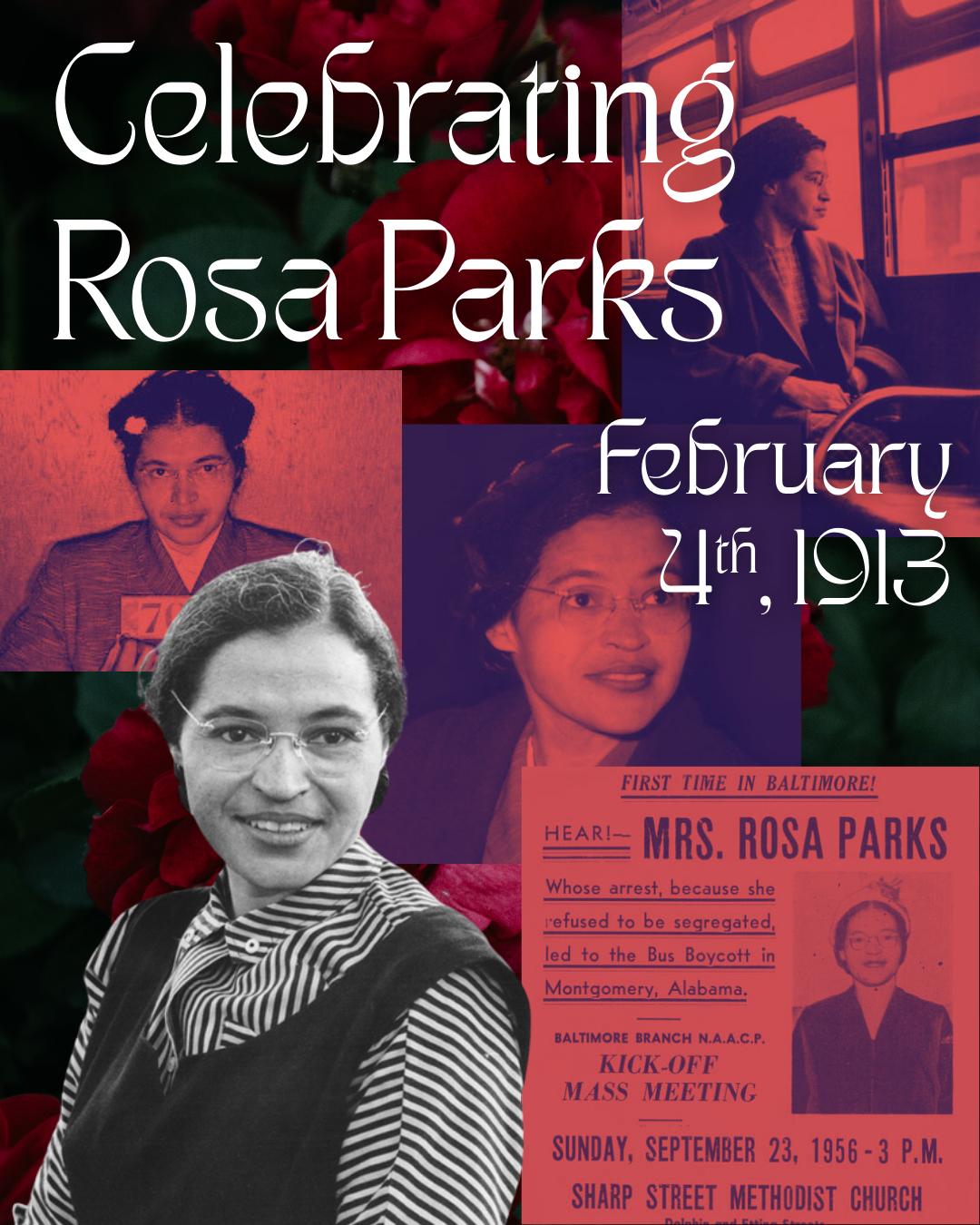
Rosa Parks was born on February 4, 1913. We remember her today because her courage helped change the course of the United States — and because the kind of change she helped make didn’t stay put.
The story most people know begins on a Montgomery bus in 1955. But Rosa Parks was not acting on impulse. She was part of a community that had been organizing, planning, and preparing to challenge segregation long before that day. Her refusal mattered because it landed inside a movement ready to act.
Segregation in the United States depended on routine cooperation. It worked by turning humiliation into habit and calling it order. Rosa Parks interrupted that system by refusing to participate in her own erasure. That refusal was small in appearance, but enormous in consequence.
What followed was not symbolic. The Montgomery Bus Boycott was sustained, disciplined, and collective. It showed how everyday life — transit, wages, shopping, movement itself — could become a terrain of democratic struggle. It forced legal change and reshaped public expectations around what a society owes its people.
And here’s where the story gets even more interesting: those strategies were never purely “American,” and they never belonged to one country.
The U.S. Civil Rights Movement grew in conversation with global anti-colonial struggles — including India’s independence movement. India’s freedom struggle offered the world a vocabulary and a practice of mass mobilization: noncooperation, boycotts, disciplined public protest, the moral force of refusing to participate in unjust systems. Those ideas traveled — and as they traveled, they changed. They were taken up, adapted, argued over, sharpened, and sometimes radically reimagined.
Then the influence flowed back the other way. As Black organizers in the United States developed new methods — legal challenges paired with mass action, economic pressure paired with moral witness, tightly organized campaigns that could sustain attention over time — those tools, too, became part of a wider repertoire. Anti-apartheid struggles, sanctions movements, labor movements, student movements, and diaspora organizing all drew from these evolving models. The point wasn’t imitation. It was iteration: people learning from one another across borders, translating tactics into new conditions, building a richer and more complex library of how freedom can be demanded.
This is one of the most important truths about justice work: freedom doesn’t arrive as a single package. There is the fight against empire — and then the fight inside the nation that remains. There is the end of colonial rule — and then the long contest over whose lives are protected, whose histories are honored, whose futures are taken seriously. Even after “independence” or “democracy” is declared, societies keep reproducing hierarchies—through law, through policing, through economic deprivation, through cultural narratives that decide who counts.
So the struggle keeps producing new lessons.
Each movement inherits not only inspiration, but a growing set of examples: what worked, what didn’t, what brought people together, what fractured coalitions, what made institutions respond, what made them retaliate. Over generations, these struggles become more precise — more detailed about power, more careful about strategy, more honest about the costs, more imaginative about solidarity.
That’s part of what it means to honor Rosa Parks with clarity. Not to flatten her into a simple icon, but to recognize her as a node in a long, living network of freedom-making — where people across the world learn from one another, revise one another, and keep expanding what liberation can mean.
Remembering her is not only about the past. It is about the ongoing work of building a democracy that does not simply announce freedom, but extends it — again and again — until it is real for everyone.
ROSA PARKS — Q&A
Who was Rosa Parks?
Rosa Parks was a civil rights organizer whose refusal to give up her bus seat in Montgomery, Alabama, became a turning point in the fight against segregation in the United States. She was not only a symbol of courage, but a committed political actor shaped by years of organizing.
Why do we celebrate Rosa Parks today?
We celebrate Rosa Parks because her actions helped change the direction of the country. Her refusal exposed the cruelty of segregation, mobilized mass resistance, and showed how everyday systems of control can be challenged through collective action.
What did Rosa Parks’ action actually lead to?
Her arrest helped launch the Montgomery Bus Boycott, a sustained, nonviolent campaign that led to a Supreme Court ruling declaring bus segregation unconstitutional. It reshaped U.S. law, strengthened the Civil Rights Movement, and proved that organized communities could force democratic institutions to change.
Was Rosa Parks’ resistance just about one bus seat?
No. That moment represented a broader challenge to how power operated in daily life. Segregation worked by demanding constant compliance. Rosa Parks’ refusal interrupted that system and made visible the violence built into “normal” rules.
How did the U.S. Civil Rights Movement change the country beyond segregation laws?
The movement helped establish new legal standards, federal enforcement mechanisms, and public expectations around equality and civil rights. It expanded the meaning of democracy by insisting that freedom is not complete unless it is shared and protected.
Why does the U.S. Civil Rights Movement matter globally?
The strategies developed in the U.S.—mass nonviolent protest, legal challenges, economic boycotts, and international pressure—shaped movements worldwide. Anti-apartheid campaigns, sanctions movements, and struggles for civil rights across the Global South and diaspora communities drew from these models.
How does this connect to freedom after independence or democracy?
Rosa Parks’ legacy reminds us that winning independence or formal democracy is not the end of the story. Even after freedom is declared, societies must continue expanding who is protected, heard, and treated with dignity.
What does honoring Rosa Parks ask of us now?
It asks us to see freedom as ongoing work. To recognize that laws, norms, and institutions must be challenged when they fall short—and that ordinary people, acting together, can still reshape history.