
The Cockroaches Had Better Material
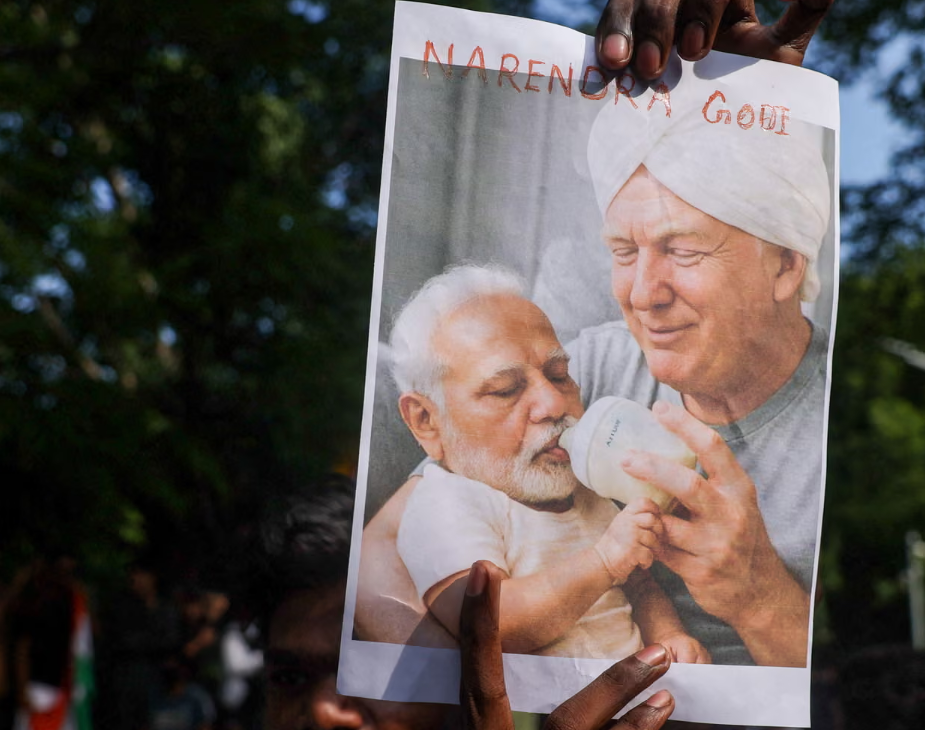
a poster depicting Narendra Modi and Donald Trump at a protest at Jantar Mantar in New Delhi. Photograph: Francis Mascarenhas/Reuters
India’s student uprising built a political language that could move between streets and screens, faith and satire, Delhi and the diaspora. Its larger achievement was creating a movement people could enter briefly, support materially and rejoin when the next political moment arrived.
As police confronted young protesters in Delhi with batons, barricades and tear gas, some students responded by making reels beside officers to a Lana Del Rey song and carrying signs that read, “Arrest me daddy.”
The joke did not make the police violence less real. It made the police lose control of its meaning.
The expected image was familiar: stern officers restoring order while irresponsible young people created trouble. The students replaced it with something stranger. Police power became the involuntary backdrop to a flirtatious internet joke. The officers still held the batons, but the protesters controlled the scene being circulated.
That reversal explains much about the Cockroach Janta Party movement. Its humor was politically useful, but not because jokes are magical or because memes have replaced organization. Humor allowed facts, anger, identity and action to travel together. It gave people across India and abroad a common language through which they could understand the protest, add something of their own and carry it elsewhere.
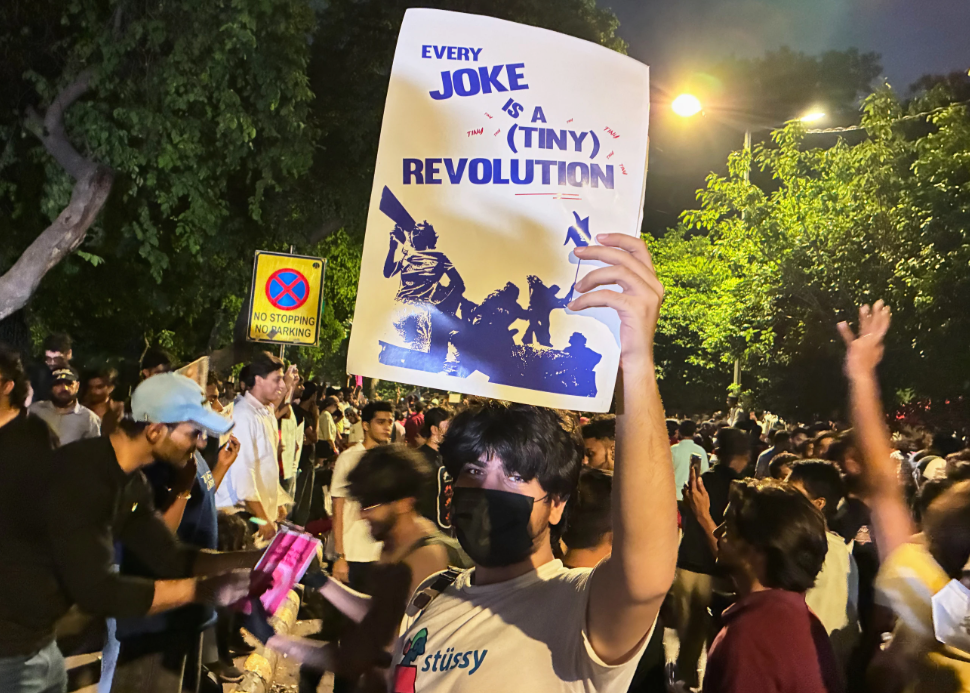
(AP Photo/Verda Subzwari)
The movement developed an unruly archive. Protesters played noughts and crosses on a screenshot of Prime Minister Narendra Modi’s forehead. They recast Modi and Italian Prime Minister Giorgia Meloni as characters in an unstable romantic comedy. An AI-generated Kim Jong Un supposedly entered the love triangle. A fake George Soros denied organizing the protests in an Indian language, while another video showed a protester pretending to telephone Xi Jinping to confirm that the Chinese conspiracy was proceeding according to plan.
When pro-government television suggested the students were controlled by foreign interests, the protesters did not always answer with a point-by-point rebuttal. They turned the accusation into content. The more elaborate the conspiracy became, the better the material.
This mattered because authoritarian communication depends on controlling the frame. Government figures appear historic and grave. News anchors deliver speculation with the vocal urgency of someone announcing an asteroid. Every administrative failure becomes a difficult but visionary stage in the nation’s ascent.
Ridicule reduces that distance. It returns politicians, ministers and television hosts to ordinary human size, where their claims can be judged rather than reverently received.
The movement’s political language was also densely layered. Memes sat beside testimony from students whose examinations had been compromised. AI-generated absurdity travelled alongside reporting about paper leaks and unemployment. Bhajans, “Jai Bhim,” the Constitution and the Ramcharitmanas occupied the same protest space. People moved between religious, secular, popular and political references without stopping to establish which category had jurisdiction.
That flexibility helped the protests cross boundaries that conventional political messaging often reinforces. People did not need to share a religion, caste, ideology or complete diagnosis of the Indian state before recognizing the joke. They could begin with the common knowledge that young people had studied for years, their families had spent heavily, the system had failed them, and officials still expected gratitude.
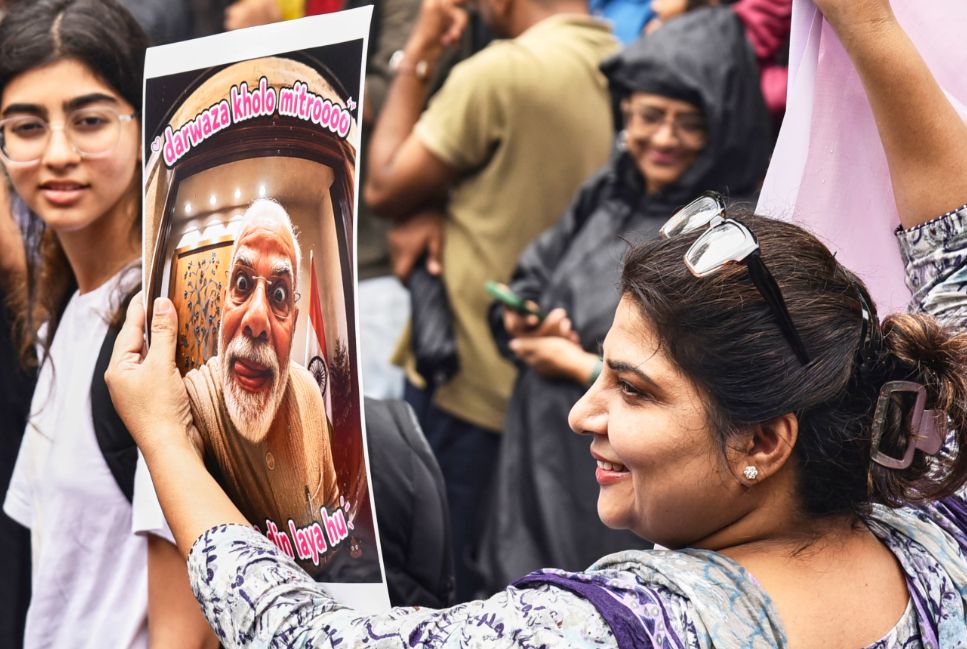
(AP Photo/Verda Subzwari)
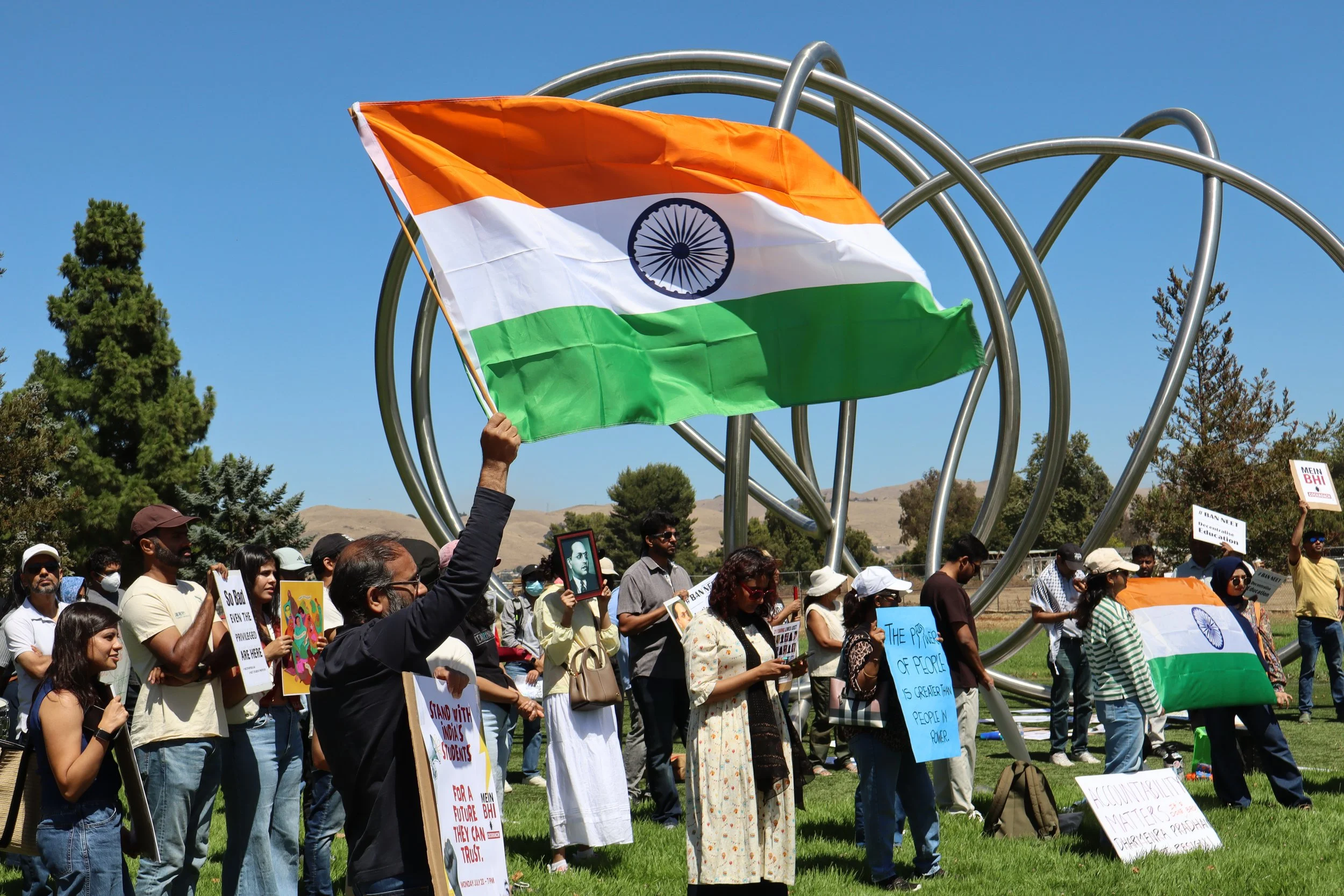
Shared sensibility became the entrance to shared action. The international response showed why this matters. Solidarity gatherings appeared in New York, London, Manchester, Berlin and the Netherlands, often using the slogan “Main bhi cockroach,” or “I too am a cockroach.” The image needed little explanation. People treated as disposable had found one another and discovered that there were rather a lot of them.
Diaspora participants engaged in ways shaped by their own experience and access. Some understood the examination crisis firsthand. Others attended rallies, circulated testimony, contacted journalists, produced graphics or connected organizers with institutions. Their involvement was practical, flexible and responsive. They supported a movement led by those taking the greatest risks in India, while helping its demands travel further and reach new audiences.
A movement rarely needs every supporter to perform the same role or maintain the same intensity. It needs people who can become available when a particular task arises. One person translates. Another raises money. Someone knows a lawyer, an elected official, a journalist or the person who controls the community center booking calendar. Others document abuses, verify information or persuade religious and cultural institutions to speak. Then they may step back. The test is whether the relationships, trust and shared language survive long enough to be activated again. Political communication scholars W. Lance Bennett and Alexandra Segerberg have described a “logic of connective action” in which personalized sharing helps create fluid political networks that can reconfigure as issues and circumstances change. The Cockroach movement offered a vivid version of that process. Participants did not merely receive a message from a central organization. They adapted the movement’s symbols and language, using them to connect their own grievances, communities and abilities to a common campaign.
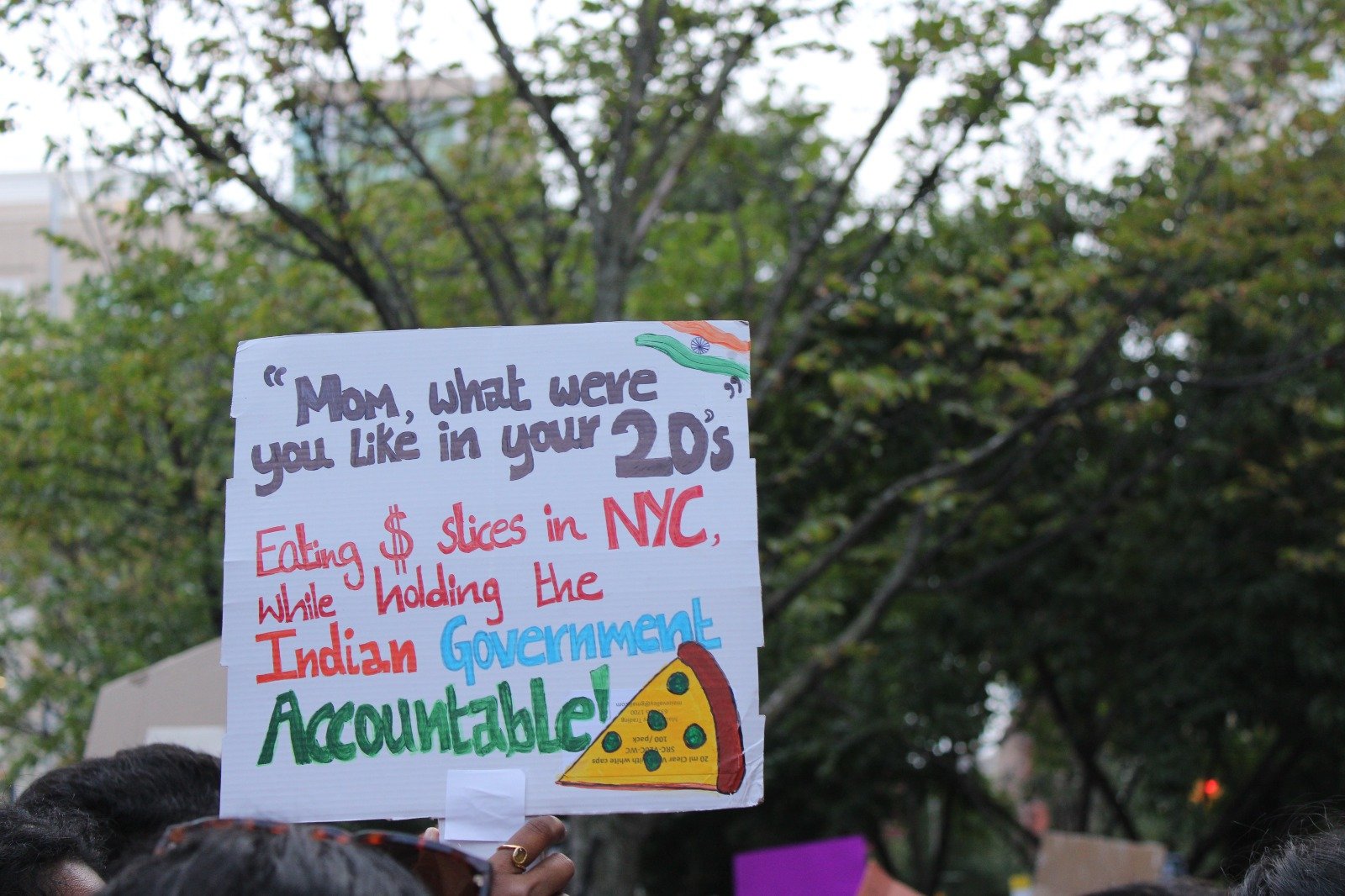
The network also moved material support, not only images. Supporters who could not reach Jantar Mantar ordered meals and water through delivery apps for protesters they had never met. The volume became so large that organizers reportedly asked people to stop sending food. One order included 70 pizzas and required three delivery riders.
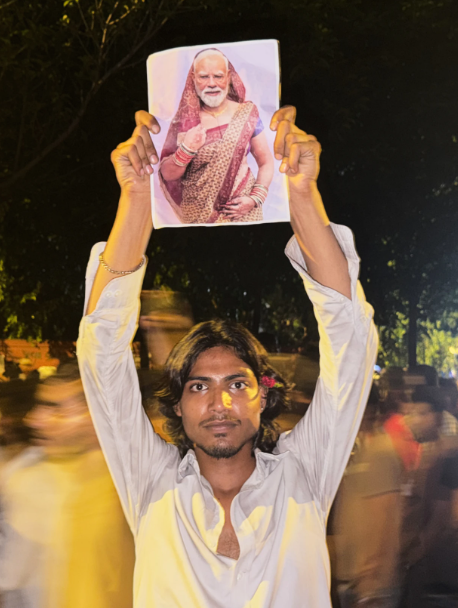
(AP Photo/Verda Subzwari)
A pizza is not a political theory. It is still useful when several thousand people are occupying a protest site. This is where the familiar argument about “online versus offline” becomes inadequate. The food was ordered online and eaten on the street. Livestreams documented physical violence and generated international pressure. A meme brought someone into the story; a payment kept a protester fed; a diaspora rally carried the demand into another country’s media and political institutions.
The actions reinforced one another. The movement’s strength came from the circulation between them. Sharing an image from New York is not equivalent to facing a baton in Delhi. International supporters don’t mistake visibility for ownership or treat people on the ground as raw material for their own political identities. Digital participation also brings risks. AI-generated parodies can be mistaken for authentic videos. False information can move as quickly as satire. Public posts can help authorities or political vigilantes identify and intimidate protesters. Speed without verification can destroy the credibility that speed helped create.
A durable movement therefore needs a division of labor. Some participants produce humor. Others preserve evidence, check claims, maintain secure records, organize legal defense and establish channels through which international supporters can respond without endangering the people they hope to help.
The movement also needs periods of lower visibility. Permanent emergency is not a sustainable organizing model, particularly when authorities can wait while activists exhaust themselves. Networks must be able to disperse, preserve their relationships and return under different conditions.
The Cockroach Janta Party’s decision to operate as a pressure group rather than immediately become an electoral party may offer one route. Its leaders have said they intend to continue demanding government accountability rather than seek office immediately. That choice will present its own difficulties, but it recognizes that political power can be exercised through continued public scrutiny, rapid mobilization and the threat of renewed attention.
For diaspora organizations, there is a practical lesson. The goal should not be to keep every supporter permanently mobilized. It should be to create reliable ways for people to re-enter.
That requires maintaining contact lists, translation capacity, legal and media relationships, emergency funding mechanisms and trusted routes for information from India. It means giving supporters specific tasks rather than asking them to become full-time activists. It also means accepting that people may arrive through humor, culture, religion, friendship or a viral video rather than through an approved ideological curriculum.
Movements often lose useful people by demanding complete alignment before collaboration. Participants are asked to agree on every historic dispute, political party, method and phrase before being permitted to help with the problem happening on Thursday.
The Cockroach movement was effective because it allowed many kinds of contribution while retaining concrete demands. The humor was broad, but the anger had an object. The network was dispersed, but food reached Jantar Mantar. People entered through jokes, but a minister resigned after sustained demonstrations and public pressure. The government’s response after the protests, including greater outreach to Gen Z, suggests that it recognized the political damage.
The lesson is larger than communications. A shared language can become infrastructure. It helps strangers recognize one another, lowers the cost of entering a movement and preserves political memory after a protest site empties.
They say that after the end of the world, after the apocalypse, whatever form it may take - the only thing that will survive is Cher and the cockroach (maybe its Rekha in the desi version). The cockroach is undefeatable, she can disappear beneath the floorboards and re-emerge when the coast is clear …
The cockroach laughter drew people together. The relationships, resources and habits of collaboration are what can bring them back.
Source links
The Guardian, Anuvab Pal, “‘They played noughts and crosses on the PM’s huge forehead!’ An Indian standup picks his favourite gen Z protest memes”
https://www.theguardian.com/culture/2026/jul/30/india-gen-z-protests-cockroach-memes-modi
The Economic Times, “‘Main bhi cockroach’ slogan echoes in New York, London and European cities”
Additional reporting on New York and London solidarity demonstrations, Times of India
https://timesofindia.indiatimes.com/india/main-bhi-cockroach-student-protests-against-neet-reach-new-york-london-watch/articleshow/132550338.cmsW. Lance Bennett and Alexandra Segerberg, “The Logic of Connective Action: Digital Media and the Personalization of Contentious Politics”
https://www.tandfonline.com/doi/abs/10.1080/1369118X.2012.670661
Associated Press, “Supporters across India send food via delivery apps to sustain the ‘Cockroach’ protest”
Associated Press, “How India’s Gen Z movement of ‘Cockroaches’ dented Modi’s political image”
https://apnews.com/article/india-cockroach-protests-modi-government-4358744e9d890b92ffdd2477bbd99e8a
Associated Press, “India’s ‘Cockroach’ protests take on Modi with unlikely weapons: Sharp, irreverent humor and memes”
https://apnews.com/article/india-cockroach-protests-memes-satire-316b37b5e766e90b80e300c32afbefc1
Background on the movement’s early growth, The Guardian
Hindus for Human Rights, “From Satyagraha to Cockroach Politics: Sonam Wangchuk, CJP & India’s New Language of Dissent”
https://www.hindusforhumanrights.org/news/sonam-wangchuk-cjp-protest