
What Is Ugadi? Meaning, Traditions, and Its Deeper Message on Renewal and Justice

One of the most symbolic foodsmis Ugadi Pachadi, which combines six distinct tastes:
Ugadi marks the New Year for many communities in South India, especially in Andhra Pradesh, Telangana, and Karnataka. Falling at the onset of spring, it is a festival of beginnings—rooted in seasonal change, renewal, and the quiet acknowledgment that time moves in cycles, not straight lines.
The word “Ugadi” itself comes from the Sanskrit yuga (age) and adi (beginning), signaling not just the start of a calendar year, but a moment to pause and consider what it means to begin again.
Traditionally, homes are cleaned and decorated with mango leaves, symbolizing life and fertility. People wear new clothes, gather with family, and visit temples. One of the most distinctive elements of Ugadi is the preparation of Ugadi Pachadi, a dish that combines six tastes—sweet, sour, salty, bitter, pungent, and tangy. Each flavor represents a different aspect of life: joy, sorrow, anger, fear, disgust, and surprise.
It’s a striking ritual—one that resists the idea that a new year must be purely hopeful or optimistic. Instead, Ugadi invites us to accept that life will hold many experiences at once. To begin the year by tasting all of them together is to acknowledge that fullness, rather than perfection, is what we are offered.
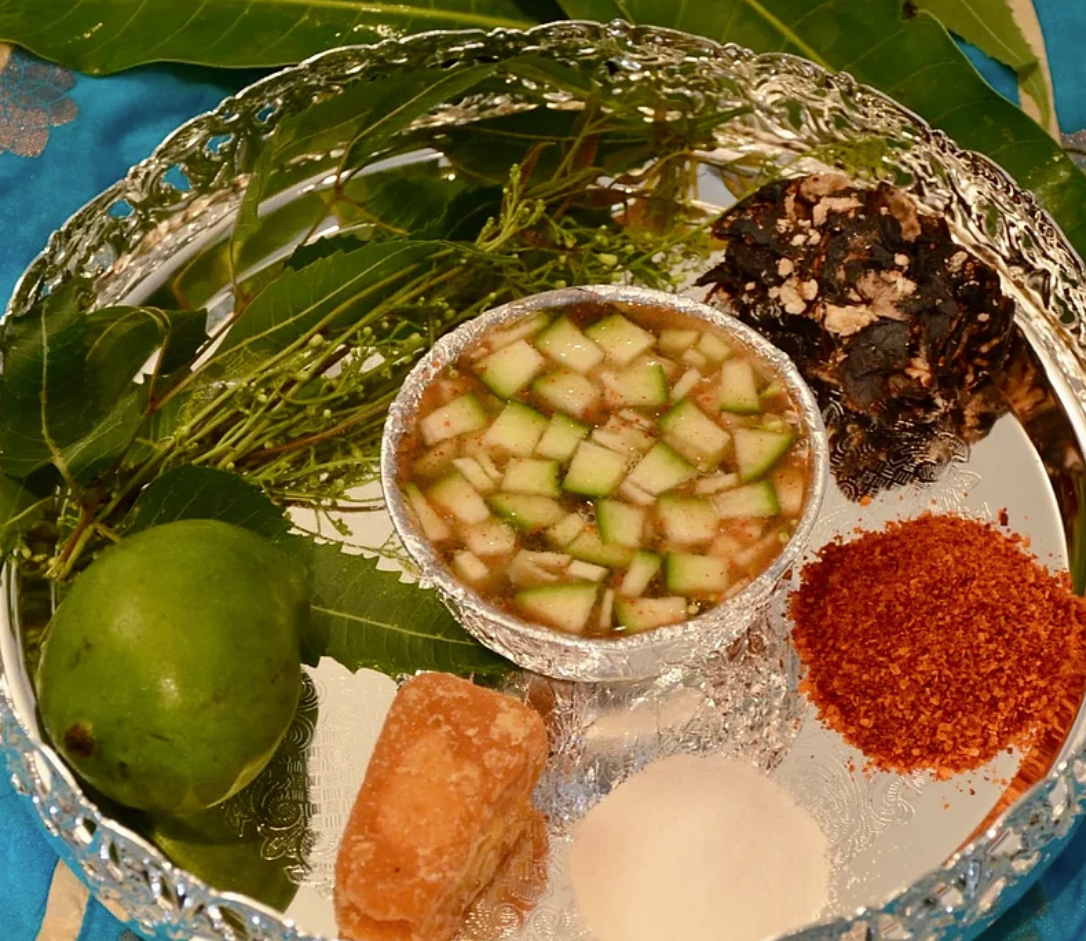
a unique dish that combines six different flavors: sweet, sour, salty, bitter, spicy, and tangy. These flavors represent the various experiences of life, both good and bad.
In that sense, Ugadi carries a deeply philosophical message. It asks us to sit with complexity, to move forward with awareness, and to resist flattening life into simple narratives of success or failure.
These ideas resonate in powerful ways. The work of justice is rarely linear. It is shaped by progress and setbacks, solidarity and struggle, hope and grief. Much like the six tastes of Ugadi Pachadi, movements for dignity and equality are made up of many emotions and experiences that must coexist.
Ugadi can also be a moment to reflect on what we carry forward—and what we leave behind. Across South Asia and the diaspora, communities continue to grapple with systems of inequality, including caste, religious nationalism, and economic injustice. A new year offers an opportunity not just for personal renewal, but for collective recommitment: to building societies that are more inclusive, more equitable, and more rooted in care.
At its heart, Ugadi is not just about celebration. It is about attention—to time, to change, to one another. It reminds us that beginnings are not blank slates, but continuations shaped by what came before.
As we step into the new year, Ugadi asks a simple but profound question: what kind of world are we choosing to build, together?
What is Ugadi?
Ugadi is the New Year festival celebrated primarily in the South Indian states of Andhra Pradesh, Telangana, and Karnataka. It marks the beginning of a new lunar calendar year and symbolizes renewal, seasonal change, and new beginnings.
When is Ugadi celebrated?
Ugadi is typically celebrated in March or April, depending on the lunar calendar. It falls on the first day of the Chaitra month, which marks the start of the Hindu lunisolar New Year.
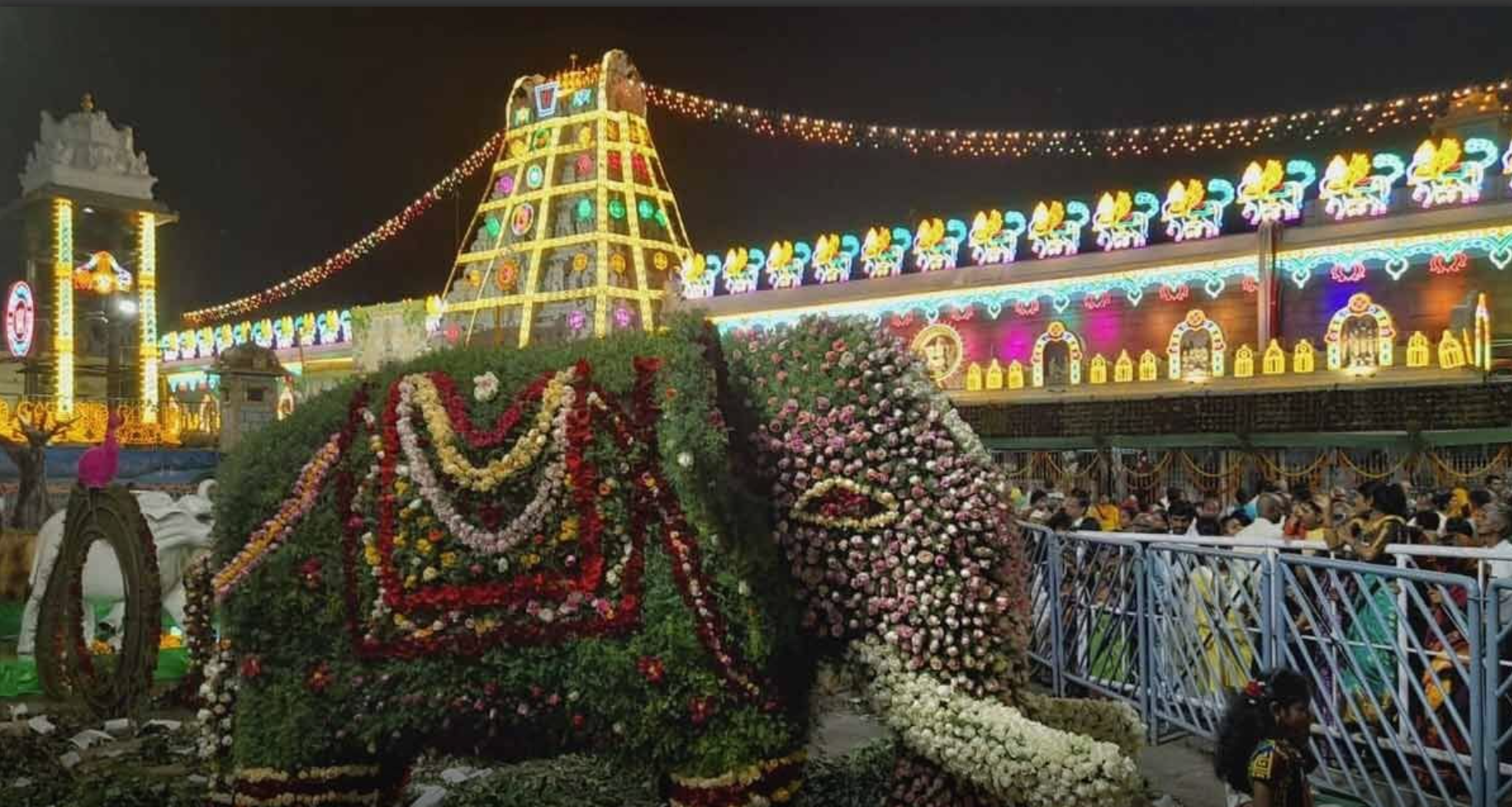
Ugadi' festival at the hill temple of Lord Venkateswara, Tirumala
What does the word “Ugadi” mean?
The word “Ugadi” comes from Sanskrit: yuga (age or era) and adi (beginning). Together, it means “the beginning of a new age” or “new year.”
Why is Ugadi important?
Ugadi is important because it marks a time of renewal—both personal and collective. It is associated with reflection, intention-setting, and the recognition of life’s cyclical nature. For many, it is a moment to reset and begin again with awareness and purpose.
What are common Ugadi traditions?
Common Ugadi traditions include:
Cleaning and decorating homes with mango leaves (torans)
Wearing new clothes
Visiting temples
Listening to the Panchanga Sravanam (astrological forecast for the year)
Preparing and sharing Ugadi Pachadi, a symbolic dish
What is Ugadi Pachadi and why is it significant?
Ugadi Pachadi is a traditional dish made with six different tastes—sweet, sour, salty, bitter, pungent, and tangy. Each taste represents a different human emotion or life experience, such as joy, sorrow, anger, and surprise. It symbolizes the acceptance of life in its entirety.
How is Ugadi different from other Hindu New Year festivals?
Ugadi is one of several regional New Year celebrations in India. While it is observed in Andhra Pradesh, Telangana, and Karnataka, other regions celebrate New Year festivals like Gudi Padwa (Maharashtra), Vishu (Kerala), and Puthandu (Tamil Nadu). Each has distinct traditions but shares themes of renewal and seasonal transition.
What is the deeper meaning of Ugadi?
Beyond celebration, Ugadi reflects a philosophical understanding of time as cyclical. It encourages people to embrace life’s full range of experiences and to approach the future with resilience, balance, and awareness.
How can Ugadi be understood in a modern or global context?
In today’s world, Ugadi can be seen as a moment to reflect on community, justice, and shared responsibility. Its emphasis on renewal and complexity resonates with ongoing efforts toward equality, dignity, and collective care across societies.