
When Devotion Becomes a Public Trust: The Ram Mandir Donation Controversy and the Ethics of Accountability
The controversy now unfolding around alleged misuse of donations at the Ram Mandir in Ayodhya is not only a story about missing money. It is a story about faith, public power, political symbolism, and the moral obligations that come with sacred trust.
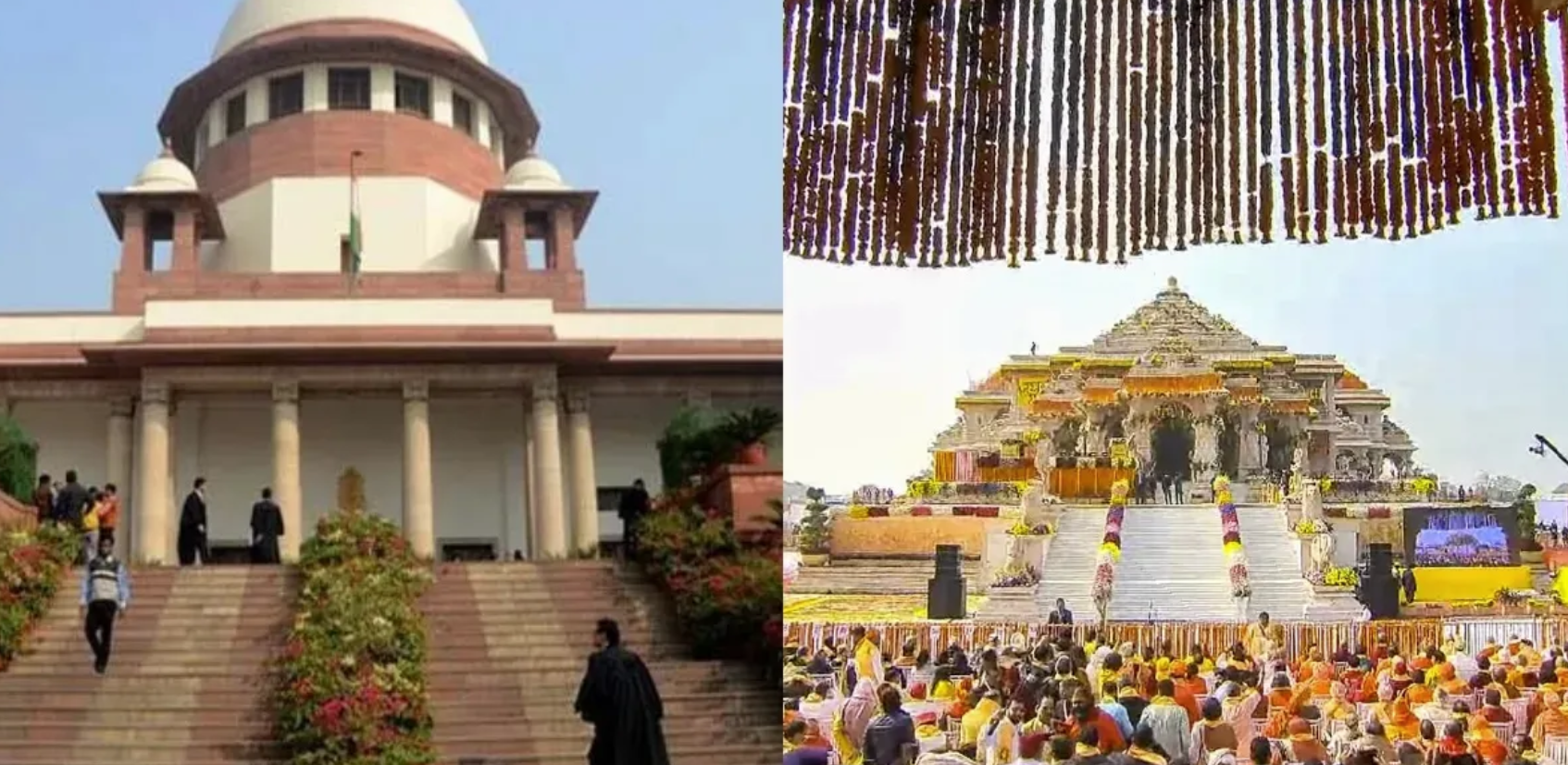
A PIL (Public Interest Litigation) has been filed in the Supreme Court seeking registration of an FIR and a fair and time-bound probe into the alleged embezzlement of funds in the Ram Temple at Ayodhya.
Across India, the allegations have touched a nerve because the Ram Mandir is not an ordinary temple project. It has been built through decades of political mobilization, state involvement, mass fundraising, public emotion, and the devotion of millions of Hindus who gave what they could: cash, jewelry, labor, memory, longing, and belief. When such offerings are placed before a deity, they do not become private property. They become a moral trust.
That is why even the possibility of financial irregularity matters so deeply.
Recent reports have described allegations of misappropriated donations, questions about cash-counting systems, scrutiny of temple employees and trust officials, recovered cash from a temple employee’s residence, and claims that valuable offerings may have been mishandled or replaced. The Uttar Pradesh government has formed a Special Investigation Team to look into the matter, while opposition leaders and petitioners have demanded stronger, more independent scrutiny, including calls for a time-bound judicial probe or a CBI-led SIT.
The details remain contested. The Shri Ram Janmabhoomi Teerth Kshetra Trust has rejected allegations of wrongdoing. Investigations are still underway. But the public question is already larger than the legal question: what standards of transparency should govern a religious institution that has received donations from millions, enjoyed intense political patronage, and been placed at the center of India’s national imagination?
The Sacred Does Not Excuse the Unaccountable
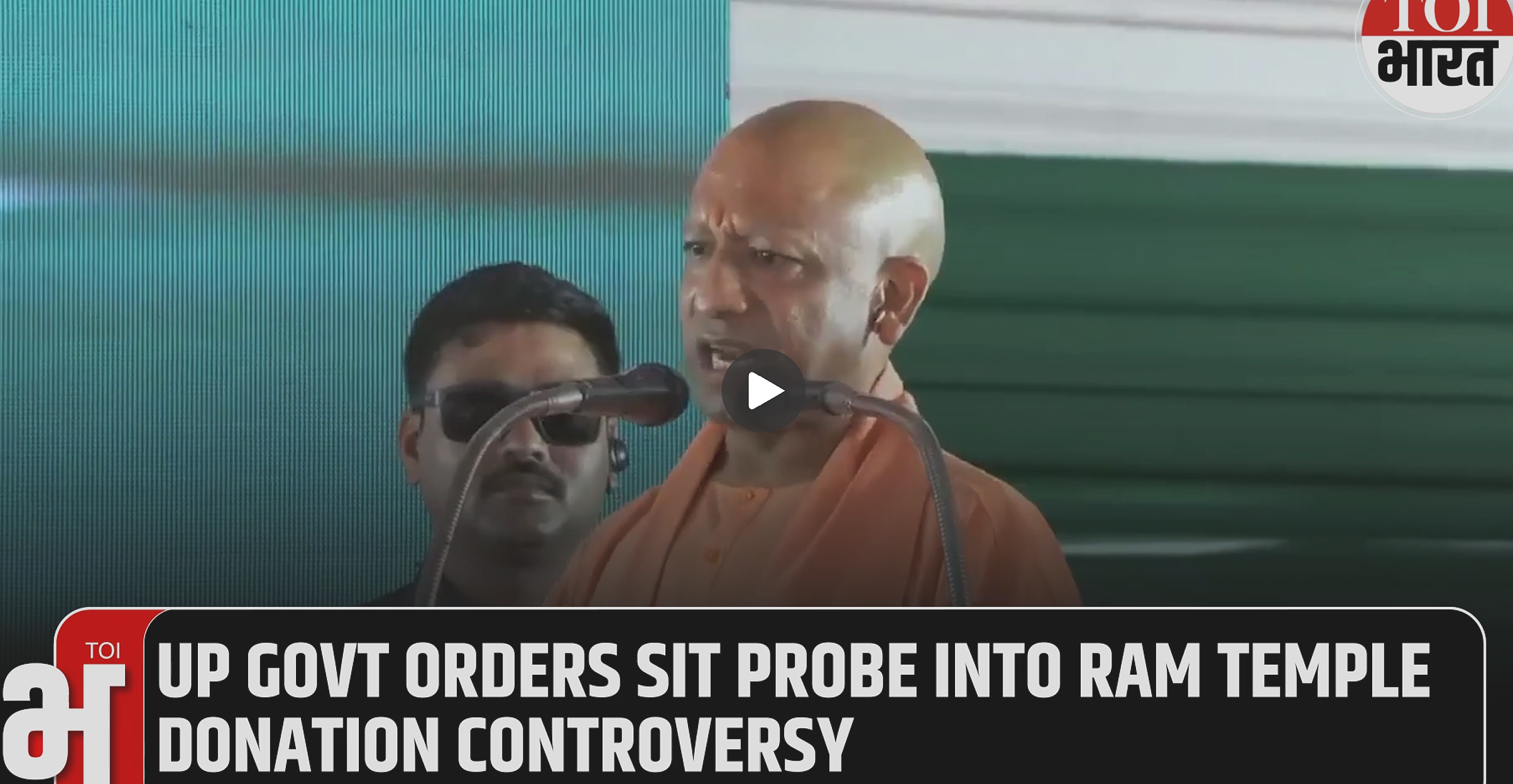
The Ram Mandir donation controversy has moved from devotional concern to public accountability, as the Uttar Pradesh government forms a three-member SIT.
In Hindu ethical thought, dana, or giving, is not merely a transaction. It is a practice that links the giver to a larger moral world. A devotee gives because they believe the offering will be handled with care, humility, and responsibility. The religious institution that receives that offering carries a duty not only to the deity, but also to the people.
To misuse religious donations, or even to create systems where misuse becomes possible, is not a small administrative failure. It is a violation of trust.
This is especially true when donations come from ordinary people. The rupee placed in a hundi by a pilgrim, the small transfer made by a family, the ornament offered by a devotee, the contribution gathered through campaigns across villages and cities — these gifts carry emotional and spiritual weight. They come from people who may never sit on a trust board, attend a political meeting, or have access to the officials who manage temple funds.
Transparency is therefore not an attack on faith. It is a form of respect for faith.
A Temple at the Center of the State
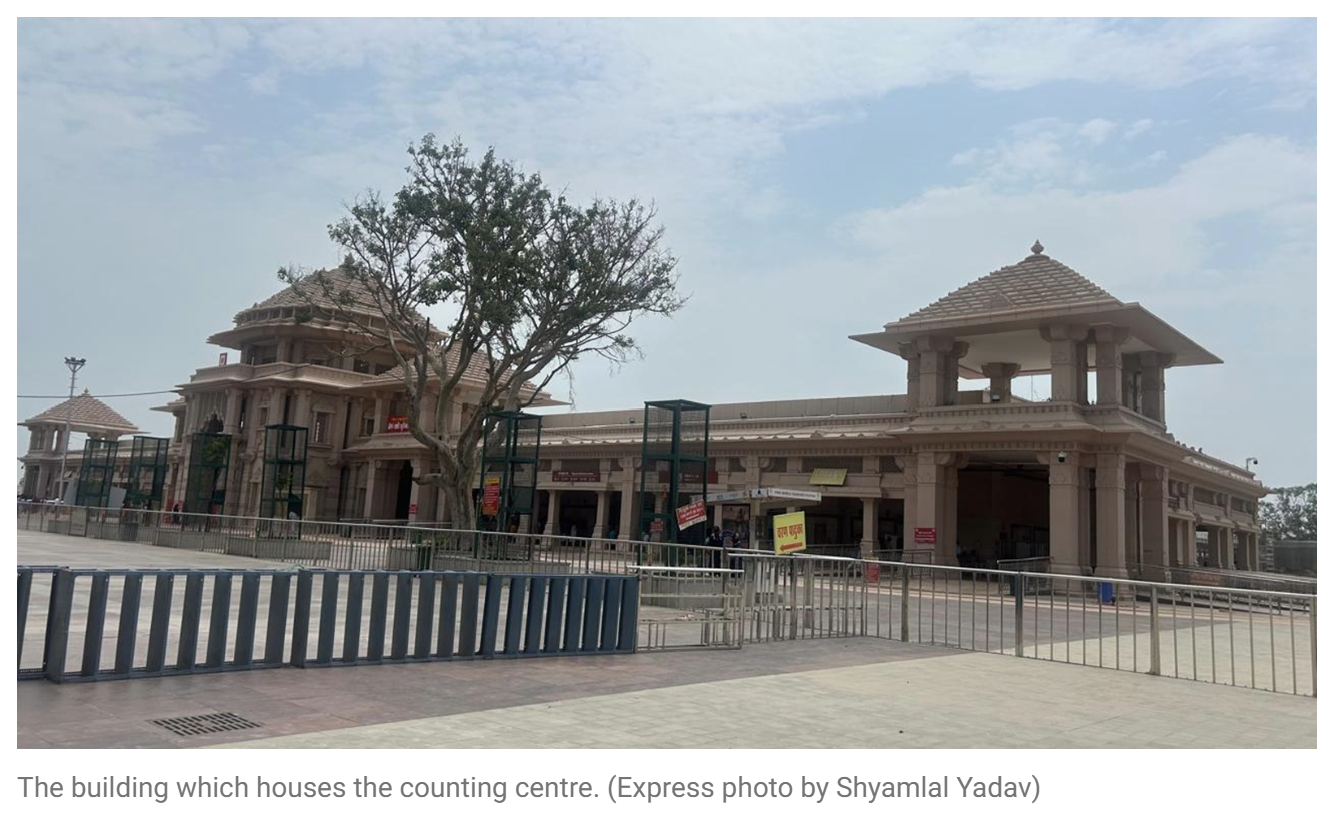
The Ram Mandir has always occupied a complicated space between religion and politics. The current trust was created after the Supreme Court’s 2019 Ayodhya judgment, and the Government of India approved the Shri Ram Janmabhoomi Teerth Kshetra Trust in 2020 to oversee the temple’s construction and management. From the beginning, the project has been deeply entwined with state power, electoral mobilization, and the ruling party’s vision of Hindu nationalism.
That makes accountability even more urgent.
When a temple is promoted as a national civilizational symbol, when political leaders participate in its consecration, when public emotion is mobilized around it, and when donations are collected on a massive scale, its governance cannot be treated as a purely private religious matter. The question is not whether Hindus should care about the Ram Mandir. Many do. The question is whether that care will be honored through transparent institutions or exploited through opaque systems.
A temple that claims to represent Hindu devotion must be held to the highest ethical standards. A movement that invokes Lord Ram must be answerable to maryada — moral restraint, duty, and integrity.
Devotion Cannot Be Used as a Shield Against Scrutiny
One of the most damaging patterns in contemporary Indian public life is the use of religious sentiment to shut down legitimate questions. When citizens ask how funds were collected, counted, audited, or spent, they are not insulting Hinduism. They are asking whether those who speak in the name of Hinduism are behaving ethically.
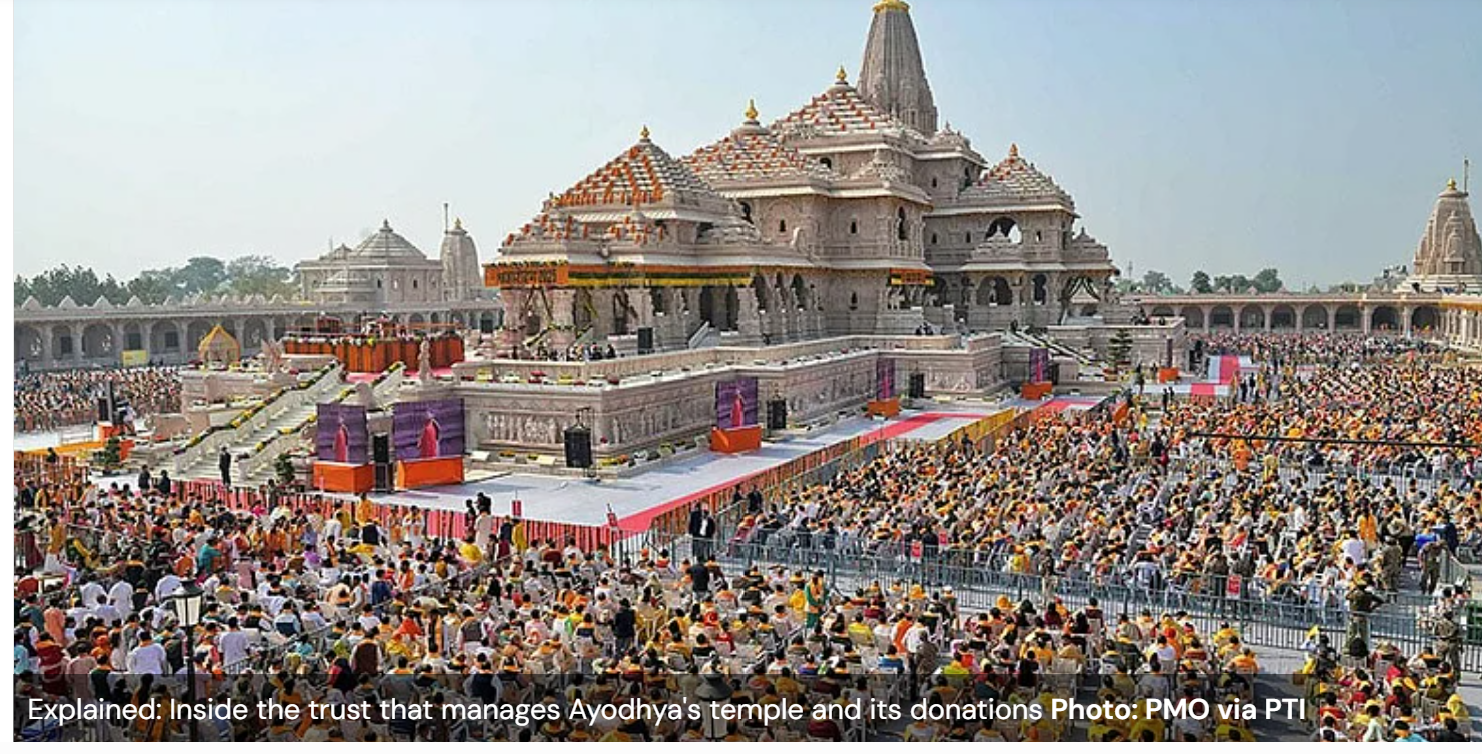
Inside the trust that manages the temple and its donations
This distinction matters.
Hinduism is not weakened by accountability. It is weakened when powerful people claim immunity from accountability because they have wrapped themselves in religious symbolism. The misuse of faith begins not when citizens ask questions, but when institutions tell citizens that asking questions is somehow anti-Hindu.
A spiritually serious Hindu response should be the opposite. It should welcome scrutiny. It should insist that offerings made in the name of Ram be handled with the highest degree of honesty. It should recognize that devotion becomes vulnerable when institutions become secretive.
SUBSCRIBE TO OUR NEWSLETTER
Why Independent Oversight Matters
The formation of a Special Investigation Team (SIT) is significant, but it may not be enough to restore public confidence. The controversy has already become politically charged. Opposition parties have questioned whether a state-appointed SIT can investigate the matter with sufficient independence. Some have demanded a probe led by a sitting High Court judge. A petition before the Supreme Court has sought an FIR and a CBI-led SIT investigation.
The point is not to assume guilt before the investigation concludes. The point is that a religious institution of this scale requires standards that are beyond reproach.
At minimum, the public deserves:
A full independent audit of donations, expenditures, and procurement.
Clear disclosure of cash-counting procedures and internal controls.
Publicly accessible annual financial statements.
Transparent systems for recording offerings of jewelry, gold, silver, and other valuables.
Protection for whistleblowers and employees who raise concerns.
Independent oversight that is not vulnerable to political pressure.
A clear distinction between devotional funds, temple management, political campaigns, and private contractors.
These are not radical demands. They are basic standards of ethical stewardship.
The Bigger Question: Who Owns Public Hinduism?
The Ram Mandir controversy also raises a deeper question: who gets to define Hindu public life?
For decades, Hindutva politics has claimed to speak for Hindus as a single political community. The Ram Mandir movement was central to that project. But when allegations arise around the handling of donations, it becomes clear that the language of Hindu unity can obscure real differences of power, class, caste, access, and accountability.
Millions of ordinary Hindus may have donated in good faith. But who controls the money? Who sits on the trust? Who audits the accounts? Who benefits from contracts, land deals, tourism, VIP access, and political proximity? Who is expected to give, and who is allowed to govern?
A human rights-centered Hindu response must ask these questions. It must resist the idea that religious emotion belongs to political elites. It must insist that public Hindu institutions be accountable to the people whose devotion sustains them.
What Does Lord Ram’s Name Mean and Not Mean
The Ramayana is full of arguments about power, duty, exile, kingship, sacrifice, and justice. Lord Ram is not only a figure of devotion; he is also associated with the difficult burden of righteous rule. To invoke Ram in public life is to invoke a standard of conduct.
That standard cannot be reduced to spectacle, slogans, ceremonies, or fundraising campaigns.
If the Ram Mandir is to be treated as a sacred institution, its finances must be treated as sacred responsibilities. If it is to be treated as a public symbol, its governance must meet public standards. If political leaders use it as proof of civilizational pride, then they must also accept civilizational accountability.
The issue is not whether devotees should trust God. The issue is whether devotees can trust the people who manage what is given in God’s name.
Faith without accountability becomes vulnerable to exploitation. Devotion without transparency becomes a resource for power. And a temple without public trust becomes a monument not to dharma, but to the dangers of confusing religious symbolism with moral authority.
What People Are Asking About the Ram Mandir Donation Controversy
What is the Ram Mandir donation controversy?
The controversy centers on allegations that donations and offerings made by devotees to the Ram Mandir in Ayodhya may have been misappropriated or mishandled. Reports have described claims involving missing funds, questions about cash-counting systems, scrutiny of employees, and allegations related to valuable offerings. The matter is under investigation, and the temple trust has denied wrongdoing.
Who manages the Ram Mandir donations?
The Ram Mandir is managed by the Shri Ram Janmabhoomi Teerth Kshetra Trust. The Trust was approved by the Government of India in 2020 after the Supreme Court’s 2019 Ayodhya judgment. It oversees temple construction, management, donations, and related operations.
Has the Ram Mandir Trust been found guilty of misuse of funds?
No final legal finding of guilt has been reported. The allegations are currently under investigation. The Shri Ram Janmabhoomi Teerth Kshetra Trust has rejected claims of wrongdoing, while investigators, political leaders, and petitioners have called for greater transparency and scrutiny.
Why are people demanding an independent investigation?
People are demanding an independent investigation because the Ram Mandir is not just a private temple project. It has received mass donations, been closely associated with state power, and holds enormous religious and political significance. Critics argue that only a truly independent probe can restore public confidence and ensure that devotees’ offerings were properly handled.
Why does this matter from a Hindu ethical perspective?
In Hindu traditions, offerings are not ordinary money. They are acts of devotion. Those who receive and manage them have a duty of honesty, humility, and care. From a dharmic perspective, transparency is not hostile to faith. It protects faith from exploitation.
Is questioning the Ram Mandir Trust anti-Hindu?
No. Asking for transparency in the handling of religious donations is not anti-Hindu. In fact, it can be understood as a deeply Hindu demand: that institutions acting in the name of dharma must themselves act with integrity. Criticism of financial opacity is not criticism of devotion.
What should happen next?
The public needs a transparent, credible, and independent accounting of donations and expenditures. This should include a full audit, clear disclosure of cash and valuables handling procedures, protections for whistleblowers, and oversight mechanisms that are insulated from political pressure.
What is the larger lesson of the controversy?
The larger lesson is that religious institutions with public power must be publicly accountable. When faith is mobilized on a national scale, the systems that manage that faith must be transparent. Devotion should never be used to silence questions about money, power, or institutional responsibility.
Resources and Further Reading
India TV News — “Ram Temple donation row reaches Supreme Court: PIL seeks FIR, CBI-led SIT probe into trust irregularities”
https://www.indiatvnews.com/news/india/ram-temple-donation-row-reaches-supreme-court-pil-seeks-fir-cbi-led-sit-probe-into-trust-irregularities-2026-06-22-1045747
The Times of India — “SIT submits preliminary report to UP govt in Ayodhya Ram temple donation embezzlement probe”
https://timesofindia.indiatimes.com/city/lucknow/sit-submits-preliminary-report-to-up-govt-in-ayodhya-ram-temple-donation-embezzlement-probe/articleshow/131928350.cms
The Indian Express — “35 donation boxes, 2 shifts: As SIT probes Ram Mandir ‘fund theft’, how count is kept”
https://indianexpress.com/article/cities/lucknow/ram-mandir-trust-donation-ayodhya-sit-probe-yogi-adityanath-10746901/
Outlook India — “Explained: Inside The Trust That Manages Ayodhya’s Ram Mandir And Its Donations”
https://www.outlookindia.com/national/explained-inside-the-trust-that-manages-ayodhyas-ram-mandir-and-its-donations
The New Indian Express — “Ram Temple donation row deepens as cash recovered from employee’s house in Ayodhya”
https://www.newindianexpress.com/states/uttar-pradesh/2026/Jun/13/ram-temple-donation-row-deepens-as-cash-recovered-from-employees-house-in-ayodhya
Hindustan Times — “Ayodhya Ram Temple in focus over alleged disappearance of donation funds: The row explained”
https://www.hindustantimes.com/india-news/ayodhya-ram-mandir-temple-in-focus-over-alleged-disappearance-of-donation-funds-the-row-explained-101781417493925.html
The Economic Times — “Ram Temple donation fund row: Congress demands time-bound investigation by High Court judge”
https://m.economictimes.com/news/politics-and-nation/ram-temple-donation-fund-row-congress-demands-time-bound-investigation-by-high-court-judge/articleshow/131780504.cms
Prime Minister’s Office — “PM announces setting up of Shri Ram Janma Bhoomi Tirtha Kshetra trust” https://www.pmindia.gov.in/en/news_updates/pm-announces-setting-up-of-shri-ram-janma-bhoomi-tirtha-kshetra-trust/