
When the Flags No Longer Need to Fly: Reflections From a Journey Through India
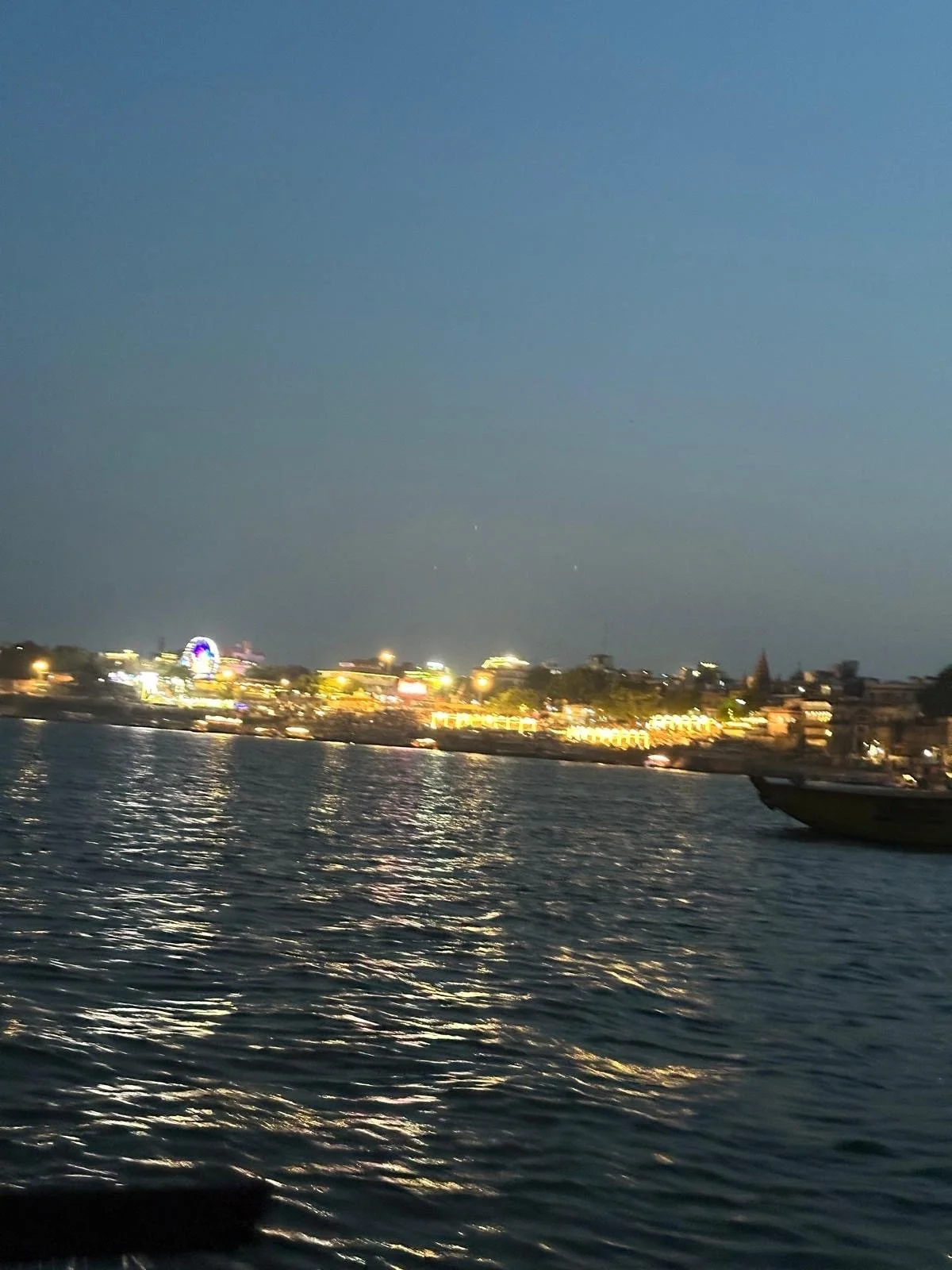
Ferris Wheel on Assi Ghat
My recent trip to India was, first of all, personal. I went to spend time with my son, to be with family, to breathe the air of places that have shaped me and continue to claim me. But no trip to India is ever only personal. The country speaks through everything: through the river and the road, through the driver who tells you what he has stopped saying out loud, through the bookstore owner who has watched an entire ghat change before his eyes, through the hills that seem to be groaning under the weight of our appetite.
In Benares, I saw cruise ships moving across the Ganga, their black exhaust rising over a river we call sacred. I saw Assi Ghat being remade in the image of spectacle, with a ferris wheel and the strange, bright language of amusement imposed on a place of prayer, memory, and mourning. In Himachal, the overdevelopment was almost unbearable. The mountains, once a refuge, now feel besieged by concrete, traffic, construction, and a human confidence that mistakes consumption for progress.
This is not separate from politics. It is politics. A country that cannot protect its rivers, hills, poor, minorities, farmers, workers, and dissenters is revealing something about the story it has chosen to tell about itself.
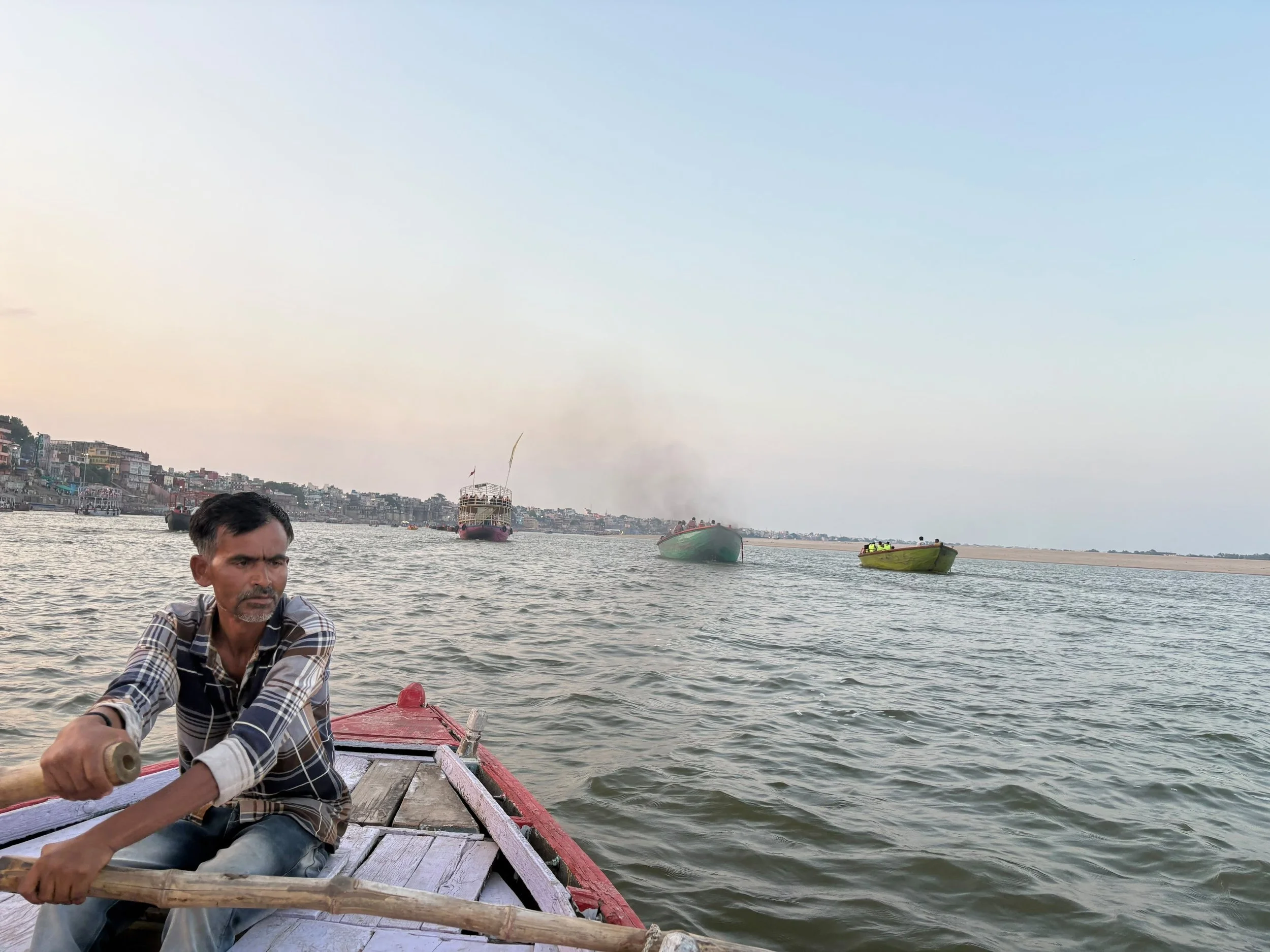
Motor boats emitting fumes on the Ganga
My last trip to India was two years ago. I had traveled in the South with Swami Raghvendra, and friends from Delhi on what felt like a small prema yatra, a pilgrimage of love. Out of that journey came my TIME essay, “The Hindu Leaders Fighting Hindu Supremacism,” about the courageous Hindu religious leaders who were speaking out against Hindutva from within the traditions that Hindutva seeks to flatten and weaponize.
On this journey, I met again with Swami Raghvendra and other Hindu religious leaders whose courage lies in something both simple and profound: they represent Hindu dharma as a source of love.
On that trip, I was shocked by how many Hindutva flags covered the land from North to South. They were everywhere, almost as if the country itself had been draped in saffron as a warning, a declaration, a performance of conquest. And then came the national elections, which were not the all-out triumph the BJP had expected. Many of us allowed ourselves to feel that the people of India were beginning to speak up, to push back, to take back their country.
This trip felt completely different.
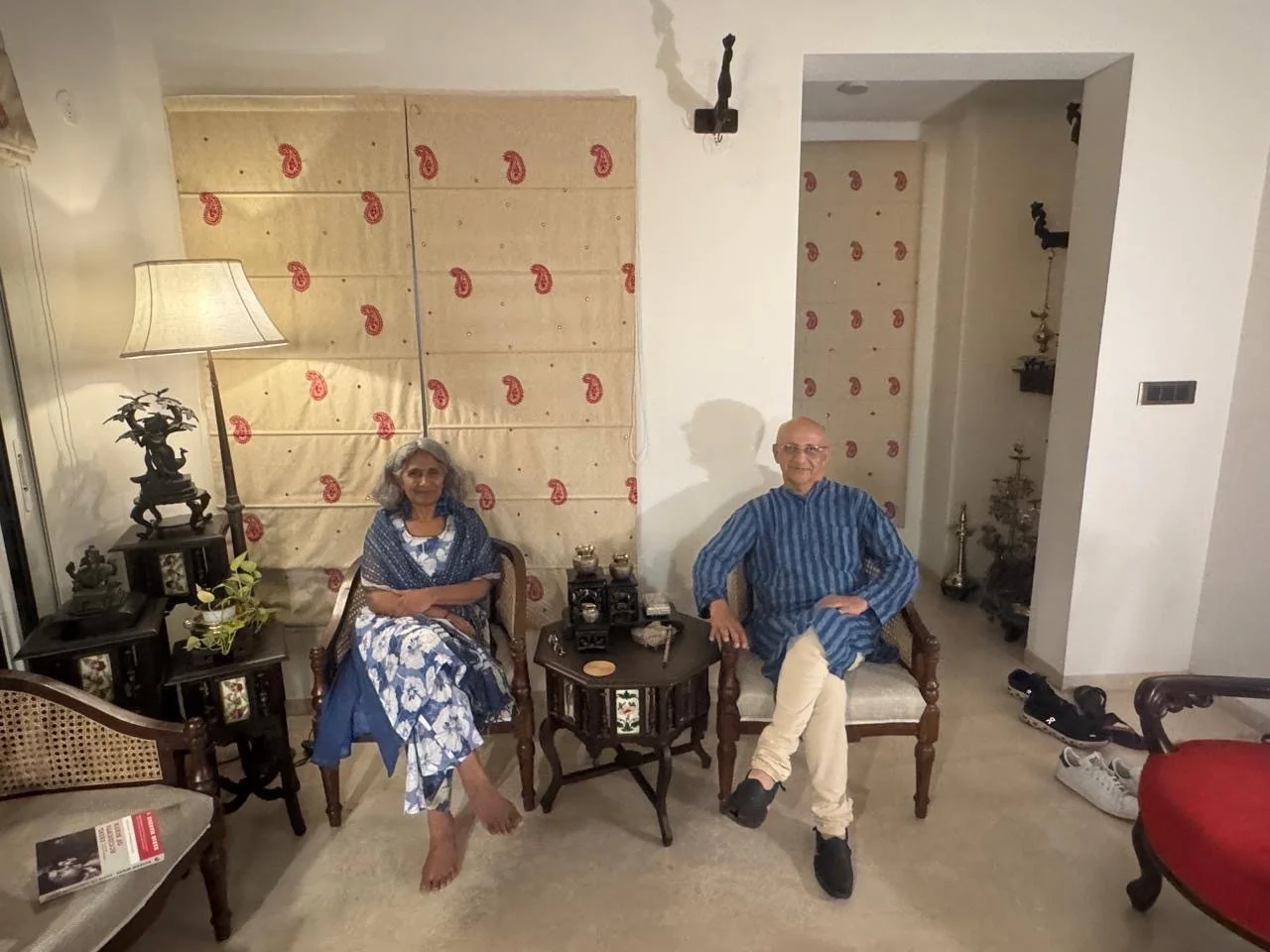
Sunita and Harsh Mander
The flags were not everywhere. Of course, there were Shiv Sena flags in Bombay. Benares was awash in saffron. But that would have been true even before 2014. What struck me this time was not the visual excess of Hindutva, but the absence of the need for display. Again and again, in conversations across Delhi, Bombay, Benares, Himachal, and Tamil Nadu, I heard a version of the same fear: the project is no longer announcing itself because it believes it has already won.
The institutions have been captured. The norms have been rewritten. The fear has entered ordinary speech. The country does not need to be covered in flags if the flag has already entered the law, the bureaucracy, the media, the police station, the school, the temple, and the imagination.
And yet India is never one story.
I spent long hours in conversation with people who are watching the country closely: a bookstore owner in Benares; Dev, a Hindu driver from Chandigarh whose family had participated in the farmers’ protest; another driver from Madurai who told us on the entire six hour drive to Kodaikanal about how much he loved his wife; the mostly Muslim owners and staff of a resort in Kodaikanal; progressive residents of Kodaikanal who gathered to speak with Yogendra Yadav; and dear friends and colleagues including Harsh Mander.
Tamil Nadu was spoken of again and again as the last bastion. There is great excitement about the new Chief Minister Vijay, especially among ordinary people. But others expressed caution, that we do not yet know what Vijay stands for. We cannot mistake excitement for clarity. We cannot afford to confuse novelty with moral courage.
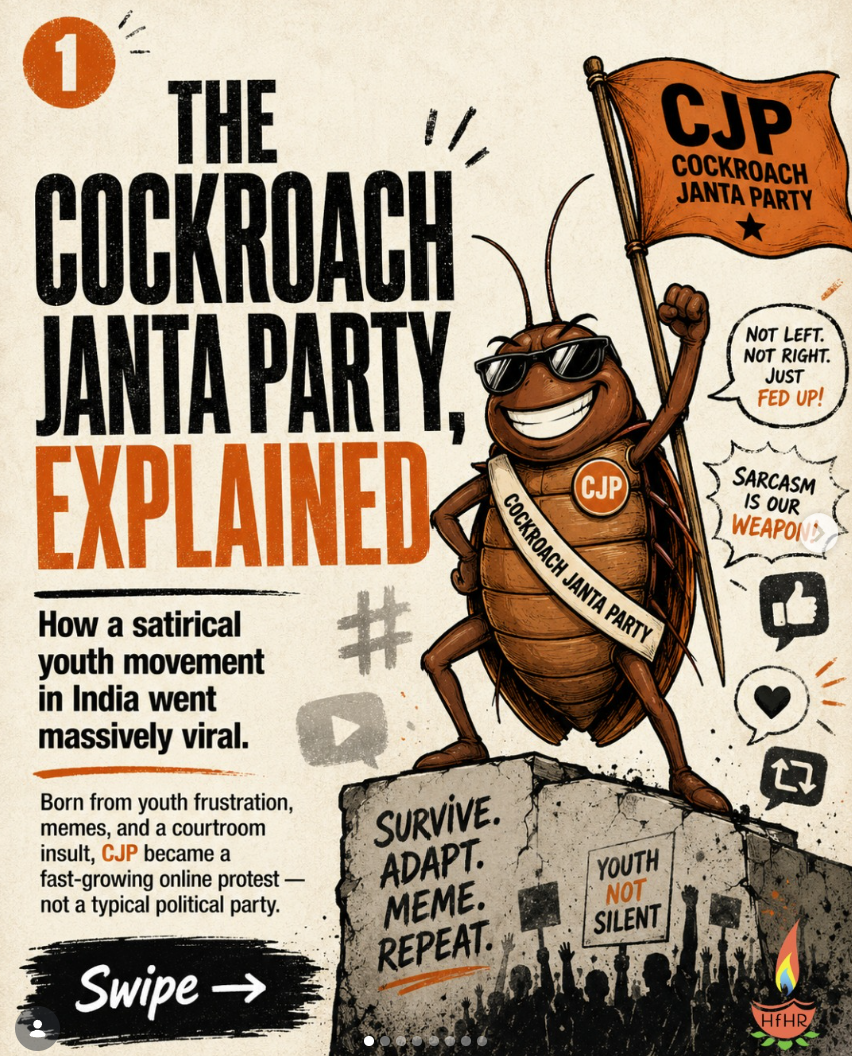
There was also enormous excitement, across class and religious lines, about the Cockroach Janata Party, or CJP — a new satirical youth-led political movement that has turned insult into identity. Its slogan, “Main Bhi Cockroach,” “I too am a cockroach,” takes a word of contempt and transforms it into a badge of survival, stubbornness, and refusal. What might sound absurd at first has clearly touched something real: anger among young people, frustration with unemployment and corruption, disgust with political arrogance, and a hunger for dissent that does not speak in the tired language of existing parties. Its irreverence, absurdity, and refusal to be humiliated have become part of its power. But here too, some of the people I trust urged caution, and expressed worry that it could be a ruse, or that even if it is not, it could be co-opted by the BJP, AAP, or another force.
And then, just after I returned, Rajmohan Gandhi reminded me of something essential.
When I spoke with him on Sunday before our Liberation Baithak, he said he was excited about CJP. He was not naive. He was not dismissing the dangers of co-option. But he said skepticism and cynicism must not prevent us from celebrating dissent wherever it appears. This felt important to me. In a time when so much has been captured, even the appearance of unruly speech, laughter, refusal, and defiance matters.
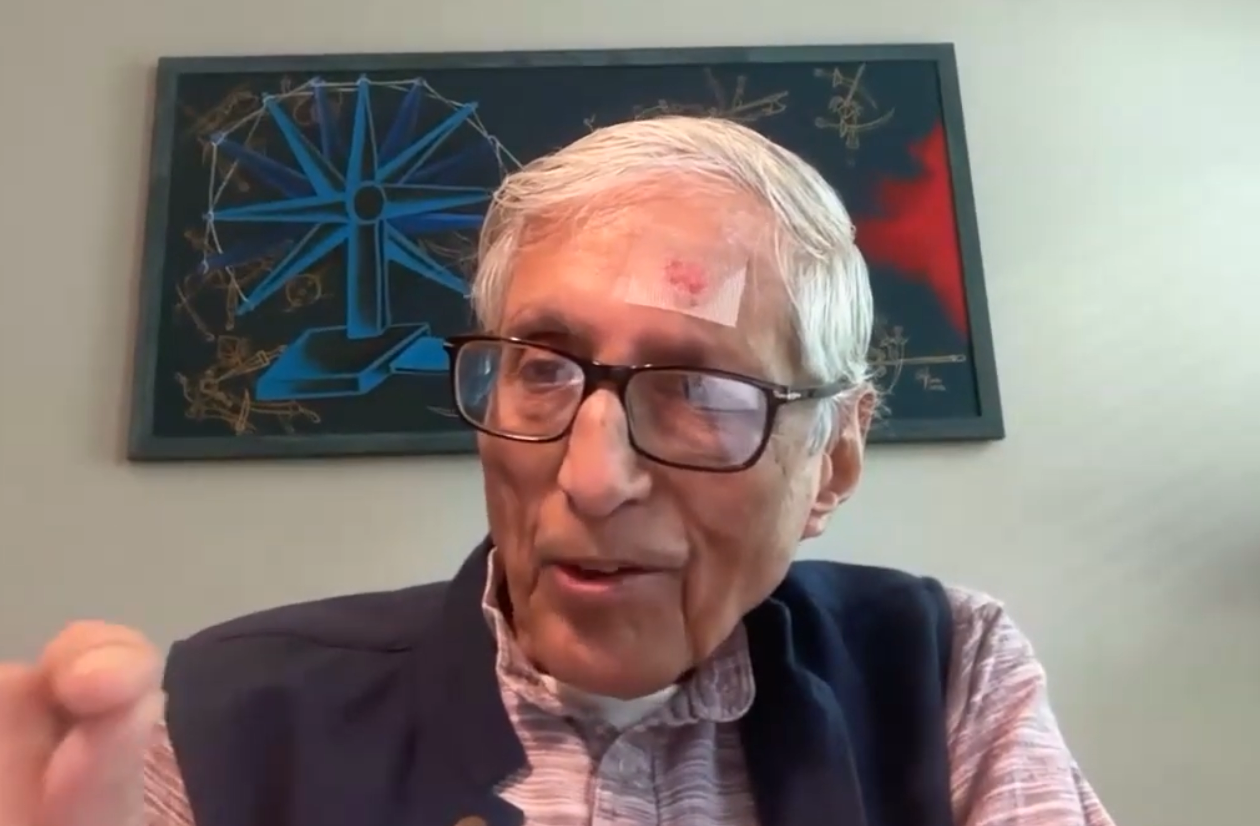
Rajmohan Gandhi at Do You Know Your Hinduism? Baithak
At the Baithak, we gathered around Rajmohan ji’s new book, Do You Know Your Hinduism?, which offers a distinction that felt like the moral center of the journey: “Perhaps the question is of where our minds travel. We can climb vertically into our imagined past, and savour the presumed glory there. Or we can enter horizontally into the lives of our compatriots, our neighbours of different castes and creeds, and see if we can lower the pain we may find there. To both exercises we seem to give the name Hinduism. May we choose the benevolent one.”
That choice — between a Hinduism that climbs into imagined glory and a Hinduism that moves horizontally toward the suffering of our neighbors — is key.
Rajmohan ji also urged me to listen to Rahul Gandhi’s recent speech. Later, at the Baithak, he invoked Baba Amte: the slogan of the freedom movement was “Quit India,” but the slogan we need for free India is “Knit India.”
Knit India.
Not conquer India. Not purify India. Not brand India. Not sell India. Not discipline India into silence. Knit India. Stitch together what has been torn. Repair what has been deliberately frayed. Refuse the politics that survives by separating neighbor from neighbor, Hindu from Muslim, caste from caste, citizen from citizen, human being from land and river and sky.
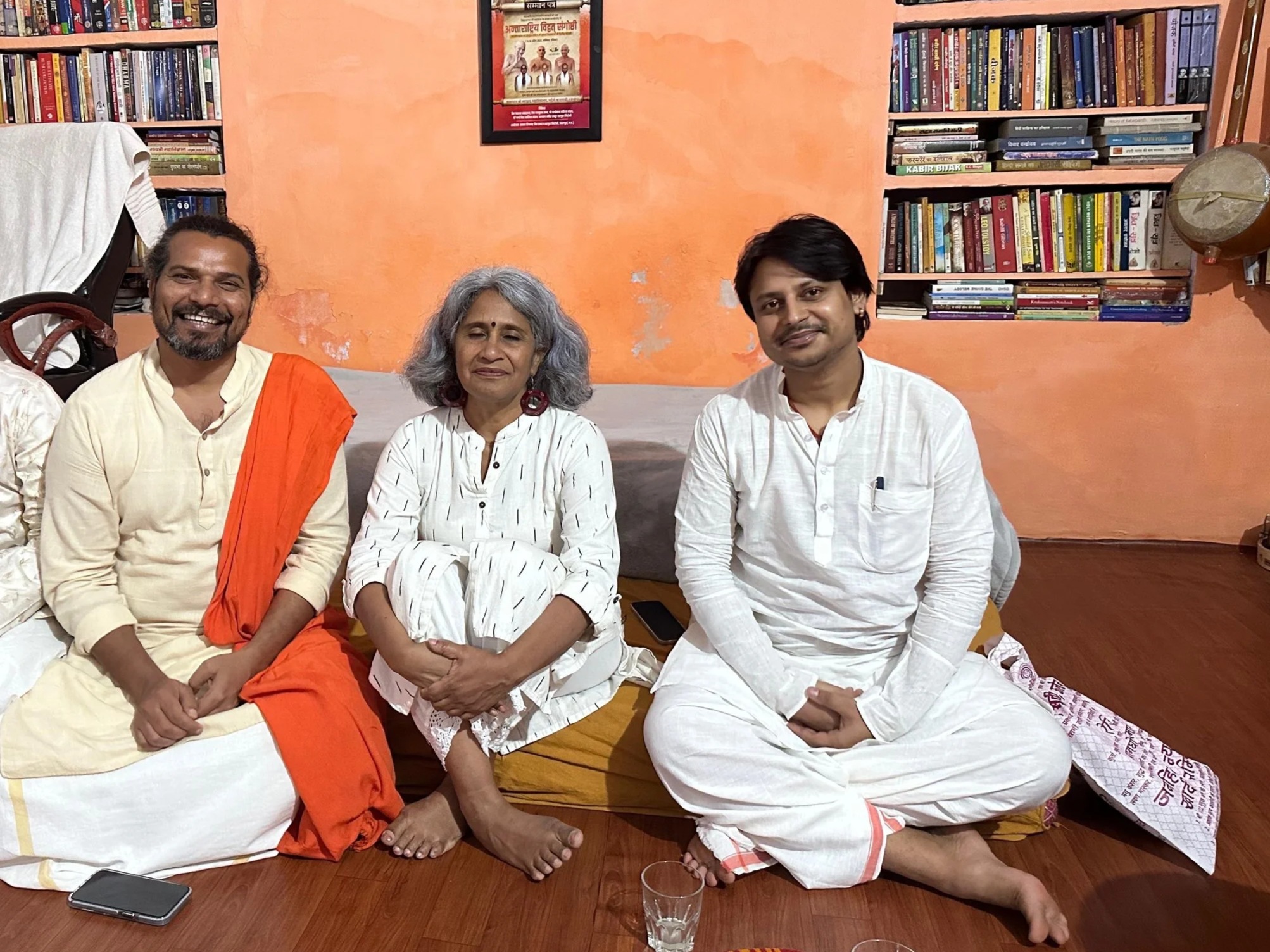
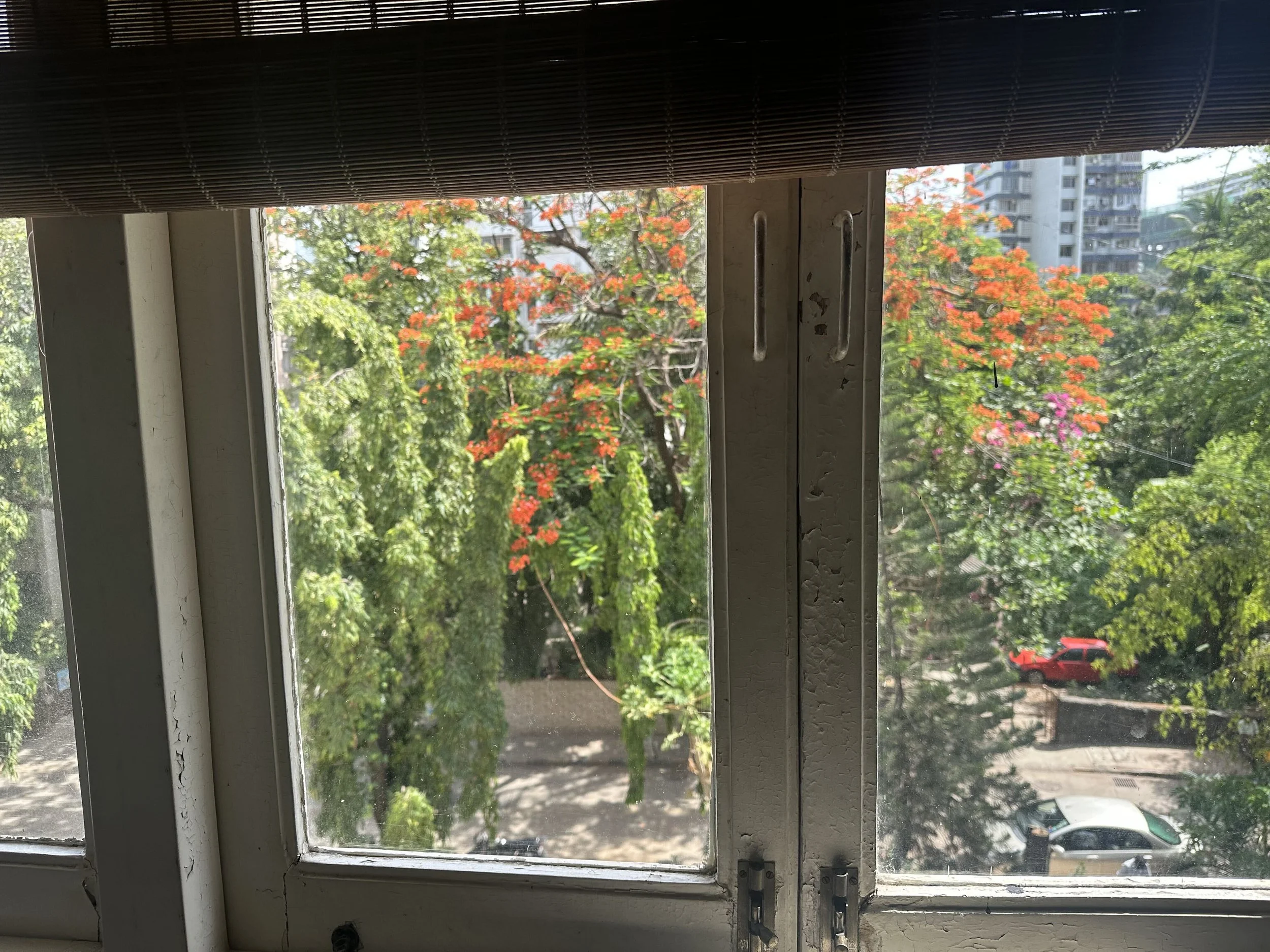
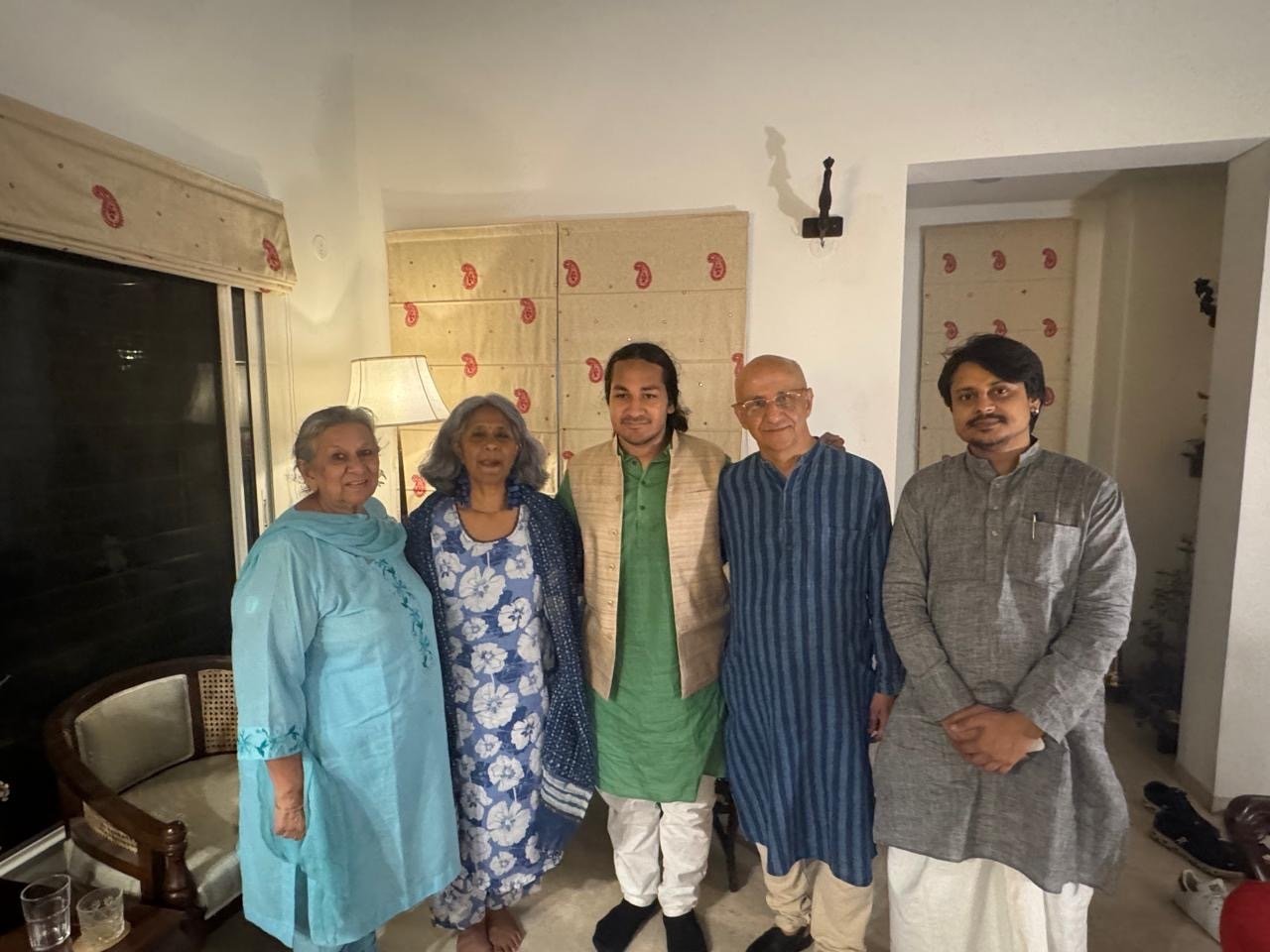
Everywhere we went, I encountered despondency. More than on previous trips. There was a profound sense that the Hindutva project had reached a stage of completion. But despondency is not the same as surrender. Beneath it, I also heard longing: for courage, for solidarity, for language that has not been corrupted, for religion that does not humiliate, for politics that does not feed on cruelty.
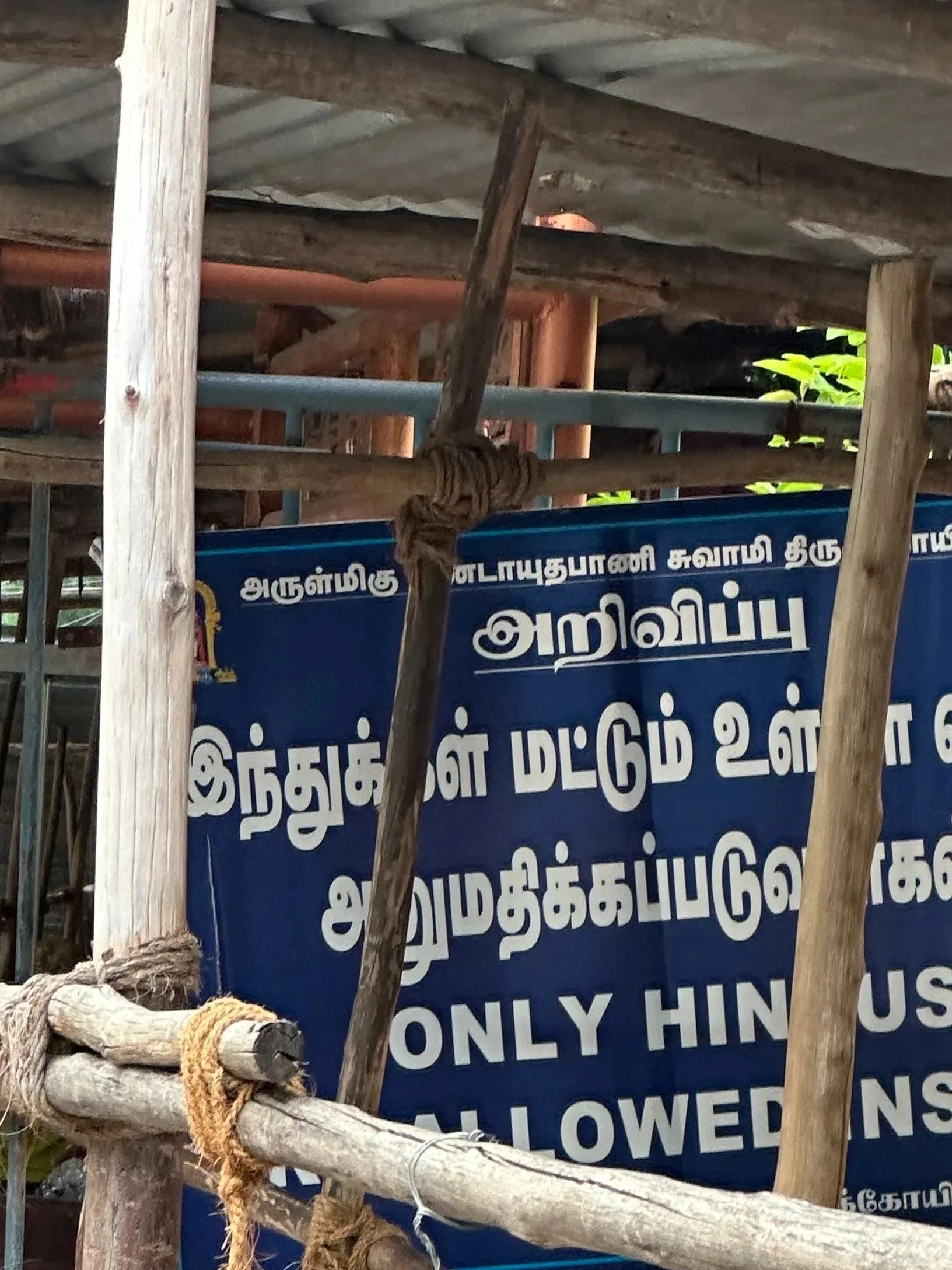
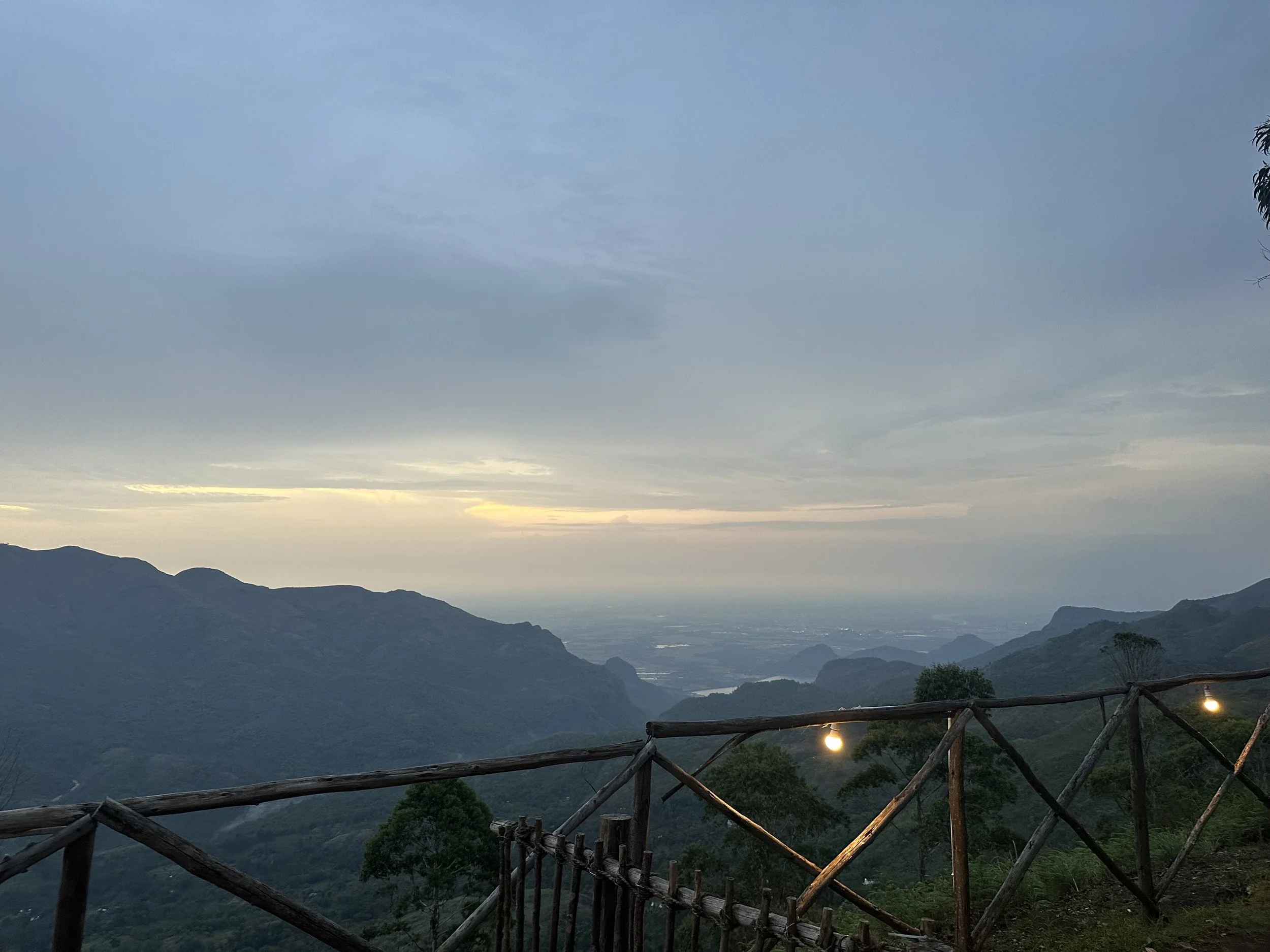
When we were in Kodaikanal, we took the breathtaking drive up the hill to Palani, hoping to visit the famed Palani Murugan Temple. A Muslim staff member at our resort told us that he had gone to this and many other Murugan temples, that Lord Murugan is important to him. He asked us to bring him back panchamrutam, the sweet concoction made of five ingredients, milk, curd, honey, ghee, and sugar, and served as prasadam (divinely blessed food). This is the India that so many of us are nostalgic for, the India we need to resuscitate. Imagine my devastation when we reached the temple, only to find a sign saying “Only Hindus Are Allowed Inside.” Needless to say, my son and I had no heart to enter.
One conversation in Bombay will stay with me forever.
A Muslim cab driver pointed out a plot of land in Bandra that, he told me, the government had gifted to Adani for one rupee. He said he was living in a country that was both a Hindu Rashtra and one suffocating on material greed. He gestured toward Bombay’s shiny new roads, tunnels, and bridges and asked: what use is all this if we do not care for the poor?
He was excited about CJP, but disappointed that his own children were too apathetic to join. “The young must rise up,” he said. “It is the only way.”
When he realized we were Hindus, his eyes filled with tears.
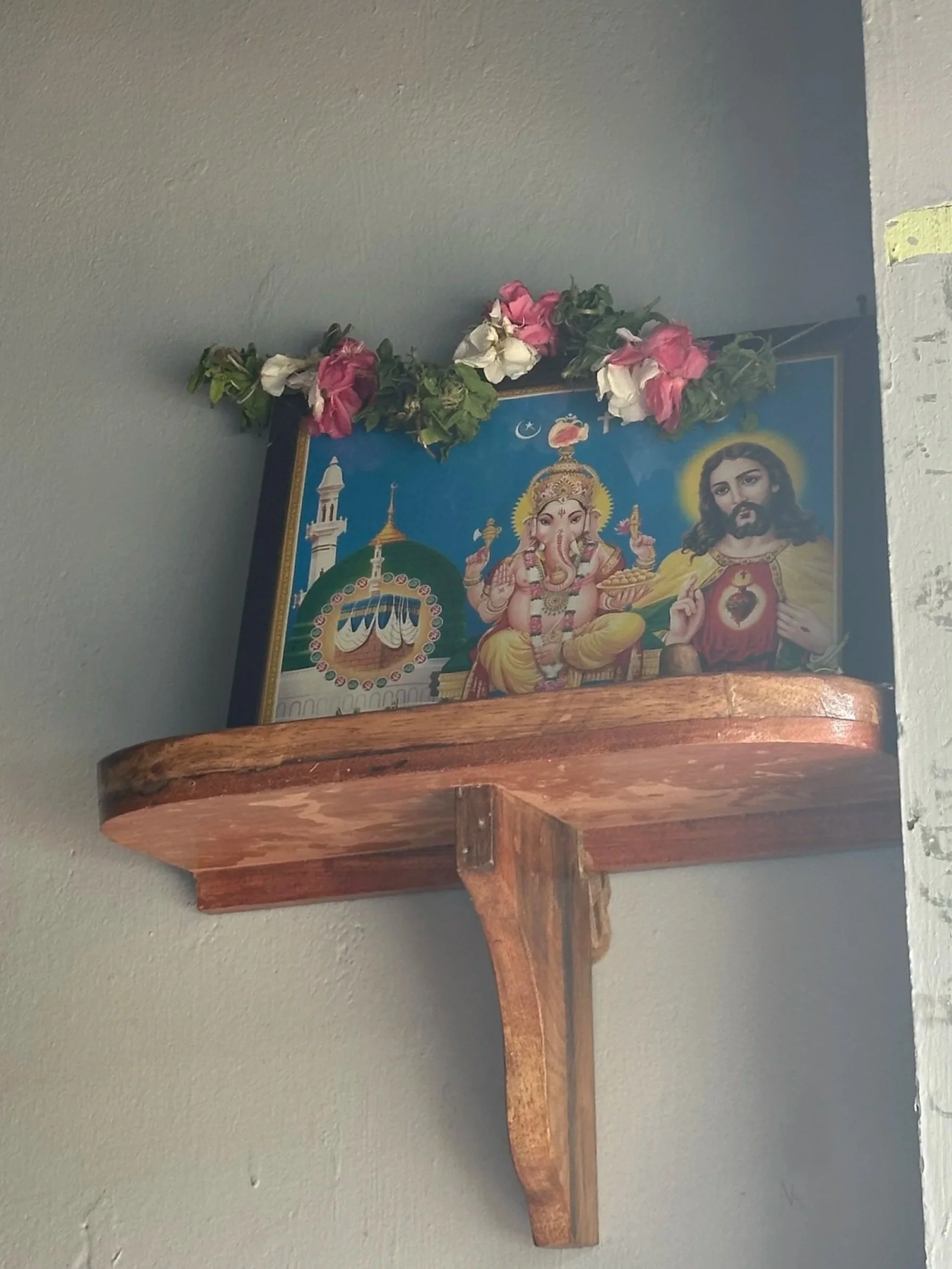
Multifaith Image in Kodaikanal
“Aap ke jaise bahut kam log hote hain,” he said. There are very few people like you.
My heart shattered.
Not because I wanted his gratitude. I did not. I felt ashamed that a Muslim man in India should feel such surprise at meeting Hindus who care about his life, his safety, his children, his dignity, his future. I felt ashamed that basic solidarity could feel rare enough to bring tears. And I felt, again, the full weight of our responsibility.
This is why our work matters.
On many previous trips to India, when I spoke of Hindus for Human Rights, I was often met with discomfort, suspicion, or polite skepticism. Some people did not know what to do with us. Some wondered whether progressive Hindus in the diaspora had any real role to play. Some were wary of the word Hindu itself, understandably so, after all that has been done in its name.
This time was different.
Again and again, people spoke of Hindus for Human Rights with warmth, seriousness, and respect. They believe in us and encourage our work. I carry those sentiments with me.
There is a particular loneliness in this work. To oppose Hindutva as Hindus is to be misunderstood from many directions at once. The Hindu right calls us traitors. Some secular allies worry that any Hindu language is already compromised. Many ordinary people are afraid. Many others are exhausted. And yet, on this trip, I felt something shift. Not in the condition of the country, which remains grave. But in the recognition of the work.
People see why it matters that Hindus speak against Hindu supremacy.
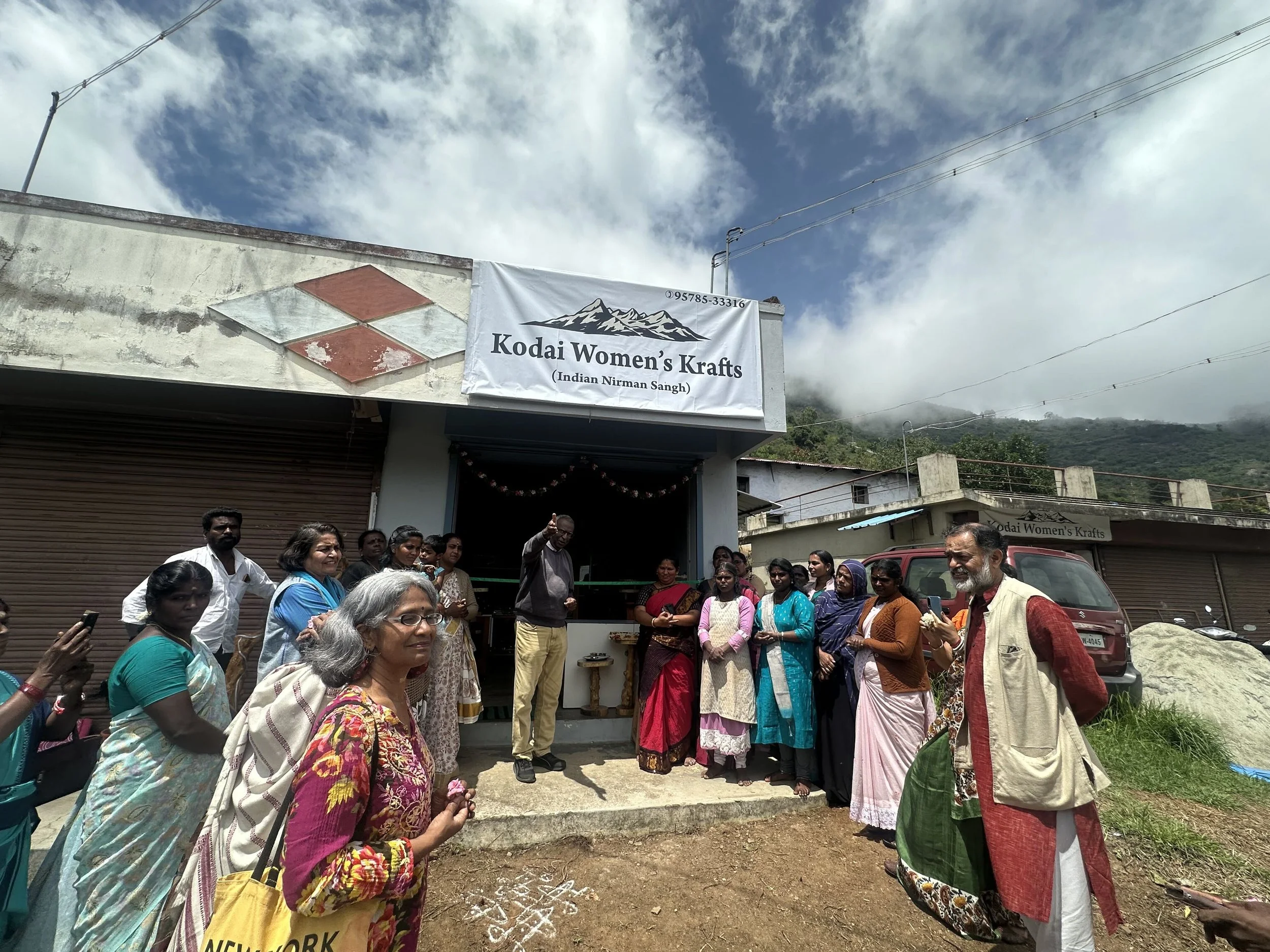
With Yogendra Yadav and his wife Madhulika Banerjee for the opening of a women’s craft store in Kodaikanal.
People see why it matters that we refuse to surrender Hindu traditions to those who use them to sanctify violence, hierarchy, misogyny, caste, Islamophobia, greed, and authoritarianism.
People see why it matters that love is not softness, but discipline. That interfaith solidarity is not symbolism, but survival. That the work of repair must be spiritual, political, ecological, and deeply human all at once.
India today is not simply a country in crisis. It is a country being remade. The question is whether it will be remade only by those who have captured power, or whether it can still be remade by those who knit: the dissenters, the truth-tellers, the caretakers, the young, the poor, the religious leaders who refuse hate, the Muslims who still hope, the Hindus who refuse supremacy, the people who protect rivers and books and memory and one another.
I returned from India with grief. I also returned with clarity.
The flags may no longer need to cover everything. But the work of love remains visible wherever people still refuse to give up on one another.
We must be strong.
We must not give up.
We must knit India.